
Asio otus
The long-eared owl (Asio otus) is a medium-sized owl found across Europe, the Palearctic, and North America. It is known for its prominent ear tufts, preference for woodland edges for roosting and nesting, and hunting over open ground. This species is a specialized predator of small rodents, particularly voles, and is considered of Least Concern by the IUCN.
Key Facts
- ›Prefers semi-open habitats, roosting in dense woods and hunting in open areas.
- ›Primarily preys on small rodents, especially voles.
- ›Utilizes nests built by other animals, particularly corvids.
- ›Is partially migratory and can be nomadic.
- ›Distinguished by prominent ear tufts, which may aid in communication.
- ›Considered a Least Concern species due to its wide distribution and numerous population.
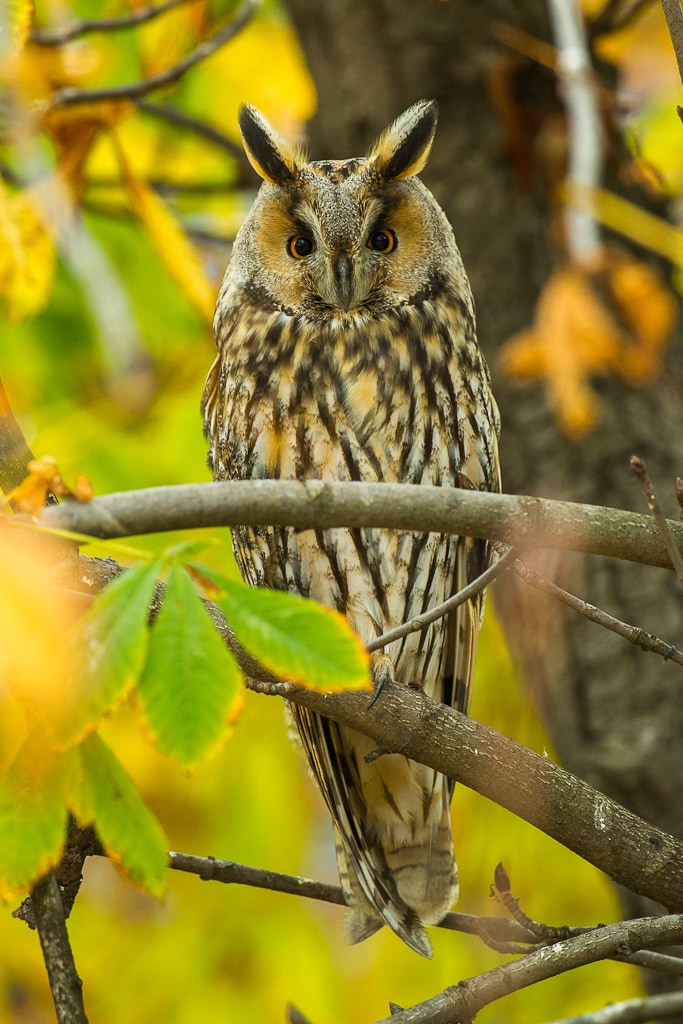
Northern Long-Eared Owl, Lesser Horned Owl, Cat Owl
Woodland Edge, Semi-Open Habitats, Dense Stands of Wood For Roosting/Nesting, Open Ground For Hunting
Europe, Palearctic, North America
- Medium-sized owl
- Slim and long-winged
- Prominent erectile ear tufts
- Ochraceous-tawny coloration with grayish or brownish wash
- Blackish vertical streaks on upperparts
- Whitish scapulars
- Well-developed facial disc
- Yellowish-orange to orange-red eyes
- Tarsi and toes feathered
- Females are typically larger than males
Small Rodents, Voles, Birds, Insects
Voles
About Asio otus
The Long-Eared Owl (Asio otus)
The long-eared owl, scientifically known as Asio otus, is a medium-sized owl species recognized by its prominent ear tufts and extensive breeding range across Europe, the Palearctic, and North America. Its genus name, Asio, is Latin for "horned owl," and the specific epithet, otus, is derived from Greek, referring to a small eared owl. This species belongs to the family Strigidae, the typical owls, which encompasses most extant owl species.
Habitat and Diet
Asio otus exhibits a preference for semi-open habitats. It favors woodland edges, roosting and nesting within dense stands of trees while hunting over open ground. The long-eared owl is a specialized predator, with its diet primarily consisting of small rodents, particularly voles. However, under certain conditions, such as fluctuations in prey populations or in arid or urbanized environments, it can adapt to consuming a more diverse range of prey, including birds and insects.
Behavior and Distribution
Unlike many owl species, long-eared owls are not strongly territorial or sedentary. They are considered partially migratory and are sometimes characterized as "nomadic." A distinctive behavioral trait is their inclination for regular roosts that are shared by multiple individuals. The species is one of the most widely distributed and numerous owl species globally, leading to its classification as Least Concern by the IUCN. Despite its broad range and population size, notable declines have been observed in several parts of its distribution.
Physical Characteristics
The long-eared owl is a slim, long-winged owl with distinctive erectile ear tufts, which are thought to play a role in intraspecies communication of mood and intent. Its coloration is generally ochraceous-tawny with grayish or brownish washes, overlaid with blackish vertical streaks, especially on the wings and back. The facial disc is well-developed, and its eyes typically range from yellowish-orange to orange-red. Females are usually larger than males, a phenomenon known as reverse sexual dimorphism.
Identification
Distinguishing a long-eared owl in the field involves recognizing its ear tufts, size, and coloration. It can be confused with other owl species, but differences in head shape, eye color, and plumage patterns help experienced observers differentiate them. When flying, their erratic and buoyant flapping style is often likened to that of a moth. Compared to the short-eared owl, which shares parts of its range, the long-eared owl tends to favor woodland edges over completely treeless habitats and typically has more extensive darker markings.
Source: Wikipedia ↗
Frequently Asked Questions
What is the scientific name for the long-eared owl?
The scientific name for the long-eared owl is Asio otus. The genus name 'Asio' is Latin for 'horned owl', and 'otus' is derived from Greek, referring to a small eared owl.
Where do long-eared owls typically live?
Long-eared owls prefer semi-open habitats, such as woodland edges. They roost and nest within dense stands of trees but hunt over open ground.
What do long-eared owls eat?
Their diet primarily consists of small rodents, with voles being a major food source. However, they can adapt to eating birds and insects when necessary.
Are long-eared owls territorial?
Unlike many owls, long-eared owls are not strongly territorial or sedentary. They are partially migratory and are sometimes described as nomadic.
How can I identify a long-eared owl?
Key identification features include their prominent ear tufts, a medium size, and a preference for woodland edges. They can be distinguished from similar owl species by their specific coloration, ear tuft placement, and flight patterns.
What is the conservation status of the long-eared owl?
The long-eared owl is classified as Least Concern by the IUCN due to its very broad range and large population. However, declines have been noted in some parts of its range.
Related Raptor species

Asio flammeus
The short-eared owl (Asio flammeus) is a widely distributed grassland owl belonging to the Strigidae family. Known for its distinctive feather tufts resembling ears, which are usually not visible but can be displayed when threatened, this medium-sized owl hunts primarily rodents in open country and grasslands across multiple continents.

Athene cunicularia
The burrowing owl (Athene cunicularia), also known as the prairie owl, is a small, long-legged owl species found in open landscapes across North and South America. Unlike most owls, they are often active during the day and are primarily terrestrial, nesting in burrows dug by other animals. Their distinctive features include bright eyes, lack of ear tufts, and longer legs adapted for their grassland and desert habitats.

Bubo bubo
The Eurasian eagle-owl (Bubo bubo) is one of the largest owl species, recognized by its distinctive ear tufts and striking orange eyes. It inhabits a wide range of environments across Eurasia, from mountainous regions to forests and steppes. This powerful nocturnal predator is known for its impressive size and broad diet, playing a significant role in its ecosystem.