
Athene cunicularia
The burrowing owl (Athene cunicularia), also known as the prairie owl, is a small, long-legged owl species found in open landscapes across North and South America. Unlike most owls, they are often active during the day and are primarily terrestrial, nesting in burrows dug by other animals. Their distinctive features include bright eyes, lack of ear tufts, and longer legs adapted for their grassland and desert habitats.
Key Facts
- ›Native to open grasslands, rangelands, deserts, and agricultural areas of North and South America.
- ›Nests and roosts in burrows repurposed from other animals like badgers and ground squirrels.
- ›Often active during the day, though they avoid the midday heat, and are primarily crepuscular hunters.
- ›Possess longer legs than most owls, aiding in pursuit of prey and momentum for short flights.
- ›Diet consists of invertebrates and small vertebrates, with a preference for insects and small rodents.
- ›Exhibit a unique defense mechanism of mimicking rattlesnake sounds when threatened.
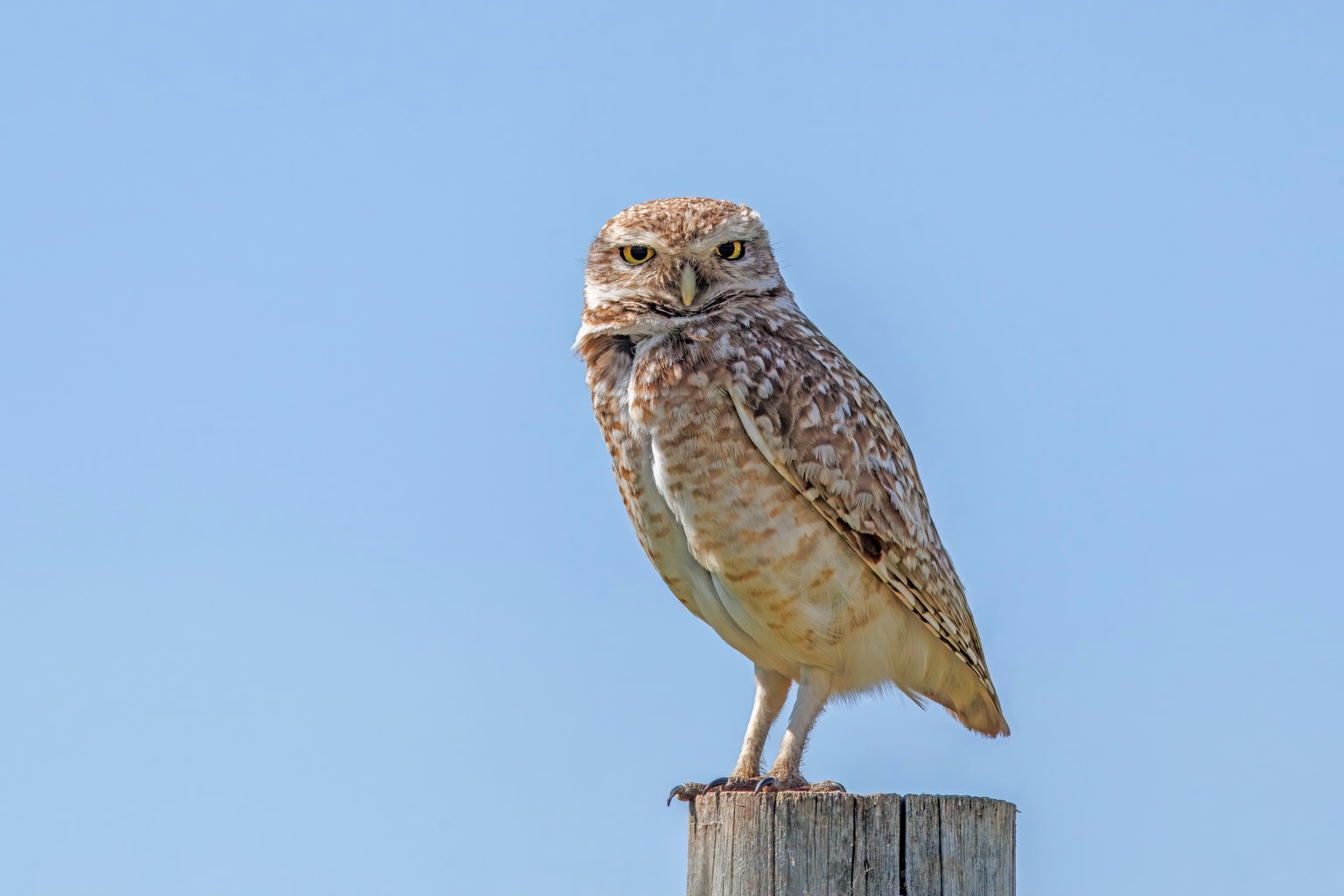
Prairie Owl
Grasslands, Rangelands, Agricultural Areas, Deserts, Open Dry Areas With Low Vegetation
North America, South America, Caribbean Islands
- Small size, 19–28 cm long
- Wingspan of 50.8–61 cm
- Weight of 140–240 g
- Longer legs than other owls
- Bright eyes, dark yellow or gray beaks
- Flattened facial disc, no ear tufts
- Prominent white eyebrows and a white chin patch
- Brown heads and wings with white spotting
- White chests and abdomens with variable brown spotting or barring
- Juveniles have buff wing bars and buff-colored breasts
Invertebrates, Small Vertebrates, Large Insects, Small Rodents, Birds, Reptiles, Amphibians, Fruits, Seeds
Waiting on a perch until prey is spotted, Swooping down on prey, Flying up to catch insects in flight, Chasing prey on foot across the ground
Termites, Katydids, Jerusalem Crickets, Crickets, Grasshoppers, Scarab Beetles, Scorpions, Spiders, Millipedes, Ground Beetles, Earthworms, Delicate Vesper Mouse, Tropical House Gecko, Eared Doves, Sparrows
- Habitat loss
- Control programs for prairie dogs and ground squirrels
- Vehicle strikes
- Predation by badgers, coyotes, snakes, cats, and dogs
- Urban development and construction
About Athene cunicularia
Burrowing Owl (Athene cunicularia)
The burrowing owl, scientifically known as Athene cunicularia, is a small, long-legged owl species native to the open landscapes of North and South America. It is typically found in grasslands, rangelands, agricultural areas, deserts, and any other open, dry region with low vegetation. Unlike most owls, burrowing owls are often active during the day, though they tend to avoid the heat of midday, and are primarily crepuscular hunters, utilizing their excellent vision and hearing during dawn and dusk.
Physical Characteristics and Adaptations
Burrowing owls are characterized by their bright eyes, flattened facial discs, and lack of ear tufts. They possess prominent white eyebrows and a white chin patch that they display during certain behaviors. Their plumage is generally brown with white spotting on the head and wings, and their chests and abdomens are white with variable brown spotting or barring. A key adaptation for their terrestrial lifestyle is their longer legs compared to other owl species, which aids in sprinting to pursue prey and provides momentum for short flights. They measure between 19–28 cm in length with a wingspan of 50.8–61 cm and weigh between 140–240 grams. Males and females are similar in size and appearance, exhibiting little sexual dimorphism, though males may appear lighter due to sun-bleaching from spending more time outdoors.
Habitat and Behavior
These owls are not flightless but prefer to nest and roost in burrows, which they typically do not excavate themselves, instead repurposing abandoned burrows of animals like American badgers, foxes, ground squirrels, or prairie dogs. Their habitat preference for open grasslands and prairie ecosystems, rather than dense forests, has driven the evolution of their longer legs. Burrowing owls exhibit a unique defensive behavior, mimicking rattlesnake sounds when threatened, a strategy believed to deter predators.
Diet and Hunting
The diet of the burrowing owl is highly variable, consisting of approximately one-third invertebrates and two-thirds small vertebrates. They primarily consume large insects and small rodents, but also prey on birds, reptiles, and amphibians. Notably, they are also known to eat fruits and seeds, a trait uncommon among owls. Their hunting techniques involve waiting on a perch until prey is spotted, then swooping down or flying to catch insects in flight, and sometimes chasing prey on foot.
Reproduction and Life Cycle
The nesting season begins in late March or April in North America, with pairs often nesting in loose colonies. The female lays between four to 12 eggs, which she incubates for 3–4 weeks while the male provides food. Both parents care for the chicks after hatching, and the young owls typically begin short flights and leave the nest burrow about four weeks after hatching, continuing to be fed by their parents for another 1–3 months. Burrowing owls can live for at least 9 years in the wild and over 10 years in captivity.
Distribution and Conservation
Burrowing owls are found across much of North and South America, with migratory populations breeding in Canada and the northern U.S. and wintering in Mexico and the southern U.S. While they are common and widespread in many Neotropical countries, certain populations face significant threats. They are endangered in Canada and threatened in Mexico, and are listed as a species of special concern in California. Major threats include habitat loss, eradication programs targeting burrowing animals that create their homes, and anthropogenic impacts like vehicle strikes and urbanization. Despite these challenges, they are listed as Least Concern by the IUCN globally, and are protected under the Migratory Bird Treaty Act in Canada, the United States, and Mexico.
Source: Wikipedia ↗
Frequently Asked Questions
What makes burrowing owls distinctive from other owls?
Burrowing owls are distinctive due to their small size, long legs, and terrestrial lifestyle. Unlike many other owl species, they are often active during the day and nest in existing burrows rather than excavating their own.
Where do burrowing owls typically live?
They inhabit open landscapes such as grasslands, rangelands, deserts, and agricultural areas across North and South America. They prefer open, dry environments with low vegetation where they can find suitable burrows.
What do burrowing owls eat?
Their diet is varied and includes invertebrates and small vertebrates. They primarily consume large insects and small rodents, but also prey on birds, reptiles, and amphibians. Interestingly, they also eat fruits and seeds.
How do burrowing owls protect themselves?
When threatened, burrowing owls retreat into their burrows and produce rattling and hissing sounds, mimicking those of a rattlesnake. This behavior is believed to deter predators that are familiar with the dangers posed by rattlesnakes.
Are burrowing owls endangered?
The conservation status of burrowing owls varies by region. They are listed as endangered in Canada and threatened in Mexico, but are considered Least Concern globally by the IUCN. However, certain populations, like the western burrowing owl in California, are facing specific threats and have had listing petitions submitted.
Related Raptor species
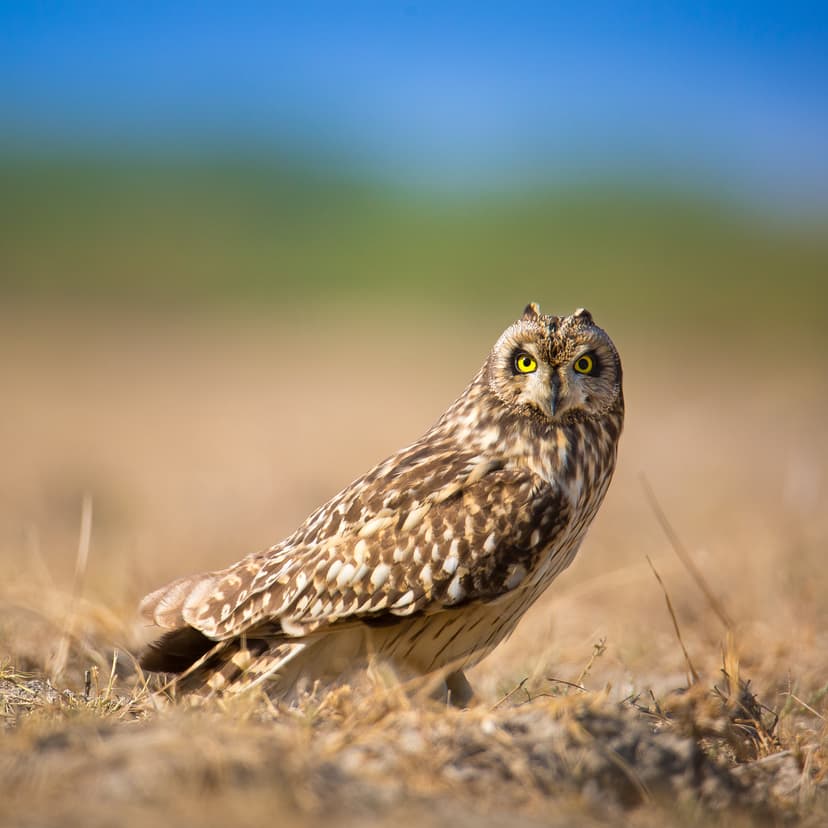
Asio flammeus
The short-eared owl (Asio flammeus) is a widely distributed grassland owl belonging to the Strigidae family. Known for its distinctive feather tufts resembling ears, which are usually not visible but can be displayed when threatened, this medium-sized owl hunts primarily rodents in open country and grasslands across multiple continents.
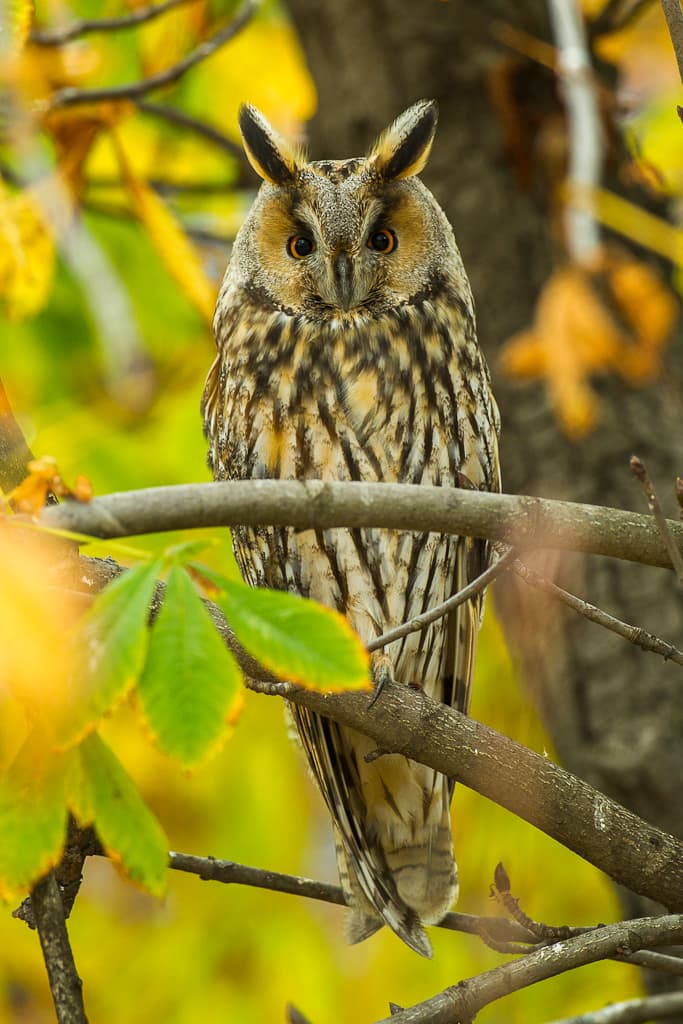
Asio otus
The long-eared owl (Asio otus) is a medium-sized owl found across Europe, the Palearctic, and North America. It is known for its prominent ear tufts, preference for woodland edges for roosting and nesting, and hunting over open ground. This species is a specialized predator of small rodents, particularly voles, and is considered of Least Concern by the IUCN.
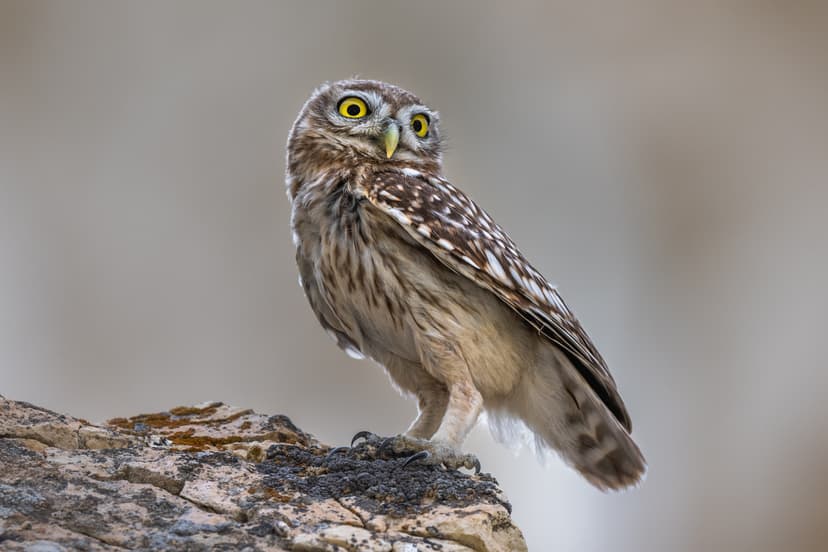
Athene noctua
The little owl (Athene noctua) is a small, cryptically colored bird found across temperate and warmer regions of Europe, Asia, and North Africa. It is a member of the true owl family (Strigidae) and is distinctive for its flat-topped head, prominent "eyebrows," and its association with wisdom in Greek and Roman mythology. This owl is primarily nocturnal but can be active during the day, inhabiting diverse environments from farmlands to semi-deserts.