
Asio flammeus
The short-eared owl (Asio flammeus) is a widely distributed grassland owl belonging to the Strigidae family. Known for its distinctive feather tufts resembling ears, which are usually not visible but can be displayed when threatened, this medium-sized owl hunts primarily rodents in open country and grasslands across multiple continents.
Key Facts
- ›Found in open country and grasslands across all continents except Antarctica and Australia.
- ›Characterized by short, usually invisible feather tufts, large eyes with black rings, and mottled tawny to brown plumage.
- ›Hunts primarily voles and other small rodents, but also consumes small mammals and occasionally birds and insects.
- ›Nests on the ground in concealed locations within its preferred habitats.
- ›Has a distinctive floppy flight due to irregular wingbeats, often described as moth or bat-like.
- ›Evaluated by the IUCN as a species of least concern due to its large population and extensive range.

Pueo, Hawaiian Short-Eared Owl
Grasslands, Open Country, Prairie, Tundra, Savanna, Meadows
North America, South America, Europe, Asia, Africa, Caribbean, Hawaii, GaláPagos Islands
- Medium-sized owl, 34–43 cm in length.
- Large eyes, big head, short neck, and broad wings.
- Plumage is mottled tawny to brown with a barred tail and wings.
- Upper breast is significantly streaked.
- Yellow-orange eyes encircled by black rings, giving a mascara-like appearance.
- Large, whitish facial disks resembling a mask.
- Short, strong, hooked black bill.
- Short ear tufts, usually not visible, but displayed when defensive.
- Females are slightly larger than males.
Rodents, Small Mammals, Smaller Birds, Insects
- Flies low over open fields and grasslands, swooping down feet-first on prey.
- Hunts during daylight, crepuscular periods, and primarily at night, often coinciding with prey activity.
Voles, Mice, Rabbits, Shrews, Shorebirds, Larks, Grasshoppers
About Asio flammeus
Short-eared Owl (Asio flammeus)
The short-eared owl, scientifically known as Asio flammeus, is a widely distributed owl species belonging to the Strigidae family. These owls are characterized by their ear tufts, though in Asio flammeus, these are very short and often not visible, only being displayed in defensive situations. They are medium-sized owls, measuring between 34–43 cm in length with wingspans ranging from 85 to 110 cm, and typically weigh between 206–475 g. Their plumage is a mottled tawny to brown, with distinctive streaking on the upper breast and barred tails and wings. A striking feature is their yellow-orange eyes, which are accentuated by black rings that give them a mascara-like appearance, framed by large, whitish facial disks.
Distribution and Habitat
Asio flammeus boasts one of the most extensive geographic distributions of any bird species, found on every continent except Antarctica and Australia. They breed across Europe, Asia, North and South America, the Caribbean, Hawaii, and the Galápagos Islands. Their preferred habitat consists of open country and grasslands, including prairies, tundras, savannas, and meadows. They are partially migratory, moving south from their northern ranges in winter and often relocating to areas with higher rodent populations or wandering nomadically when food supplies are low.
Behavior and Diet
Short-eared owls are known for their floppy, moth- or bat-like flight, attributed to their irregular wingbeats. While they can hunt at night, they are also diurnal and crepuscular, with daylight hunting often coinciding with the high activity periods of their primary prey: rodents, especially voles. Their diet also includes other small mammals such as rabbits and mice, and occasionally smaller birds and insects. They typically hunt by flying low over open fields and grasslands before swooping down feet-first on their prey. During breeding season, males perform elaborate aerial courtship displays to attract females. They generally form monogamous pairs.
Breeding and Nesting
The breeding season in the Northern Hemisphere generally spans from March to June, with a peak in April. During this time, these owls may gather in flocks. The short-eared owl constructs its nest on the ground, concealed by low vegetation within its grassland habitat. Nests are often lined with soft materials like grass or feathers. A typical clutch contains 4 to 7 white eggs, though this number can increase significantly in years with abundant voles. The female incubates the eggs for 21–37 days, and the young typically fledge at just over four weeks. A notable defensive behavior is the female's ability to feign a crippled wing to lure predators away from the nest.
Conservation Status
With an estimated global population of 1,200,000 to 2,100,000 individuals and a very large range, the short-eared owl is evaluated by the IUCN as a species of least concern. However, there are regional concerns, with the species listed as declining in the southern portion of its United States range and endangered in New Mexico. Its presence in certain areas, such as Long Island, has led to environmental assessments impacting significant development projects.
Source: Wikipedia ↗
Frequently Asked Questions
What is the scientific name for the short-eared owl?
The scientific name for the short-eared owl is Asio flammeus. It was first formally described in 1763 by Erik Pontoppidan. The genus name Asio refers to owls with ear tufts, and the specific epithet 'flammeus' is Latin for 'flame-coloured'.
What does the short-eared owl eat?
The short-eared owl's diet consists mainly of rodents, with voles being a preferred prey. It also eats other small mammals like rabbits, mice, shrews, and rats. Occasionally, they will prey on smaller birds, especially near coastal areas, and supplement their diet with insects.
Where are short-eared owls found?
Short-eared owls have one of the most widespread distributions of any bird, found on all continents except Antarctica and Australia. They breed in Europe, Asia, North and South America, the Caribbean, Hawaii, and the Galápagos Islands, favoring open country and grasslands.
How can I distinguish a short-eared owl from a long-eared owl?
Key differences include the short-eared owl's usually invisible ear tufts compared to the long-eared owl's noticeable ones. Iris color also differs, with short-eared owls having yellow eyes and long-eared owls often having orange. The facial markings and flight patterns also provide distinguishing characteristics, such as a white band on the rear edge of the short-eared owl's wing.
What is the conservation status of the short-eared owl?
The short-eared owl is considered a species of least concern by the IUCN due to its large global population and very wide range. However, it is listed as declining in parts of its United States range and endangered in New Mexico.
Related Raptor species
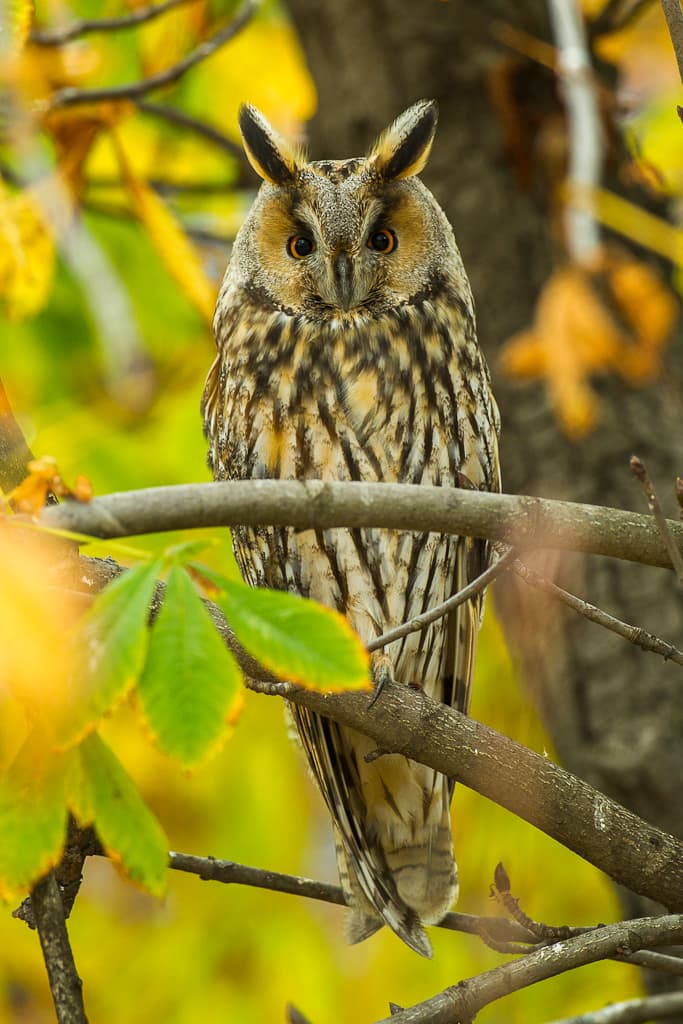
Asio otus
The long-eared owl (Asio otus) is a medium-sized owl found across Europe, the Palearctic, and North America. It is known for its prominent ear tufts, preference for woodland edges for roosting and nesting, and hunting over open ground. This species is a specialized predator of small rodents, particularly voles, and is considered of Least Concern by the IUCN.

Athene cunicularia
The burrowing owl (Athene cunicularia), also known as the prairie owl, is a small, long-legged owl species found in open landscapes across North and South America. Unlike most owls, they are often active during the day and are primarily terrestrial, nesting in burrows dug by other animals. Their distinctive features include bright eyes, lack of ear tufts, and longer legs adapted for their grassland and desert habitats.
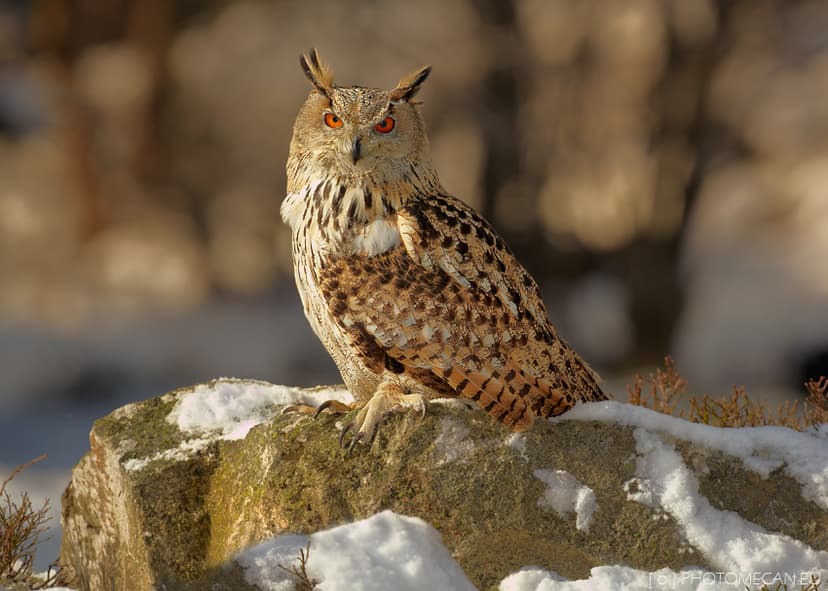
Bubo bubo
The Eurasian eagle-owl (Bubo bubo) is one of the largest owl species, recognized by its distinctive ear tufts and striking orange eyes. It inhabits a wide range of environments across Eurasia, from mountainous regions to forests and steppes. This powerful nocturnal predator is known for its impressive size and broad diet, playing a significant role in its ecosystem.