
Bubo bubo
The Eurasian eagle-owl (Bubo bubo) is one of the largest owl species, recognized by its distinctive ear tufts and striking orange eyes. It inhabits a wide range of environments across Eurasia, from mountainous regions to forests and steppes. This powerful nocturnal predator is known for its impressive size and broad diet, playing a significant role in its ecosystem.
Key Facts
- ›One of the largest owl species in the world.
- ›Possesses prominent ear tufts and large, orange eyes.
- ›Inhabits diverse environments including mountains, forests, and steppes across Eurasia.
- ›Primarily a nocturnal hunter, preying on mammals, birds, and occasionally reptiles and fish.
- ›Nests on cliff ledges, in gullies, or among rocks, laying 2-4 eggs.
- ›Listed as 'Least Concern' by the IUCN, though its population trend is decreasing.
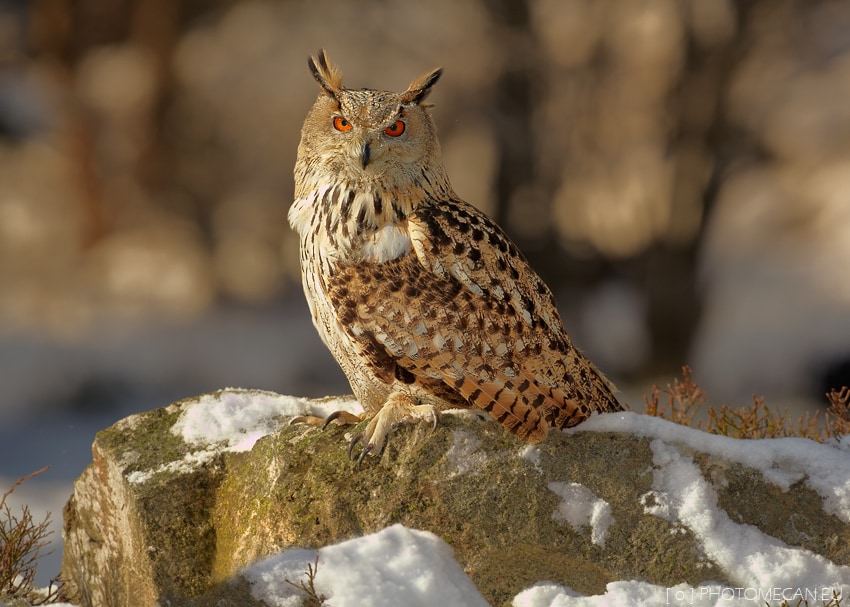
Eagle-Owl, Eurasian Eagle Owl
Mountainous Regions, Rocky Areas, Woodland Edges, Shrubby Areas With Openings, Wetlands, Coniferous Forests, Steppes, Farmland, Park-Like Settings
Europe, Asia
- Large size, one of the largest owl species.
- Distinctive ear tufts.
- Large, orange eyes.
- Upper parts mottled with darker blackish and tawny colors.
- Wings and tail are barred.
- Underparts are buff streaked with darker coloring.
- Females are larger than males.
- Plumage coloration is variable among subspecies.
Small Mammals, Birds, Larger Mammals, Reptiles, Amphibians, Fish, Large Insects, Invertebrates
Rodents, Rabbits, Birds, Mammals, Fish
Population Trend Is Decreasing
About Bubo bubo
Eurasian Eagle-Owl (Bubo bubo)
The Eurasian eagle-owl, scientifically known as Bubo bubo, is one of the largest and most widely distributed owl species found across Eurasia. This imposing bird of prey is characterized by its prominent ear tufts, which give it a distinctive appearance, and its large, piercing orange eyes.
Habitat and Distribution
Eurasian eagle-owls inhabit a diverse array of environments, demonstrating remarkable adaptability. They are predominantly found in mountainous and rocky areas, often in proximity to woodland edges, shrubby regions with open spaces, or wetlands. Their range also extends to coniferous forests, steppes, and more remote landscapes. Occasionally, they venture into agricultural lands and even park-like settings within European and Asian cities, though their presence in busy urban centers is rare.
Physical Characteristics and Diet
As one of the largest owls, the Eurasian eagle-owl possesses a robust build. Females are generally larger than males, with a total length that can reach up to 75 cm and a wingspan of nearly two meters. Their plumage typically features mottled patterns of dark blackish and tawny colors on the upper parts, with barred wings and tail, and streaked underparts. The facial disc is not strongly defined, and their most striking feature remains their large, orange irises. These owls are primarily nocturnal predators, with a broad diet that includes small mammals such as rodents and rabbits, as well as birds and larger mammals. Their diet can also extend to reptiles, amphibians, fish, and large insects.
Reproduction and Conservation
The nesting habits of the Eurasian eagle-owl involve utilizing concealed locations such as cliff ledges, gullies, or among rocks. They typically lay a clutch of 2 to 4 eggs, which hatch at different times due to being laid at intervals. The female incubates the eggs and broods the young, while the male provides food for the family. Both parents offer extended care for the nestlings for approximately five months. Despite its wide distribution and large population, estimated to be between 100,000 and 500,000 individuals, the IUCN lists the Eurasian eagle-owl's conservation status as 'Least Concern', though its population trend is observed to be decreasing.
Source: Wikipedia ↗
Frequently Asked Questions
What are the most distinctive features of the Eurasian eagle-owl?
The Eurasian eagle-owl is easily identified by its large size, prominent ear tufts that resemble horns, and its large, bright orange eyes. Its plumage is typically mottled with dark blackish and tawny colors, with barred wings and tail, and streaked underparts.
Where does the Eurasian eagle-owl live?
This species has a vast geographic distribution across Europe and Asia. It prefers mountainous and rocky areas, often near woodland edges, shrubby areas with openings, or wetlands. They can also be found in coniferous forests, steppes, and sometimes in farmland or park-like settings within cities.
What does the Eurasian eagle-owl eat?
The Eurasian eagle-owl is a versatile predator that hunts primarily at night. Its diet consists mainly of small mammals like rodents and rabbits, but it also preys on birds and larger mammals. Secondary food sources include reptiles, amphibians, fish, and large insects.
How large is a Eurasian eagle-owl?
Eurasian eagle-owls are substantial birds. Females can reach a total length of up to 75 cm (30 inches) with a wingspan of 188 cm (6 feet 2 inches), while males are slightly smaller. They can weigh between 1.2 to 4.6 kg (2.6 to 10.1 lb) depending on sex and subspecies.
What is the conservation status of the Eurasian eagle-owl?
The International Union for Conservation of Nature (IUCN) lists the Eurasian eagle-owl as 'Least Concern'. However, the species' population trend is noted as decreasing, indicating a need for continued monitoring.
Related Raptor species
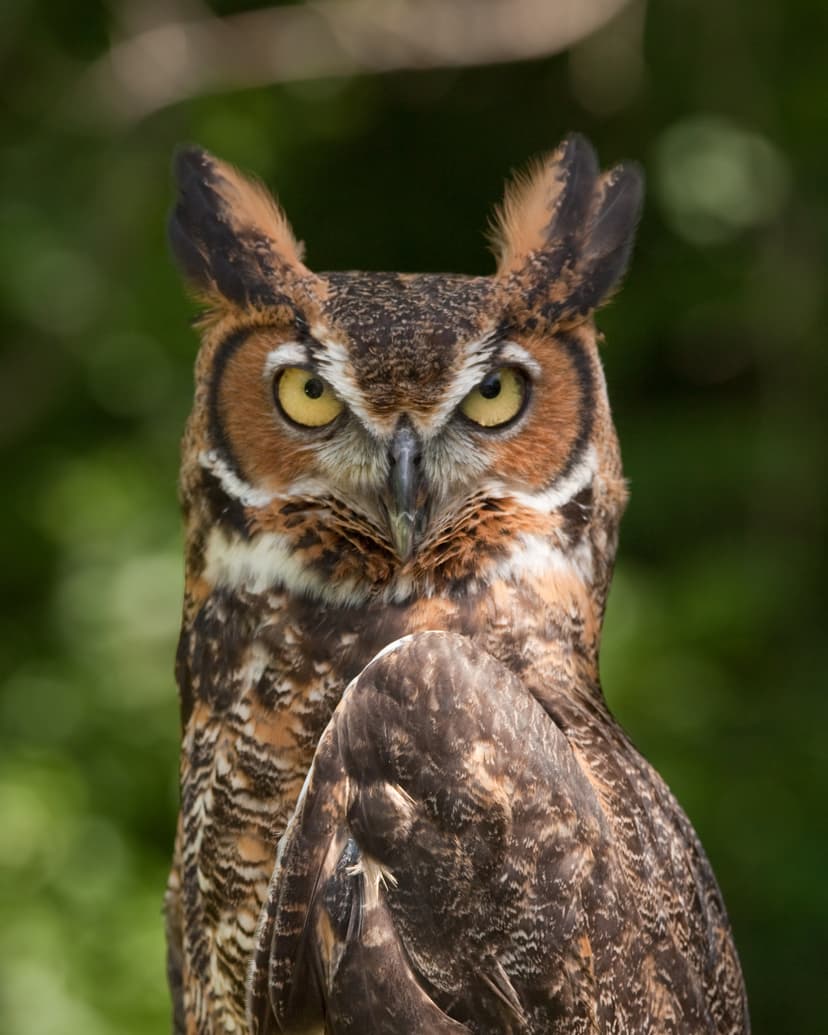
Bubo virginianus
The great horned owl (Bubo virginianus), also known as the tiger owl or hoot owl, is a large, highly adaptable owl native to the Americas. It is the most widely distributed true owl on the continent, known for its distinctive "horns" (ear tufts) and powerful hunting abilities across diverse habitats.
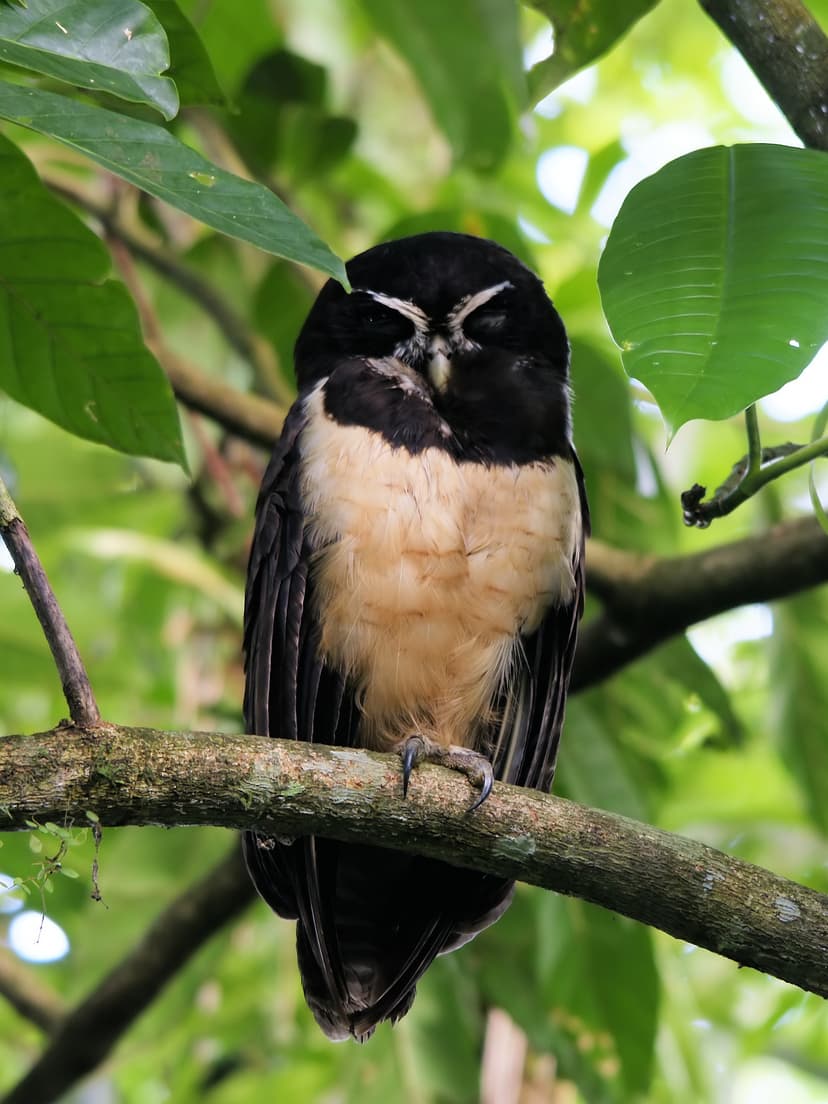
Pulsatrix perspicillata
The spectacled owl (Pulsatrix perspicillata), also known as Murucututu, is a large tropical owl native to the Neotropics. It is characterized by its distinctive white facial markings, yellow eyes, and blackish-brown upperparts. This owl inhabits dense, old-growth tropical rainforests across a wide geographic range.
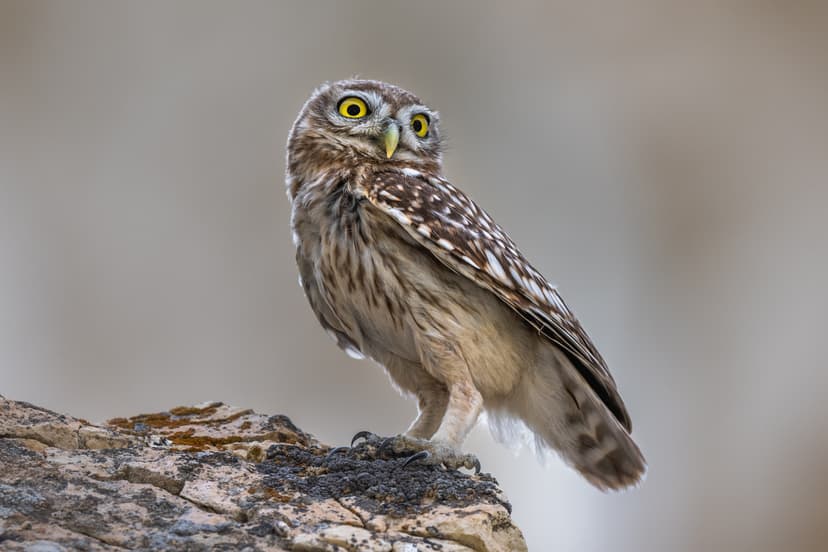
Athene noctua
The little owl (Athene noctua) is a small, cryptically colored bird found across temperate and warmer regions of Europe, Asia, and North Africa. It is a member of the true owl family (Strigidae) and is distinctive for its flat-topped head, prominent "eyebrows," and its association with wisdom in Greek and Roman mythology. This owl is primarily nocturnal but can be active during the day, inhabiting diverse environments from farmlands to semi-deserts.