
Athene noctua
The little owl (Athene noctua) is a small, cryptically colored bird found across temperate and warmer regions of Europe, Asia, and North Africa. It is a member of the true owl family (Strigidae) and is distinctive for its flat-topped head, prominent "eyebrows," and its association with wisdom in Greek and Roman mythology. This owl is primarily nocturnal but can be active during the day, inhabiting diverse environments from farmlands to semi-deserts.
Key Facts
- ›Inhabits temperate and warmer parts of Europe, the Palearctic east to Korea, and North Africa.
- ›A small owl, approximately 22 cm long with a wingspan of 56 cm.
- ›Feeds on insects, earthworms, other invertebrates, and small vertebrates.
- ›Known for its association with wisdom in Greek and Roman mythology, symbolizing Athena and Minerva.
- ›A cavity nester, typically laying a clutch of three to five eggs in spring.
- ›Assessed by the IUCN as 'least concern' due to its wide range and large population.
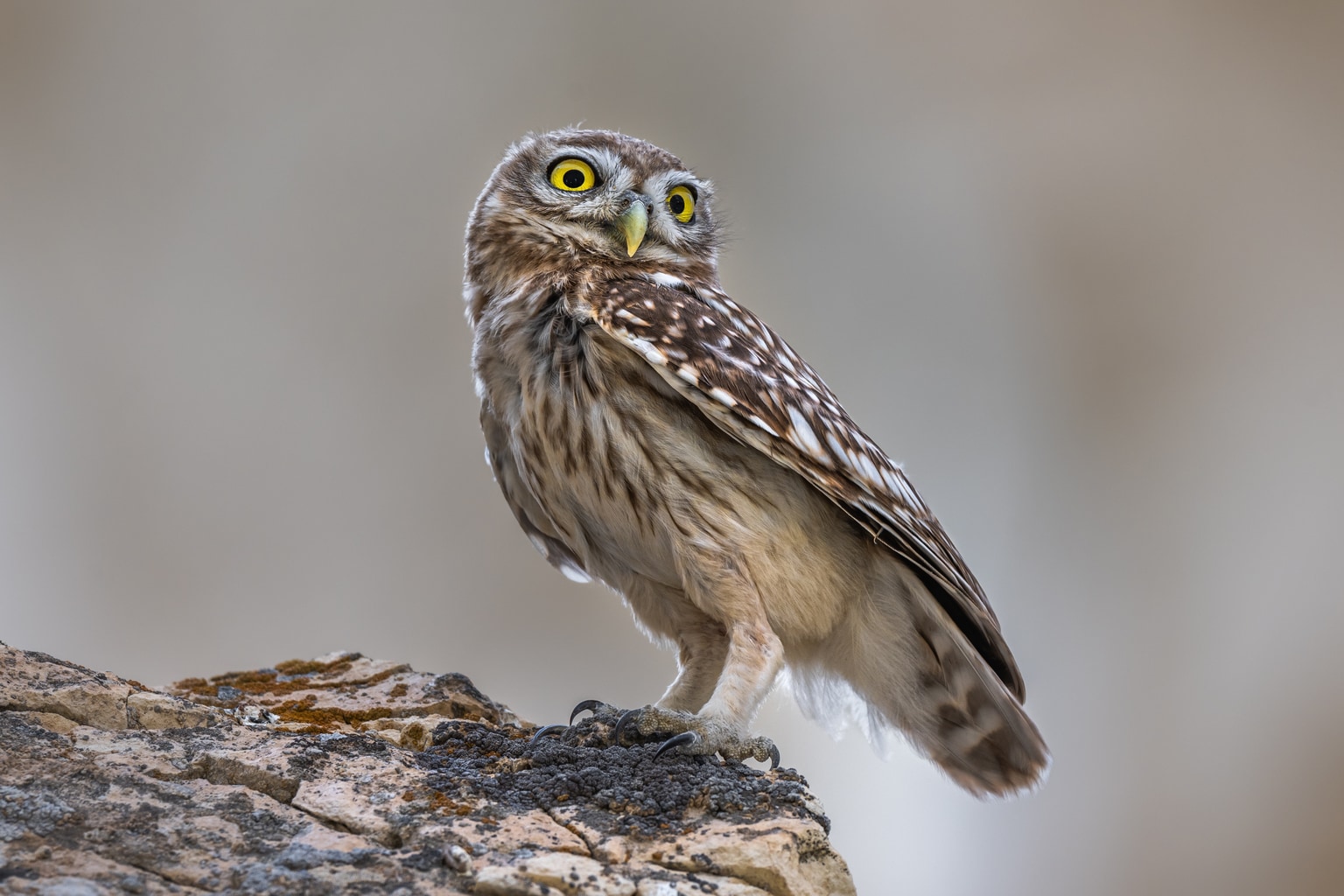
Owl of Athena, Owl of Minerva, Syrian Little Owl
- Farmland
- Woodland Fringes
- Steppes
- Semi-Deserts
- Agricultural Land With Hedgerows and Trees
- Orchards
- Parks and Gardens
- Stony Semi-Deserts
- Dunes
- Vicinity of Ruins, Quarries, and Rocky Outcrops
- Villages and Suburbs
Europe, North Africa, Asia, United Kingdom, New Zealand
- Small size, approximately 22 cm in length.
- Wingspan of about 56 cm for both sexes.
- Plump, compact body and a short tail.
- Flat-topped head with a flattened facial disc above the eyes.
- Greyish-brown plumage, spotted, streaked, and barred with white.
- Underparts are pale and streaked with darker colour.
- Yellow eyes.
- Distinctive white "eyebrows" giving a stern expression.
- Bounding flight, similar to a woodpecker.
Insects, Earthworms, Other Invertebrates, Small Vertebrates, Mice, Rats, Voles, Squirrels, Shrews, Moles, Rabbits, Birds, Vegetable Matter
Swooping Down From An Elevated Perch, Pursuit On the Ground, Caching Surplus Food
Insects, Earthworms, Mice, Voles, Small Birds, Amphibians, Reptiles
Severe Winters, Road Vehicles
About Athene noctua
Athene noctua: The Little Owl
The little owl, scientifically known as Athene noctua, is a small owl species widely distributed across the temperate and warmer regions of Europe, Asia, and North Africa. It is a member of the Strigidae family, commonly referred to as true owls. This species is recognizable by its compact size, approximately 22 cm in length with a 56 cm wingspan, its greyish-brown plumage mottled with white, and a characteristically flat head with prominent white "eyebrows" that lend it a stern expression.
Habitat and Distribution
Athene noctua is a sedentary bird found in a diverse range of open habitats. These include agricultural land with hedgerows, woodland verges, steppes, stony semi-deserts, orchards, parks, gardens, and even areas with human activity such as villages and suburbs. Its range extends from the Iberian Peninsula and Denmark eastward to China and south to the Himalayas, with introductions in the United Kingdom and New Zealand.
Diet and Behavior
Primarily a nocturnal hunter, the little owl also exhibits diurnal activity, often perching prominently during the day. Its diet consists mainly of insects and earthworms, supplemented by small vertebrates like amphibians, reptiles, birds, and mammals such as mice and voles. The owl hunts by perching in an elevated position and swooping down on prey, sometimes pursuing them on the ground. It also caches surplus food.
Reproduction
The breeding season begins in late spring, marked by increased vocalizations. Nests are typically located in cavities, such as holes in trees, cliffs, old buildings, or rabbit burrows. The female incubates a clutch of three to five white eggs for about 29 days, while the male provides food. The young hatch with a duller plumage and leave the nest around seven weeks after hatching, capable of flight a week or two later.
Conservation and Cultural Significance
The little owl is assessed as "least concern" by the IUCN due to its extensive range and a large, stable population. Historically, the species is deeply associated with wisdom, being a symbol of the Greek goddess Athena and the Roman goddess Minerva. Representations of the little owl appear on ancient Greek coinage and in classical art. Despite some historical persecution due to misconceptions about its diet, studies have shown it primarily preys on invertebrates and small mammals, posing little threat to game birds.
Source: Wikipedia ↗
Frequently Asked Questions
What is the scientific name of the little owl?
The scientific name of the little owl is Athene noctua. It was formally described in 1769 by Giovanni Antonio Scopoli under the binomial name Strix noctua, and later placed in the genus Athene by Friedrich Boie in 1822.
Where does the little owl live?
The little owl is widespread across Europe, Asia, and North Africa, ranging from the Iberian Peninsula and Denmark eastwards to China and southwards to the Himalayas. It has also been introduced to Britain and New Zealand.
What does the little owl eat?
The little owl's diet consists mainly of insects and earthworms, but it also consumes other invertebrates and small vertebrates such as amphibians, reptiles, birds, and mammals like mice and voles.
What are the distinctive physical characteristics of the little owl?
The little owl is a small owl with a flat-topped head, a plump body, and a short tail. It has a greyish-brown plumage spotted and streaked with white, yellow eyes, and white "eyebrows" that give it a stern appearance.
What is the conservation status of the little owl?
The little owl is listed as 'least concern' by the International Union for Conservation of Nature. This assessment is due to its extremely large range, a large total population, and a stable population trend.
How does the little owl hunt?
The little owl typically perches in an elevated position and swoops down on small creatures it notices. It may also pursue prey on the ground and caches surplus food in hiding places.
Related Raptor species
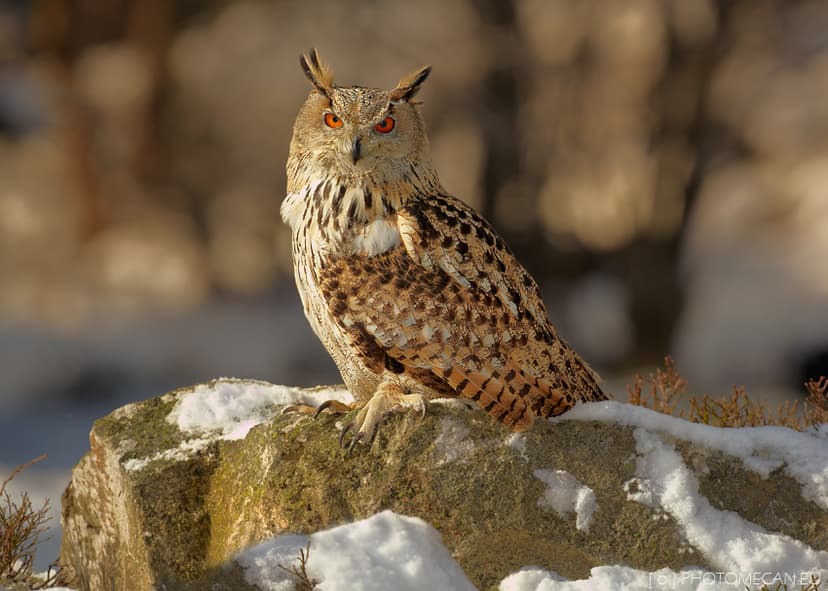
Bubo bubo
The Eurasian eagle-owl (Bubo bubo) is one of the largest owl species, recognized by its distinctive ear tufts and striking orange eyes. It inhabits a wide range of environments across Eurasia, from mountainous regions to forests and steppes. This powerful nocturnal predator is known for its impressive size and broad diet, playing a significant role in its ecosystem.
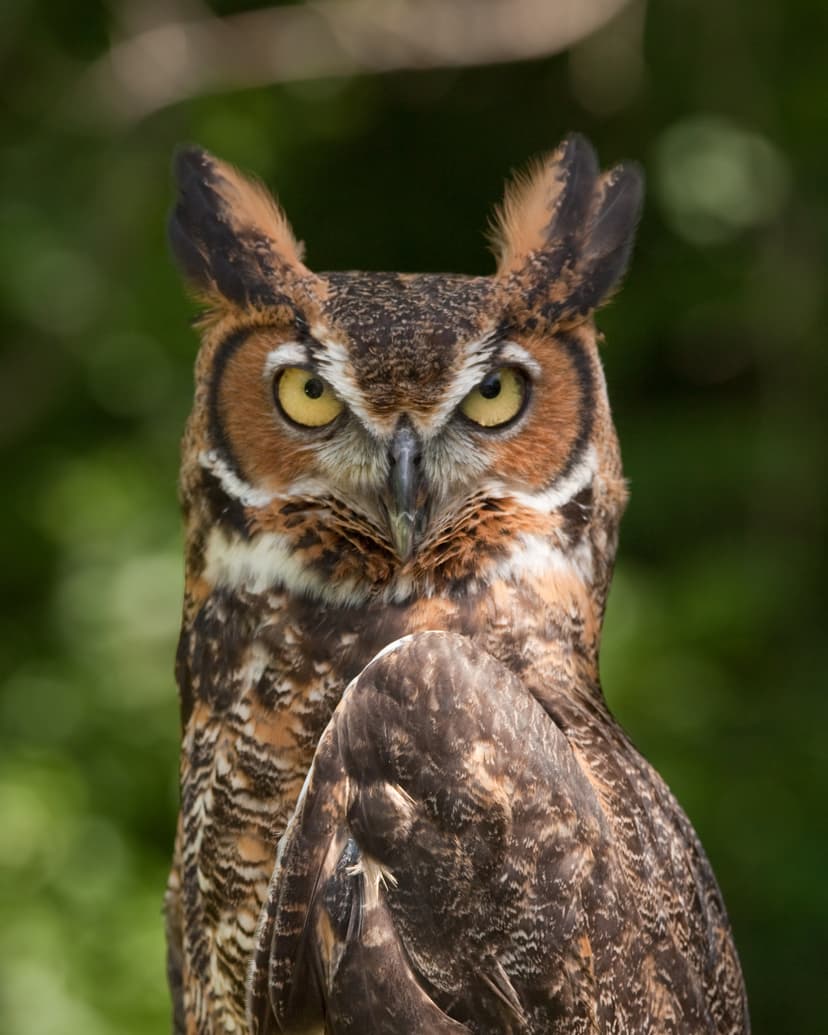
Bubo virginianus
The great horned owl (Bubo virginianus), also known as the tiger owl or hoot owl, is a large, highly adaptable owl native to the Americas. It is the most widely distributed true owl on the continent, known for its distinctive "horns" (ear tufts) and powerful hunting abilities across diverse habitats.
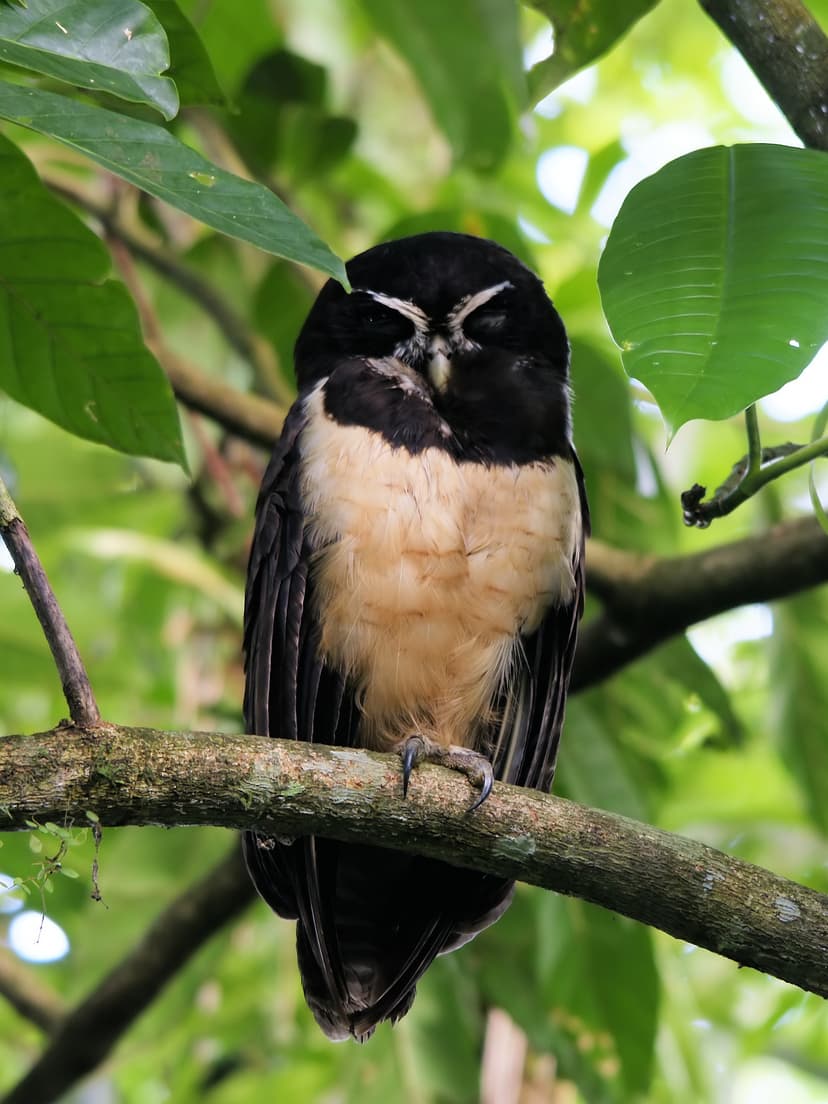
Pulsatrix perspicillata
The spectacled owl (Pulsatrix perspicillata), also known as Murucututu, is a large tropical owl native to the Neotropics. It is characterized by its distinctive white facial markings, yellow eyes, and blackish-brown upperparts. This owl inhabits dense, old-growth tropical rainforests across a wide geographic range.