
Bubo virginianus
The great horned owl (Bubo virginianus), also known as the tiger owl or hoot owl, is a large, highly adaptable owl native to the Americas. It is the most widely distributed true owl on the continent, known for its distinctive "horns" (ear tufts) and powerful hunting abilities across diverse habitats.
Key Facts
- ›It is the most widely distributed true owl in the Americas.
- ›Its diet is varied, including rabbits, hares, rodents, and even skunks.
- ›Great horned owls are among the earliest nesting birds in North America.
- ›They possess exceptionally powerful talons, capable of exerting significant crushing force.
- ›Their asymmetrical ear openings aid in precise prey location in the dark.
- ›The "horns" are feather tufts, not actual ears, and likely play a role in social interactions.
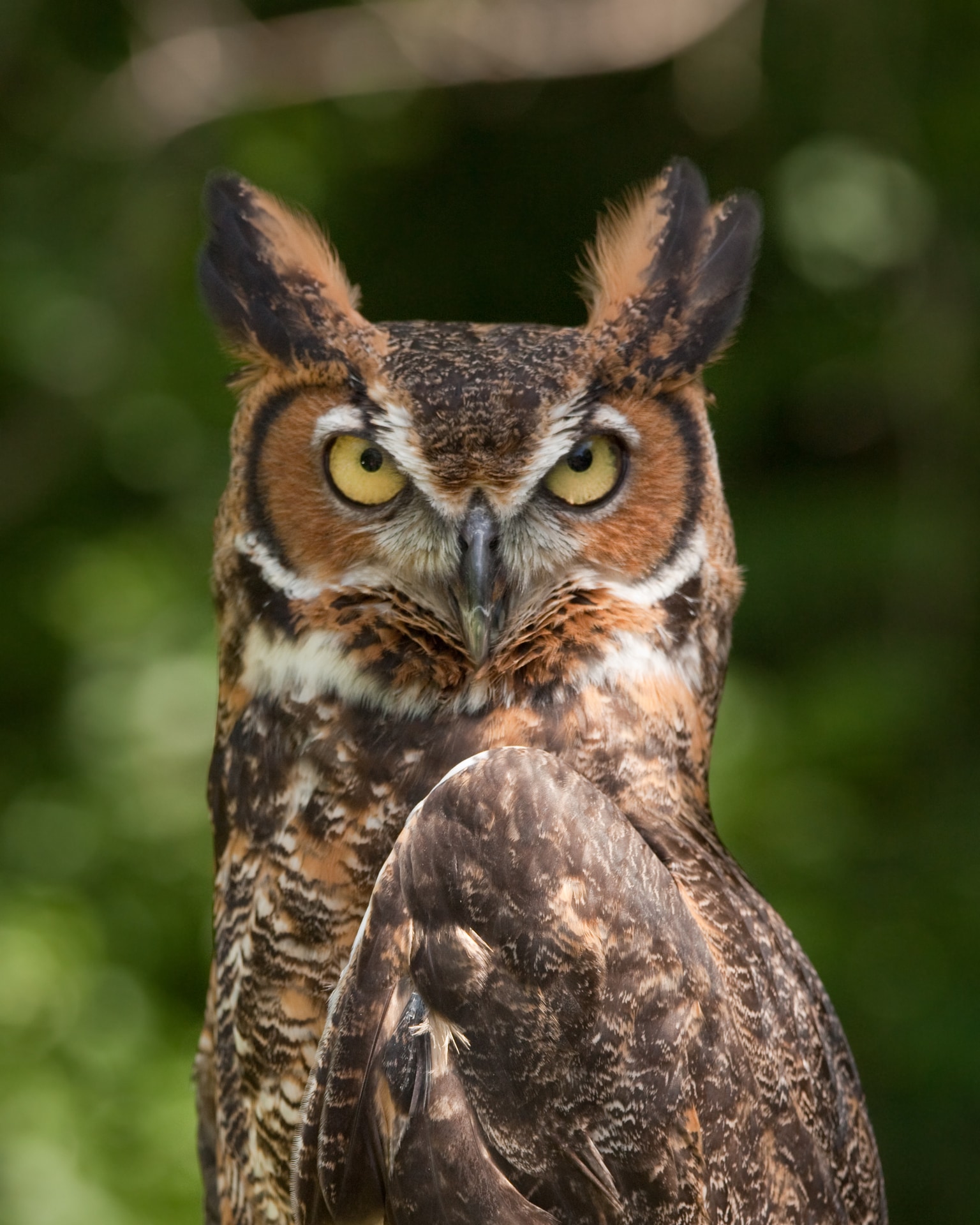
Tiger Owl, Hoot Owl
Forests, Grasslands, Deserts, Mountains, Urban Areas, Suburban Areas, Swamps, Cultivated Fields
North America, Central America, South America
- Large owl with a barrel-shaped body, large head, and broad wings.
- Plumage is generally colored for camouflage, mottled brown with barring on underparts.
- Possesses distinctive feather tufts on the head, known as plumicorns or "horns."
- Variable white patch on the throat.
- Large, powerful legs and talons.
- Eyes are large and adapted for nocturnal vision, with a yellow iris.
- Capable of silent flight due to specialized wing feather structure.
Rabbits, Hares, Rats, Mice, Voles, Skunks, Rodents, Mid-Sized Mammals, Birds, Reptiles, Amphibians, Invertebrates
Silent Flight, Ambush Hunting From Perches, Using Acute Hearing For Prey Location
Rabbits, Hares, Rats, Mice, Voles, Skunks
About Bubo virginianus
Great Horned Owl (Bubo virginianus)
The great horned owl, scientifically known as Bubo virginianus, is a large and exceptionally adaptable owl species found throughout the Americas. Often referred to as the tiger owl or hoot owl, it is the most widely distributed true owl on the continent, inhabiting a diverse range of environments from forests and grasslands to deserts and even urban areas.
Physical Characteristics and Adaptations
This powerful raptor is characterized by its robust build, large head, and broad wings, with a typical wingspan of around 122 cm (48 inches) and a weight averaging 1.6 kg (3.5 lbs) for females and 1.2 kg (2.7 lbs) for males. Its plumage is patterned for camouflage, typically mottled brown with darker barring on its underside. A distinctive feature is the prominent tufts of feathers on its head, known as plumicorns or "horns," which are believed to play a role in social signaling rather than hearing. The great horned owl possesses large eyes, finely tuned for nocturnal vision, and asymmetrical ear openings that enable precise triangulation of sounds, allowing it to locate prey with remarkable accuracy even in complete darkness. Its legs and talons are exceptionally strong, capable of exerting significant crushing force.
Diet and Hunting
The great horned owl is a formidable predator with a varied diet. Its primary prey includes rabbits, hares, rats, mice, and voles. However, its predatory range extends to larger mammals, birds, reptiles, amphibians, and invertebrates. Notably, it is one of the few raptors that regularly preys on skunks. Its hunting strategy often involves silent flight, allowing it to approach unsuspecting prey undetected before a swift strike.
Reproduction and Vocalizations
Great horned owls are among the earliest nesting birds in North America, frequently laying eggs weeks or even months before other raptorial species. They do not construct their own nests, instead utilizing abandoned nests of other birds or natural cavities. The species' vocalizations are distinctive, most commonly recognized by a resonant, low-pitched hooting call, often transcribed as "ho-ho-hoo hoo hoo." Females typically produce higher-pitched calls. Beyond this characteristic hoot, they can emit a surprising range of sounds, including chuckles, screeches, and growls, particularly when agitated or during courtship.
Distribution and Conservation
The great horned owl's adaptability has allowed it to thrive across a vast geographical range spanning North, Central, and South America. Its widespread distribution and ability to adapt to various habitats have contributed to its current conservation status of Least Concern.
Source: Wikipedia ↗
Frequently Asked Questions
What is the great horned owl's scientific name?
The scientific name of the great horned owl is Bubo virginianus. It was formally described by Johann Friedrich Gmelin in 1788.
What is the typical diet of a great horned owl?
The great horned owl has a diverse diet, primarily consisting of rabbits, hares, rats, mice, and voles. They are also known to hunt larger mammals, birds, reptiles, amphibians, and invertebrates, and are one of the few regular predators of skunks.
Where are great horned owls found?
Great horned owls are native to the Americas, with a vast range that makes them the most widely distributed true owl on the continent. They inhabit a wide variety of environments from the Arctic to South America.
What are the distinctive physical features of the great horned owl?
Key physical characteristics include their generally camouflaged plumage, which is mottled brown with barring on the underparts. They possess a variable white throat patch and prominent feather tufts on their heads, known as plumicorns or "horns." Their eyes are large and adapted for nocturnal vision, and their legs and talons are powerful.
How do great horned owls hunt?
Great horned owls are adept hunters, utilizing their silent flight, exceptional hearing, and keen eyesight. Their asymmetrical ear openings allow for precise sound triangulation, enabling them to locate prey even when hidden. They are known to ambush prey from perches.
Are great horned owls nocturnal?
Yes, great horned owls are primarily nocturnal, meaning they are most active during the night. Their physical adaptations, such as large eyes and asymmetrical ear openings, are well-suited for hunting in low-light conditions.
Related Raptor species
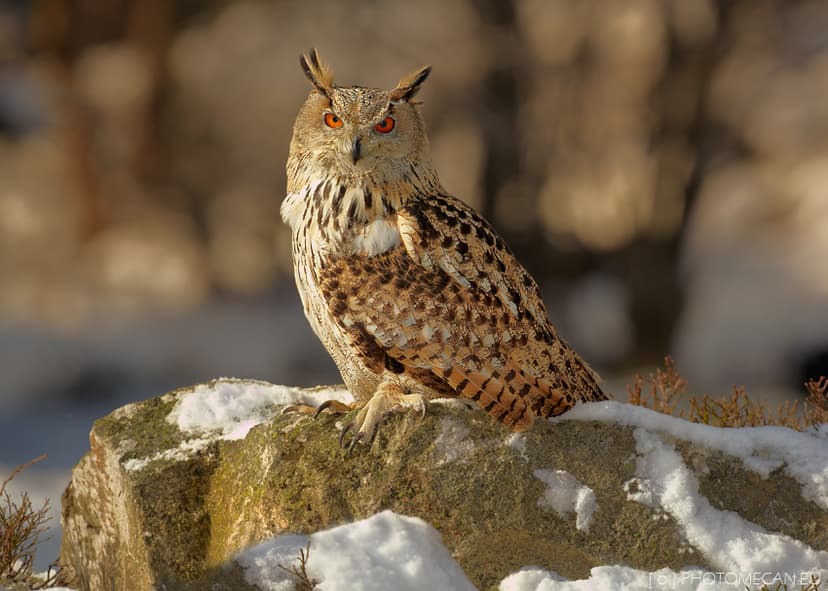
Bubo bubo
The Eurasian eagle-owl (Bubo bubo) is one of the largest owl species, recognized by its distinctive ear tufts and striking orange eyes. It inhabits a wide range of environments across Eurasia, from mountainous regions to forests and steppes. This powerful nocturnal predator is known for its impressive size and broad diet, playing a significant role in its ecosystem.
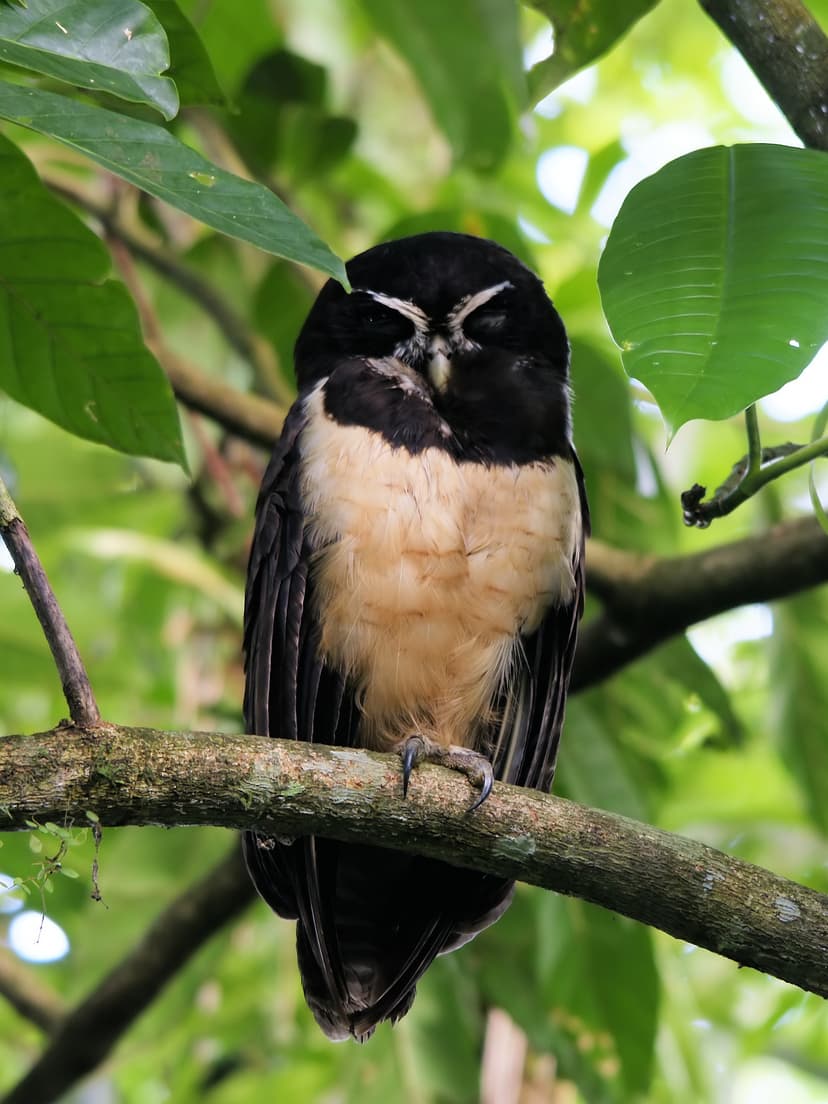
Pulsatrix perspicillata
The spectacled owl (Pulsatrix perspicillata), also known as Murucututu, is a large tropical owl native to the Neotropics. It is characterized by its distinctive white facial markings, yellow eyes, and blackish-brown upperparts. This owl inhabits dense, old-growth tropical rainforests across a wide geographic range.
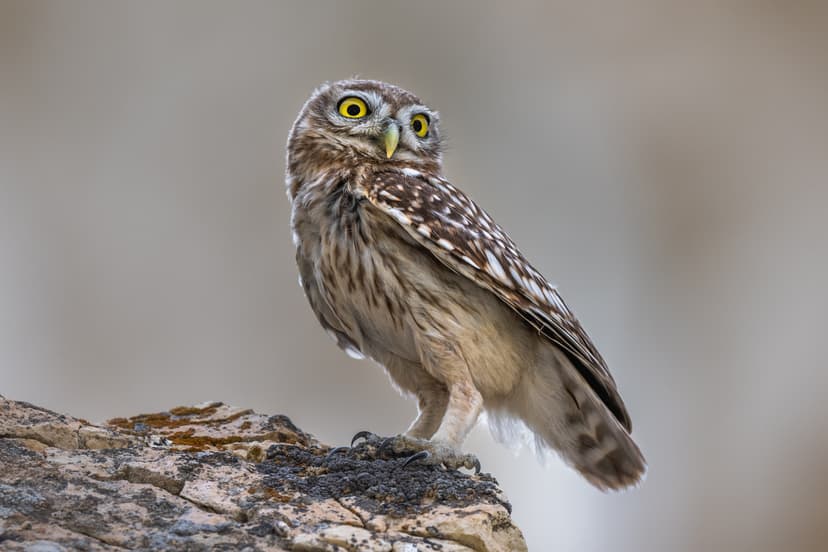
Athene noctua
The little owl (Athene noctua) is a small, cryptically colored bird found across temperate and warmer regions of Europe, Asia, and North Africa. It is a member of the true owl family (Strigidae) and is distinctive for its flat-topped head, prominent "eyebrows," and its association with wisdom in Greek and Roman mythology. This owl is primarily nocturnal but can be active during the day, inhabiting diverse environments from farmlands to semi-deserts.