
Pulsatrix perspicillata
The spectacled owl (Pulsatrix perspicillata), also known as Murucututu, is a large tropical owl native to the Neotropics. It is characterized by its distinctive white facial markings, yellow eyes, and blackish-brown upperparts. This owl inhabits dense, old-growth tropical rainforests across a wide geographic range.
Key Facts
- ›Found in tropical rainforests from southern Mexico to southern Brazil.
- ›Distinctive white facial markings and yellow eyes.
- ›Primarily nocturnal, with vocalizations described as guttural knocking or tapping.
- ›Preys on a wide variety of mammals, invertebrates, frogs, and birds.
- ›Nests in unlined tree cavities and lays 1-2 eggs.
- ›Classified as Least Concern by the IUCN due to its large range.
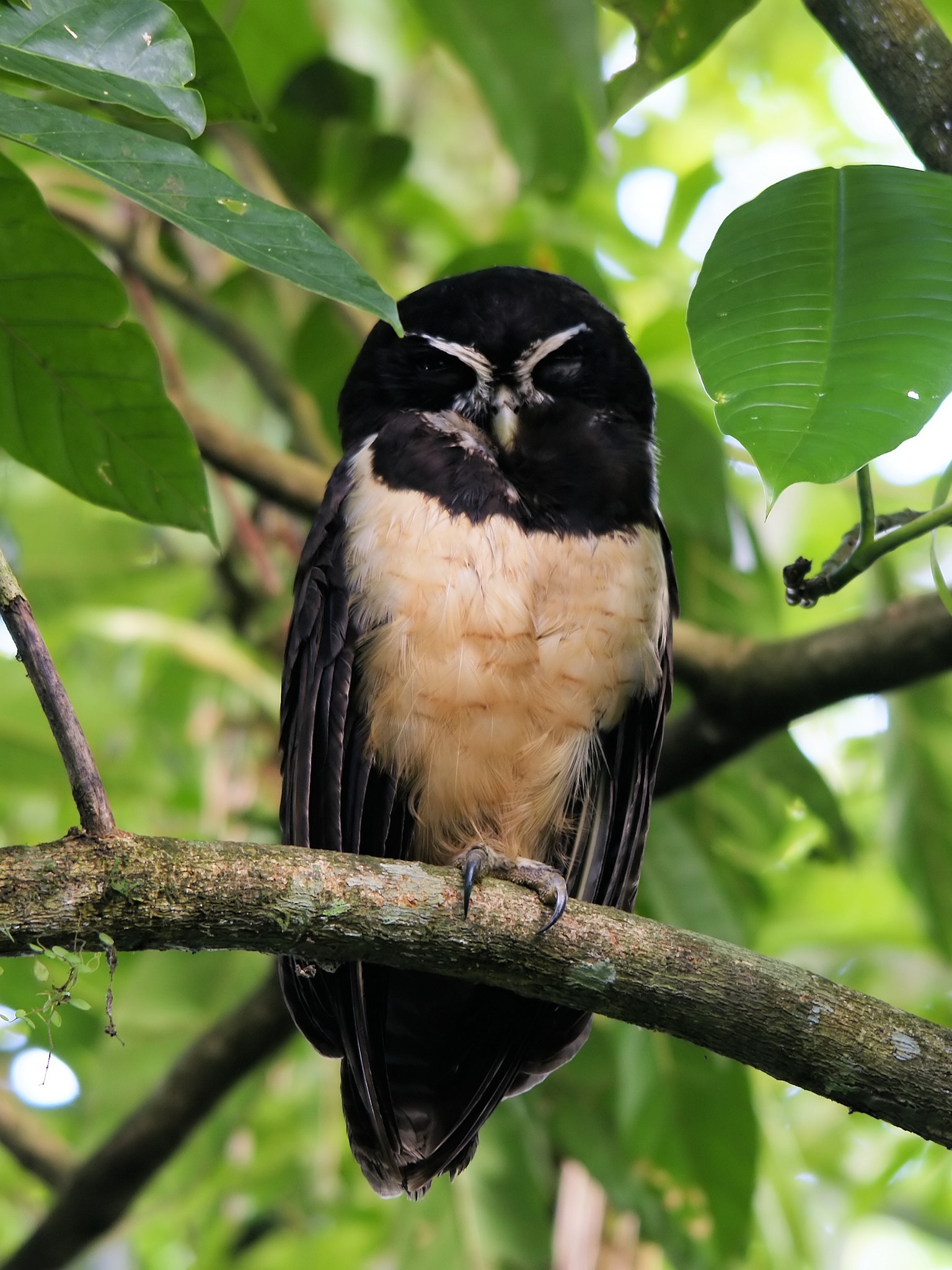
Murucututu, Short-Browed Owl, Brown-Spectacled Owl
Tropical Rainforests, Dense, Old-Growth Forest, Forest Edges, Secondary Habitats, Dry Forests, Treed Savanna Plains, Plantations, Semi-Open Areas With Trees, Subtropical Montane Cloud Forests
Mexico, Central America, Trinidad and Tobago, South America
- Large tropical owl
- 41 to 52.3 cm in length
- Males weigh 453 to 1,075 g
- Females weigh 680 to 1,250 g
- Blackish brown upperparts, head, and upper breast
- White facial markings
- Whitish to yellowish-ochre underparts
- Yellow eyes
- Pale beak
- Juveniles are completely white except for a chocolate brown facial disc
- Head typically darker than back and mantle
Mammals, Invertebrates, Frogs, Birds
Perched Scanning and Quick Pounce
Peters's Climbing Rat, Mouse Opossums, Greater Spear-Nosed Bats, Broad-Eared Bats, Tamarins, Didelphis Opossums, Mephitis Skunks, Agoutis, Three-Toed Sloth, Caterpillars, Jays, Oropendolas
Habitat Destruction, Prey Population Depletion, Automobile Collisions
About Pulsatrix perspicillata
Spectacled Owl (Pulsatrix perspicillata)
The spectacled owl, scientifically known as Pulsatrix perspicillata and also called Murucututu, is a large tropical owl native to the Neotropics. It is a resident breeder found in forests from southern Mexico and Trinidad, extending through Central America, and south to southern Brazil, Paraguay, and northwestern Argentina. This species is notable for its distinctive white facial markings that surround its yellow eyes, a feature unique among owls of the Pulsatrix genus.
Distribution and Habitat
The spectacled owl inhabits a wide range across Mexico, Central America, Trinidad and Tobago, and South America. Its primary habitat consists of dense, old-growth tropical rainforests, though it may also be found in secondary forests, forest edges, dry forests, treed savannas, plantations, and semi-open areas with trees. In some regions, like Costa Rica, they can inhabit subtropical montane cloud forests up to 1,500 meters, but they are generally associated with lowland forests.
Description and Vocalizations
Adult spectacled owls range from 41 to 52.3 cm in length, with males weighing between 453 to 1,075 g and females between 680 to 1,250 g. They possess blackish-brown upperparts, head, and upper breast, contrasted by white facial markings and whitish to yellowish-ochre underparts. Juveniles are striking, being entirely white except for a chocolate brown facial disc. The species is largely nocturnal, with vocal activity peaking on calm, moonlit nights. Their primary call is a series of guttural knocking or tapping sounds, often described as PUP-pup-pup-pup-po or POK pok pok bog bog bog bobobo. Females also emit a hawk-like scream, ker-WHEEER.
Behavior and Diet
The spectacled owl is a solitary and largely nocturnal hunter, typically commencing activity at dusk. It hunts by perching and scanning for prey before pouncing. Its diet is diverse, including a wide array of mammals such as rodents, bats, monkeys, and even sloths, sometimes weighing more than the owl itself. They also consume invertebrates like caterpillars and large insects, along with frogs and birds.
Reproduction
Breeding occurs in Costa Rica during the dry season (November–May) or early wet season (June–July). Spectacled owls nest in unlined tree cavities or tree crotches, laying one to two eggs that are incubated by the female for about five weeks. If two chicks hatch, usually only one survives. Young owls fledge around five to six weeks but remain dependent on parents for several months, potentially up to a year, which can affect breeding frequency.
Conservation Status
Classified as Least Concern by the IUCN, the spectacled owl benefits from its extensive range. However, it is a slow-maturing bird of prey that occurs at low densities. Local populations can decline due to prey depletion, habitat destruction, and human-related threats such as road collisions. The extinction of one subspecies on Trinidad is attributed to these pressures.
Source: Wikipedia ↗
Frequently Asked Questions
What is the spectacled owl's scientific name and common names?
The scientific name of the spectacled owl is Pulsatrix perspicillata. It is also commonly known as Murucututu. One subspecies is occasionally referred to as the short-browed or brown-spectacled owl.
Where is the spectacled owl found?
The spectacled owl is found in tropical rainforests across the Neotropics, ranging from southern Mexico and Trinidad, through Central America, down to southern Brazil, Paraguay, and northwestern Argentina.
What does a spectacled owl look like?
Spectacled owls have blackish-brown upperparts, head, and upper breast, with striking white facial markings and whitish to yellowish-ochre underparts. They are distinguished by their yellow eyes, which is unique among Pulsatrix owls. Juveniles are entirely white except for a chocolate brown facial disc.
What does the spectacled owl eat?
The spectacled owl has a diverse diet, primarily consisting of mammals such as rodents, mouse opossums, and even small monkeys and sloths. They also consume invertebrates like caterpillars and large insects, as well as frogs and birds.
What are the spectacled owl's nesting habits?
Spectacled owls typically nest in unlined tree cavities or the crotch of large trees, laying their eggs directly on the bare wood. They lay one to two eggs, incubated by the female, and young owls remain dependent on their parents for an extended period.
What is the conservation status of the spectacled owl?
The spectacled owl is classified as Least Concern by the IUCN. This is due to its extensive range and continued presence in many areas, although habitat destruction and prey depletion can negatively impact local populations.
Related Raptor species
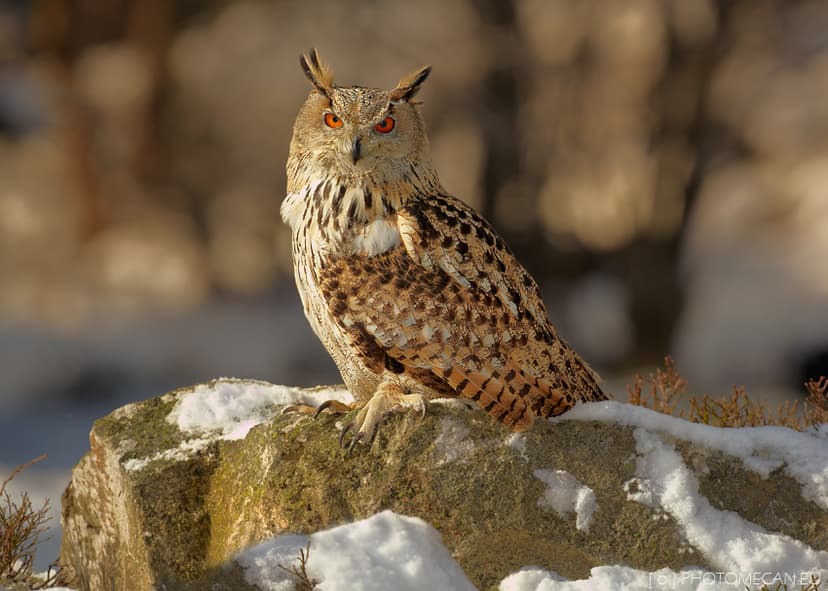
Bubo bubo
The Eurasian eagle-owl (Bubo bubo) is one of the largest owl species, recognized by its distinctive ear tufts and striking orange eyes. It inhabits a wide range of environments across Eurasia, from mountainous regions to forests and steppes. This powerful nocturnal predator is known for its impressive size and broad diet, playing a significant role in its ecosystem.
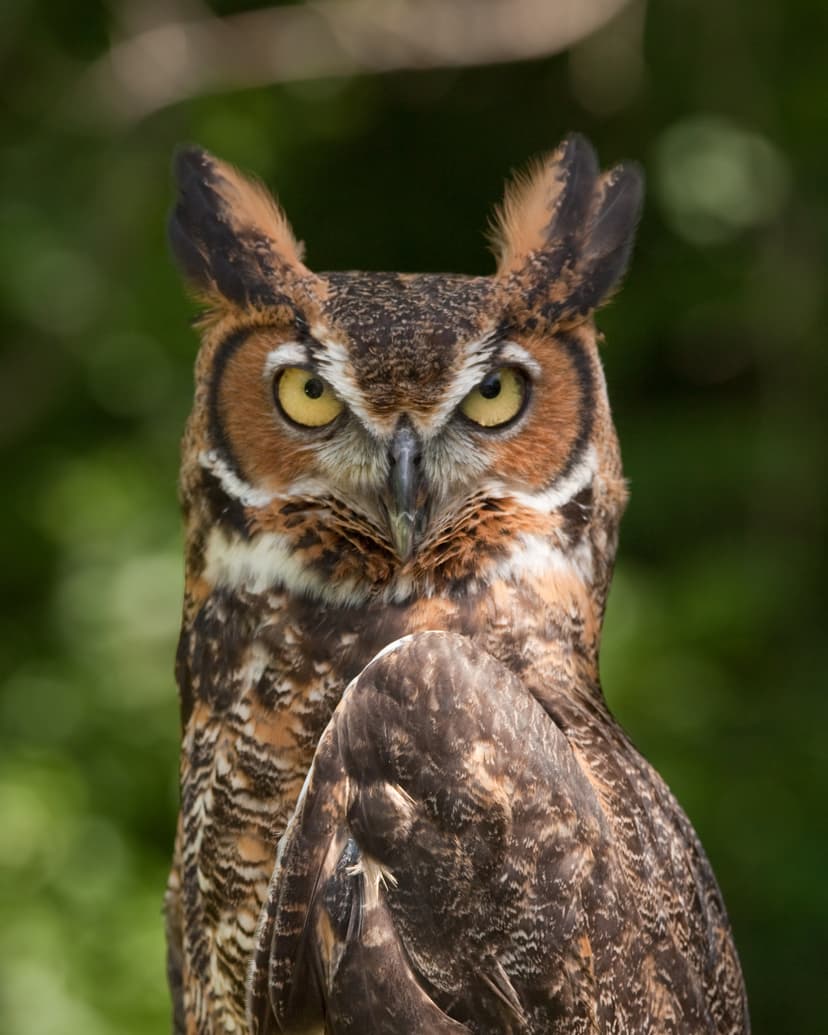
Bubo virginianus
The great horned owl (Bubo virginianus), also known as the tiger owl or hoot owl, is a large, highly adaptable owl native to the Americas. It is the most widely distributed true owl on the continent, known for its distinctive "horns" (ear tufts) and powerful hunting abilities across diverse habitats.
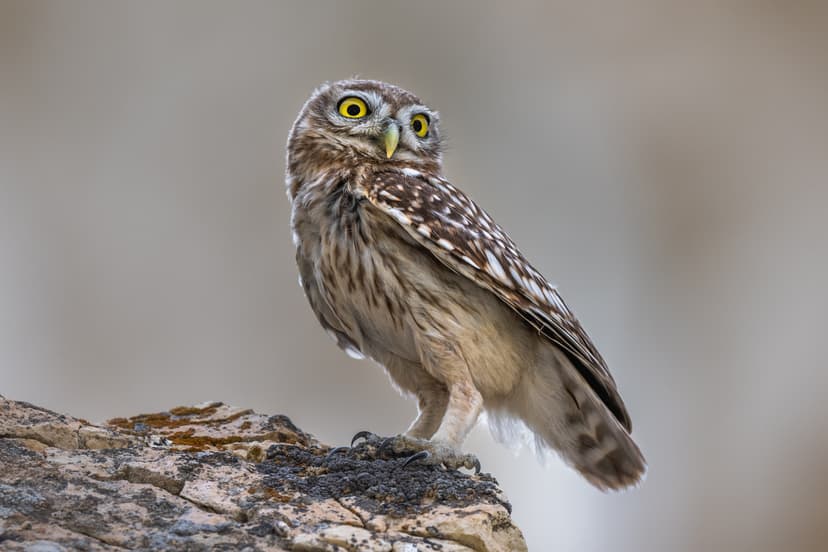
Athene noctua
The little owl (Athene noctua) is a small, cryptically colored bird found across temperate and warmer regions of Europe, Asia, and North Africa. It is a member of the true owl family (Strigidae) and is distinctive for its flat-topped head, prominent "eyebrows," and its association with wisdom in Greek and Roman mythology. This owl is primarily nocturnal but can be active during the day, inhabiting diverse environments from farmlands to semi-deserts.