
Bubo scandiacus
The snowy owl (Bubo scandiacus), also known as the polar owl, is a large, predominantly white owl native to the Arctic regions of North America and Eurasia. It is distinguished by its unique adaptations to its cold habitat, including largely white plumage, which is rarer in owls, and a tendency to be active during the day, particularly in summer.
Key Facts
- ›The snowy owl is one of the largest owl species and is unique among owls for its predominantly white plumage.
- ›Males are typically pure white, while females and juveniles have more extensive dark brown flecks and barring.
- ›Unlike most owls, snowy owls are often active during the day, especially in the summer months.
- ›Their population and breeding success are closely linked to the availability of lemmings, but they can adapt to other prey.
- ›Snowy owls are nomadic and migratory, sometimes irrupting in large numbers to southern regions.
- ›The species is currently experiencing a precipitous decline, with complex environmental factors likely contributing to its fragility.

Polar Owl, White Owl, Arctic Owl
Arctic Tundra, Open Plains
North America, Eurasia
- Large size, among the largest owls globally.
- Predominantly white plumage, unique among owls.
- Males are purer white; females and juveniles have dark brown flecks and barring.
- Bright yellow eyes.
- Thickly feathered white toes extending to the talons.
- Relatively small head with shallow facial disc.
- Conspicuously notched primaries.
- Flight can be audible at close range, less silent than many other owls.
Lemmings, Small Mammals, Water Birds, Carrion
- Hovering flight
- Steady and direct flight, reminiscent of a falcon
- Chasing avian prey with speed and agility
Lemmings, Small Rodents, Waterfowl
- Habitat Loss
- Environmental Factors Correlated With Global Warming
- Prey Availability Fluctuations
About Bubo scandiacus
Snowy Owl (Bubo scandiacus)
The snowy owl, scientific name Bubo scandiacus, is a striking large owl native to the Arctic regions of both North America and Eurasia. Known for its predominantly white plumage, a rare trait among owls, it is also called the polar owl, white owl, or Arctic owl. This species possesses unique adaptations for its harsh environment, including feathered feet and a tendency to be diurnal, especially during the Arctic summer, distinguishing it from many other owl species.
Habitat and Distribution
Snowy owls predominantly breed on the Arctic tundra and are found across the northern reaches of North America and Eurasia. They are nomadic and migratory birds, their movements often dictated by prey availability. These owls can unpredictably irrupt southward in large numbers, especially during winters with scarce food resources in their usual territories.
Diet and Hunting
While the availability of tundra-dwelling lemmings is closely tied to the snowy owl's breeding success and population levels, the species is also a capable generalist hunter. Outside of lemming abundance, they adapt by preying on other small mammals and northerly water birds, and opportunistically consume carrion. Their hunting techniques include hovering flight and direct pursuit, sometimes displaying considerable speed and agility.
Physical Characteristics and Reproduction
Adult males are typically pure white, while females and juveniles exhibit more extensive dark brown flecks and barring, which aids in aging and sexing individuals. They have bright yellow eyes and thickly feathered toes. Snowy owls nest on the ground, usually on a small rise on the tundra. They lay large clutches of eggs, often between five and eleven, with hatching occurring in a staggered manner.
Conservation Status
Historically, in-depth knowledge of the snowy owl's status was limited due to the challenges of surveying such an unpredictable and wide-ranging bird. However, more recent data from the 2010s and 2020s indicates a precipitous decline in their global population. While the exact causes are not fully understood, complex environmental factors, often correlated with global warming, are considered primary contributors to the fragility of the snowy owl's existence.
Source: Wikipedia ↗
Frequently Asked Questions
What are the main physical characteristics of a snowy owl?
Snowy owls are large owls with predominantly white plumage, bright yellow eyes, and thickly feathered white toes. Males are usually purer white, while females and juveniles tend to have more dark brown markings, particularly on their wings and underparts.
Where do snowy owls live?
Snowy owls are native to the Arctic regions of both North America and the Palearctic, primarily breeding on the tundra. They are nomadic and can migrate considerable distances, sometimes appearing in more southern areas.
What do snowy owls eat?
Their diet is specialized to tundra-dwelling lemmings, especially during the breeding season. However, they are adaptable generalist hunters and will also prey on other small mammals, water birds, and carrion when lemmings are scarce.
Are snowy owls nocturnal?
Unlike most owl species, snowy owls are often active during the day, a trait that is particularly pronounced during the Arctic summer. They hunt and forage during daylight hours, especially when prey is abundant.
What is the conservation status of the snowy owl?
Recent data suggests the snowy owl population is declining precipitously. While exact causes are not fully understood, complex environmental factors, potentially linked to global warming, are believed to be contributing to the species' fragility.
How do male and female snowy owls differ?
Mature males are usually a purer white, often with only a few dark spots. Females typically have more extensive dark brown flecking and barring on their plumage, especially on the underparts and wings, making them appear darker than males.
Related Raptor species
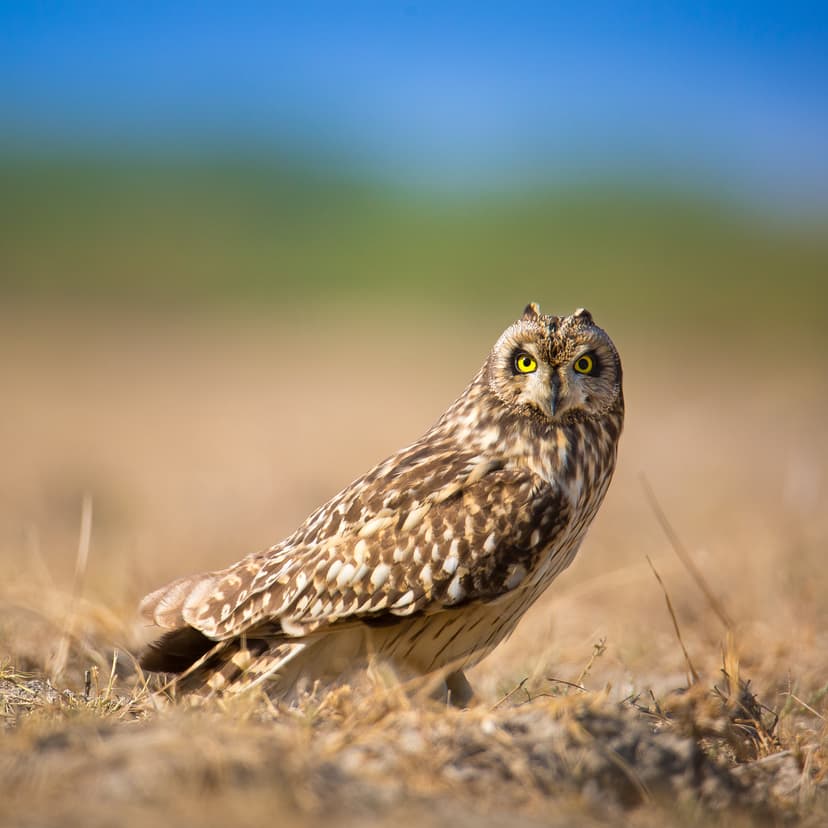
Asio flammeus
The short-eared owl (Asio flammeus) is a widely distributed grassland owl belonging to the Strigidae family. Known for its distinctive feather tufts resembling ears, which are usually not visible but can be displayed when threatened, this medium-sized owl hunts primarily rodents in open country and grasslands across multiple continents.
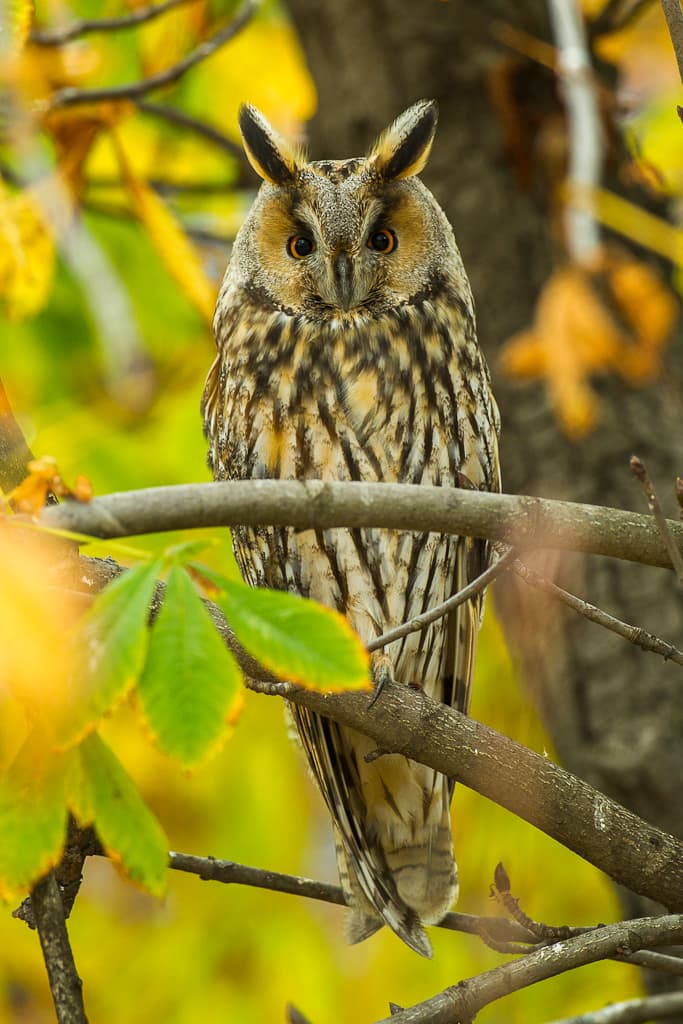
Asio otus
The long-eared owl (Asio otus) is a medium-sized owl found across Europe, the Palearctic, and North America. It is known for its prominent ear tufts, preference for woodland edges for roosting and nesting, and hunting over open ground. This species is a specialized predator of small rodents, particularly voles, and is considered of Least Concern by the IUCN.
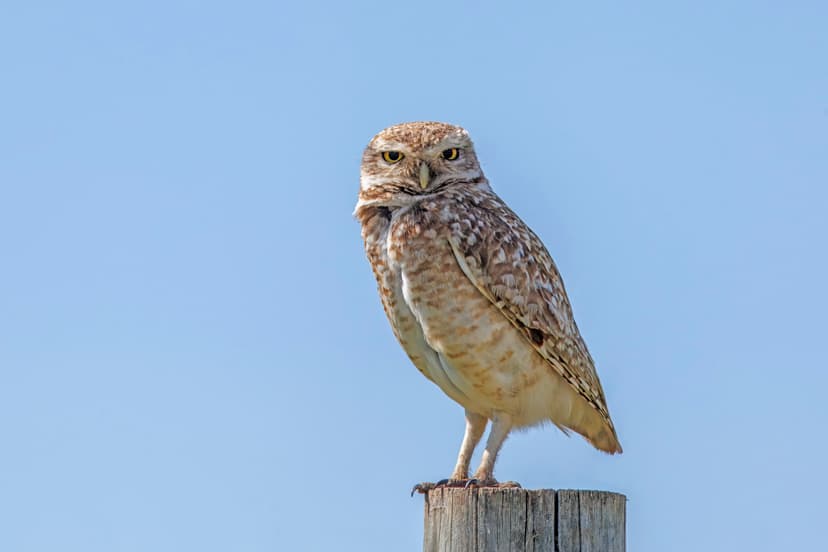
Athene cunicularia
The burrowing owl (Athene cunicularia), also known as the prairie owl, is a small, long-legged owl species found in open landscapes across North and South America. Unlike most owls, they are often active during the day and are primarily terrestrial, nesting in burrows dug by other animals. Their distinctive features include bright eyes, lack of ear tufts, and longer legs adapted for their grassland and desert habitats.