
Buteo lagopus
The rough-legged buzzard (Buteo lagopus), also known as the rough-legged hawk in North America, is a medium-large bird of prey found in arctic and subarctic regions. It is distinctive for its feathered legs, an adaptation to its cold environment, and its ability to hover regularly, a behavior uncommon among raptors of its size. This species undertakes significant seasonal migrations, moving south from its breeding grounds for the winter.
Key Facts
- ›Feathered legs are a distinctive adaptation for cold climates, reflected in its scientific name 'lagopus' meaning 'hare-foot'.
- ›It is one of the few raptors of its size capable of regularly hovering over prey.
- ›Primary diet consists of small mammals, particularly lemmings and voles, which can constitute up to 98% of their food intake.
- ›Breeds in tundra and taiga habitats and migrates to temperate regions like southern Canada, the central United States, and central Europe for winter.
- ›Nesting sites are typically on cliffs, bluffs, or in trees, with clutches usually containing three to five eggs.
- ›Adult rough-legged buzzards can live up to 19 years in the wild, though many do not survive past their first two years.
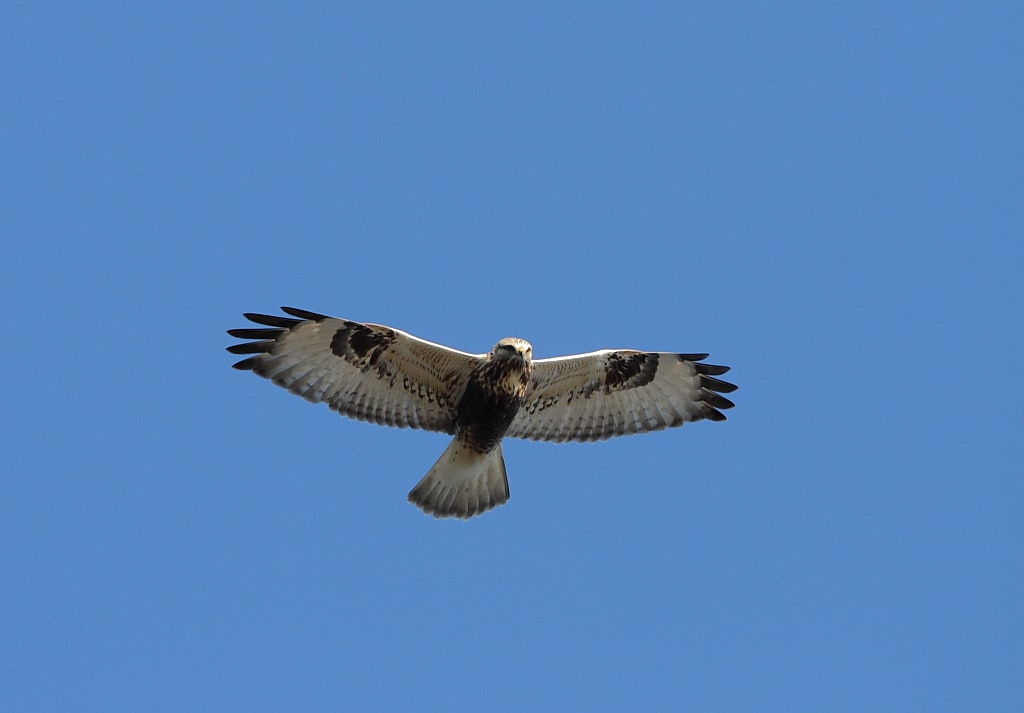
Rough-Legged Buzzard, Rough-Legged Hawk, Rough-Legged Falcon
Tundra, Taiga, Marshes, Moorland, Prairies, Agricultural Regions
North America, Europe, Asia
- Medium-large bird of prey
- Feathered legs
- Wingspan 120-153 cm
- Weight 600-1660 g
- Predominantly brown and white plumage with speckling
- Broad brown chest-band
- Dark carpal patch on white under-wing
- Long white tail feathers with dark subterminal bands
- Females typically larger and heavier than males
Small Mammals, Mice, Rats, Gerbils, Pikas, Shrews, Squirrels, Insects, Birds, Medium-Sized Mammals, Carrion
Still-Hunting From A Perch, Hunting In Flight, Hovering Flight
Lemmings, Voles, Ptarmigans, Hares, Snow Bunting, Lapland Longspur, American Tree Sparrow, Thrushes, Dunlin, Ruff, Short-Eared Owl, Prairie Dogs, Ground Squirrels, Muskrats, Weasels, Black-Tailed Jackrabbits, Common Woodpigeon, European Rabbits
- Starvation
- Harsh weather conditions
- Human destruction
- Predation
- Collisions with power lines, buildings, and vehicles
- Ingestion of poison or lead from prey
- Illegal hunting and trapping
- Earth-slides
- Chilling
About Buteo lagopus
Rough-legged Buzzard (Buteo lagopus)
The rough-legged buzzard, scientifically known as Buteo lagopus, is a medium-large bird of prey inhabiting the arctic and subarctic regions of North America, Europe, and Asia. It is notably recognized for its legs, which are feathered down to the toes, an adaptation that gives it the 'hare-foot' designation in its scientific name. This species is also distinguished by its regular hovering behavior, a trait unusual for raptors of its size, which aids in locating prey.
Habitat and Distribution
This raptor breeds in tundra and taiga environments, typically between latitudes 61° and 76° N. During the winter months, it migrates southward to more temperate zones. North American populations winter in southern Canada and the central United States, while Eurasian populations move to central Europe and Asia. Its habitat during winter includes marshes, moorland, prairies, and agricultural areas where its primary food sources are abundant.
Diet and Hunting
The diet of the rough-legged buzzard consists predominantly of small mammals, with lemmings and voles forming the bulk of its food intake, often comprising 62–98% of its diet seasonally. They are opportunistic hunters and will also prey on birds, other small mammals, and occasionally insects. Hunting methods include still-hunting from a perch and actively searching for prey from the air. Their ability to hover is a key hunting technique that sets them apart.
Reproduction and Lifespan
Rough-legged buzzards typically reach sexual maturity around two years of age. Breeding usually occurs in May, with nests constructed on cliffs, bluffs, or in trees. Females lay clutches of three to five eggs, which are incubated for a minimum of 31 days, primarily by the female. Young birds fledge after about 4–6 weeks and remain dependent on parents for a short period afterward. While adults can live up to 19 years in the wild, mortality is high in the first two years due to various threats.
Migration and Behavior
As a migratory species, the rough-legged buzzard's movements are influenced by food availability and weather. They undertake a distinctive 'foxtrot' migration pattern, with alternating rapid and slow phases. Their activity levels are closely tied to daylight hours, allowing for extended periods of hunting during the long days of the Arctic summer. They are not strongly territorial but may exhibit aggressive behavior towards other buzzard species when competing for hunting grounds.
Source: Wikipedia ↗
Frequently Asked Questions
What does 'lagopus' mean and why is it part of the rough-legged buzzard's scientific name?
The scientific name Buteo lagopus derives from Ancient Greek words: 'lagos' meaning 'hare' and 'pous' meaning 'foot'. This name reflects the species' distinctive feathered legs, which are an adaptation to its cold Arctic home range.
What is the primary diet of the rough-legged buzzard?
The rough-legged buzzard is primarily a carnivore, feeding mainly on small mammals. Lemmings and voles are the most significant prey items, sometimes making up 80-90% of their diet. They will also consume other small mammals, birds, and occasionally insects.
Where does the rough-legged buzzard breed and where does it migrate for the winter?
This species breeds in the tundra and taiga habitats of North America and Eurasia. For the winter, they migrate south to temperate regions, with North American birds moving to southern Canada and the central United States, and Eurasian birds to central Europe and Asia.
What are the distinctive physical characteristics of the rough-legged buzzard?
Rough-legged buzzards are medium-large raptors with feathered legs and a wingspan of 120-153 cm. Their plumage is typically brown and white with speckling, often featuring a broad brown chest-band and a dark carpal patch on the under-wing. A key identifier is their long white tail feathers with dark subterminal bands.
How does the rough-legged buzzard hunt its prey?
Rough-legged buzzards hunt during the day, employing methods such as still-hunting from a perch or watching for prey while in flight. Uniquely for raptors of their size, they can also hover over a spot by beating their wings quickly to locate prey.
What are the main threats to the rough-legged buzzard?
Young rough-legged buzzards face threats from starvation due to prey scarcity, harsh weather conditions, human destruction, and predation. Adults are often victims of human activities like collisions with infrastructure, poisoning from prey, and illegal hunting. Predation at the nest by animals like arctic foxes and wolverines is also a significant factor.
Related Raptor species
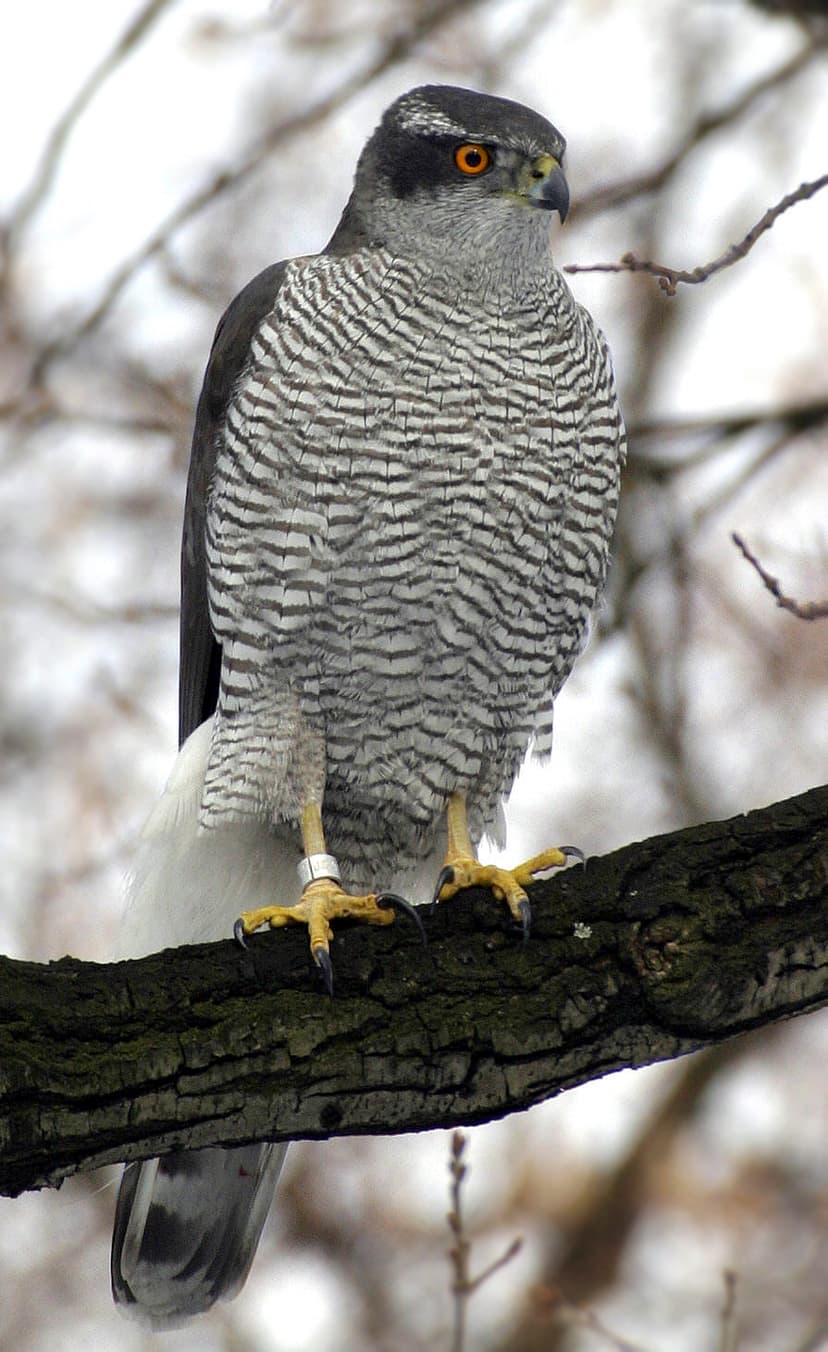
Accipiter gentilis
The Eurasian goshawk (Astur gentilis) is a medium-large bird of prey found across temperate Eurasia. It is recognized by its broad wings, long tail, and distinctively barred plumage. This species is known for its agility in wooded environments and is the sole goshawk in most of its range, often simply called "goshawk".
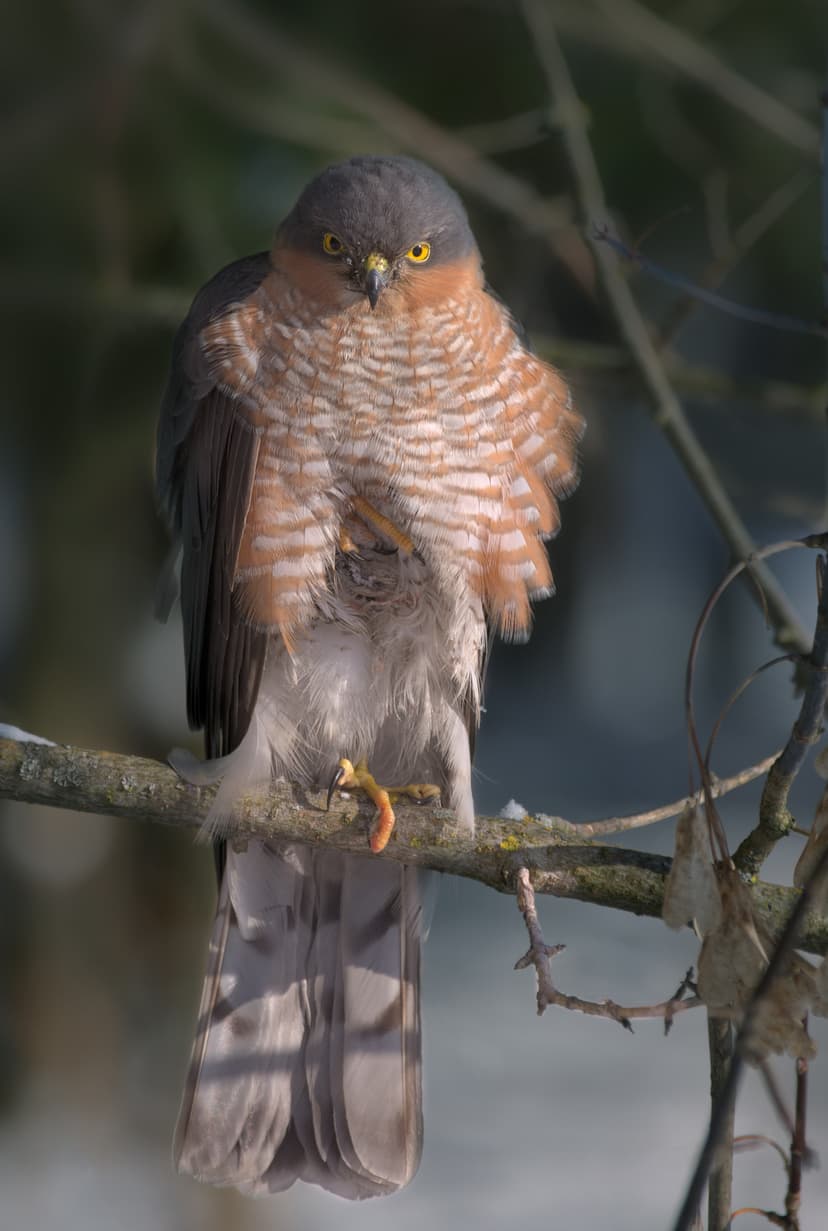
Accipiter nisus
The Eurasian sparrowhawk (Accipiter nisus) is a small bird of prey found across the temperate and subtropical regions of the Old World. It is distinctive for the significant size difference between sexes, with females being much larger than males, and for its specialized hunting of woodland birds, though it also adapts to urban environments. Once threatened by organochlorine insecticides, its populations have recovered and it is now considered of least concern.
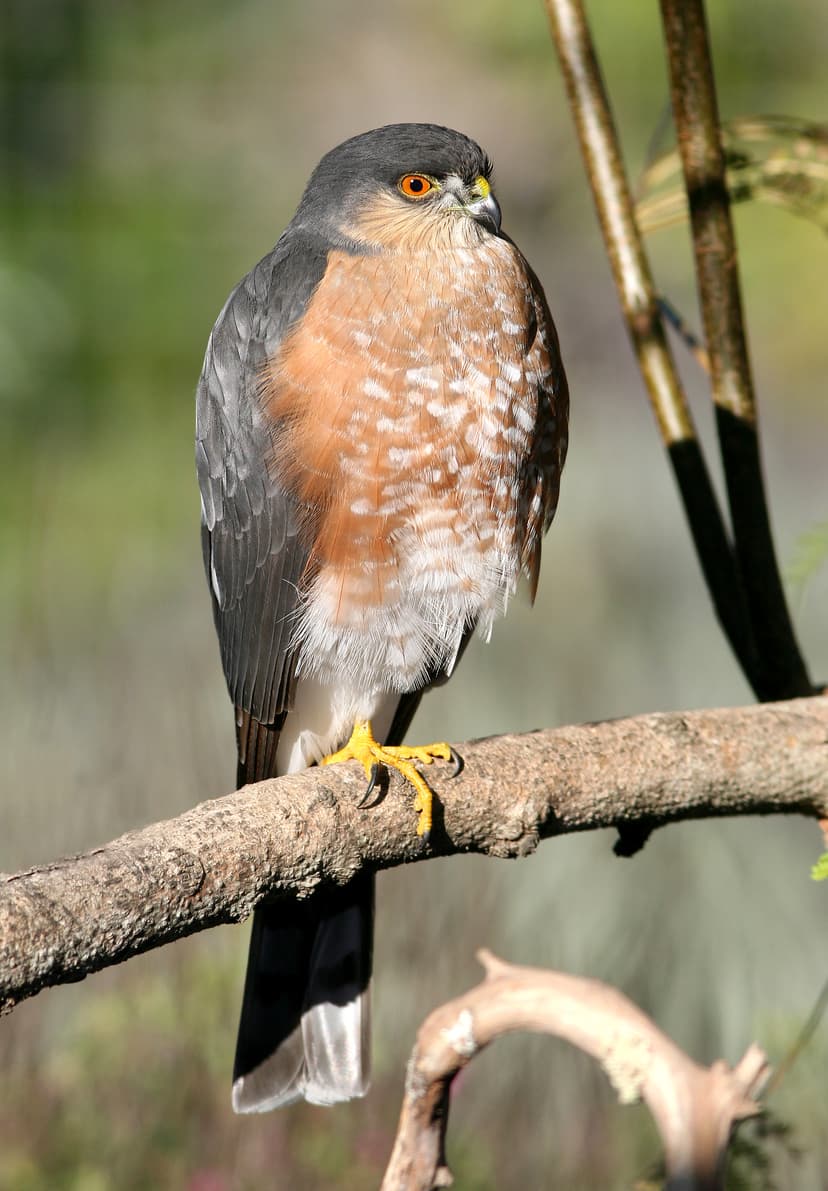
Accipiter striatus
The sharp-shinned hawk (Accipiter striatus) is a small hawk found across North and South America. It is known for its small size, with males being the smallest hawks in the United States and Canada, and its remarkable agility in hunting small birds within dense vegetation. Its taxonomy is complex, with some authorities considering several southern populations to be distinct species.