
Buteo regalis
The ferruginous hawk (Buteo regalis) is the largest of North American Buteos, often mistaken for an eagle due to its size. It inhabits open, arid grasslands and bush steppe country in interior North America and is recognized by its broad wings, feathered legs down to the talons, and two color morphs: light and dark.
Key Facts
- ›It is the largest North American Buteo, with a wingspan averaging 139 cm (4 ft 7 in).
- ›There are two color morphs: light, which is rusty brown and pale, and dark, which is dark brown.
- ›Its primary prey consists of small to medium-sized mammals, making up 80-90% of its diet.
- ›Ferruginous hawks are adaptable nesters, using a variety of locations including trees, ledges, rock outcrops, and even man-made structures.
- ›The species is found in the arid and semiarid grassland regions of North America.
- ›Their legs are feathered all the way to the talons, similar to golden eagles.
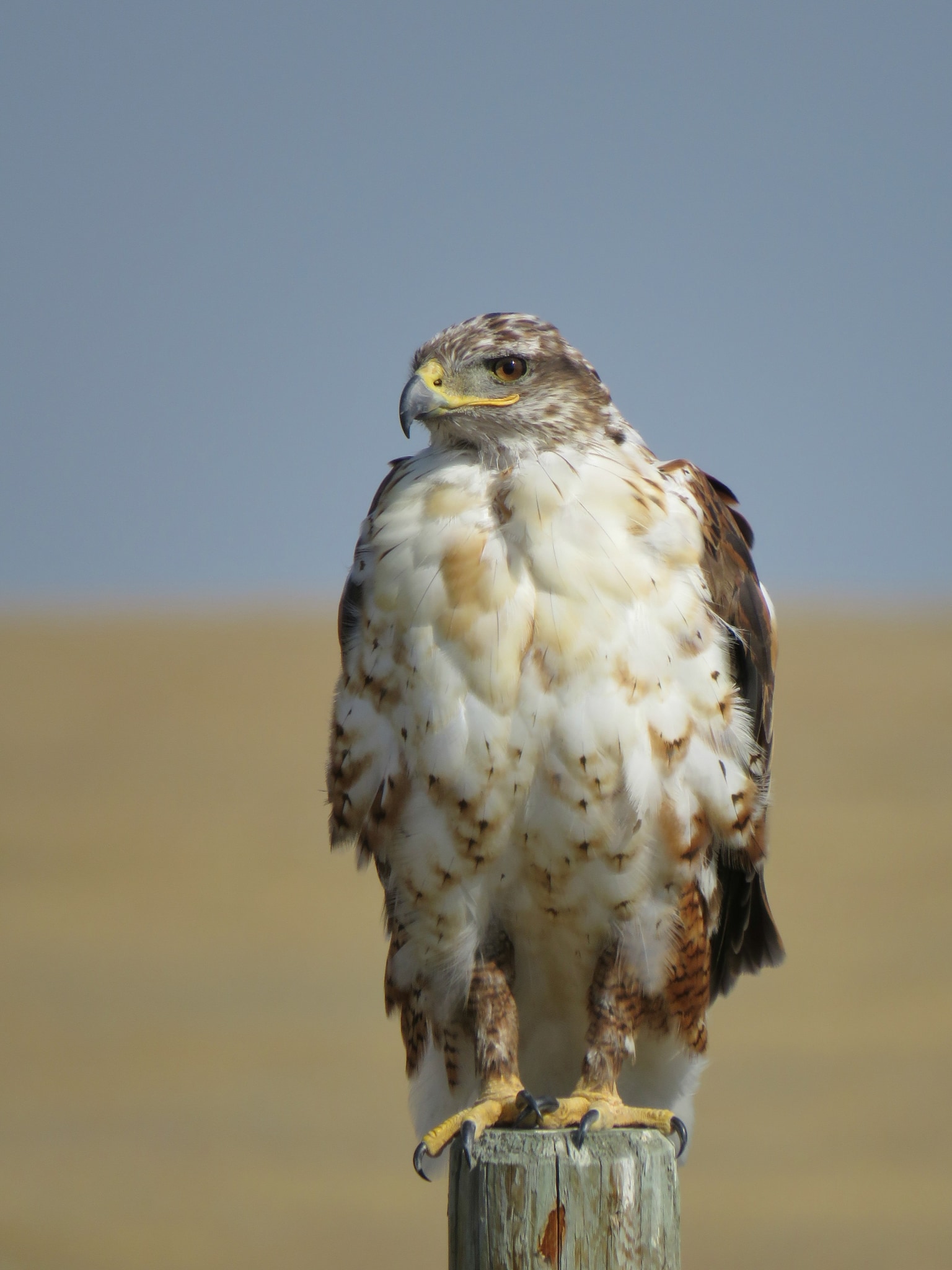
Ferrugineous Rough-Leg
Arid and Semiarid Grasslands, Prairie, Bush Steppe Country, Foothills, Middle Elevation Plateaus, Cultivated Shelterbelts, Riparian Corridors
North America
- Largest of North American Buteos
- Often mistaken for an eagle due to size, proportions, and behavior
- Long broad wings
- Broad gray, rusty, or white tail
- Legs feathered to the talons
- Two color forms: light morph and dark morph
- Adults have identical markings, with females being larger than males
- Perched birds have a white breast and body with dark legs
- Back and wings are brownish rust color
- Head is white with a dark streak behind the eye
- Underside is primarily light colored with dark legs forming a 'V' shape
- Reddish upper-back color extends to inner wing-coverts
- Primary remiges are dark gray with conspicuous light 'windows' in inner primaries
- Three prominent light areas on the upper surface: two 'windows' on outer wings and a rufous rump mark
- Underwings are whitish overall with rufous markings
- Dark 'comma'-shaped markings at the wrists
- Larger bill than other Buteos
- Much wider gap when the bill is opened
- Soar with wings in a dihedral
Small To Medium-Sized Mammals, Birds, Reptiles, Insects
Perch and Wait, Ground Perching, Low-Level Flight, High-Level Flight, Hovering, Cooperative Hunting, Piracy
Rabbits, Hares, Ground Squirrels, Pocket Gophers, Thirteen-Lined Ground Squirrels, Northern Pocket Gophers, Great Basin Pocket Mice, Botta's Pocket Gophers, Gunnison's Prairie Dogs, Desert Cottontails, Black-Tailed Prairie Dogs, Richardson's Ground Squirrel, Plains Pocket Gophers, Yellow-Faced Pocket Gophers, Black-Tailed Jackrabbits, White-Tailed Jackrabbits, Eastern Deer Mice, Montane Voles, Townsend's Ground Squirrels, Western Pocket Gophers, Muskrats, Eastern Cottontails, Giant Kangaroo Rats, Antelope Squirrels, Stoats, Long-Tailed Weasels, Black-Footed Ferrets, Western Meadowlark, Horned Larks, Passerines, Dabbing Ducks, Common Pheasants, Lesser Prairie-Chickens, Sharp-Tailed Grouse, Sage Grouse, American Crows, Common Raven, Chihuahuan Ravens, Burrowing Owls, American Barn Owls, Other Buteo Hawks, Snakes, Lizards, Texas Horned Lizards, Yellow-Bellied Racer, Garter Snake, Western Hognose Snakes, Pine Snakes, Frogs, Grasshoppers
About Buteo regalis
Ferruginous Hawk (Buteo regalis)
The ferruginous hawk, scientifically known as Buteo regalis, is a prominent bird of prey recognized as the largest among North American Buteos. Its substantial size and proportions often lead to it being mistaken for an eagle. The species inhabits the open, arid grasslands, prairies, and bush steppe country endemic to the interior parts of North America.
Description and Identification
This hawk is characterized by its large size, with lengths ranging from 51 to 71 cm (20 to 28 in) and an average wingspan of about 139 cm (4 ft 7 in). Its legs are feathered down to the talons, a trait shared with the golden eagle. The ferruginous hawk exhibits two distinct color morphs: the light morph, which is rusty brown on the upper parts and pale on the head and underparts, and the dark morph, which is uniformly dark brown. Both sexes share identical markings, though females are generally larger than males. Key identification features in flight include broad wings, a broad tail that can be gray, rusty, or white, and prominent light areas on the upper surface of the wings and a rufous rump mark.
Habitat and Distribution
The preferred habitat for ferruginous hawks includes arid and semiarid grasslands, prairies, and bush steppe country, largely devoid of trees. They favor open, level, or rolling terrain, as well as foothills and middle elevation plateaus. They actively avoid high elevations, dense forest interiors, and narrow canyons. During the breeding season, they nest in open areas or in trees along waterways, but avoid cultivated fields and modified grasslands. Their winter habitat is similar to their summer range, with a requirement for perches such as poles, lone trees, or fence posts.
Diet and Hunting Behavior
Small to medium-sized mammals constitute the primary diet of the ferruginous hawk, typically making up 80–90% of their prey biomass. This includes species like rabbits, hares, ground squirrels, and pocket gophers. Birds, reptiles, and insects are also part of their diet. They hunt using a variety of methods, including perching and waiting for prey, low-level flight over the landscape, hovering, and ground perching near rodent burrows. They may also engage in cooperative hunting with their mates.
Reproduction and Nesting
Ferruginous hawks are highly adaptable nesters, utilizing a wide range of locations such as trees, ledges, rock outcrops, the ground, and various man-made structures. Nests are constructed from sticks, branches, and other ground debris, with old nests frequently refurbished. Clutch size typically ranges from one to eight eggs, with an average of three to four. The incubation period lasts approximately 32 days, and the nestling period ranges from 38 to 50 days, with brooding primarily undertaken by the female.
Source: Wikipedia ↗
Frequently Asked Questions
What is the ferruginous hawk?
The ferruginous hawk is a large bird of prey belonging to the broad-winged buteo hawk group. It is the largest of the North American Buteos and is known for its size, habitat preference, and distinct color morphs.
Where does the ferruginous hawk live?
This species is endemic to the interior parts of North America, preferring arid and semiarid grassland regions, prairies, and bush steppe country. They avoid high elevations and forest interiors.
What does the ferruginous hawk eat?
The diet of the ferruginous hawk primarily consists of small to medium-sized mammals, such as rabbits, hares, ground squirrels, and pocket gophers. Birds, reptiles, and insects are also occasionally taken.
How does the ferruginous hawk hunt?
Ferruginous hawks employ several hunting techniques, including perching and waiting, low-level flight, hovering, and ground perching near prey burrows. They may also wait in ambush or engage in cooperative hunting with their mates.
What are the physical characteristics of the ferruginous hawk?
They are large with long, broad wings, and have legs feathered to the talons. Adults have long broad wings and a broad gray, rusty, or white tail. There are two color forms: a light morph with rusty brown upper parts and pale underparts, and a dark morph that is dark brown overall.
What are the nesting habits of the ferruginous hawk?
Ferruginous hawks are adaptable nesters, utilizing trees, ledges, rock or dirt outcrops, the ground, and man-made structures. Nests are constructed from sticks, branches, and other ground debris, often with added lining materials.
Related Raptor species
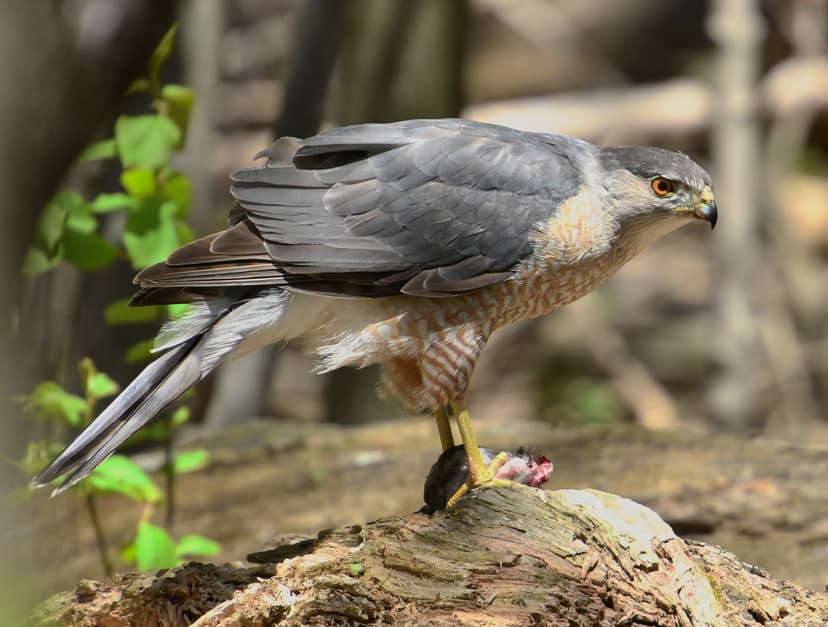
Accipiter cooperii
Cooper's hawk is a medium-sized hawk native to North America, ranging from southern Canada to Mexico. It is known for its exceptional agility, which it uses to hunt agile prey like birds and small mammals. Distinctive features include its blue-gray or brown-gray plumage, a long, barred tail with a white tip, and forward-set eyes adapted for precise hunting.
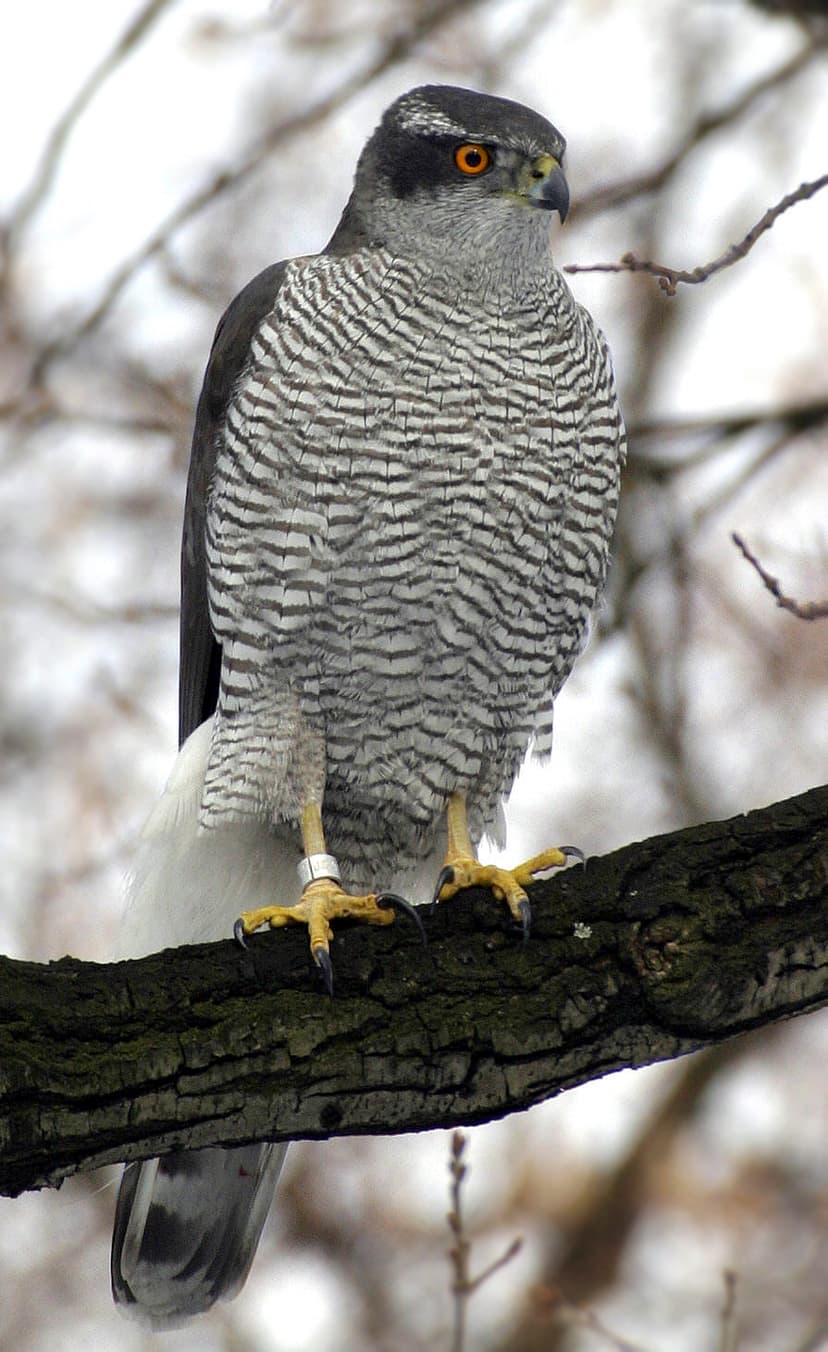
Accipiter gentilis
The Eurasian goshawk (Astur gentilis) is a medium-large bird of prey found across temperate Eurasia. It is recognized by its broad wings, long tail, and distinctively barred plumage. This species is known for its agility in wooded environments and is the sole goshawk in most of its range, often simply called "goshawk".
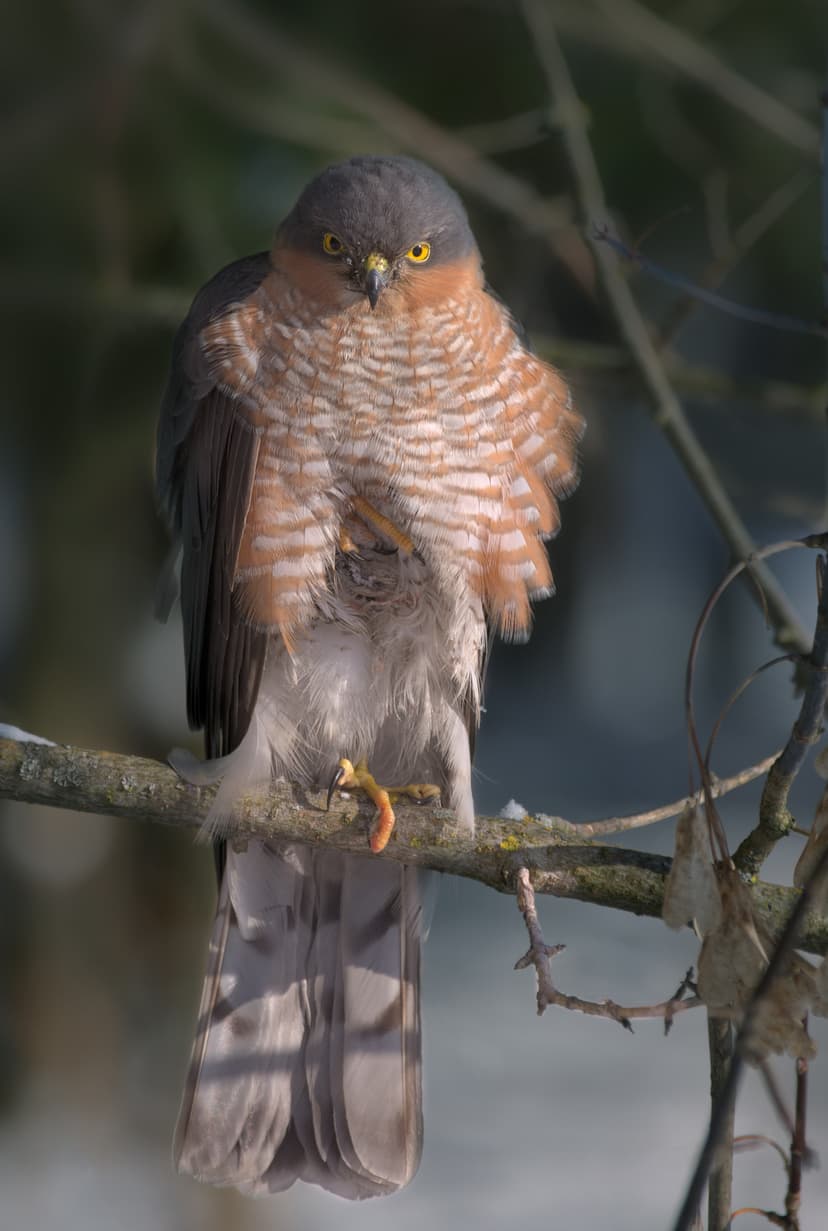
Accipiter nisus
The Eurasian sparrowhawk (Accipiter nisus) is a small bird of prey found across the temperate and subtropical regions of the Old World. It is distinctive for the significant size difference between sexes, with females being much larger than males, and for its specialized hunting of woodland birds, though it also adapts to urban environments. Once threatened by organochlorine insecticides, its populations have recovered and it is now considered of least concern.