
Buteo swainsoni
Not considered a threatened species by the IUCN, but listed as a threatened species in California.·Hawk
Swainson's hawk (Buteo swainsoni) is a large raptor native to western North America, named after British naturalist William Swainson. It is distinctive for its long-distance migration to Argentina and its fondness for eating grasshoppers and locusts, earning it the colloquial names "grasshopper hawk" and "locust hawk". The species exhibits two main color morphs: light and dark, with the light morph being more common.
Key Facts
- ›Breeds in prairie and dry grasslands of western North America.
- ›Migrates long distances to winter in Argentina.
- ›Known for its diet of insects, particularly grasshoppers and locusts.
- ›Has two main color variations: light-morph and dark-morph.
- ›Females are generally larger and heavier than males.
- ›Its breeding habitat is closely tied to the distribution of small mammals.
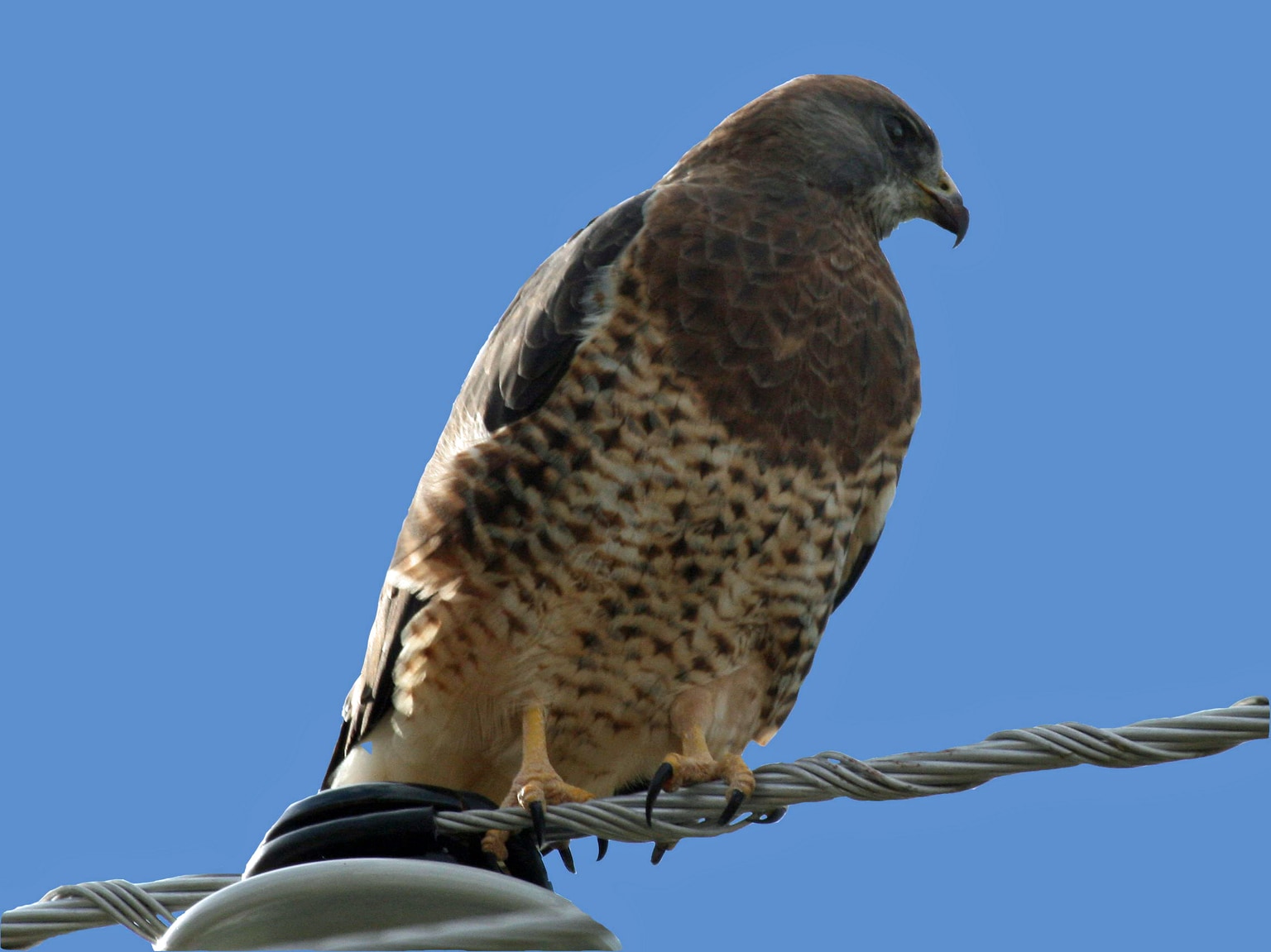
Grasshopper Hawk, Locust Hawk
Prairie, Dry Grasslands, Open Country, Semi-Open Country, Deserts
North America, South America, Argentina, Uruguay, Brazil, Chile, Dominican Republic, Trinidad and Tobago, Norway
- Medium-sized member of the genus Buteo
- Length: 43–56 cm
- Wingspan: 117–137 cm
- Weight: 0.5–1.7 kg
- Slender, elongated wings
- Females are larger and heavier than males
- Two main color variations: light-morph and dark-morph
- Light-morph: white underparts, dark reddish bib, white throat and face patch, underwings with light linings and dark flight feathers, gray-brown tail with narrow dark bands
- Dark-morph: dark brown except for a light patch under the tail
- Rufous variant: lighter underparts with reddish bars
Insects, Small Mammals, Small Birds, Reptiles, Amphibians, Road-Killed Birds and Animals
- Still-hunting from perches
- Soaring over open ground
- Coursing low over the ground
- Hovering
- Transect-glides
- Hunting on the ground for insects
- Catching insects in flight
- Following tractors and wildfires for exposed prey
Grasshoppers, Locusts, Ground Squirrels, Cottontails, Mice, Snakes, Lizards
Pesticide Use In Wintering Grounds, Collisions With Traffic, Illegal Shooting, Electrocution, Severe Prairie Weather, Predation By Great Horned Owls, Egg Infertility
About Buteo swainsoni
Swainson's Hawk (Buteo swainsoni)
Swainson's hawk (Buteo swainsoni) is a large bird of prey found primarily in the open country of western North America. Named after the British naturalist William Swainson, this raptor is colloquially known as the "grasshopper hawk" or "locust hawk" due to its significant consumption of these insects. Its breeding habitat includes prairies and dry grasslands, where it builds stick nests in trees or shrubs. A remarkable characteristic of this species is its status as a long-distance migrant, traveling to wintering grounds in Argentina, making it one of the longest-migrating North American raptors.
Description and Variations
The Swainson's hawk is a medium-sized hawk, similar in size to the red-tailed hawk but possessing slightly longer, more slender wings. It exhibits sexual dimorphism, with females being larger and heavier than males. The species is known for its two main color variations: the light morph, which comprises over 90% of individuals, features white underparts with a distinctive dark bib and a noticeable white throat patch; the dark morph is predominantly dark brown with a light patch under the tail. In flight, the light morph displays a unique pattern of light underwings and dark flight feathers, a pattern not seen in other North American raptors.
Range and Migration
Swainson's hawks inhabit North America during the spring and summer, migrating to winter in South America, primarily in Argentina, Uruguay, and southern Brazil. Their breeding range extends across western North America, from southern Canada down into the western and southern United States. The journey to their wintering grounds can be as long as 7,100 miles, with the migration period lasting at least two months. During their southward migration, the vast majority of the population funnels through the Isthmus of Panama.
Ecology and Diet
The habitat of Swainson's hawk consists of open and semi-open environments such as deserts, grasslands, and prairies. They require elevated perches for hunting and depend on a steady supply of small mammals for their nestlings. While breeding birds focus more on vertebrate prey, insects such as grasshoppers, crickets, and locusts form a significant part of their diet, especially outside the nesting season. They are opportunistic feeders, often following agricultural machinery or wildfires to find exposed prey.
Reproduction and Lifespan
Swainson's hawks are monogamous and exhibit high fidelity to their mates and territories. Nests are constructed from twigs and grasses, typically in trees or shrubs. A clutch usually consists of two to three eggs, with an incubation period of 34 to 35 days. Young hawks fledge at around 38 to 46 days old. In the wild, Swainson's hawks can live for over 20 years, with one recorded individual reaching over 26 years of age. Threats to their survival include pesticide use, habitat loss, and collisions with human infrastructure.
Source: Wikipedia ↗
Frequently Asked Questions
What is the scientific name for Swainson's hawk?
The scientific name for Swainson's hawk is Buteo swainsoni. This binomial nomenclature identifies it within the genus Buteo.
Where does Swainson's hawk breed and winter?
Swainson's hawks breed in the prairie and dry grasslands of western North America, with populations extending into parts of Canada and the northern United States. They undertake long-distance migrations to winter primarily in Argentina.
What makes Swainson's hawk distinctive in its appearance?
Swainson's hawks have two main color variations: a light morph with white underparts and a dark bib, and a dark morph that is mostly dark brown. A unique feature in flight for the light morph is the pattern of light underwings with dark flight feathers.
What is the primary diet of Swainson's hawk?
Swainson's hawks are notably fond of insects, especially grasshoppers and locusts, which they will voraciously consume. While nesting, they switch to consuming more vertebrate prey, primarily small mammals.
How long is the migration undertaken by Swainson's hawk?
Swainson's hawk is one of the longest-distance migrants of North American raptors. The flight from breeding grounds to South American pampas can span up to 7,100 miles and takes at least two months.
Related Raptor species
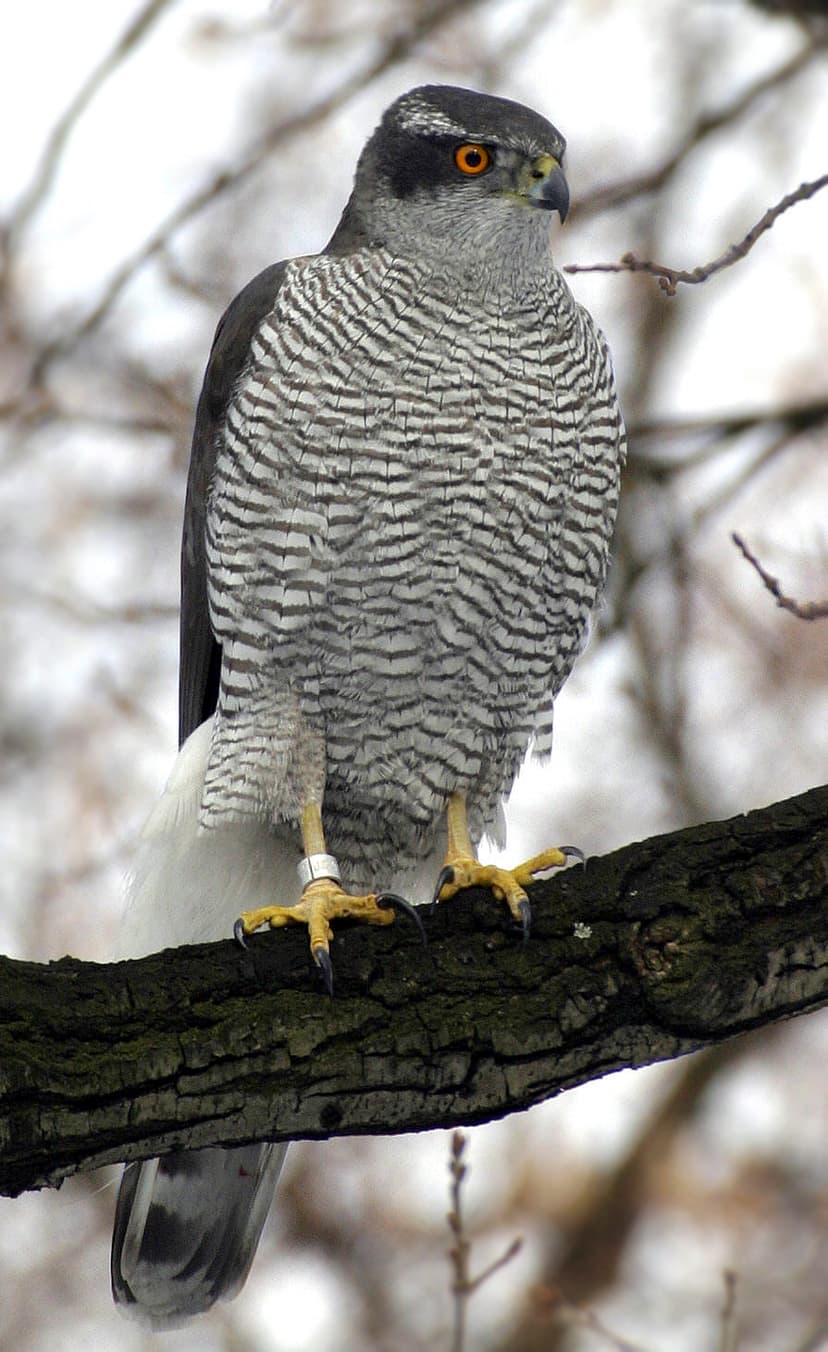
Accipiter gentilis
The Eurasian goshawk (Astur gentilis) is a medium-large bird of prey found across temperate Eurasia. It is recognized by its broad wings, long tail, and distinctively barred plumage. This species is known for its agility in wooded environments and is the sole goshawk in most of its range, often simply called "goshawk".
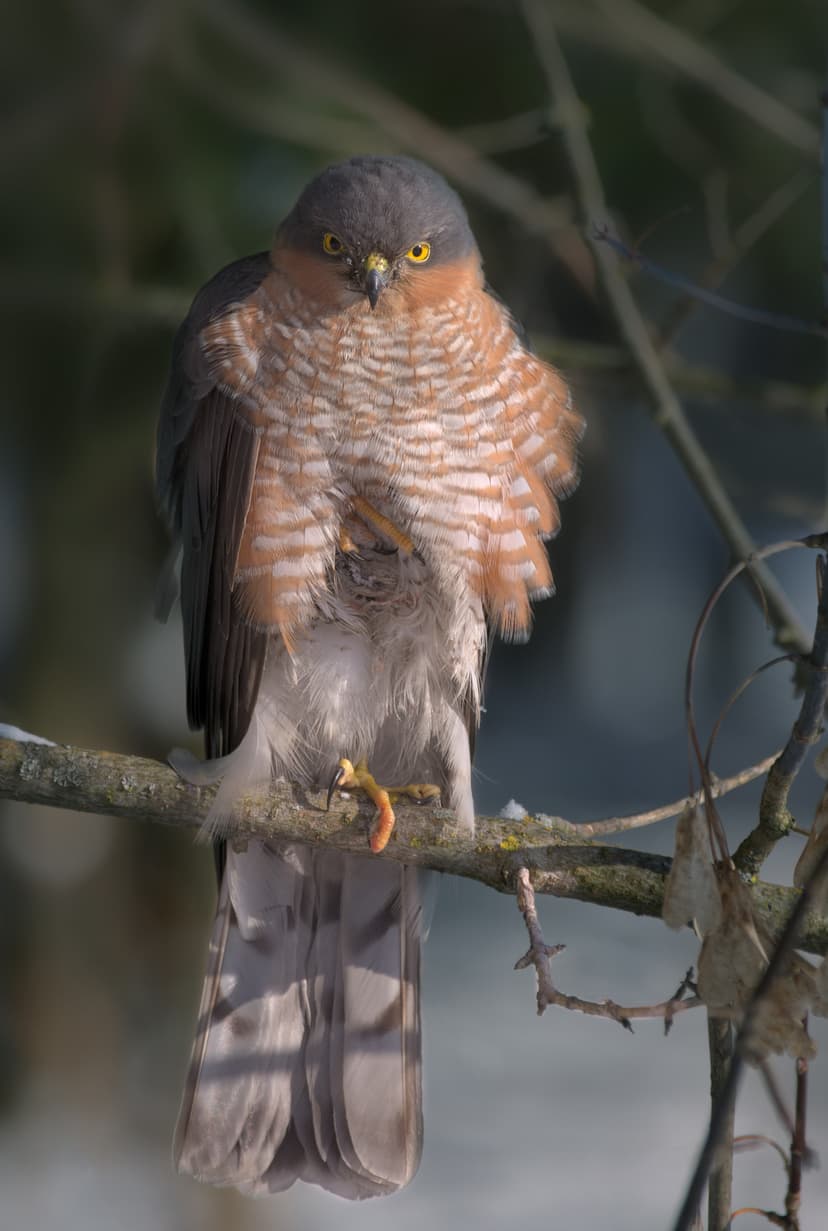
Accipiter nisus
The Eurasian sparrowhawk (Accipiter nisus) is a small bird of prey found across the temperate and subtropical regions of the Old World. It is distinctive for the significant size difference between sexes, with females being much larger than males, and for its specialized hunting of woodland birds, though it also adapts to urban environments. Once threatened by organochlorine insecticides, its populations have recovered and it is now considered of least concern.
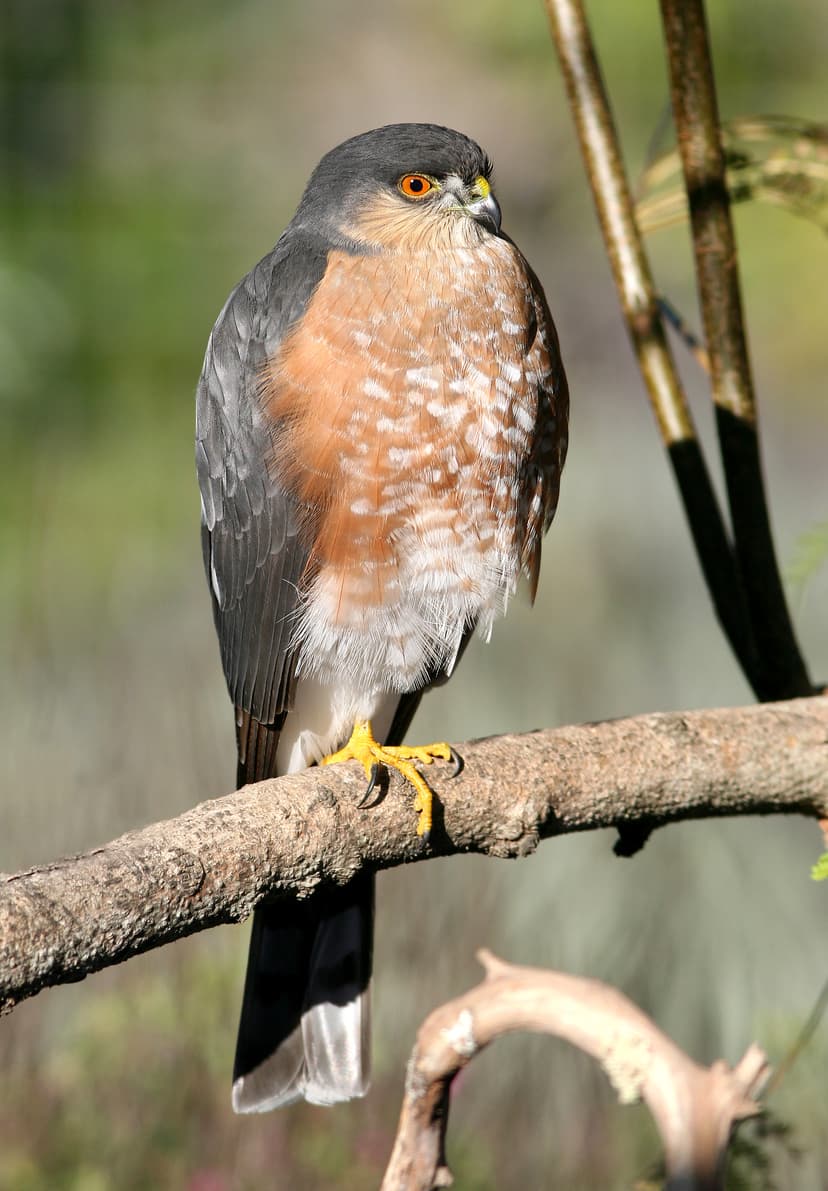
Accipiter striatus
The sharp-shinned hawk (Accipiter striatus) is a small hawk found across North and South America. It is known for its small size, with males being the smallest hawks in the United States and Canada, and its remarkable agility in hunting small birds within dense vegetation. Its taxonomy is complex, with some authorities considering several southern populations to be distinct species.