
Falco columbarius
The merlin (Falco columbarius) is a small, swift falcon found across the Northern Hemisphere, breeding in the northern Holarctic and migrating to warmer regions in winter. Known for its agility in aerial pursuits, it primarily preys on small birds and shorebirds, and has a long history of use in falconry.
Key Facts
- ›Merlins are small, robust falcons with a wingspan typically ranging from 50 to 73 cm.
- ›Males are generally blue-gray on the back with streaked buff to orange underparts, while females and immatures are brownish-gray.
- ›They are skilled aerial hunters, specializing in taking small birds in flight.
- ›Merlins inhabit open country, including scrubland, grassland, and taiga forests.
- ›Historically, they have been highly regarded as falconry birds, particularly for hunting small game birds.
- ›Populations in North America have been increasing, with some individuals adapting to urban environments and forgoing migration.
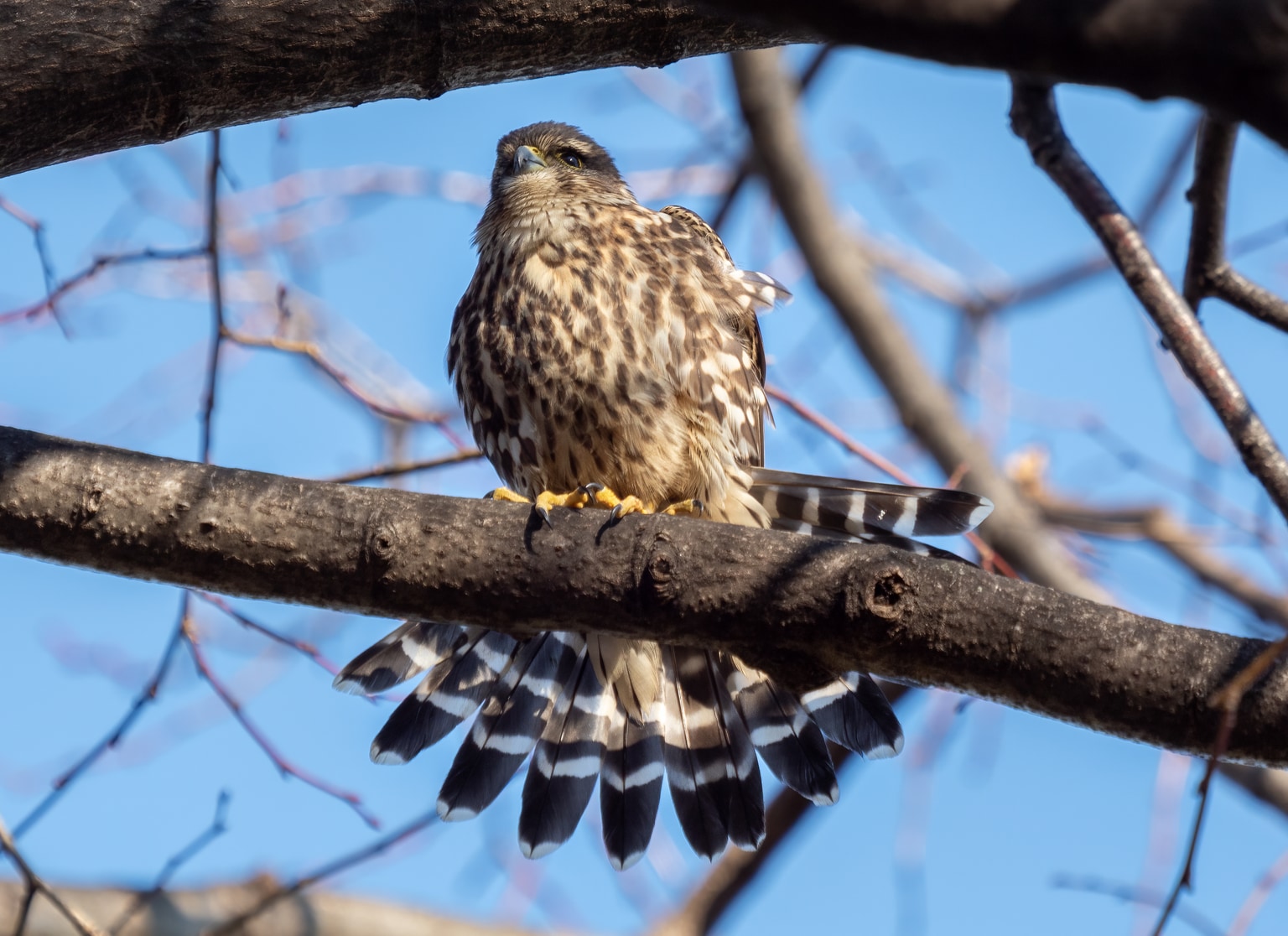
Pigeon Hawk, Esmerillon
Willow Or Birch Scrub, Shrubland, Taiga Forest, Parks, Grassland, Moorland, Coasts and Lowlands
North America, Eurasia, Subtropical Regions, Northern Tropical Regions
- Small, robust falcon
- Males: blue-gray back, buff to orange underparts streaked with black or reddish-brown
- Females and immatures: brownish-gray to dark brown above, whitish buff spotted with brown below
- Weak whitish supercilium and faint dark malar stripe
- Tail with three to four wide, blackish bands, a black tip, and a narrow white band at the very end
- Dark eyes and beak with yellow cere
- Yellow feet with black claws
Small Birds, Medium-Sized Shorebirds, Insects, Small Mammals, Reptiles, Amphibians
- Flying fast and low, typically less than 1 meter above the ground
- Using trees and large shrubs to take prey by surprise
- Capturing prey in the air
- Tail-chasing startled birds
- Cooperative hunting by breeding pairs
- Flushing prey towards a mate
- Tagging along other raptors to catch escaping prey
- Caching food for later consumption
Sparrows, Doves, Larks, Pipits, Finches, House Sparrows, Northern Wheatears, Thrushes, Kinglets, Buntings, Sandpipers, Flickers, Ptarmigan, Grouse, Ducks, Rock Doves, Dragonflies, Moths, Grasshoppers, Butterflies, Beetles, Bats, Shrews, Rabbits, Voles, Lemmings
Predation by corvids on eggs and nestlings, Predation by larger raptors
About Falco columbarius
Merlin (Falco columbarius)
The merlin, scientifically known as Falco columbarius, is a small and agile falcon native to the Northern Hemisphere. This species breeds across the northern Holarctic region, encompassing parts of North America and Eurasia, and undertakes seasonal migrations to warmer subtropical and tropical areas during winter. Known for its exceptional speed and aerial hunting prowess, the merlin primarily preys on small birds and shorebirds, though its diet can be diverse.
Nomenclature and Taxonomy
The scientific classification of Falco columbarius has a history intertwined with early natural history documentation. English naturalist Mark Catesby first described the bird as the "pigeon hawk" in the early 18th century. Swedish botanist Carl Linnaeus later formally introduced the species with the binomial name Falco columbarius in 1758. The genus name Falco derives from the Latin word for "sickle," referencing the bird's talons, while columbarius means "of or pertaining to doves," reflecting early comparisons to pigeons. Debates continue regarding whether Eurasian and North American populations should be recognized as distinct species, with Eurasian birds potentially reclaiming the name Falco aesalon.
The common name "merlin" has a separate linguistic origin, tracing back to Old French esmerillon and cognate Germanic words referring to small birds of prey. This name became firmly established in English by the late Middle Ages. Notably, the falcon's name is a homophone with, but has no etymological connection to, the legendary wizard Merlin, whose name derives from the Welsh "Myrddin."
Physical Characteristics and Description
Merlins are characterized by their robust build, being more heavily built than many other small falcons. They typically measure between 24 to 33 cm (9.4–13.0 in) in length with a wingspan of 50 to 73 cm (20–29 in). Significant sexual dimorphism is present, with males averaging around 165 g (5.8 oz) and females being larger, averaging about 230 g (8.1 oz). Adult males display a blue-gray back, with underparts ranging from buff to orange and streaked with black or reddish-brown. Females and immature birds are brownish-gray above and whitish buff spotted with brown below. Their faces are less patterned than many other falcons, featuring a weak whitish supercilium and a faint dark malar stripe. The tail typically exhibits three to four wide, blackish bands, a black tip, and a narrow white band at the very end. Their eyes and beaks are dark, with a yellow cere, and their feet are also yellow with black claws.
Ecology and Behavior
Merlins inhabit relatively open country, including scrubland, shrubland, taiga forests, grasslands like steppes and prairies, and moorlands. They are adaptable and can be found from sea level up to the treeline, generally preferring areas with a mix of low and medium-height vegetation interspersed with trees, while avoiding dense forests and arid regions. During migration, they utilize a wider range of habitats. Most populations are migratory, wintering in warmer regions, although some resident populations exist in milder coastal areas.
These falcons are renowned for their speed and agility in hunting. They often fly low to the ground, using surprise to capture prey, but more frequently catch their quarry in mid-air through rapid aerial pursuits. Merlins are adept at hunting small to mid-sized birds and will even hunt cooperatively, with one bird flushing prey towards its mate. They are also known to scavenge from other predators and have been observed aggressively harassing larger raptors, a behavior that can aid in their identification. Merlins sometimes cache food for later consumption.
Reproduction and Lifespan
Breeding typically occurs in May and June. Merlins do not construct their own nests, instead utilizing abandoned nests of corvids or hawks, or making shallow scrapes in dense vegetation in open habitats. Pairs are usually monogamous for at least a breeding season. Females lay three to six eggs, which are rusty brown and average about 40 mm × 31.5 mm. The incubation period lasts for 28 to 32 days, with the female undertaking most of the incubation while the male hunts. Hatchlings fledge after approximately 30 days and remain dependent on their parents for up to four more weeks. First-year birds may sometimes act as "nest helpers." The oldest recorded wild merlin lived into its 13th year.
Relationship with Humans
Merlins have a long-standing relationship with humans, particularly through their use in falconry. In medieval Europe, they were considered popular birds for falconry, often referred to as "the falcon for a lady," and were noted for their pursuit of skylarks. Their size and agility make them effective for hunting small game birds like doves and quail, and they can be trained for hunting in urban environments. Notable illustrations of the merlin were created by artists such as John James Audubon and William Lewin.
Conservation
While the specific conservation status of the merlin is not detailed in this text, populations in North America have shown significant increases in recent decades. Some individuals are adapting to urban life and have ceased migrating. In Europe, populations experienced an increase up to around 2000 individuals and have since remained steady.
Source: Wikipedia ↗
Frequently Asked Questions
What is the scientific name for the merlin?
The scientific name for the merlin is Falco columbarius. This name was formally assigned by Carl Linnaeus in 1758, with the genus name Falco referring to its sharp, sickle-like talons and the species epithet columbarius meaning 'of or pertaining to doves'.
Where are merlins found?
Merlins are found throughout the Northern Hemisphere, breeding in the northern Holarctic region. They inhabit North America and Eurasia, with some populations migrating to subtropical and northern tropical regions during winter.
What do merlins eat?
Merlins primarily prey on small birds, such as sparrows and doves, as well as medium-sized shorebirds. Their diet can also include insects, small mammals like bats and voles, reptiles, and amphibians, especially outside the breeding season.
Are merlins migratory?
Most merlin populations are migratory, traveling to warmer regions for the winter. Northern European birds migrate to southern Europe and North Africa, while North American populations head to the southern United States and northern South America. Some populations in milder climates may only move to lower elevations or coastal areas.
What are the main threats to merlins?
The primary threats to merlin eggs and nestlings are corvids, such as crows and magpies. Adult merlins can be preyed upon by larger raptors like peregrine falcons and eagle-owls, though their aggressiveness and agility often deter predators.
How are merlins used in falconry?
Merlins have been popular in falconry for centuries, historically being known as 'the falcon for a lady.' Their speed and agility make them effective hunters of small game birds like skylarks, larks, and finches, and they are suitable for hunting in urban settings.
Related Raptor species
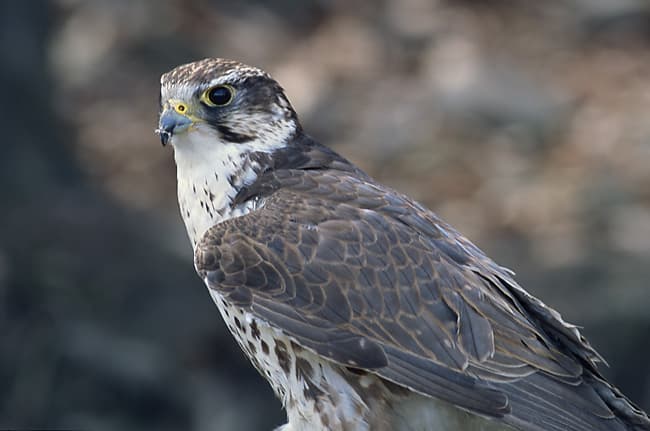
Falco cherrug
The saker falcon (Falco cherrug) is a large falcon species native to Eurasia, known for its impressive speed in flight. It is a partial migrant, with some populations wintering in the Sahel region of Africa. Culturally, it holds significance as the national bird of several countries and has a long history of use in falconry.
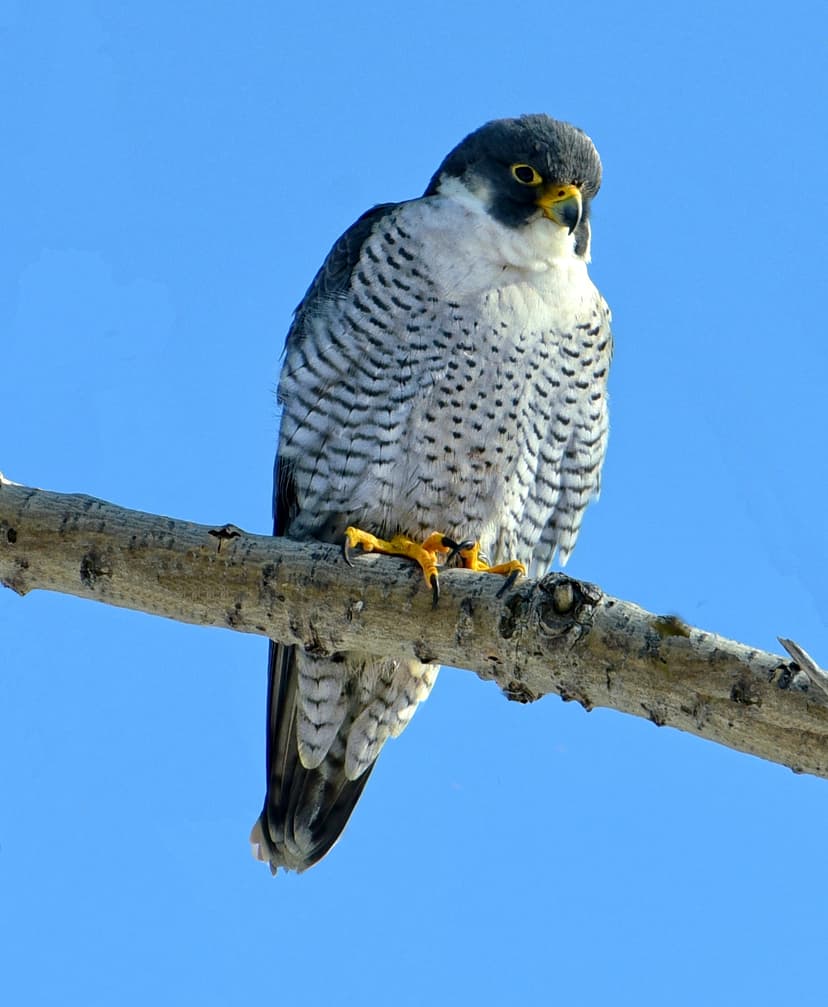
Falco peregrinus
The peregrine falcon (Falco peregrinus) is a widely distributed bird of prey renowned for its incredible speed during hunting dives. Characterized by its blue-grey back, barred white underparts, and black head, this crow-sized falcon is found on nearly every continent. It has adapted remarkably to urban environments, utilizing tall buildings for nesting and preying on abundant bird populations like pigeons.
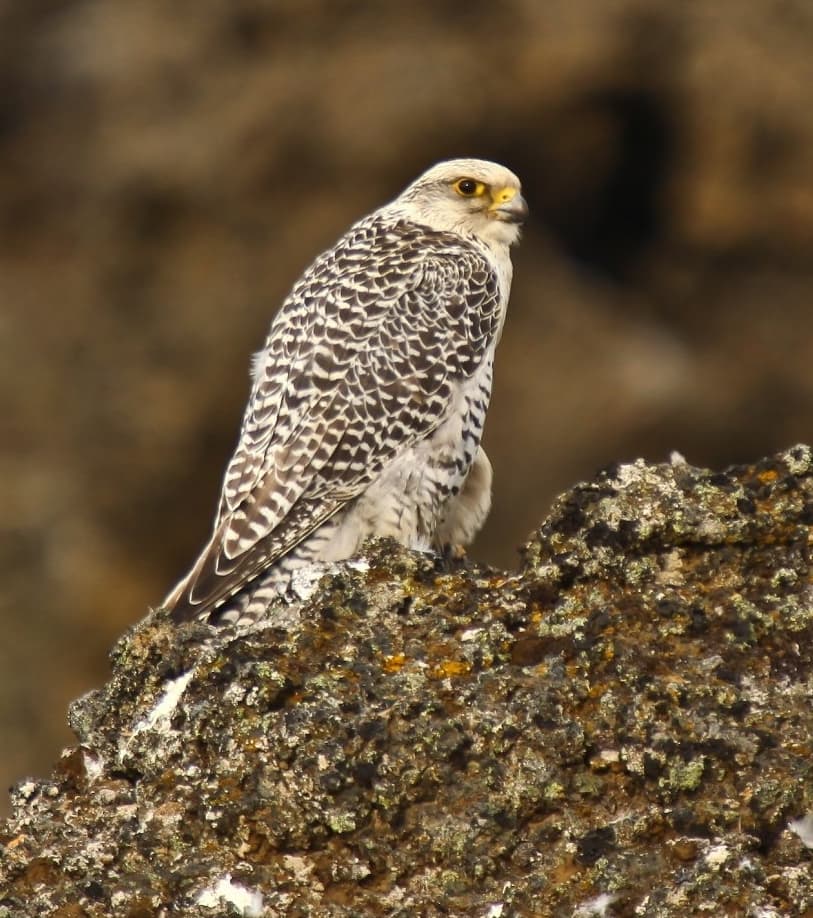
Falco rusticolus
The gyrfalcon (Falco rusticolus) is the largest species of falcon, native to Arctic coastal regions and tundra. It is a highly polymorphic species, with plumage ranging from all-white to dark grey-brown, and exhibits sexual dimorphism with females being significantly larger than males. Historically valued for falconry, it preys on birds and mammals, often hunting in horizontal pursuits rather than stoops.