
Falco rusticolus
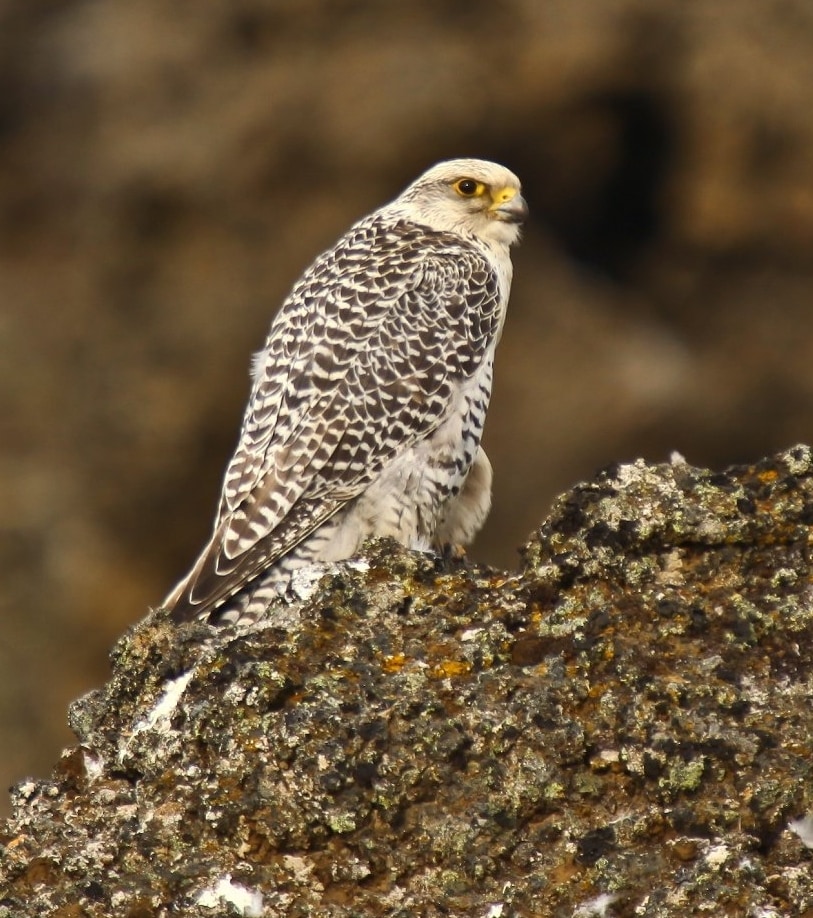
The gyrfalcon (Falco rusticolus) is the largest species of falcon, native to Arctic coastal regions and tundra. It is a highly polymorphic species, with plumage ranging from all-white to dark grey-brown, and exhibits sexual dimorphism with females being significantly larger than males. Historically valued for falconry, it preys on birds and mammals, often hunting in horizontal pursuits rather than stoops.
Key Facts
- ›Largest species in the falcon family (Falconidae).
- ›Plumage varies significantly, with 'white', 'silver', 'brown', and 'black' morphs.
- ›Females are larger and heavier than males (sexual dimorphism).
- ›Prey primarily consists of birds like ptarmigan and waterfowl, as well as small mammals.
- ›Nests on cliff faces, often using abandoned nests of other birds.
- ›Historically prized for hunting by royalty and nobility.
Gyr, Gerfalcon, Jerfalcon
Arctic Coasts, Tundra, Islands of Northern North America, Islands of Siberia, Sea Ice
North America, Siberia, Arctic Regions
- Largest falcon species.
- Plumage varies from all-white to dark grey-brown.
- Sexual dimorphism: Females are larger and heavier than males.
- Broad-winged with pointed wings.
- Juveniles are darker and browner than adults.
Birds, Mammals, Ptarmigan, Waterfowl, Seabirds, Arctic Ground Squirrels, Arctic Hares, Fish
Horizontal Pursuit, Forcing Prey To the Ground
Ptarmigan, Waterfowl, Arctic Ground Squirrels, Arctic Hares, Seabirds, Geese, Capercaillie, Rock Ptarmigan, Willow Grouse, Auks, Gulls, Seaducks, Mallards, Corvids, Passerines, Doves, Other Birds of Prey, Norway Lemmins, Mice, Water Voles, Muskrats, Stoats, Minks, Arctic Fox Pups, Bats, Brown Trout
Human Hunting, Automobile Collisions, Poisoning of Carrion, Competition With Peregrine Falcons, Avian Influenza
About Falco rusticolus
The Gyrfalcon: Arctic King of Falcons
The gyrfalcon (Falco rusticolus) is the largest and most formidable species of falcon, a majestic bird of prey that commands the high-latitude skies. Its scientific name, Falco rusticolus, translates from Latin as "country-dwelling falcon," reflecting its preference for wild, open landscapes.
Physical Characteristics and Polymorphism
This species is renowned for its impressive size, rivaling that of large buteos, and its significant sexual dimorphism, with females being considerably larger and heavier than males. A striking feature of the gyrfalcon is its polymorphism; its plumage can vary dramatically, displaying distinct color variations known as morphs. These range from an almost pure white form, common in Greenland, to dark grey-brown or even blackish individuals found in Eurasian populations. This color variation is genetically linked, with specific gene variations influencing plumage.
Habitat and Distribution
Gyrfalcons are primarily a high-latitude species, breeding on the Arctic coasts and tundra, as well as the islands of northern North America and Siberia. While largely resident, some individuals undertake post-breeding dispersals or migrate further afield in winter, occasionally being found far from their usual territories. During winter, they have been observed spending considerable periods on sea ice, far from land.
Diet and Hunting Behavior
The diet of the gyrfalcon is varied, consisting mainly of birds and mammals. They are known to hunt prey as large as geese and capercaillie, as well as smaller birds like redpolls and various mammals including Arctic ground squirrels and Arctic hares. Unlike the peregrine falcon's characteristic stoop from great heights, the gyrfalcon typically hunts using a horizontal pursuit, often driving its prey to the ground before dispatching it.
Nesting and Reproduction
Gyrfalcons do not construct their own nests; instead, they utilize cliff ledges or take over abandoned nests of other large birds, such as golden eagles and common ravens. A clutch typically consists of two to four eggs, with an incubation period of about 35 days. The young falcons, known as eyases, fledge at about seven to eight weeks and become independent a few months later.
Relationship with Humans and Conservation
For centuries, the gyrfalcon has been highly valued by humans, particularly for its use in falconry. Its rarity and the difficulty in obtaining it meant that, in European falconry, it was reserved for royalty and nobility. It holds symbolic status in several regions, being the official bird of Canada's Northwest Territories and featured on the coat of arms of Iceland. Despite historical threats from hunting and pollution, the gyrfalcon is currently listed as 'Least Concern' by the IUCN, thanks to improved environmental standards and conservation efforts.
Source: Wikipedia ↗
Frequently Asked Questions
What is the largest species of falcon?
The gyrfalcon (Falco rusticolus) is the largest species in the falcon family. It is comparable in size to the largest buteos and is typically slightly heavier.
What does the gyrfalcon eat?
The gyrfalcon's diet primarily consists of birds, including ptarmigan, waterfowl, seabirds, and smaller passerines. They also hunt small mammals such as Arctic ground squirrels and Arctic hares.
Where does the gyrfalcon live?
This high-latitude species breeds on Arctic coasts and tundra, as well as islands in northern North America and Siberia. While mainly resident, some individuals disperse more widely after the breeding season or in winter.
What makes the gyrfalcon's appearance distinctive?
Gyrfalcons are highly polymorphic, meaning their plumage varies greatly. They can range from all-white to very dark grey-brown, with distinct morphs known as 'white', 'silver', 'brown', and 'black'.
How does the gyrfalcon hunt?
Unlike the peregrine falcon's high stoop, the gyrfalcon typically hunts in a horizontal pursuit. Most prey is killed on the ground, either captured there or forced to the ground if it was initially airborne.
What is the conservation status of the gyrfalcon?
The gyrfalcon is listed as 'Least Concern' on the IUCN Red List. While historically impacted by factors like pesticide pollution, conservation efforts and improving environmental standards have allowed populations to recover.
Related Raptor species
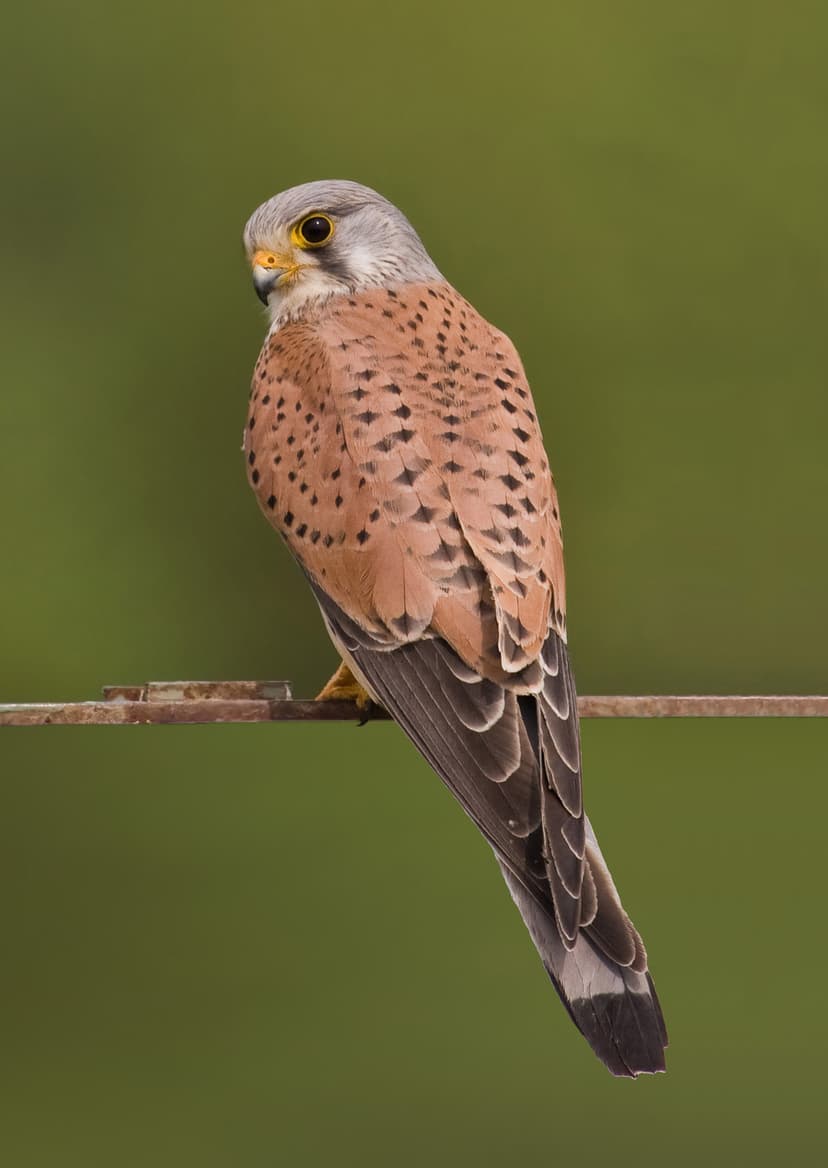
Falco tinnunculus
The common kestrel (Falco tinnunculus) is a widespread species of falcon found across Europe, Asia, and Africa, occasionally reaching North America. It is distinctive for its habit of hovering in the air while hunting and for the prominent black malar stripe present in all individuals.
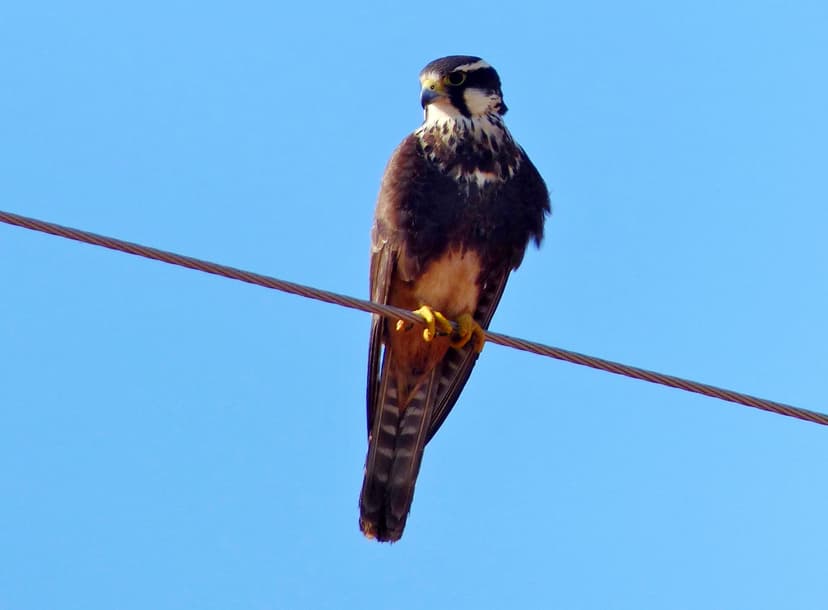
Falco femoralis
The aplomado falcon (Falco femoralis) is a slender, medium-sized falcon found throughout the Americas. Its name, derived from the Spanish word for "lead-colored," refers to its distinctive blue-grey plumage. This species is known for its swift hunting style, often preying on small birds, and its adaptability to various open habitats.
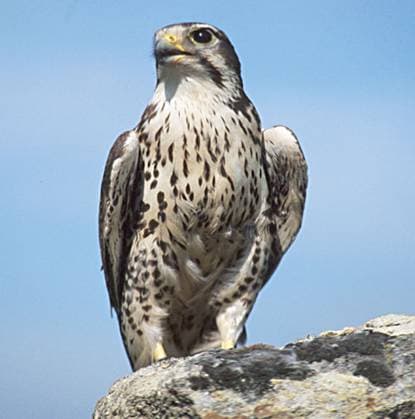
Falco mexicanus
The prairie falcon (Falco mexicanus) is a medium-sized falcon native to Western North America, distinguished by its adaptation to arid climates and opportunistic hunting. It is a divergence from the peregrine falcon lineage, capable of thriving on a more varied diet in harsher environments. The species is known for its aggressive nature and distinctive physical characteristics, including black "wingpits" and a narrow "moustache" mark.