
Falco peregrinus
The peregrine falcon (Falco peregrinus) is a widely distributed bird of prey renowned for its incredible speed during hunting dives. Characterized by its blue-grey back, barred white underparts, and black head, this crow-sized falcon is found on nearly every continent. It has adapted remarkably to urban environments, utilizing tall buildings for nesting and preying on abundant bird populations like pigeons.
Key Facts
- ›The peregrine falcon is one of the most widespread raptors globally, found in diverse habitats from Arctic tundra to tropical regions.
- ›It is famous for its high-speed hunting dive, known as a stoop, which can exceed 200 mph.
- ›Females are significantly larger than males, a trait known as sexual dimorphism common in bird-eating raptors.
- ›Historically, pesticides like DDT severely impacted peregrine populations, leading to their endangered status, but conservation efforts have aided recovery.
- ›These falcons are highly adaptable, thriving in urban settings by using skyscrapers as nesting sites.
- ›Both its common and scientific names, 'peregrine' and 'peregrinus,' translate to 'wandering falcon,' reflecting their migratory tendencies.
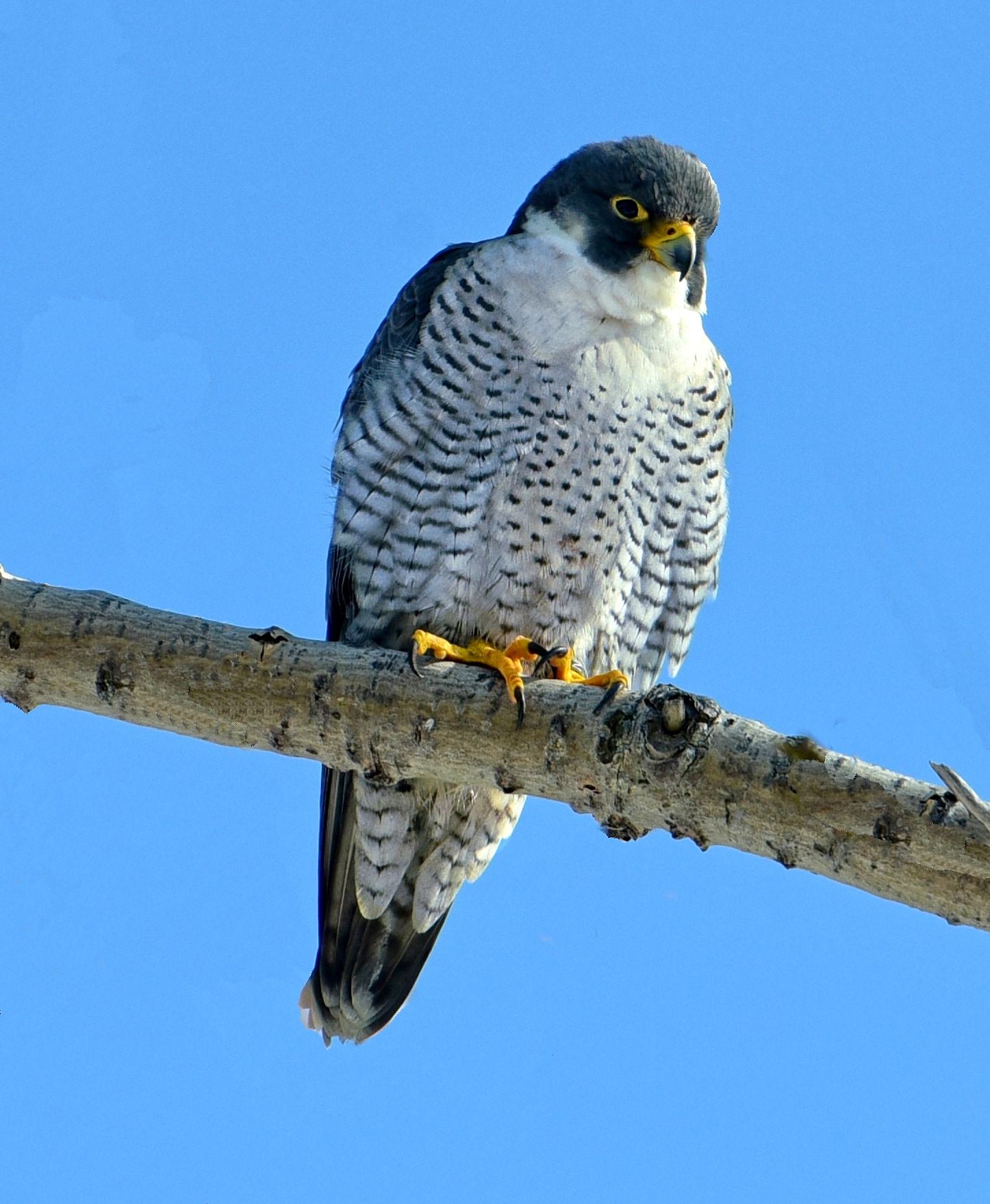
Peregrine, Duck Hawk, Black-Cheeked Falcon
Mountain Ranges, River Valleys, Coastlines, Cities, Cliff Edges, Tall Human-Made Structures
Arctic Tundra, Tropics, Nearly Worldwide
- Crow-sized falcon
- Blue-grey back
- Barred white underparts
- Black head with black 'moustache'
- Long, pointed wings
- Tail colored like the back with thin, clean bars
- Yellow cere and feet
- Upper beak notched near the tip
- Immature birds are browner with streaked underparts
Medium-Sized Birds, Small Mammals, Small Reptiles, Insects
Stoop
Pigeons, Ducks
Widespread Use of Various Pesticides
About Falco peregrinus
Peregrine Falcon (Falco peregrinus)
The peregrine falcon, scientifically known as Falco peregrinus, is a bird of prey celebrated globally for its astonishing speed and wide-ranging distribution. This crow-sized falcon is characterized by its distinctive blue-grey back, barred white underparts, and a black head, often featuring a prominent black 'moustache' mark. Its binomial name, Falco peregrinus, translates from Medieval Latin as 'wandering falcon,' aptly describing the migratory habits of many of its populations.
Habitat and Distribution
The peregrine falcon boasts one of the most extensive geographical distributions of any raptor, inhabiting land regions from the Arctic tundra to the tropics. It can be found on nearly every continent, absent only from extreme polar regions, very high mountains, and most tropical rainforests. Its adaptability has led to remarkable success as urban wildlife, with many populations thriving in cities where tall buildings serve as artificial cliff faces for nesting and abundant prey like feral pigeons is readily available.
Diet and Hunting
Primarily an avivore, the peregrine falcon's diet consists almost exclusively of medium-sized birds. It is a highly effective hunter, employing a high-speed dive known as a 'stoop,' which can exceed 200 miles per hour, to strike and disable its prey. While birds are its main food source, peregrines are opportunistic and will also hunt small mammals, reptiles, or insects when the opportunity arises.
Physical Characteristics and Reproduction
Peregrine falcons exhibit pronounced sexual dimorphism, with females being considerably larger than males. Adults display the characteristic blue-grey and white plumage, while juveniles are browner with streaked underparts. They mate for life and typically nest in scrapes on cliff edges or, increasingly, on the ledges of tall human-made structures. The species reaches sexual maturity at one year of age.
Conservation and Threats
Historically, peregrine falcon populations faced severe declines due to the widespread use of pesticides, particularly DDT, which caused eggshell thinning and reproductive failure. This led to the species becoming endangered in many areas. However, following the ban on DDT in the early 1970s and concerted conservation efforts, including the protection of nesting sites and captive breeding programs, peregrine falcon populations have shown significant recovery in numerous regions, demonstrating the resilience of this remarkable raptor.
Source: Wikipedia ↗
Frequently Asked Questions
What is the peregrine falcon known for?
The peregrine falcon is most famous for its incredible speed, particularly during its hunting dive called a stoop, which can reach speeds over 200 miles per hour. It is also recognized for its widespread distribution and adaptability to urban environments.
Where do peregrine falcons live?
Peregrine falcons have an extensive breeding range that spans from the Arctic tundra to the tropics. They can be found nearly everywhere on Earth, with notable exceptions including extreme polar regions, very high mountains, and most tropical rainforests.
What does a peregrine falcon eat?
The diet of peregrine falcons consists almost exclusively of medium-sized birds. However, they will occasionally hunt small mammals, small reptiles, or insects when the opportunity arises.
What are the physical characteristics of a peregrine falcon?
Adult peregrine falcons have a blue-grey back, barred white underparts, and a black head with a distinctive black 'moustache' mark. They have long, pointed wings, a blue-grey tail with thin dark bars, and yellow cere and feet. Females are considerably larger than males.
Why did the peregrine falcon become endangered?
Peregrine falcons became endangered in many areas due to the widespread use of pesticides, especially DDT. These chemicals thinned their eggshells, leading to reproductive failure. Since the ban on DDT in the early 1970s, populations have begun to recover.
How do peregrine falcons hunt?
Their primary hunting technique is the 'stoop,' a high-speed dive where they soar to a great height and then plunge towards their prey. They often strike their prey with one wing to disable it without harming themselves on impact.
Related Raptor species
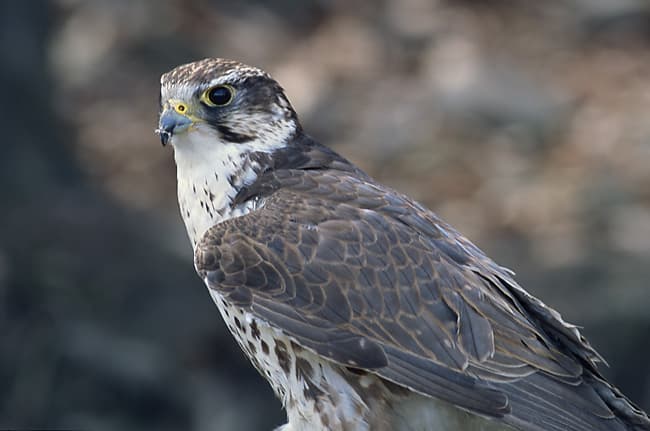
Falco cherrug
The saker falcon (Falco cherrug) is a large falcon species native to Eurasia, known for its impressive speed in flight. It is a partial migrant, with some populations wintering in the Sahel region of Africa. Culturally, it holds significance as the national bird of several countries and has a long history of use in falconry.
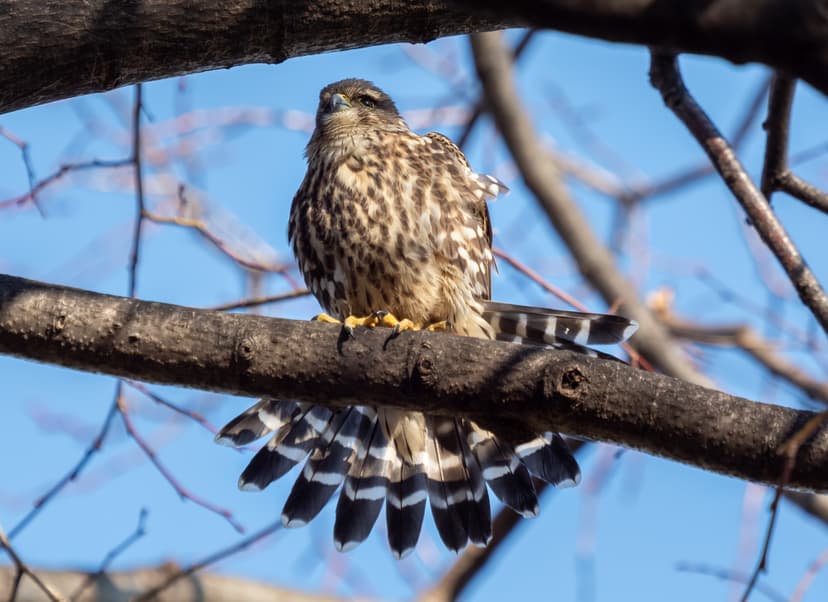
Falco columbarius
The merlin (Falco columbarius) is a small, swift falcon found across the Northern Hemisphere, breeding in the northern Holarctic and migrating to warmer regions in winter. Known for its agility in aerial pursuits, it primarily preys on small birds and shorebirds, and has a long history of use in falconry.
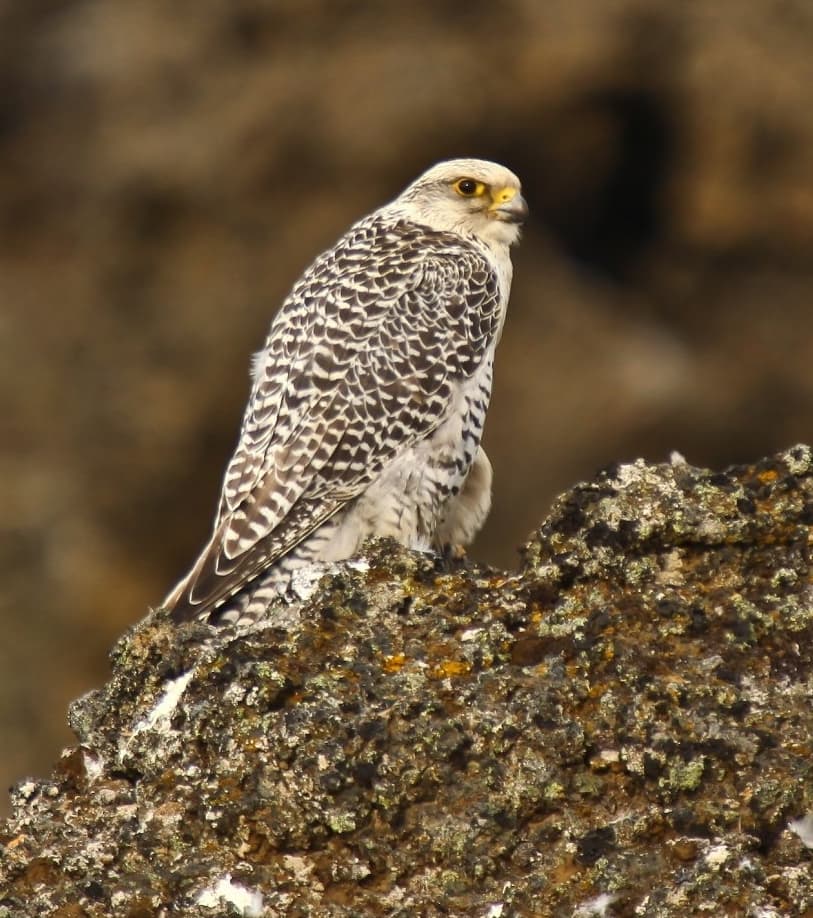
Falco rusticolus
The gyrfalcon (Falco rusticolus) is the largest species of falcon, native to Arctic coastal regions and tundra. It is a highly polymorphic species, with plumage ranging from all-white to dark grey-brown, and exhibits sexual dimorphism with females being significantly larger than males. Historically valued for falconry, it preys on birds and mammals, often hunting in horizontal pursuits rather than stoops.