
Falco femoralis
The aplomado falcon (Falco femoralis) is a slender, medium-sized falcon found throughout the Americas. Its name, derived from the Spanish word for "lead-colored," refers to its distinctive blue-grey plumage. This species is known for its swift hunting style, often preying on small birds, and its adaptability to various open habitats.
Key Facts
- ›The aplomado falcon is characterized by its slender build, long wings, and long tail, resembling a small peregrine falcon.
- ›Adults display dark blue-grey upperparts, a white throat and eyestripe, and a cinnamon-colored belly with black patches on the lower breast.
- ›Its diet primarily consists of large invertebrates and small vertebrates, with small birds forming the majority of its prey.
- ›The species prefers dry grasslands, savannas, and marshes and has been observed hunting insects at twilight and following maned wolves.
- ›Reintroduction efforts have been undertaken in the southwestern United States, with varying degrees of success, highlighting habitat destruction as a major threat.
- ›Three subspecies are recognized: F. f. septentrionalis, F. f. femoralis, and F. f. pichinchae.
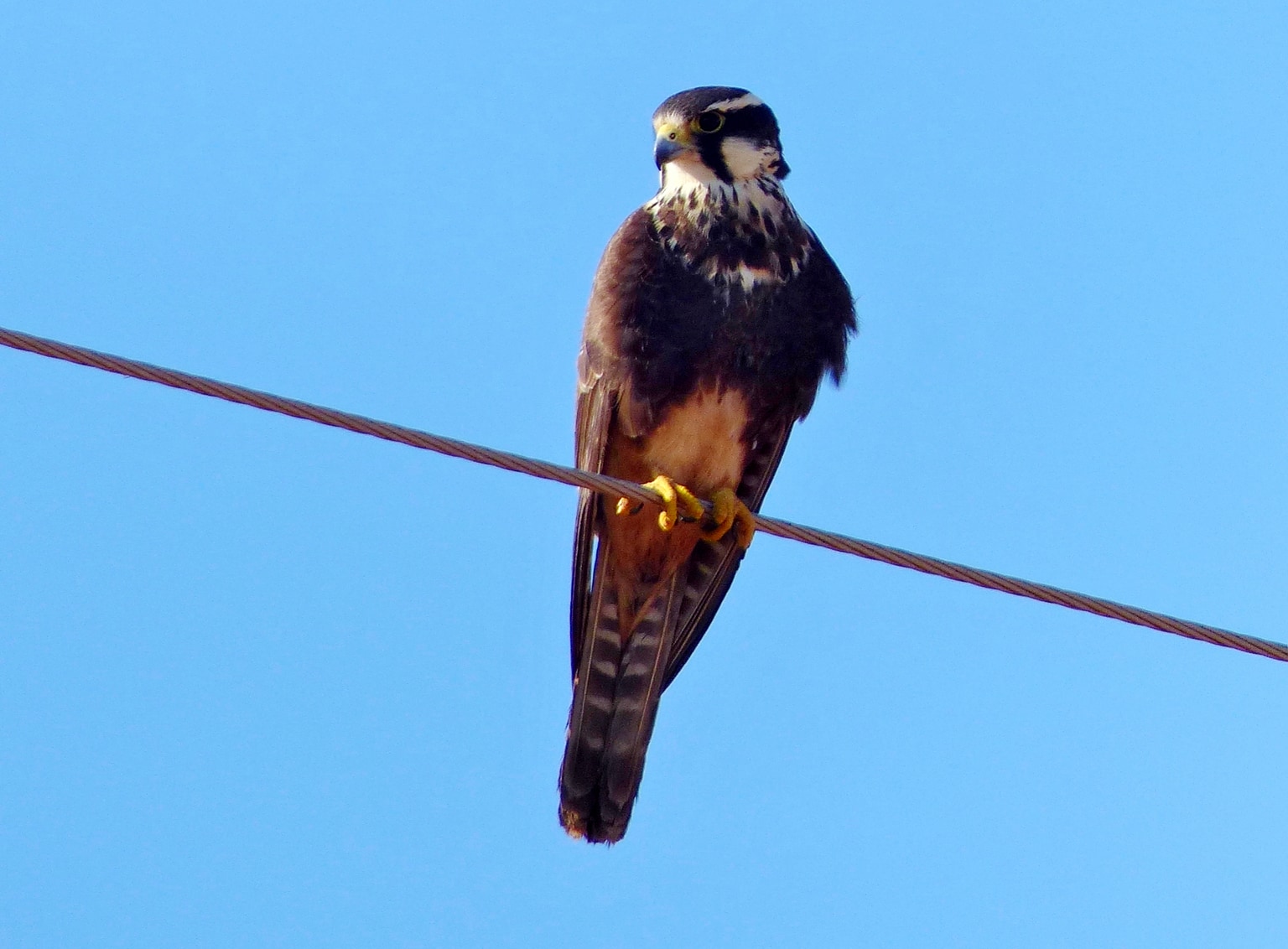
Aplomado Falcon, Orange-Chested Hobby, HalcóN Aplomado, HalcóN Fajado, FalcãO-De-Coleira
Dry Grasslands, Savannas, Marshes
Americas, North America, South America, Mexico, Guatemala, Nicaragua, Belize, Trinidad, Colombia, Chile, Argentina, Tierra Del Fuego, United States
- Medium-sized falcon
- Very slender
- Long-winged
- Long-tailed
- 30–40 cm in length
- Adult upperparts dark blue-grey
- White throat and eyestripe
- Falcon 'moustache'
- Black patches on lower breast
- Light cinnamon belly and thighs
- Black tail with narrow white or grey bars and a white tip
- Yellow or yellow-orange cere, eye-ring, and feet
- Females are larger than males
- Juveniles have blackish brown upperparts and belly band, black-streaked chest, buffy white on head and breast, paler cinnamon underparts, and paler feet
Large Invertebrates, Small Vertebrates, Small Birds
Soaring At Twilight Hunting Insects, Following Maned Wolves To Flush Birds, Cooperation Between Pairs During Hunts, Hunting Over Burning Fields
Small Birds, Insects, Cattle Egret, Plain Chachalaca
Habitat Destruction
About Falco femoralis
The Aplomado Falcon (Falco femoralis)
The aplomado falcon, scientifically known as Falco femoralis, is a medium-sized falcon native to the Americas. Its name, "aplomado," is a Spanish term meaning "lead-colored," referencing the distinctive blue-grey hues of its plumage. While its largest continuous range is in South America, it is also found from northern Mexico down to southern parts of the continent. Historically, it was sometimes called the "orange-chested hobby" due to its shape and plumage.
Description and Characteristics
This falcon is characterized by its slender build, long wings, and long tail, making it comparable in size to a small peregrine falcon. Adults typically measure 30–40 cm in length with an average wingspan of about 90 cm. The upperparts and much of the head are a dark blue-grey, sharply contrasted by a white throat and eyestripe, and a characteristic falcon "moustache." The upper breast is white, transitioning to black patches on the lower breast that meet in the middle. The belly and thighs are a light cinnamon color, and the tail is black with narrow white or grey bars and a white tip. The cere, eye-ring, and feet are a vibrant yellow or yellow-orange. Females are larger than males, but otherwise, the sexes are similar in appearance. Juvenile birds resemble adults but have blackish-brown upperparts and belly bands, streaked chests, buffy white on the head and breast, and paler cinnamon underparts.
Habitat and Distribution
The aplomado falcon prefers open environments such as dry grasslands, savannas, and marshes. It has adapted to various regions across the Americas, though it has become extinct in many parts of its former range, including much of northern and central Mexico. Despite these local declines, the species is considered globally widespread and is listed as Least Concern by the IUCN.
Diet and Hunting Behavior
Its diet consists primarily of large invertebrates and small vertebrates, with small birds making up the vast majority of its prey. Small birds often react with alarm upon spotting aplomado falcons, indicating their significant predatory impact. The falcon is known for hunting insects at twilight and is sometimes observed following larger animals like maned wolves to catch flushed birds. Cooperation between pairs during hunts has also been documented.
Reproduction and Conservation
Nesting occurs on stick platforms built in bushes or trees, where two or three eggs are laid. Reintroduction efforts have been initiated in the southwestern United States, particularly in Texas and New Mexico, to restore populations that had diminished significantly. These efforts have faced challenges, with habitat destruction identified as a major threat hindering the establishment of wild breeding populations. Despite some successes, the long-term success of these reintroduction programs remains a focus for conservationists.
Source: Wikipedia ↗
Frequently Asked Questions
What does the aplomado falcon look like?
Adult aplomado falcons are slender with dark blue-grey upperparts and head, contrasting with a white throat and eyestripe. They have a distinctive black-and-cinnamon pattern on their underparts and a black tail with white bars and tip. Their cere, eye-ring, and feet are yellow or yellow-orange.
Where does the aplomado falcon live?
The aplomado falcon has a wide range across the Americas, with its largest continuous distribution in South America, though not in the deep interior of the Amazon Basin. It is also found from northern Mexico south to southern South America.
What does the aplomado falcon eat?
Its diet mainly comprises large invertebrates and small vertebrates, with small birds constituting the bulk of its prey. They have been observed hunting insects on the wing and have even been recorded taking larger birds like cattle egrets.
What are the main threats to the aplomado falcon?
Habitat destruction is identified as a primary threat that has contributed to the species' near disappearance from parts of its former range, such as the United States. This also hinders the reestablishment of wild breeding populations.
Are there reintroduction efforts for the aplomado falcon?
Yes, reintroduction efforts have been ongoing in the southwestern United States, particularly in Texas and New Mexico. These programs have seen some success, including the fledging of young, but face challenges related to habitat preservation and protection status.
Related Raptor species
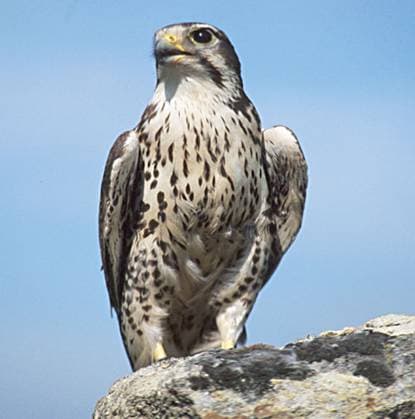
Falco mexicanus
The prairie falcon (Falco mexicanus) is a medium-sized falcon native to Western North America, distinguished by its adaptation to arid climates and opportunistic hunting. It is a divergence from the peregrine falcon lineage, capable of thriving on a more varied diet in harsher environments. The species is known for its aggressive nature and distinctive physical characteristics, including black "wingpits" and a narrow "moustache" mark.
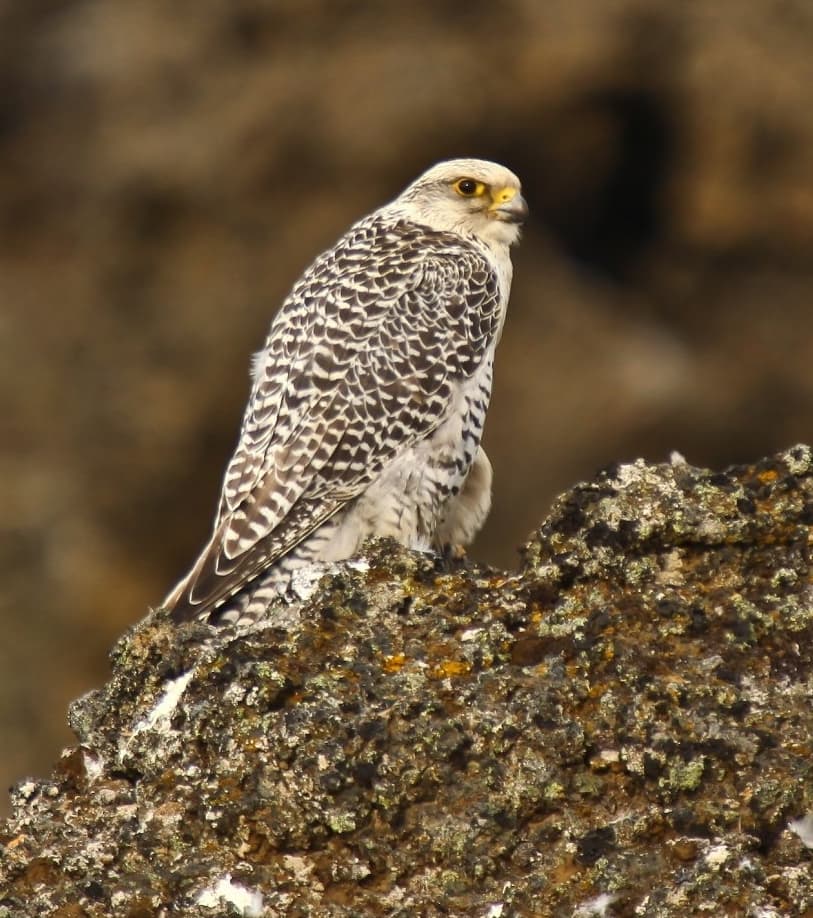
Falco rusticolus
The gyrfalcon (Falco rusticolus) is the largest species of falcon, native to Arctic coastal regions and tundra. It is a highly polymorphic species, with plumage ranging from all-white to dark grey-brown, and exhibits sexual dimorphism with females being significantly larger than males. Historically valued for falconry, it preys on birds and mammals, often hunting in horizontal pursuits rather than stoops.
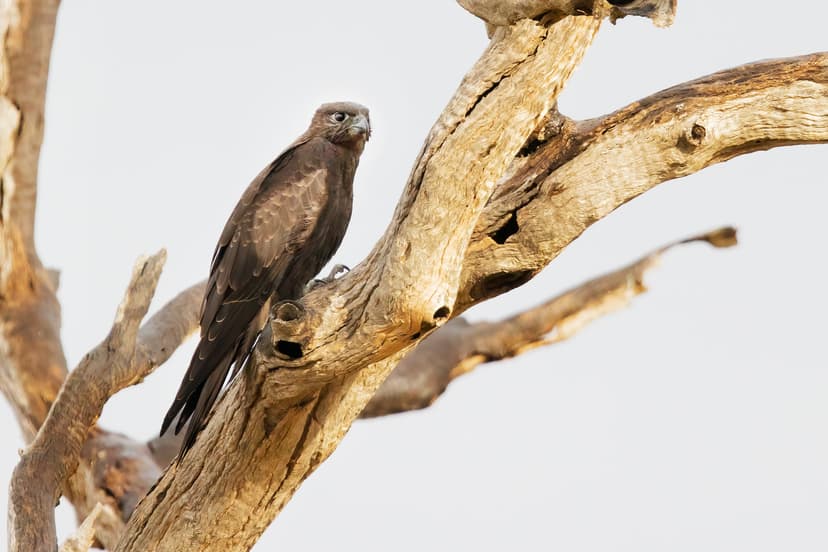
Falco subniger
The black falcon (Falco subniger) is a medium-large falcon endemic to Australia, known for its uniform dark brown to sooty black plumage. Despite being found across mainland Australia, it is considered the country's most under-studied falcon, and its population status varies by state, with some listing it as vulnerable or rare. Its streamlined body, long pointed wings, and variable flight style are distinctive.