
Falco mexicanus
The prairie falcon (Falco mexicanus) is a medium-sized falcon native to Western North America, distinguished by its adaptation to arid climates and opportunistic hunting. It is a divergence from the peregrine falcon lineage, capable of thriving on a more varied diet in harsher environments. The species is known for its aggressive nature and distinctive physical characteristics, including black "wingpits" and a narrow "moustache" mark.
Key Facts
- ›Native exclusively to North America, it is the only larger falcon species found strictly on the continent.
- ›It inhabits open, arid country, including deserts, shortgrass prairies, and alpine tundra.
- ›Prairie falcons are opportunistic hunters, preying on a wide range of mammals, birds, and occasional reptiles.
- ›Males are smaller and lighter than females, with females capable of hunting significantly larger prey.
- ›Its plumage is warm gray-brown above and pale with dark mottling below, featuring distinctive black axillars.
- ›The species is popular in falconry for its aggressiveness and agility.
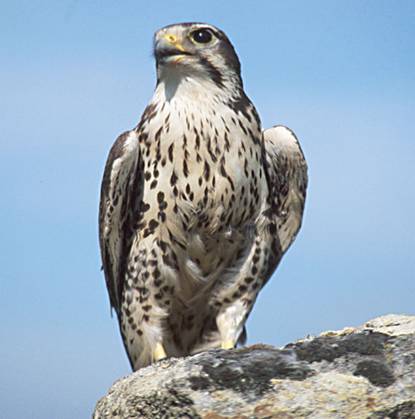
Prairie Falcon
Arid Open Country, Shortgrass Prairie, High Desert, Alpine Tundra, Low Deserts
North America, Canada, Western United States, Northern Mexico
- Warm gray-brown plumage above, pale with dark mottling below
- Narrow "moustache" mark below the eye
- White line over the eye
- Conspicuous black axillars and underwing coverts
- Males: 37-38 cm length, 500-635g weight
- Females: ~45 cm length, 762-970g weight
- Wingspan up to 1.1 meters
- Longer tail in proportion to size compared to Peregrine Falcon
- More tubular, less stocky body than Peregrine Falcon
- Wing joint farther from body than Peregrine Falcon
Small Mammals, Small To Medium-Sized Birds, Occasional Larger Birds, Occasional Reptiles
- Fast, low flight over terrain to surprise prey
- Stooping from altitude, leveling out near the ground
- Using terrain for cover to approach flocks and attack from below
- Pursuing prey sighted from a perch in a tail-chase
- Emulating flight styles of other birds to deceive prey
- High-speed diving stoop from high altitude
- Striking prey with closed foot or swiping with open foot armed with talons
- Using talons, particularly the hallux, for raking
Sparrows, Finches, Squirrels, Ground Squirrels, Prairie Dogs, Chipmunks, Gophers, Rabbits, Starlings, Grackles, Doves, Quail, Meadow Larks, Pigeons, Coots, Teal, Mallards
About Falco mexicanus
Prairie Falcon (Falco mexicanus)
The prairie falcon, scientifically known as Falco mexicanus, is a medium-sized falcon endemic to Western North America. It is recognized as an arid-climate divergence from the peregrine falcon lineage, having evolved to thrive in harsher environments with lower prey densities. This adaptation has led to a more opportunistic and varied diet, encompassing mammals, birds, and reptiles, distinguishing it from its close relatives.
Description and Characteristics
Prairie falcons are characterized by their warm gray-brown plumage above and pale, mottled undersides. Distinctive features include a narrow "moustache" mark below the eye, a white supercilium (eyebrow stripe), and notably, black axillars or "wingpits" that create a "strutted" appearance along the wings. Significant sexual dimorphism is present; males are considerably smaller and lighter than females, with females capable of hunting prey much larger than themselves. The species possesses a longer tail relative to its body size and a more tubular, less stocky build compared to the peregrine falcon.
Habitat and Distribution
This falcon prefers open country, particularly arid landscapes such as shortgrass prairies, high deserts, and alpine tundra during the breeding season. In winter, their range expands to include low deserts and occasionally urban areas. The prairie falcon is resident from southern Canada (Alberta, British Columbia, Saskatchewan) through the western United States and into northern Mexico. While less migratory than other North American falcons, they do move from the northernmost and highest elevations in winter, spreading to deserts and the Pacific coast.
Diet and Hunting Behavior
As opportunistic predators, prairie falcons hunt a broad spectrum of prey. Their diet primarily consists of small mammals, especially during summer, and small to medium-sized birds caught in flight. They are also known to take reptiles. Their hunting techniques are diverse, including fast, low flights to surprise prey, high-speed stoops from altitude, and using terrain for cover. They are relentless in pursuit and employ striking methods with their feet, often using closed talons or raking with an extended talon to subdue prey.
Reproduction and Life Cycle
Prairie falcons nest on cliff ledges. The average clutch size is four eggs, which are adapted for arid climates with better water retention. The incubation period lasts approximately 31 days, with the female undertaking most of the incubation and brooding. The male provides the majority of the food, with the female joining the hunt once the chicks are a few weeks old. Young falcons, known as eyases, fledge around 36 to 41 days after hatching and become self-sufficient approximately 65 days after hatching. They are known to compete with other raptors, including peregrine falcons and various hawks, but can also aggressively defend their territories and even overpower larger avian predators.
Evolutionary Significance and Falconry
Genetic studies reveal the prairie falcon as an ancient offshoot of the peregrine falcon lineage, having diverged millions of years ago and adapted to arid environments through parapatric speciation. This evolutionary path has equipped them with enhanced energy efficiency and prey utilization in sparse habitats. The prairie falcon is also highly valued in falconry for its aggressiveness, agility, and hunting prowess, making it a popular choice for sport hunting.
Source: Wikipedia ↗
Frequently Asked Questions
What is the primary habitat of the prairie falcon?
The prairie falcon's natural habitat is open country, particularly arid regions. This includes shortgrass prairie, high desert, and in summer, even alpine tundra. In winter, they become more widespread, venturing into low deserts and occasionally near towns.
How does the prairie falcon's diet differ from the peregrine falcon's?
The prairie falcon has a more meager, opportunistic diet compared to the peregrine falcon. It is adapted to environments with low prey density and hunts a wide range of mammals, birds, and reptiles, including prey often larger than itself.
What are the key physical differences between male and female prairie falcons?
Prairie falcons exhibit significant sexual dimorphism. Males are typically 37-38 cm in length and weigh 500-635g, while females are larger, around 45 cm in length and weighing 762-970g. A large female can be nearly twice the size of a small male and hunts larger prey.
How can one distinguish a juvenile prairie falcon from an adult?
Distinguishing juveniles involves examining several factors: juveniles tend to have more uniform coloration on their upper breast, uniformly colored shoulder and back feathers, and gray skin around their eyes, cere, and legs. Adults often have more dark streaking on the upper breast, barred shoulder and back feathers, and yellow skin.
What is the evolutionary relationship between the prairie falcon and the peregrine falcon?
Genetic analysis indicates that the prairie falcon is an early aridland offshoot of the peregrine falcon lineage, diverging about 3 to 5 million years ago. They evolved through parapatric speciation, adapting to the selective pressures of arid environments.
Does the prairie falcon migrate?
The prairie falcon is much less migratory than other North American falcons. However, in winter, they do withdraw from the northernmost and highest parts of their breeding range, spreading to deserts and the Pacific coast, and southward into Mexico.
Related Raptor species
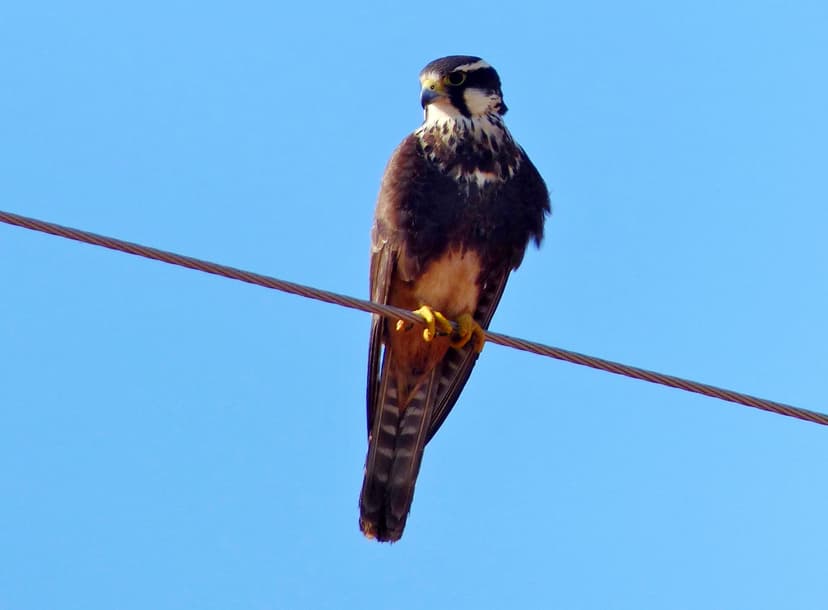
Falco femoralis
The aplomado falcon (Falco femoralis) is a slender, medium-sized falcon found throughout the Americas. Its name, derived from the Spanish word for "lead-colored," refers to its distinctive blue-grey plumage. This species is known for its swift hunting style, often preying on small birds, and its adaptability to various open habitats.
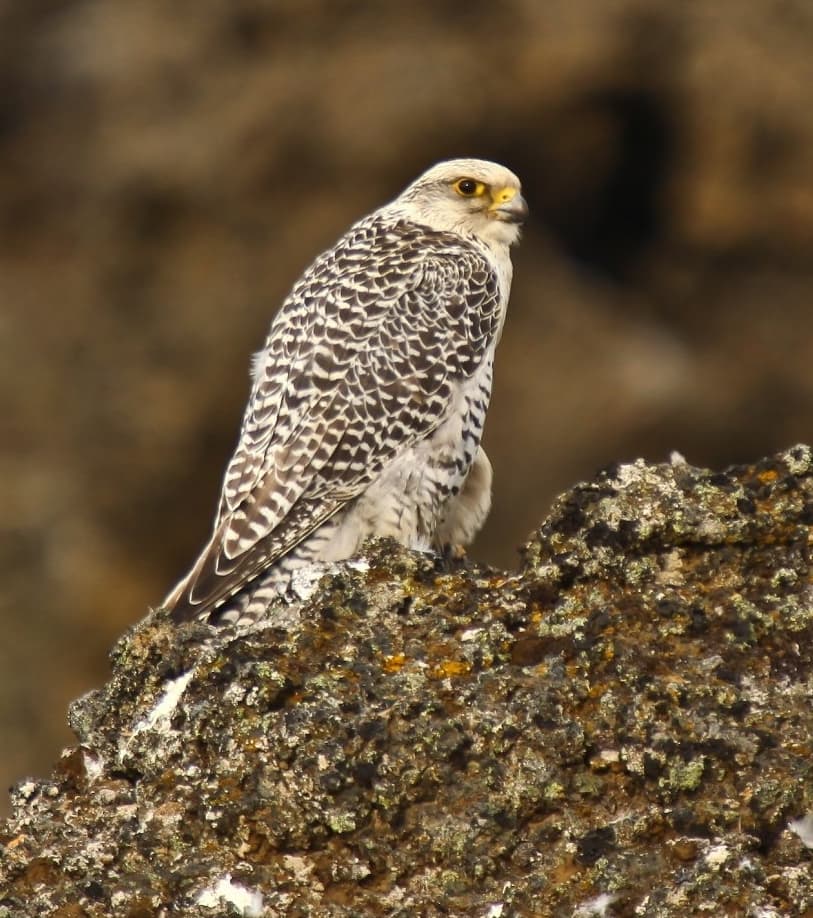
Falco rusticolus
The gyrfalcon (Falco rusticolus) is the largest species of falcon, native to Arctic coastal regions and tundra. It is a highly polymorphic species, with plumage ranging from all-white to dark grey-brown, and exhibits sexual dimorphism with females being significantly larger than males. Historically valued for falconry, it preys on birds and mammals, often hunting in horizontal pursuits rather than stoops.
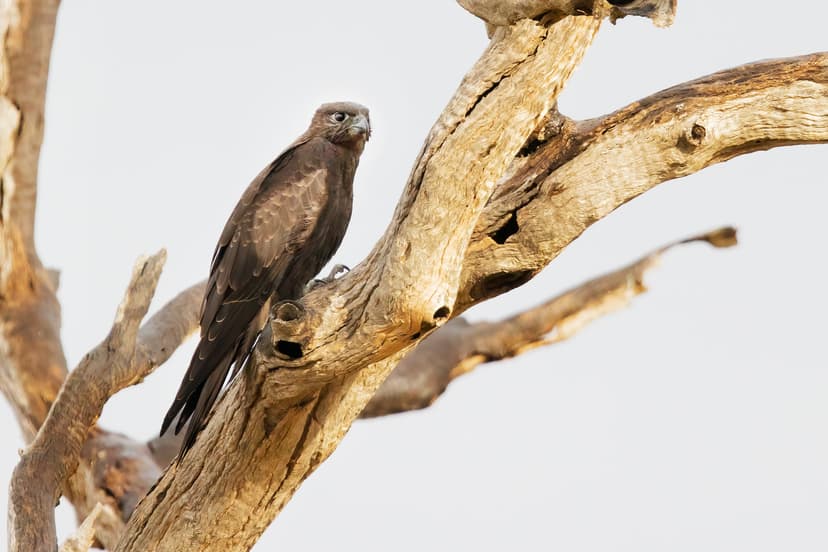
Falco subniger
The black falcon (Falco subniger) is a medium-large falcon endemic to Australia, known for its uniform dark brown to sooty black plumage. Despite being found across mainland Australia, it is considered the country's most under-studied falcon, and its population status varies by state, with some listing it as vulnerable or rare. Its streamlined body, long pointed wings, and variable flight style are distinctive.