
Falco subniger
The black falcon (Falco subniger) is a medium-large falcon endemic to Australia, known for its uniform dark brown to sooty black plumage. Despite being found across mainland Australia, it is considered the country's most under-studied falcon, and its population status varies by state, with some listing it as vulnerable or rare. Its streamlined body, long pointed wings, and variable flight style are distinctive.
Key Facts
- ›Uniformly dark brown to sooty black plumage, with juveniles being darker than adults.
- ›Females are larger than males, exhibiting sexual dimorphism.
- ›Primarily preys on bird species but also consumes small mammals, insects, and carrion.
- ›Nests in trees, often utilizing abandoned stick nests of corvids or other raptors.
- ›Considered Australia's most under-studied falcon.
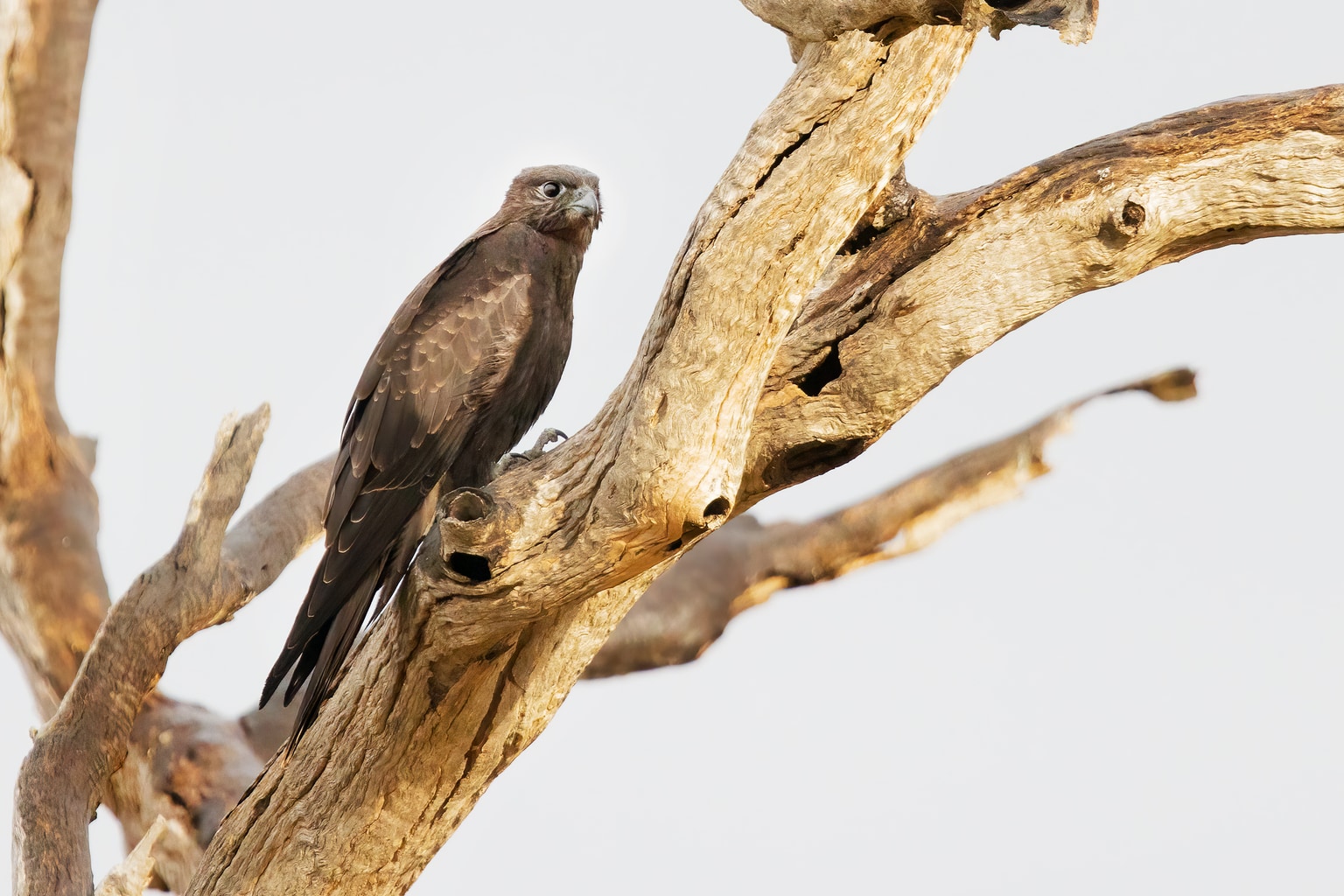
Black Falcon
Arid and Semi-Arid Zones, Open Wooded Grasslands, Saltbush Plains, Bluebush Plains, Low Vegetation, Wetlands, Near Watercourses, Utilizing Patches of Isolated Trees
Australia
- Medium-large falcon
- Uniform dark brown to sooty black plumage
- Juveniles are generally darker than adults
- Underwing feathers are two-tone
- Adults may have a dark stripe below the eye
- Occasional white chin, spots on underwing coverts, or bars on undertail coverts
- Cere, eye ring, and feet are pale grey or pale blue-grey
- Dark brown eyes
- Black beak tip
- Black talons
- Streamlined body
- Relatively long tail
- Slim build
- Long, pointed wings tapering toward the tip
- White down on chicks
Bird Species, Small Mammals, Insects, Carrion
Contour hunting, Surprising and taking birds on the wing, Tail chasing other birds over long distances, Peregrine-like vertical stoop, Soaring for long periods without flapping, Catching prey in the air or on the ground, Powerful, rapid wingbeats in pursuit
Crested Pigeon, Feral Rock Dove, Australian Pipit, Australian Magpie, Australian Ringneck, Black-Faced Cuckooshrike, Blue Bonnet, Budgerigar, Common Starling, Eastern Rosella, Fairy Martin, Galah, Grey Teal, Honeyeaters, Horsfield's Bush Lark, Little Buttonquail, Little Corella, Musk Lorikeet, Stubble Quail, Zebra Finch, Turquoise Parrot, Apostlebird, Rabbits, Mice, Rats
- Habitat clearing
- Degradation of habitat by overgrazing
- Collision with vehicles
- Shooting
- Competition from corvids and other raptors over nest sites
- Disturbance of nest sites
- Harassment by other birds
About Falco subniger
Black Falcon (Falco subniger)
The black falcon, scientifically known as Falco subniger, is a medium-large falcon endemic to Australia. It is found across all mainland states and territories, yet remains one of Australia's most under-studied raptors. Its plumage is a distinctive uniform dark brown to sooty black, with juveniles typically being darker than adults. Females are larger than males, a form of sexual dimorphism.
Distribution and Habitat
The black falcon is widely distributed throughout mainland Australia, favoring arid and semi-arid regions. It is commonly found near watercourses or in areas with isolated trees, hunting over open wooded grasslands, saltbush plains, and other low vegetation. While generally absent from densely forested areas, they may be seen near wetlands or temporary water bodies that attract abundant birdlife.
Behavior and Ecology
This falcon exhibits a variable flight style, often characterized by relaxed, crow-like wingbeats interspersed with soaring. They can also fly with stiffer, shorter wingbeats and glide with wings slightly drooped or horizontal. Hunting is typically solitary but can occur cooperatively in pairs or larger groups when prey is abundant. Their diet primarily consists of birds, but they also consume small mammals, insects, and carrion. Notable hunting techniques include contour hunting over treetops and tail-chasing.
Breeding and Life Cycle
Breeding typically occurs between May and November, with clutches usually containing three to four eggs. Incubation lasts approximately 34 days, and the nestling period ranges from 5.5 to 7 weeks. Black falcons nest in trees, often re-using stick nests built by corvids or other raptors. They have a lifespan of at least 12 years in the wild and up to 20 years in captivity.
Conservation Status and Threats
While listed as Least Concern under the IUCN Red List, the black falcon's status varies regionally within Australia, being considered Vulnerable in New South Wales and Rare in South Australia. Major threats are anthropogenic, including habitat clearing, degradation, vehicle collisions, and shooting. Competition for nesting sites and disturbance also impact breeding success. Further research into its biology and ecology is considered a priority for conservation management.
Source: Wikipedia ↗
Frequently Asked Questions
What is the scientific name of the black falcon?
The scientific name of the black falcon is Falco subniger. It belongs to the family Falconidae, along with other Australian falcons such as the brown falcon, grey falcon, and peregrine falcon.
Where are black falcons found?
Black falcons are widely distributed across mainland Australia, excluding densely forested areas. They are typically found in arid and semi-arid zones, often near watercourses or isolated trees, hunting over open wooded grasslands and low vegetation.
What does a black falcon eat?
The diet of the black falcon primarily consists of bird species, ranging in size from finches to cockatoos. They have also been observed feeding on small mammals like rabbits and mice, as well as insects and carrion.
How does a black falcon hunt?
Black falcons exhibit variable flight and hunting styles, often using relaxed, crow-like wingbeats or stiffer, shorter beats. They may soar for extended periods, catch prey in the air or on the ground, use contour hunting over treetops, and occasionally engage in tail-chasing or vertical stoops.
What are the threats to black falcons?
Primary threats to black falcons are human-induced, including habitat clearing, degradation by overgrazing, collisions with vehicles, and shooting. The loss of large old trees and breeding sites, particularly in riparian areas, is a significant concern.
Related Raptor species
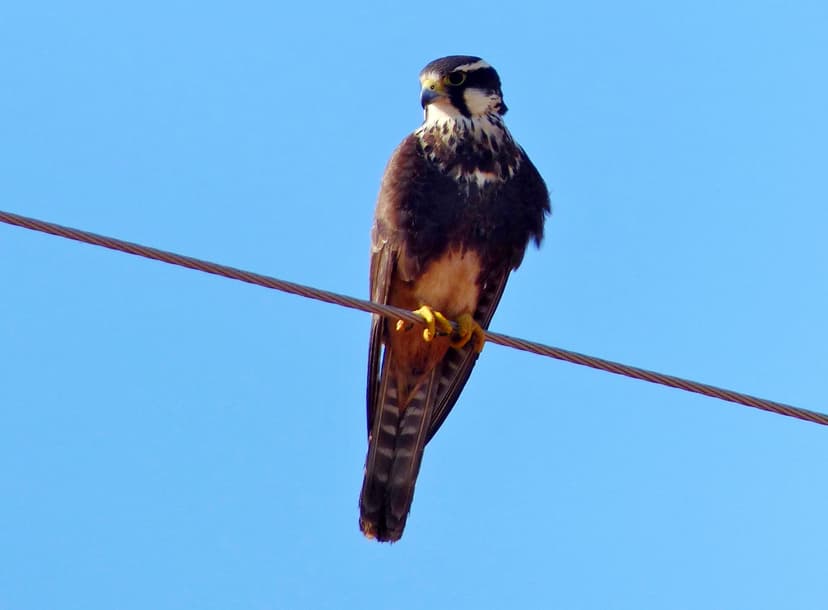
Falco femoralis
The aplomado falcon (Falco femoralis) is a slender, medium-sized falcon found throughout the Americas. Its name, derived from the Spanish word for "lead-colored," refers to its distinctive blue-grey plumage. This species is known for its swift hunting style, often preying on small birds, and its adaptability to various open habitats.
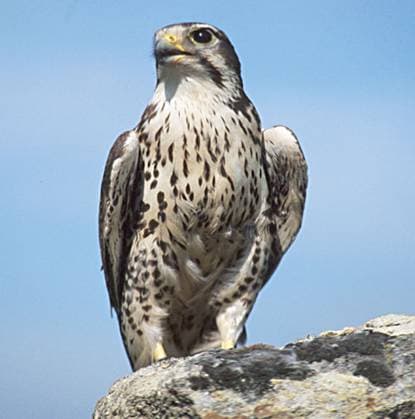
Falco mexicanus
The prairie falcon (Falco mexicanus) is a medium-sized falcon native to Western North America, distinguished by its adaptation to arid climates and opportunistic hunting. It is a divergence from the peregrine falcon lineage, capable of thriving on a more varied diet in harsher environments. The species is known for its aggressive nature and distinctive physical characteristics, including black "wingpits" and a narrow "moustache" mark.
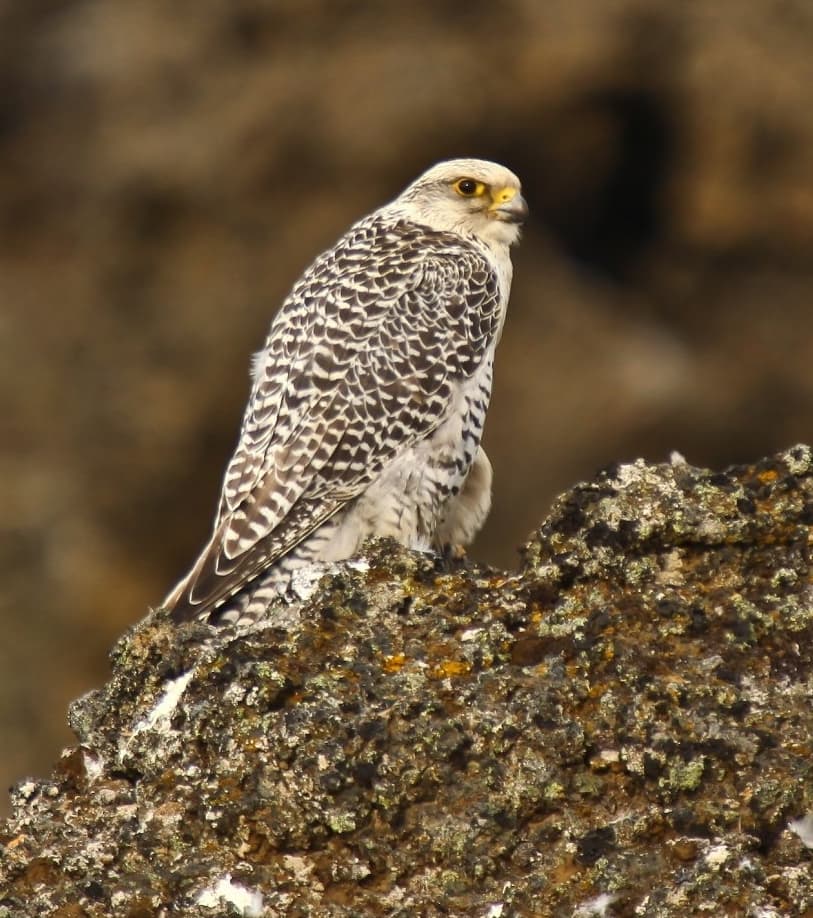
Falco rusticolus
The gyrfalcon (Falco rusticolus) is the largest species of falcon, native to Arctic coastal regions and tundra. It is a highly polymorphic species, with plumage ranging from all-white to dark grey-brown, and exhibits sexual dimorphism with females being significantly larger than males. Historically valued for falconry, it preys on birds and mammals, often hunting in horizontal pursuits rather than stoops.