
Falco tinnunculus
The common kestrel (Falco tinnunculus) is a widespread species of falcon found across Europe, Asia, and Africa, occasionally reaching North America. It is distinctive for its habit of hovering in the air while hunting and for the prominent black malar stripe present in all individuals.
Key Facts
- ›Widespread across Europe, Asia, and Africa, with occasional sightings in North America.
- ›Known for its characteristic hunting technique of hovering in MID-air.
- ›Males have a blue-grey cap and tail, and both sexes possess a black malar stripe.
- ›Primarily preys on small mammals like voles and shrews, but diet can include birds, reptiles, and insects.
- ›Nests in cavities such as holes in cliffs, trees, or buildings, and often reuses old corvid nests.
- ›Global conservation status is Least Concern, though some subspecies are rarer.
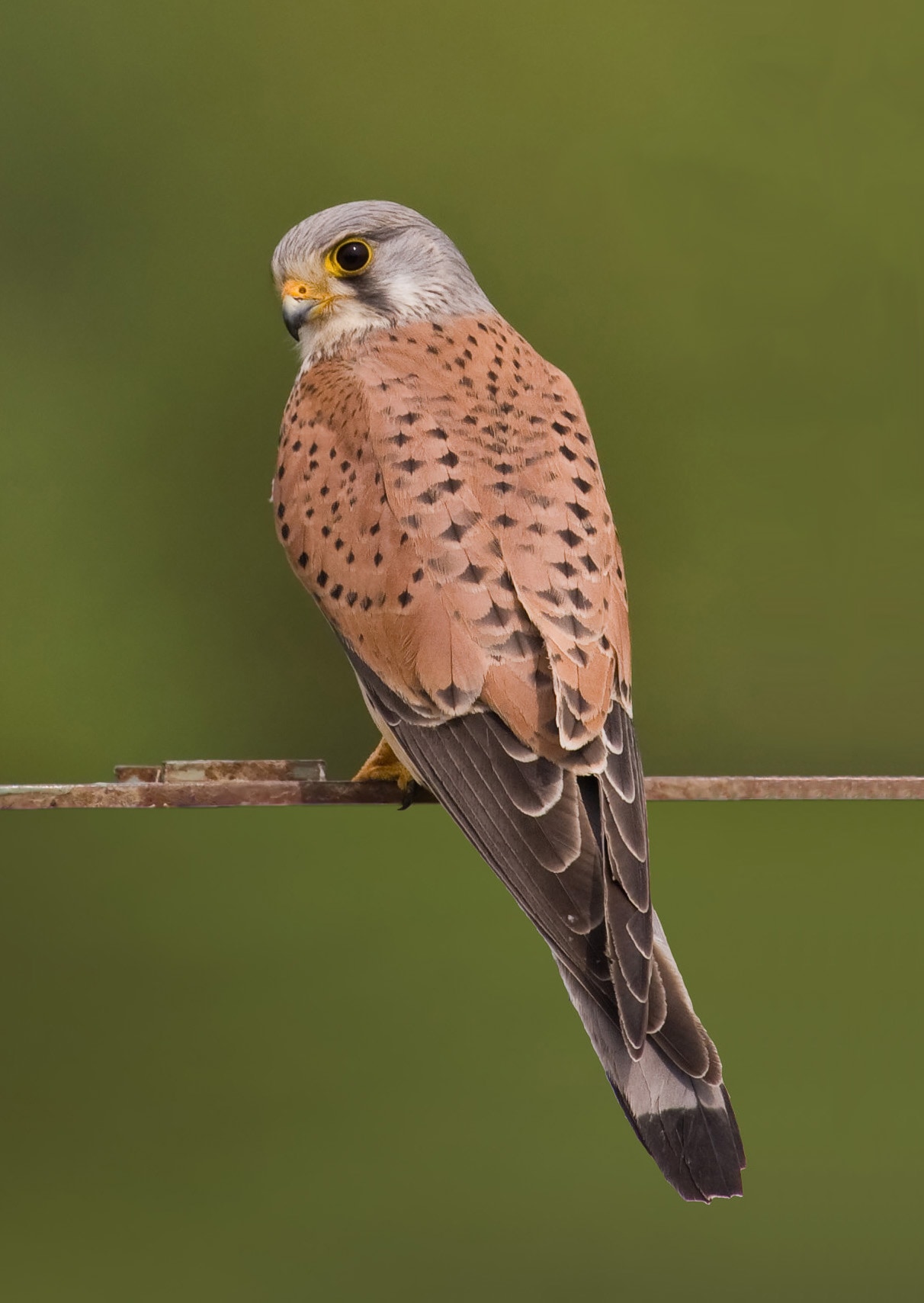
European Kestrel, Eurasian Kestrel, Old World Kestrel, Kestrel
Fields, Heaths, Shrubland, Marshland, Steppe, Savanna, Wetlands, Moorlands
Europe, Asia, Africa, North America
- Measures 32–39 cm in length.
- Wingspan ranges from 65–82 cm.
- Females are noticeably larger than males.
- Plumage is light chestnut brown with blackish spots above and buff with blackish streaks below.
- Males have a blue-grey cap and tail, fewer black spots, and blackish streaks.
- Females have brown tails with black bars.
- Both sexes possess a prominent black malar stripe.
- Cere, feet, and eye-ring are bright yellow; bill and iris are dark.
Mouse-Sized Mammals, Small Birds, Lizards, Bats, Insects, Camel Spiders, Earthworms
- Hovering 10-20m above ground, facing the wind or using ridge lift
- Short, steep dives towards sighted prey
- Perching above ground cover to survey and pounce
- Ground-hugging flight to ambush prey
Voles, Shrews, Mice, Passerines, Lizards, Insects
Pesticide Use
About Falco tinnunculus
The Common Kestrel (Falco tinnunculus)
The common kestrel, scientifically known as Falco tinnunculus, is a widely distributed bird of prey belonging to the falcon family, Falconidae. This species is readily identifiable by its characteristic hunting method of hovering in mid-air while scanning for prey, and by the distinct black malar stripe found on all individuals. Its native range is extensive, covering large parts of Europe, Asia, and Africa, with occasional sightings extending to the east coast of North America.
Description and Characteristics
Common kestrels measure between 32 to 39 cm in length, with a wingspan of 65 to 82 cm. Females are typically larger than males. The plumage is predominantly light chestnut brown with blackish spots on the upperparts and buff with narrow blackish streaks on the underparts. Males exhibit sexual dimorphism with a blue-grey cap and tail, and fewer black spots. The tail of the female is brown with black bars, while both sexes have a black tip and a narrow white rim on the tail. All common kestrels share a prominent black malar stripe, a feature shared with their closest relatives.
Behavior and Ecology
In cooler climates, the common kestrel undertakes southward migrations during winter; otherwise, it tends to be sedentary, though juveniles may disperse. It is a diurnal species that favors open habitats such as fields, heaths, shrubland, and marshland, and can adapt to various environments including steppes, savannas, wetlands, and moorlands. They are also known to inhabit urban areas, nesting on buildings.
Hunting and Diet
A hallmark of the common kestrel's hunting strategy is its ability to hover, remaining stationary in the air 10 to 20 meters above the ground to spot prey. They possess keen eyesight and can detect the ultraviolet patterns of urine trails left by rodents. Their primary food source consists of small mammals like voles, shrews, and mice. When mammals are scarce, especially on islands, they may supplement their diet with small birds. Lizards, bats, and a variety of insects such as beetles and termites are also consumed.
Breeding Habits
The breeding season for common kestrels begins in spring in temperate regions, typically April or May, and between August and December in tropical and southern African areas. They are cavity nesters, utilizing holes in cliffs, trees, or buildings, and often repurpose old nests of corvids. A clutch usually contains 3 to 7 eggs, which are incubated by both parents for about 4 weeks. The young fledge after 4 to 5 weeks and remain with the family for a few weeks to learn essential survival skills.
Conservation and Cultural Significance
Globally, the common kestrel is classified as Least Concern by the IUCN, indicating a stable population. Historically, populations were impacted by the widespread use of pesticides. However, the species has demonstrated resilience. In culture, the kestrel has been referenced in poetry, such as Gerard Manley Hopkins' "The Windhover," and featured in literature and film, notably Barry Hines' "A Kestrel for a Knave." Its ability to master flight and its presence in the sky have led to symbolic representations of nature's power and vitality.
Source: Wikipedia ↗
Frequently Asked Questions
What is the scientific name for the common kestrel?
The scientific name for the common kestrel is Falco tinnunculus. This binomial name was given by Carl Linnaeus in 1758. The genus name 'Falco' is derived from the Latin word for sickle, referencing its claws, and 'tinnunculus' is Latin for kestrel.
Where does the common kestrel live?
The common kestrel has a broad native range encompassing much of Europe, Asia, and Africa. It also occasionally appears on the east coast of North America and has colonized some oceanic islands. It prefers open habitats like fields, heaths, and shrublands.
What makes the common kestrel's hunting style distinctive?
The common kestrel is well-known for its characteristic hunting behavior of hovering approximately 10 to 20 meters above the ground. It uses this technique to scan for prey, either by flying directly into the wind or by utilizing ridge lift.
What does the common kestrel eat?
The diet of the common kestrel consists primarily of small mammals, such as voles, shrews, and mice, which make up the majority of their food intake. On islands where mammals are scarce, they may feed more heavily on small birds. Insects, lizards, and occasionally frogs are also part of their diet.
What are the nesting habits of the common kestrel?
Common kestrels are cavity nesters, seeking out holes in cliffs, trees, or buildings for their nests. In urban environments, they frequently utilize buildings and may repurpose old nests built by corvids. They can sometimes tolerate nearby conspecifics, leading to loose colonies.
What is the conservation status of the common kestrel?
The common kestrel is listed as Least Concern by the IUCN. While populations faced challenges from pesticide use in the mid-20th century, they have shown resilience. However, some specific subspecies, like dacotiae in the eastern Canary Islands, are considered quite rare.
Related Raptor species
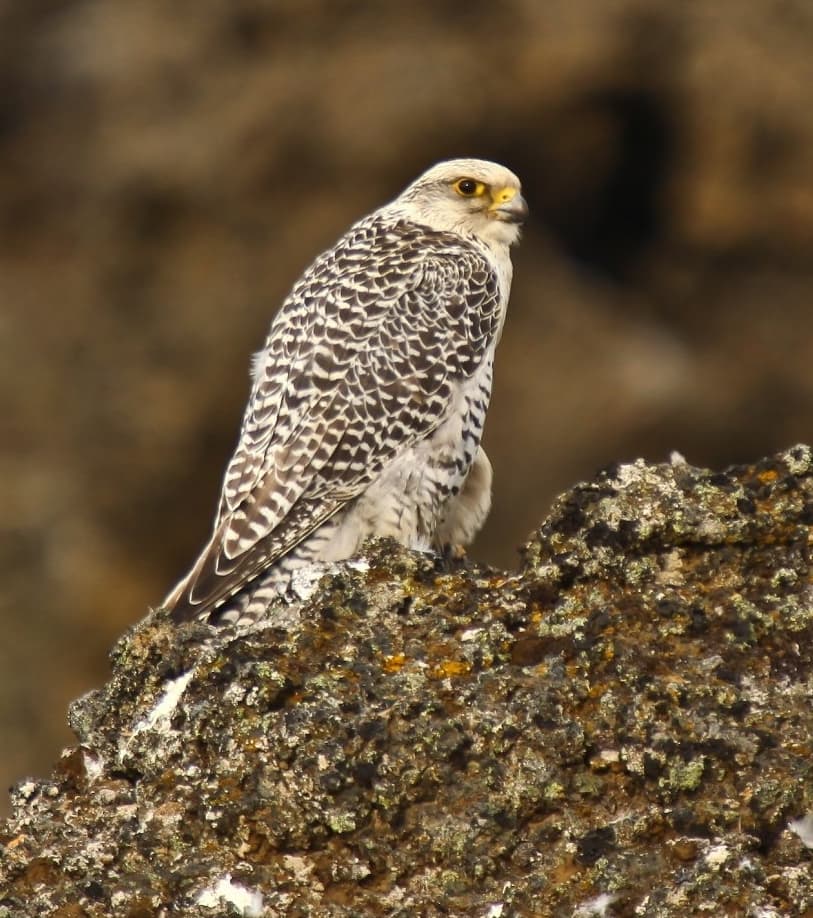
Falco rusticolus
The gyrfalcon (Falco rusticolus) is the largest species of falcon, native to Arctic coastal regions and tundra. It is a highly polymorphic species, with plumage ranging from all-white to dark grey-brown, and exhibits sexual dimorphism with females being significantly larger than males. Historically valued for falconry, it preys on birds and mammals, often hunting in horizontal pursuits rather than stoops.
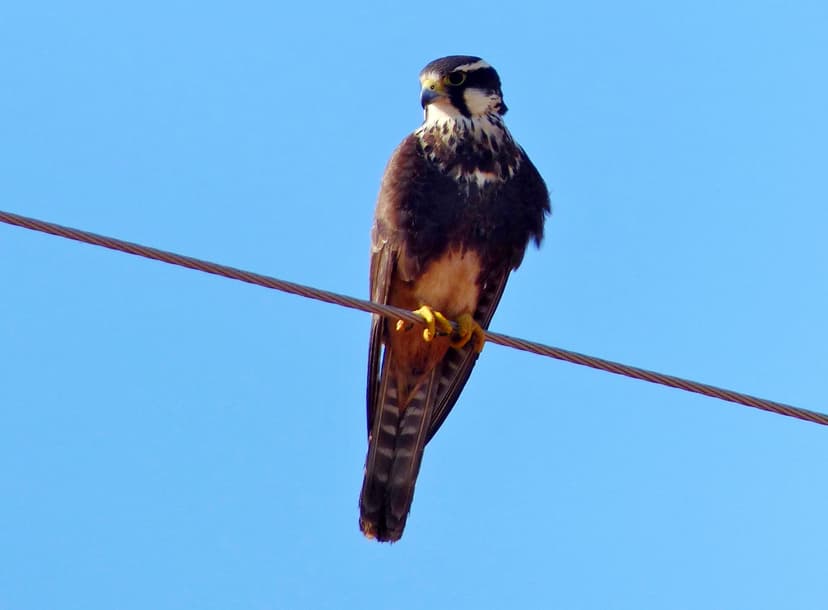
Falco femoralis
The aplomado falcon (Falco femoralis) is a slender, medium-sized falcon found throughout the Americas. Its name, derived from the Spanish word for "lead-colored," refers to its distinctive blue-grey plumage. This species is known for its swift hunting style, often preying on small birds, and its adaptability to various open habitats.
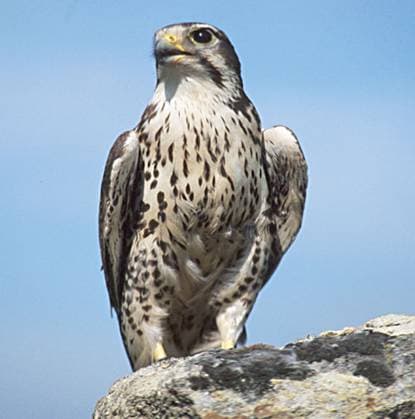
Falco mexicanus
The prairie falcon (Falco mexicanus) is a medium-sized falcon native to Western North America, distinguished by its adaptation to arid climates and opportunistic hunting. It is a divergence from the peregrine falcon lineage, capable of thriving on a more varied diet in harsher environments. The species is known for its aggressive nature and distinctive physical characteristics, including black "wingpits" and a narrow "moustache" mark.