
Falco sparverius
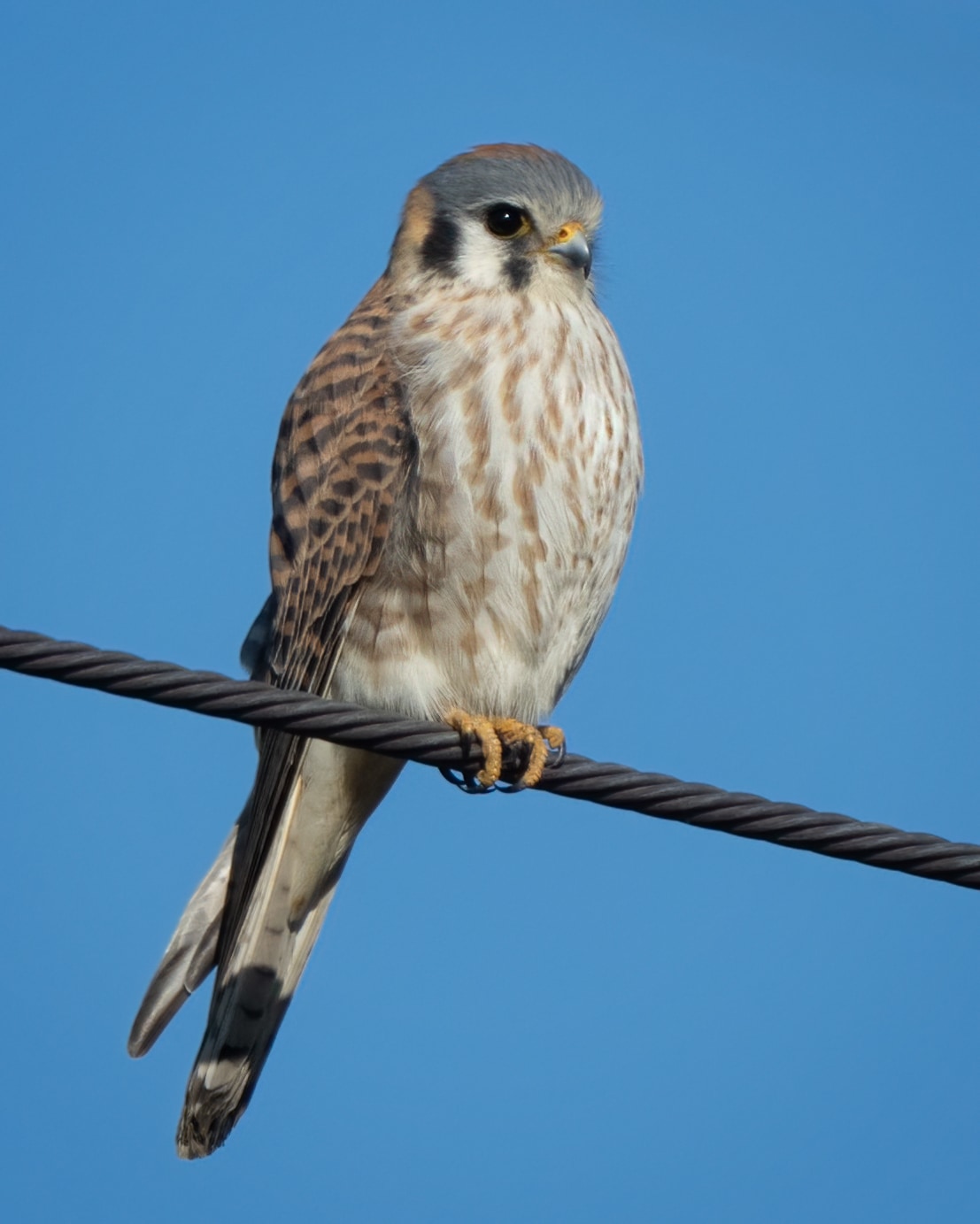
The American kestrel (Falco sparverius) is the smallest and most common falcon found across the Americas, known for its colorful plumage and adaptable nature. Despite its historical misnomer as the "sparrow hawk," it is a true falcon, distinguished by its size variation, distinct facial markings, and unique vocalizations. This species thrives in diverse habitats, from open grasslands to urban areas, contributing to its widespread success.
Key Facts
- ›The smallest and most common falcon in the Americas.
- ›Exhibits significant sexual dimorphism in size and plumage.
- ›Hunts by perching and ambushing prey, or by hovering from the air.
- ›Diet includes insects, lizards, mice, and small birds.
- ›Nests in cavities found in trees, cliffs, buildings, and other structures.
- ›Migrates south in winter from northern breeding grounds.
Sparrow Hawk, Grasshopper Hawk, Killy Hawk
Grasslands, Meadows, Deserts, Open To Semi-Open Regions, Urban Areas, Suburban Areas
North America, South America, Central America, Caribbean
- Smallest falcon in the Americas.
- Sexually dimorphic in size and plumage.
- Rufous back with noticeable barring in both sexes.
- Males have blue-gray wings with black spots and white undersides with black barring.
- Females have rufous backs and wings with dark brown barring, and creamy to buff undersides with heavy brown streaking.
- Two narrow, vertical black facial markings on each side of the head.
- Two black spots on each side of the nape.
Insects, Lizards, Mice, Voles, Shrews, Frogs, Small Birds, Scorpions, Snakes, Bats, Squirrels
Perching and ambushing, Hovering, Low flight over fields, Chasing insects and birds in the air
Grasshoppers, Mice, Sparrows, Lizards
Human Activities, Predation By Larger Birds of Prey, Invasive Snakes, Environmental Contaminants
About Falco sparverius
American Kestrel (Falco sparverius)
The American kestrel, scientifically known as Falco sparverius, is the smallest and most abundant falcon species found throughout the Americas. Despite its historical, though inaccurate, common name "sparrow hawk," it is a true falcon, distinguished by its compact size, which ranges from that of a blue jay to a mourning dove depending on subspecies and sex. This adaptability has allowed it to thrive across diverse environments, from open grasslands and deserts to urban and suburban landscapes, populating nearly the entirety of North and South America except for the Arctic fringes and dense Amazonian rainforests.
Physical Characteristics and Behavior
American kestrels exhibit notable sexual dimorphism; females are typically larger and exhibit plumage differences from males. Both sexes, however, share a rufous back with distinct barring, and their plumage is generally colorful. A distinctive feature is the presence of two narrow, vertical black facial markings on each side of the head, and two black spots on the nape that may serve as "false eyes" to deter predators. They are known for their energy-conserving hunting strategy, often perching to scan for prey before ambushing, or employing a characteristic hovering technique known as "kiting" while hunting from the air. Their diet is broad, encompassing insects, small mammals, reptiles, and birds, which contributes to their ecological success.
Reproduction and Lifespan
These falcons are cavity nesters, utilizing natural holes in trees, cliffs, or man-made structures, and typically lay three to seven eggs. Both parents participate in incubation, which lasts about 30 days. The young fledge after approximately 28 to 31 days. While wild American kestrels generally have a lifespan of under five years, with the oldest recorded individual reaching over 11 years, those in captivity can live significantly longer, up to 14-17 years. Their reproductive strategy leans towards 'r-selection,' characterized by rapid breeding and numerous offspring, a trait that supports their high population density and wide distribution.
Distribution and Migration
The breeding range of the American kestrel extends from Alaska and Canada down through North America, into Mexico and the Caribbean. They are also widely distributed throughout South America. Migratory populations from Canada and the northern United States travel south for the winter, often converging with resident kestrels in Mexico and Central America. This migratory behavior, along with their adaptability to various habitats and diets, underscores their resilience and widespread presence across the Western Hemisphere.
Source: Wikipedia ↗
Frequently Asked Questions
What is the American kestrel's scientific name and why was it historically called a sparrow hawk?
The scientific name of the American kestrel is Falco sparverius. It was historically called the American "sparrow hawk" due to a mistaken connection with the Eurasian sparrowhawk, but it is a true falcon and not closely related to Accipiter species.
How does the American kestrel hunt its prey?
The American kestrel primarily hunts by perching and scanning the ground for prey, ambushing them when they come near. It also hunts from the air, sometimes hovering with rapid wing beats to pinpoint its target.
What does the American kestrel eat?
Its diet is broad and includes grasshoppers and other insects, lizards, mice, and small birds. This varied diet contributes significantly to its success as a species.
Where does the American kestrel build its nest?
American kestrels are cavity nesters and will utilize a variety of locations, including natural tree cavities, holes in cliffs, abandoned nests of other birds, and man-made structures like nesting boxes or building ledges.
Do male and female American kestrels look different?
Yes, the American kestrel exhibits sexual dimorphism. Females are generally larger than males, and there are also differences in their plumage coloration, though both sexes have a rufous back with barring.
What are the typical vocalizations of the American kestrel?
The American kestrel has three main vocalizations: a "klee" or "killy" call when upset or excited, a "whine" call associated with feeding, and a "chitter" call used in interactions between mates and with young.
Related Raptor species
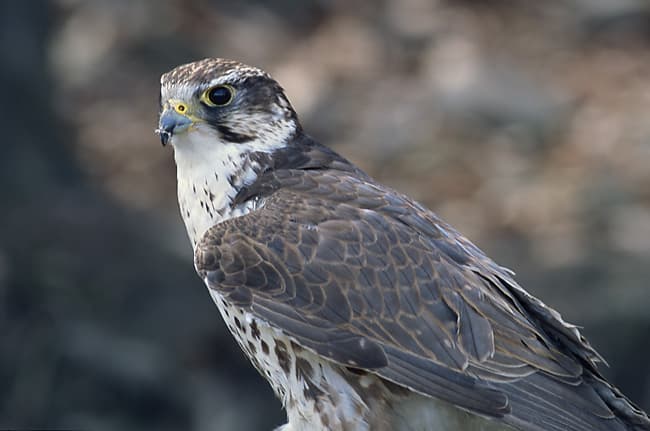
Falco cherrug
The saker falcon (Falco cherrug) is a large falcon species native to Eurasia, known for its impressive speed in flight. It is a partial migrant, with some populations wintering in the Sahel region of Africa. Culturally, it holds significance as the national bird of several countries and has a long history of use in falconry.
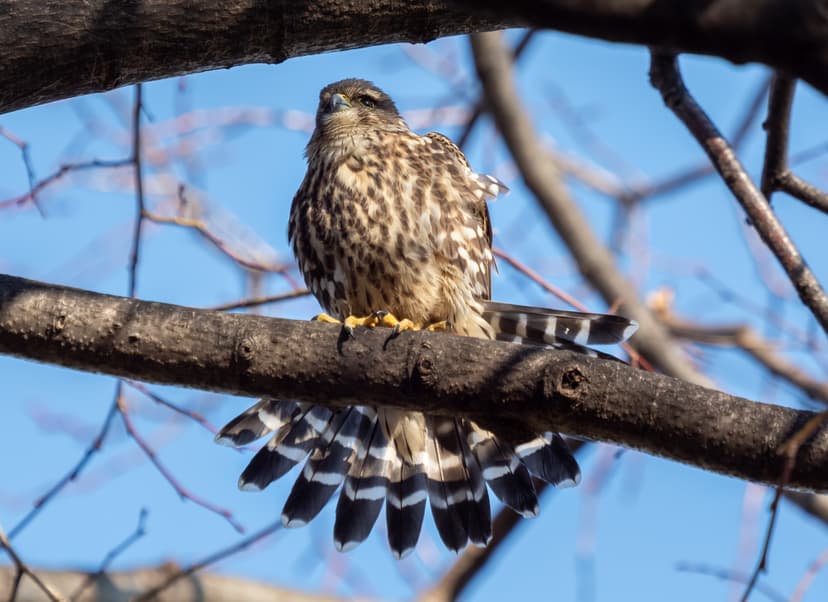
Falco columbarius
The merlin (Falco columbarius) is a small, swift falcon found across the Northern Hemisphere, breeding in the northern Holarctic and migrating to warmer regions in winter. Known for its agility in aerial pursuits, it primarily preys on small birds and shorebirds, and has a long history of use in falconry.
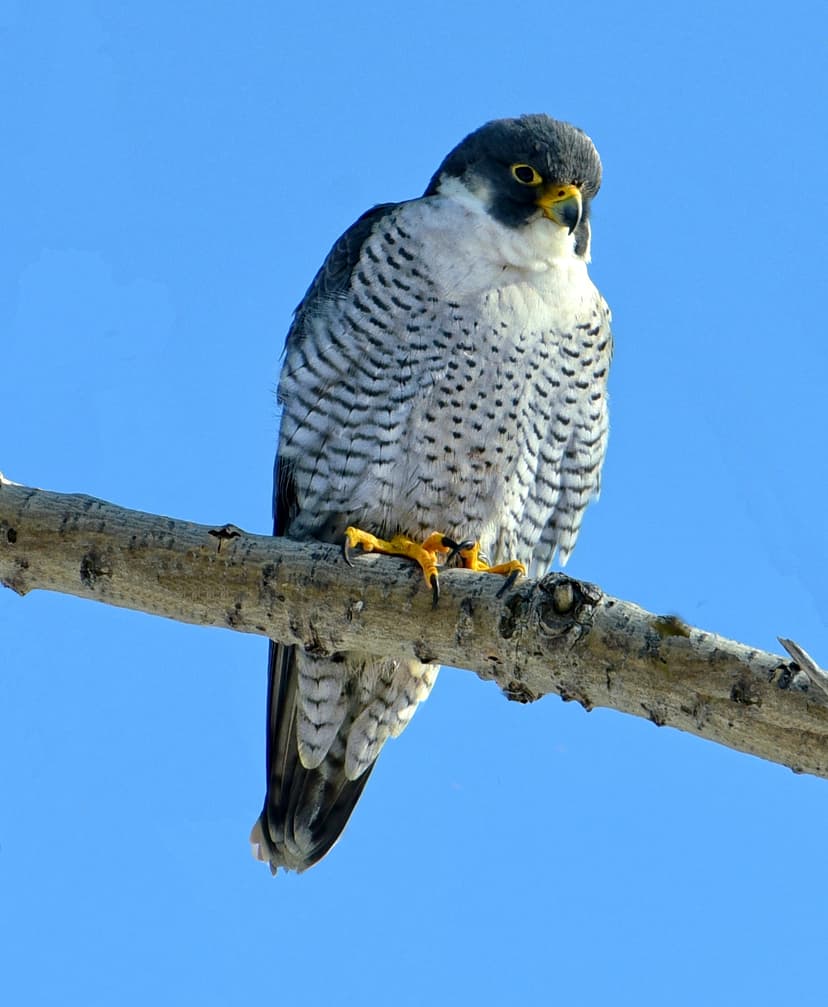
Falco peregrinus
The peregrine falcon (Falco peregrinus) is a widely distributed bird of prey renowned for its incredible speed during hunting dives. Characterized by its blue-grey back, barred white underparts, and black head, this crow-sized falcon is found on nearly every continent. It has adapted remarkably to urban environments, utilizing tall buildings for nesting and preying on abundant bird populations like pigeons.