
Haliaeetus leucocephalus
The bald eagle (Haliaeetus leucocephalus) is a large bird of prey native to North America, recognized by its distinctive white head and tail against a dark brown body. It is a sea eagle that primarily inhabits areas near large bodies of open water with abundant food supplies and old-growth trees for nesting. Known for building the largest nests of any North American bird, the bald eagle is a potent symbol of the United States.
Key Facts
- ›The bald eagle's name "bald" refers to its white head, not a lack of feathers.
- ›Adults are characterized by dark brown plumage, a white head and tail, and a large, hooked yellow beak.
- ›Females are approximately 25% larger than males.
- ›They are opportunistic feeders, with fish forming the majority of their diet.
- ›Bald eagles build the largest nests of any North American bird, which can weigh up to a metric ton.
- ›The species was once on the brink of extirpation in the contiguous United States but has since recovered significantly.

White-Headed Eagle
- Wetlands
- Seacoasts
- Rivers
- Large lakes
- Marshes
- Old-growth forests
- Mature stands of coniferous or hardwood trees
- Mangrove swamps
- Pinelands
- Seasonally flooded flatwoods
- Hardwood swamps
- Open prairies and pastureland with scattered tall trees
- Near human-made reservoirs
North America, Canada, United States, Mexico
- Adults are dark brown with a white head and tail.
- Females are about 25% larger than males.
- Large, hooked yellow beak.
- Yellow feet with large talons.
- Legs are feather-free.
- Immature plumage is brown with messy white streaking.
- Tail is moderately long and slightly wedge-shaped.
- Wings are held flat during flight.
Fish, Birds, Mammals, Carrion
- Swooping down over water to snatch fish with talons.
- Attacking bird prey in flight.
- Dragging heavy prey ashore.
- Cooperative hunting for large prey.
- Repeatedly flying at waterfowl to exhaust them.
- Kleptoparasitism.
Fish, Canada Geese, Jackrabbits, Herons, Salmon
Hunting, Pesticide Ddt
About Haliaeetus leucocephalus
The Bald Eagle (Haliaeetus leucocephalus)
The bald eagle, scientifically known as Haliaeetus leucocephalus, is a prominent bird of prey native to North America. Its common name derives from an older English usage meaning 'white-headed,' a direct reference to its distinctive plumage of a dark brown body contrasted with a stark white head and tail. This species is a member of the sea eagle group and forms a species pair with the white-tailed eagle found in the Palearctic region, occupying a similar ecological niche.
Range and Habitat
The bald eagle's natural range encompasses most of North America, including Canada, the contiguous United States, and northern Mexico. It thrives near large bodies of open water such as seacoasts, rivers, and lakes, where there is an abundant food supply. Crucially, these areas must also feature old-growth or mature trees, which are essential for perching, roosting, and nesting. While southern populations tend to be resident, northern birds are migratory, moving to areas with accessible water during winter.
Physical Characteristics and Diet
Adult bald eagles are unmistakable with their dark brown plumage, white head and tail, and a large, hooked yellow beak. While plumage is identical between sexes, females are approximately 25% larger than males. Immature bald eagles are primarily brown with white streaking until they reach sexual maturity, typically between four and five years of age. Their diet is opportunistic and largely consists of fish, which they snatch from the water with their powerful talons. However, they are known to prey on a wide variety of animals, including birds and mammals, and also scavenge carrion.
Nesting and Conservation
Bald eagles are renowned for constructing the largest nests of any North American bird. These massive structures, built from sticks and other materials, can be up to 4 meters deep and 2.5 meters wide, weighing as much as a metric ton. In the late 20th century, the bald eagle faced severe population decline and was on the brink of extirpation in the contiguous United States. However, conservation efforts, including the banning of hunting and the use of harmful pesticides like DDT, have led to a remarkable recovery. The species' status has been downgraded from 'endangered' to 'threatened' and subsequently removed from the list altogether, underscoring a significant conservation success story. The bald eagle serves as the national bird and a potent symbol of the United States, appearing on its Great Seal.
Source: Wikipedia ↗
Frequently Asked Questions
What does the name 'bald eagle' mean?
The name 'bald' in bald eagle is derived from an older meaning of the word, referring to a white head or face, rather than being hairless. This name accurately describes the adult bird's appearance with its white head contrasting with its darker body.
What is the physical description of an adult bald eagle?
Adult bald eagles are mainly dark brown with a striking white head and tail. They possess a large, hooked yellow beak, bright yellow feet, and irises. Females are notably larger than males, about 25% more so.
What is the diet of a bald eagle?
Bald eagles are opportunistic feeders, with fish constituting the primary component of their diet. They also consume birds, mammals, and other prey, with over 400 species recorded in their prey spectrum.
Where do bald eagles build their nests?
Bald eagles require old-growth or mature trees, typically near large bodies of open water, for nesting. They construct the largest nests of any North American bird, which can be incredibly deep and wide, sometimes weighing up to a metric ton.
What is the conservation status of the bald eagle?
The bald eagle's conservation status has improved dramatically. It was once endangered in the contiguous United States but has since been removed from the endangered species list, reflecting a significant population recovery.
Related Raptor species
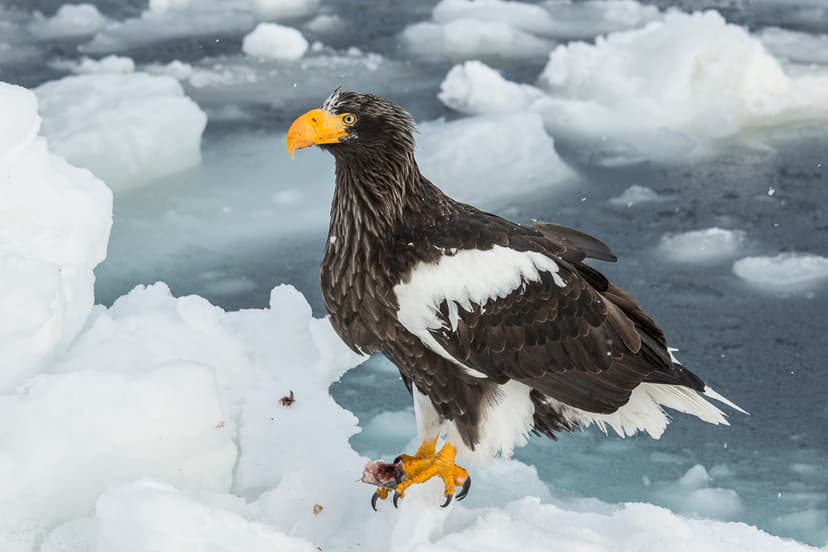
Haliaeetus pelagicus
The Steller's sea eagle (Haliaeetus pelagicus) is a massive diurnal bird of prey found in coastal northeastern Asia. It is distinguished by its dark brown plumage, white wings and tail, and a striking yellow beak and talons. While often the heaviest eagle, its size can vary, and it is a powerful predator primarily of fish and water birds.
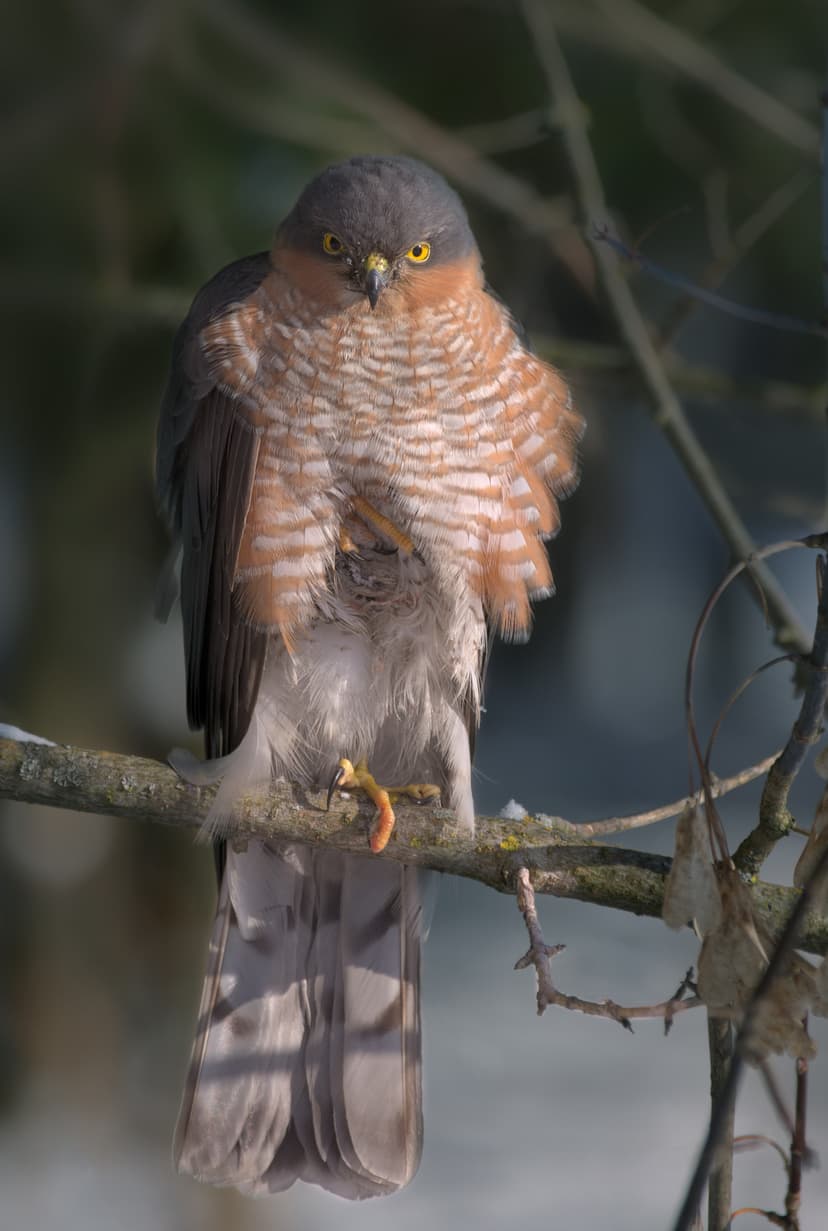
Accipiter nisus
The Eurasian sparrowhawk (Accipiter nisus) is a small bird of prey found across the temperate and subtropical regions of the Old World. It is distinctive for the significant size difference between sexes, with females being much larger than males, and for its specialized hunting of woodland birds, though it also adapts to urban environments. Once threatened by organochlorine insecticides, its populations have recovered and it is now considered of least concern.
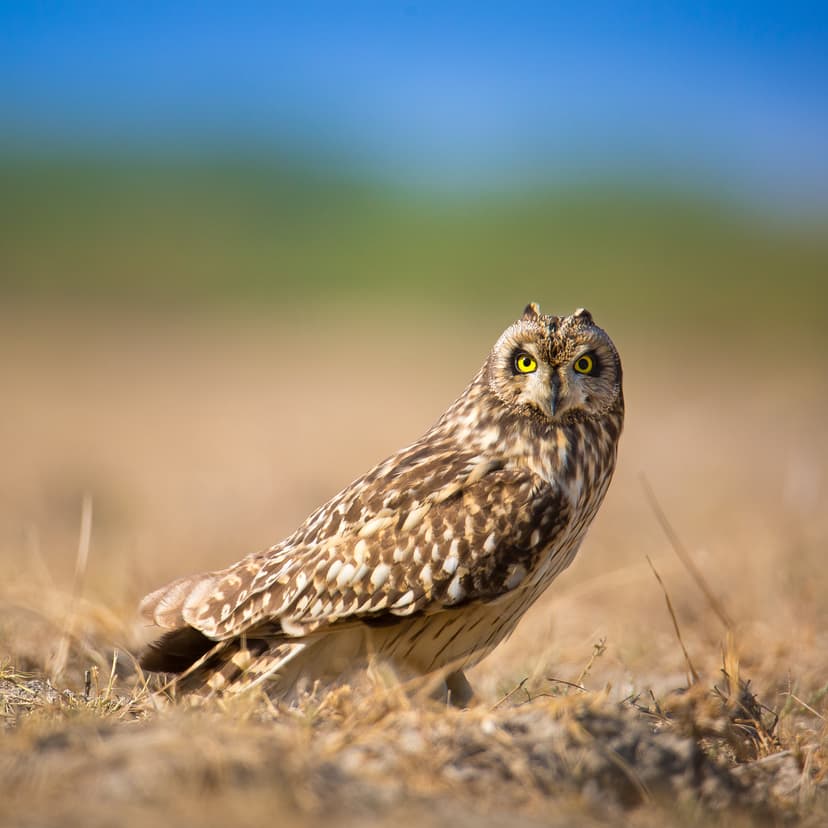
Asio flammeus
The short-eared owl (Asio flammeus) is a widely distributed grassland owl belonging to the Strigidae family. Known for its distinctive feather tufts resembling ears, which are usually not visible but can be displayed when threatened, this medium-sized owl hunts primarily rodents in open country and grasslands across multiple continents.