
Haliaeetus pelagicus
The Steller's sea eagle (Haliaeetus pelagicus) is a massive diurnal bird of prey found in coastal northeastern Asia. It is distinguished by its dark brown plumage, white wings and tail, and a striking yellow beak and talons. While often the heaviest eagle, its size can vary, and it is a powerful predator primarily of fish and water birds.
Key Facts
- ›It is one of the largest and heaviest eagles in the world, with males weighing 4.9–6.8 kg and females 6.2–9.5 kg.
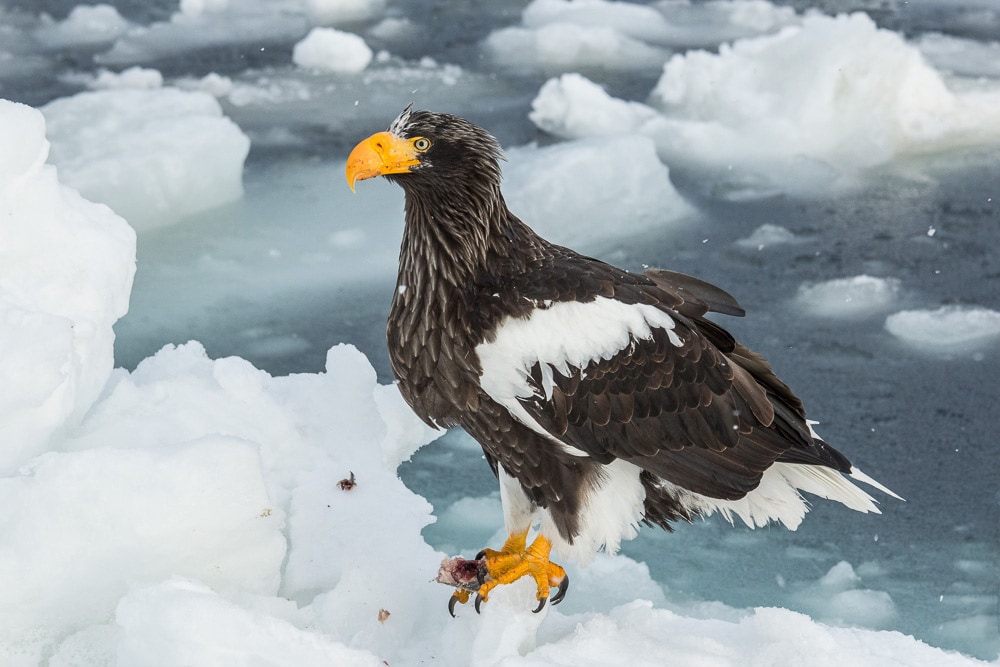
- ›Its plumage is predominantly dark brown with contrasting white on the wings, thighs, and tail, and it possesses a distinct yellow beak and talons.
- ›The species breeds in coastal northeastern Asia, including Russia, Japan, and China, and migrates to wintering grounds in Korea, Japan, and China.
- ›Steller's sea eagles primarily prey on fish, such as salmon and trout, but also consume water birds, marine life, and occasionally mammals.
- ›It is listed as Vulnerable on the IUCN Red List due to threats like habitat loss and pollution.
- ›A rare dark morph, formerly considered a subspecies, lacks white plumage except for the tail.
Pacific Sea Eagle, White-Shouldered Eagle, Steller's Fish Eagle, Beloplechii Orlan, Tikhookeanskii Orlan, ō-Washi, Chamsuri, HǔTóU HǎIdiāO
Coastal Areas, Large Rivers With Mature Trees, Floodplain Forests, Rocky Outcroppings
Russia, Korea, Japan, China
- Very large diurnal bird of prey
- Dark brown plumage with white on lesser and median upper-wing coverts, under-wing coverts, thighs, under-tail coverts, and tail
- Diamond-shaped white tail
- Yellow beak and talons
- Massive bill, possibly the largest of any living eagle
- Relatively short tarsus and tail compared to other large eagles
- Feet equipped with spicules for gripping fish
- Females are larger than males
Fish, Water Birds, Small Birds, Mammals, Carrion, Crabs, Mussels, Nereis Worms, Squid
- Diving to capture prey
- Hunting from a perch
- Hunting on the wing
- Standing in or near shallow water to grab passing fish
- Kleptoparasitism
Salmon, Trout, Ducks, Gulls, Hares, Sable
Habitat Loss, Pollution, Food Availability Fluctuations
About Haliaeetus pelagicus
Steller's Sea Eagle (Haliaeetus pelagicus)
The Steller's sea eagle, scientifically known as Haliaeetus pelagicus, is a magnificent and imposing bird of prey native to the coastal regions of northeastern Asia. This species is renowned for its formidable size, often ranking as the heaviest eagle in the world, though its precise weight can vary, and in some measurements, it may be surpassed by other large eagle species. Its striking appearance is characterized by predominantly dark brown plumage, sharply contrasted by white on its wings, thighs, and tail, complemented by a vivid yellow beak and talons.
Distribution and Habitat
Steller's sea eagles are primarily found in Russia, Korea, Japan, and China, breeding in areas such as the Kamchatka Peninsula and along the Sea of Okhotsk. Their preferred habitats include coastal areas, large rivers lined with mature trees, rocky outcroppings, and floodplain forests. While some populations are residential, many undertake migrations south during the winter months, driven by ice conditions and food availability, with Hokkaido, Japan, being a significant wintering ground.
Diet and Hunting
As their name suggests, sea eagles are piscivorous, with fish forming the bulk of their diet. Favored prey includes various species of salmon and trout, as well as Pacific cod and Alaska pollock. When fish are scarce or during winter, they will also prey on water birds such as ducks, geese, and gulls, and their diet can include a range of other animals, from marine life like crabs and mussels to mammals like hares and even young seals. They are active hunters, often diving to capture prey in shallow waters or using perches to spot opportunities. Kleptoparasitism, or stealing food from other birds, is also a common behavior.
Physical Characteristics and Reproduction
Steller's sea eagles exhibit significant sexual dimorphism, with females being larger and heavier than males. Their wingspan can be substantial, placing them among eagles with the largest wingspans. A unique feature is their bright yellow beak, even in juveniles, and a massive bill that is possibly the largest of any living eagle. The species is classified as Vulnerable on the IUCN Red List, facing threats from habitat degradation and pollution. Information regarding their specific breeding season, clutch size, and lifespan in the wild is less detailed in available records, though nests are typically built on high, secure locations.
Vocalizations
Steller's sea eagles are known for their distinctive calls, described as a deep barking cry. During aggressive encounters, their vocalizations are deeper than those of related species, and during breeding displays, they produce loud, deep calls reminiscent of gulls.
Source: Wikipedia ↗
Frequently Asked Questions
What is the scientific name for Steller's sea eagle?
The scientific name for Steller's sea eagle is Haliaeetus pelagicus. The genus name, Haliaeetus, is derived from Ancient Greek words meaning 'sea eagle', and the species name, pelagicus, refers to the open sea or ocean.
Where does Steller's sea eagle live?
Steller's sea eagles are endemic to the coastal regions of northeastern Asia. They breed in areas of Russia, such as the Kamchatka Peninsula, and are also found in Japan and China. They migrate to wintering grounds in Korea, Japan, and China.
What does Steller's sea eagle eat?
The diet of Steller's sea eagle consists mainly of fish, with salmon and trout being favored in riverine habitats. They also prey on various water birds, including ducks and gulls, and may supplement their diet with marine life and small mammals.
Is Steller's sea eagle endangered?
Steller's sea eagle is classified as Vulnerable on the International Union for Conservation of Nature's Red List. Threats to its survival include habitat loss, pollution, and human disturbance.
What are the distinctive physical characteristics of Steller's sea eagle?
Steller's sea eagles are characterized by their large size, dark brown plumage with white wing and tail patches, and a bright yellow beak and talons. They have a relatively short tail and a massive bill, which is likely the largest of any living eagle.
Related Raptor species

Haliaeetus leucocephalus
The bald eagle (Haliaeetus leucocephalus) is a large bird of prey native to North America, recognized by its distinctive white head and tail against a dark brown body. It is a sea eagle that primarily inhabits areas near large bodies of open water with abundant food supplies and old-growth trees for nesting. Known for building the largest nests of any North American bird, the bald eagle is a potent symbol of the United States.
Harpia harpyja
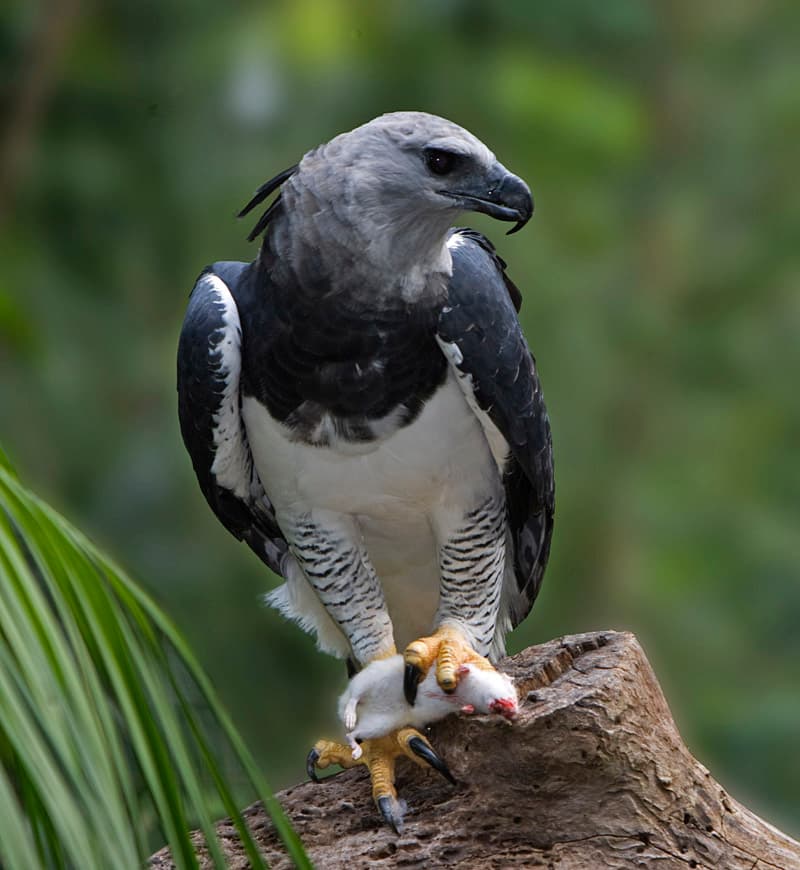
The harpy eagle (Harpia harpyja) is a formidable, large neotropical eagle, renowned as the largest bird of prey in its range and one of the largest eagles globally. Primarily inhabiting the emergent canopy of tropical lowland rainforests, it is distinguished by its immense talons, powerful build, and a distinctive double crest on its head. Due to extensive habitat destruction, its populations have significantly declined across much of its historical territory.
Accipiter gentilis
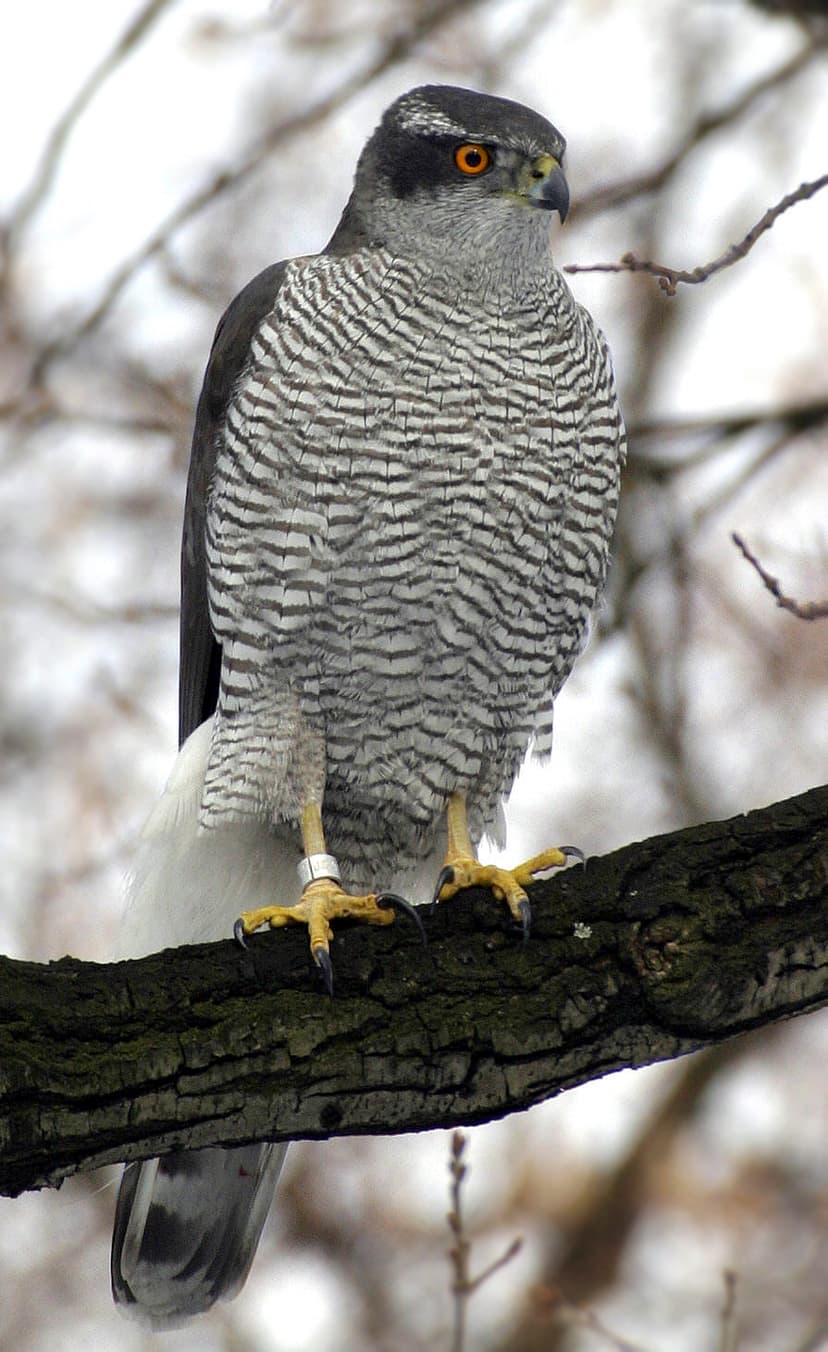
The Eurasian goshawk (Astur gentilis) is a medium-large bird of prey found across temperate Eurasia. It is recognized by its broad wings, long tail, and distinctively barred plumage. This species is known for its agility in wooded environments and is the sole goshawk in most of its range, often simply called "goshawk".