
Milvus migrans
The black kite (Milvus migrans) is a widely distributed bird of prey belonging to the Accipitridae family, known for its opportunistic scavenging and hunting behavior. Easily identified by its angled wings and forked tail, it is vociferous with a distinct shrill call. This species is thought to be the most abundant in its family, found across temperate and tropical regions of Eurasia, Australasia, and Oceania, with migratory temperate populations.
Key Facts
- ›The black kite is one of the most abundant raptor species globally, with an estimated population of up to 6.7 million individuals.
- ›It is characterized by its angled wings and a distinct forked tail, aiding in easy identification during flight.
- ›Black kites are opportunistic feeders, often scavenging for food and regularly consuming carrion, household refuse, and small prey.
- ›They are attracted to fires and smoke, where they seek out escaping prey, and are known to spread wildfires by dropping burning twigs.
- ›Temperate populations of the black kite are migratory, while those in tropical regions tend to be resident.
- ›The species exhibits a shrill whinnying call, which is distinctive and often heard.
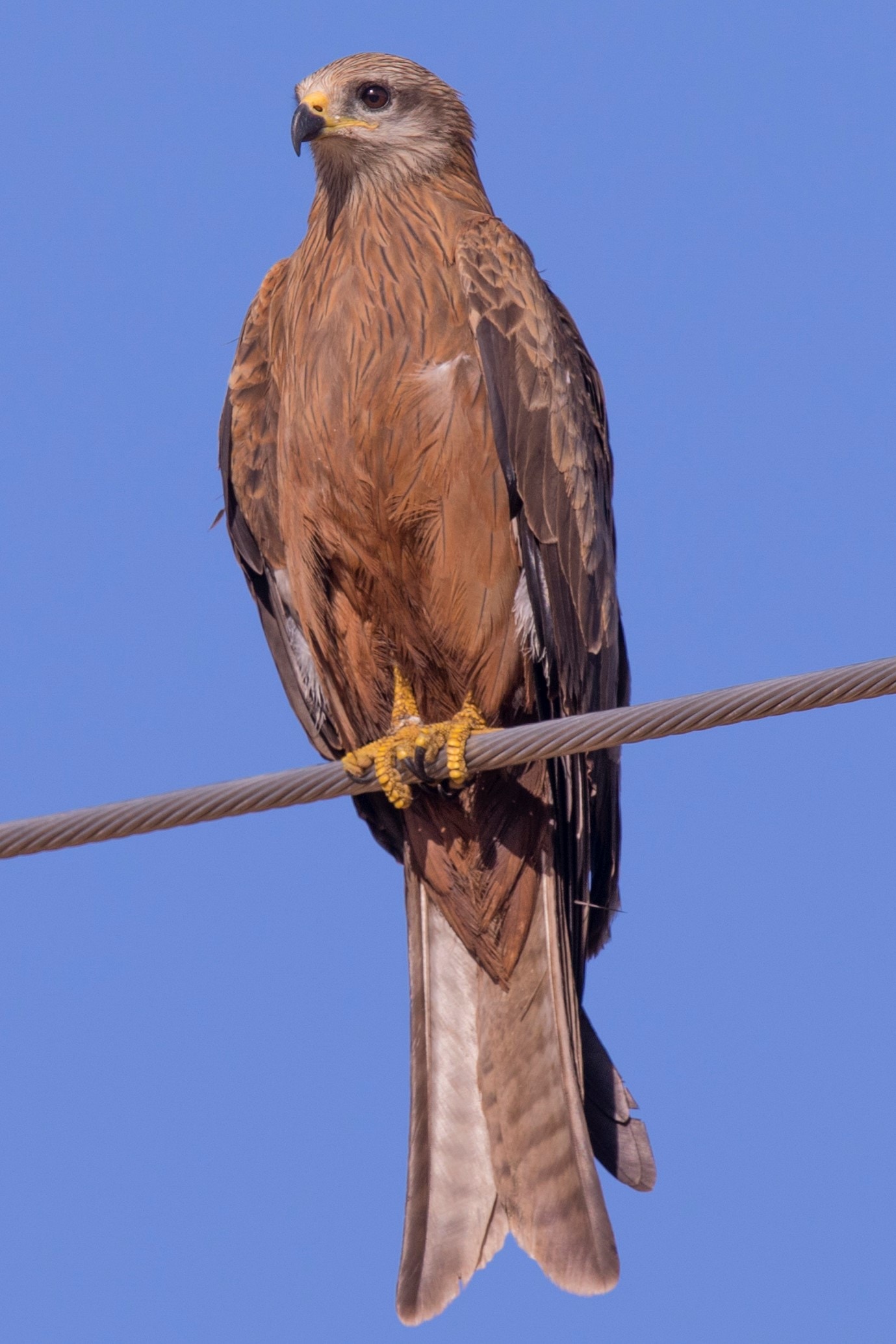
Fire Kite, Small Indian Kite, Black-Eared Kite, Fork-Tailed Kite, Taiwan Kite
Temperate Regions, Tropical Regions, Urban Areas, Agricultural Fields, Near Water
Eurasia, Africa, Australasia, Oceania
- Medium-sized bird of prey
- Generally dark plumage
- Angled wings
- Distinctive forked tail
- Upper plumage is brown, head and neck tend to be paler
- Outer flight feathers are black with dark cross bars
- Lower body parts are pale brown
- Yellow cere and gape, black bill
- Yellow legs, black claws
- Females are longer than males and have a slightly larger wingspan
Carrion, Household Refuse, Small Live Prey, Fish, Birds, Bats, Rodents, Nestlings, Eggs
- Swooping down with legs lowered to snatch prey
- Gliding and soaring on thermals to search for food
- Attracted to smoke and fires to seek escaping prey
- Spreading wildfires by dropping burning twigs to flush prey
Waterfowl Nestlings, Baya Weaver Eggs and Chicks, Small Passerines
Electrocution On Electric Wires, Collisions With Vehicles, Poisoning From Rodents, Birdstrikes At Airports, Predation By Eurasian Eagle-Owls
About Milvus migrans
Milvus migrans: The Black Kite
The black kite, scientifically known as Milvus migrans, is a medium-sized bird of prey belonging to the Accipitridae family. It is widely recognized for its opportunistic scavenging and hunting behaviors, making it one of the most abundant raptor species globally, with estimates suggesting up to 6.7 million individuals worldwide.
Identification and Distribution
Black kites are easily distinguished in flight by their characteristic angled wings and a noticeably forked tail. Their plumage is generally dark brown, with paler heads and necks, and they possess a distinctive shrill whinnying call. The species is broadly distributed across temperate and tropical regions of Eurasia, Africa, Australasia, and Oceania. Temperate populations are migratory, seeking warmer climates during winter, while tropical populations remain resident.
Behavior and Ecology
These birds are often observed gliding effortlessly on thermals as they search for food. They are known for their adaptability, frequently inhabiting urban areas and readily scavenging for food, including household refuse and carrion. Black kites are also attracted to fires, where they exploit escaping prey, and have been noted to intentionally spread wildfires by dropping burning twigs to flush out animals.
Diet and Foraging
The diet of the black kite is highly varied due to its opportunistic nature. It includes small live prey such as birds, bats, and rodents, as well as fish and nestlings. Their foraging strategies involve swooping down to snatch food from the ground or water, and their proximity to human settlements has led to them becoming accustomed to scavenging near populated areas.
Breeding and Reproduction
The breeding season varies geographically, occurring in winter in India and during the summer in Europe. Nests are constructed from twigs and sticks, typically built in trees and sometimes reused annually. Both male and female kites share responsibilities in nest building, incubating eggs, and caring for the young. Clutch sizes usually consist of two or three eggs, with incubation periods around 30-34 days. Siblings may exhibit aggression towards each other, but parents have been observed to preferentially feed smaller chicks in experimental situations.
Threats and Conservation
While generally abundant, black kites face several threats, including electrocution from power lines, collisions with vehicles, and poisoning from consuming contaminated prey. They can also be a significant hazard at airports due to bird strikes. The Eurasian eagle-owl is a notable natural predator of the black kite. Despite these challenges, the species remains widespread, although certain populations have experienced declines.
Source: Wikipedia ↗
Frequently Asked Questions
What makes the black kite easy to identify?
The black kite is readily identified in flight by its distinctive angled wings and a forked tail. Its generally dark plumage, without the rufous coloration often seen in red kites, also helps in distinguishing it.
What is the typical diet of a black kite?
Black kites are opportunistic feeders with a varied diet. They commonly scavenge for carrion and household refuse, but also hunt live prey such as small birds, bats, rodents, and fish. They are also known to prey on nestlings and eggs.
Where are black kites found?
The black kite has a very wide distribution, found throughout temperate and tropical parts of Eurasia, and extending into parts of Australasia and Oceania. This includes regions of Europe, Asia, Africa, and Australia.
Are black kites migratory?
Temperate populations of the black kite tend to be migratory, moving to warmer regions during the winter. However, populations in tropical areas are generally resident and do not undertake long-distance seasonal movements.
How do black kites hunt or forage?
Black kites are often seen gliding and soaring on thermals while searching for food. They will swoop down to snatch prey or scavenged items. They are known to be attracted to fires, where they exploit escaping prey, and have even been observed spreading wildfires to flush out food.
What are the nesting habits of the black kite?
Nests are constructed as rough platforms of twigs and sticks, typically placed in trees. Nest sites can be reused in subsequent years. Both male and female black kites participate in nest building, incubation, and caring for the chicks.
What are some threats to the black kite population?
Threats to black kites include electrocution from power lines, collisions with vehicles, and accidental poisoning from consuming poisoned rodents. They can also pose a birdstrike hazard at airports. Natural predators include the Eurasian eagle-owl.
Related Raptor species
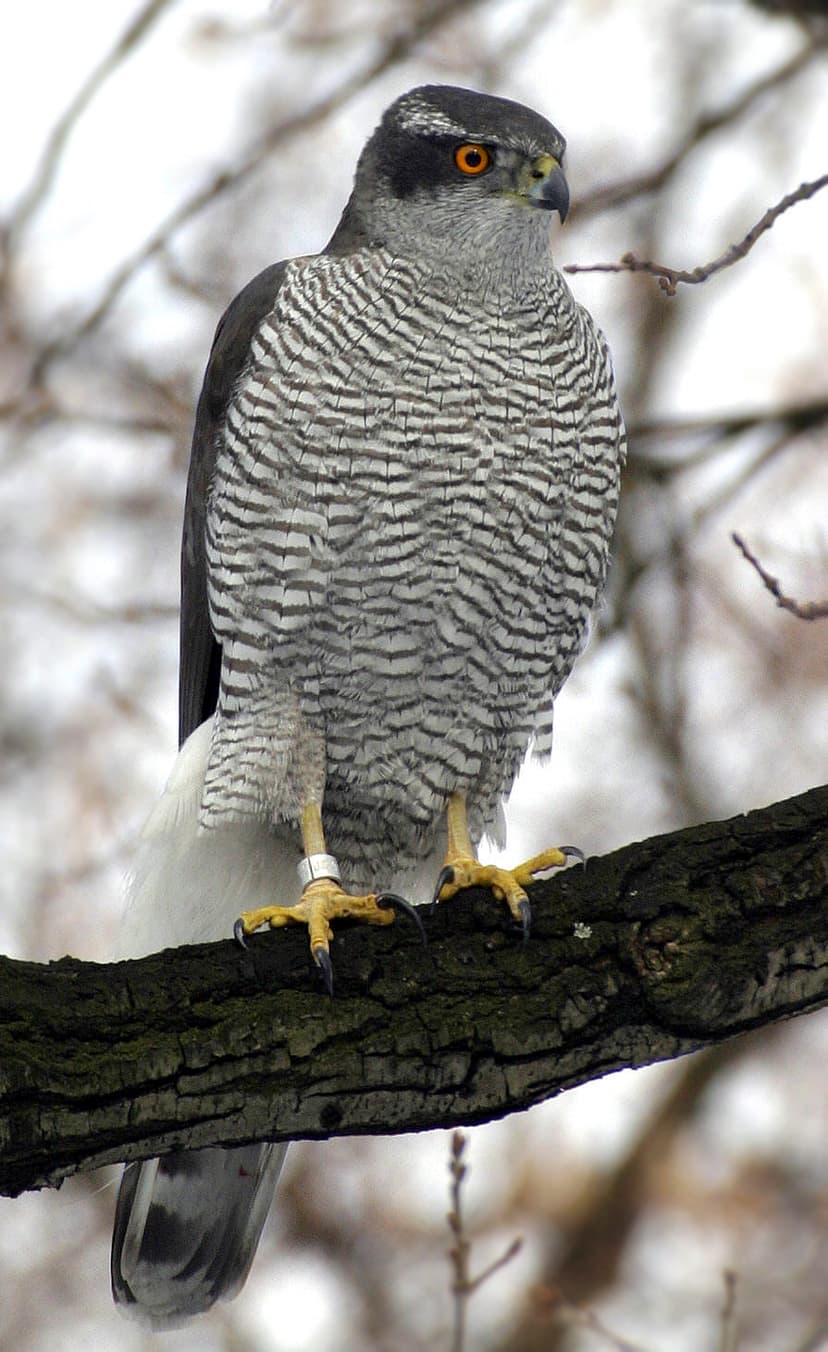
Accipiter gentilis
The Eurasian goshawk (Astur gentilis) is a medium-large bird of prey found across temperate Eurasia. It is recognized by its broad wings, long tail, and distinctively barred plumage. This species is known for its agility in wooded environments and is the sole goshawk in most of its range, often simply called "goshawk".
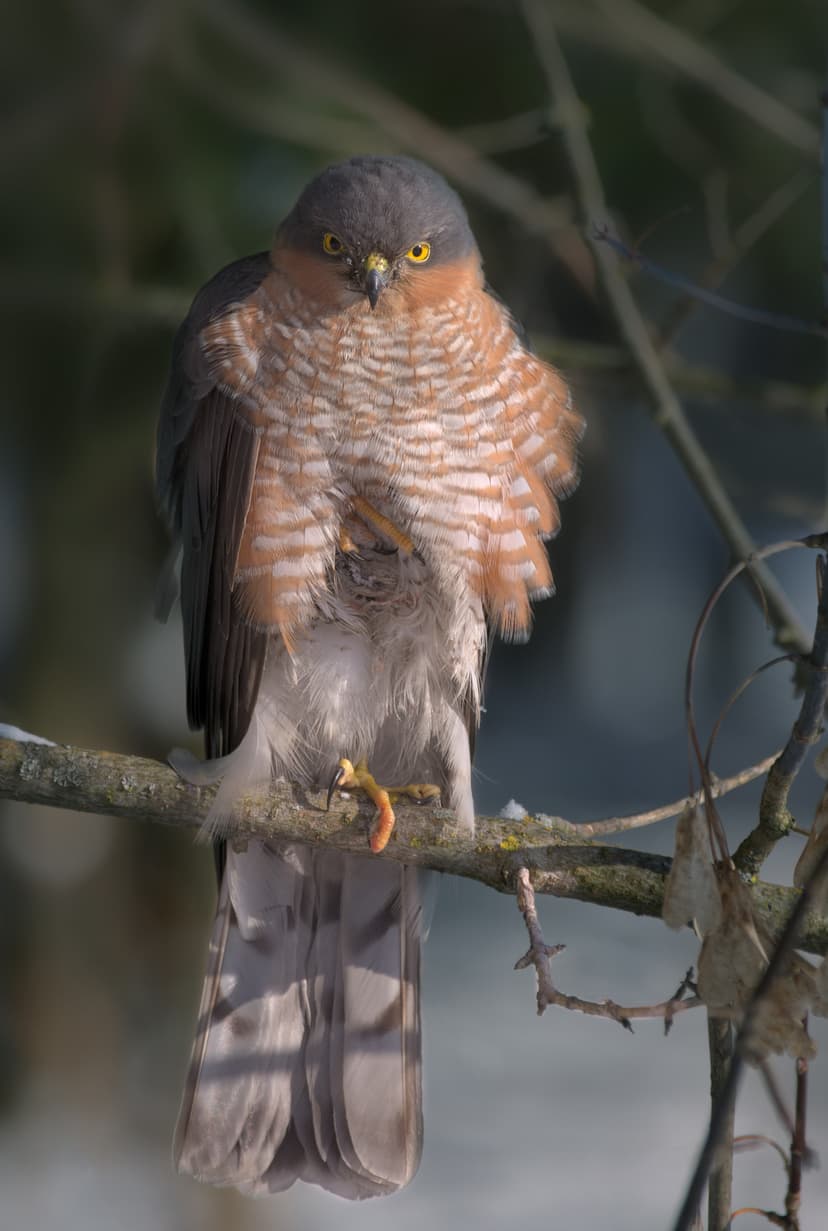
Accipiter nisus
The Eurasian sparrowhawk (Accipiter nisus) is a small bird of prey found across the temperate and subtropical regions of the Old World. It is distinctive for the significant size difference between sexes, with females being much larger than males, and for its specialized hunting of woodland birds, though it also adapts to urban environments. Once threatened by organochlorine insecticides, its populations have recovered and it is now considered of least concern.
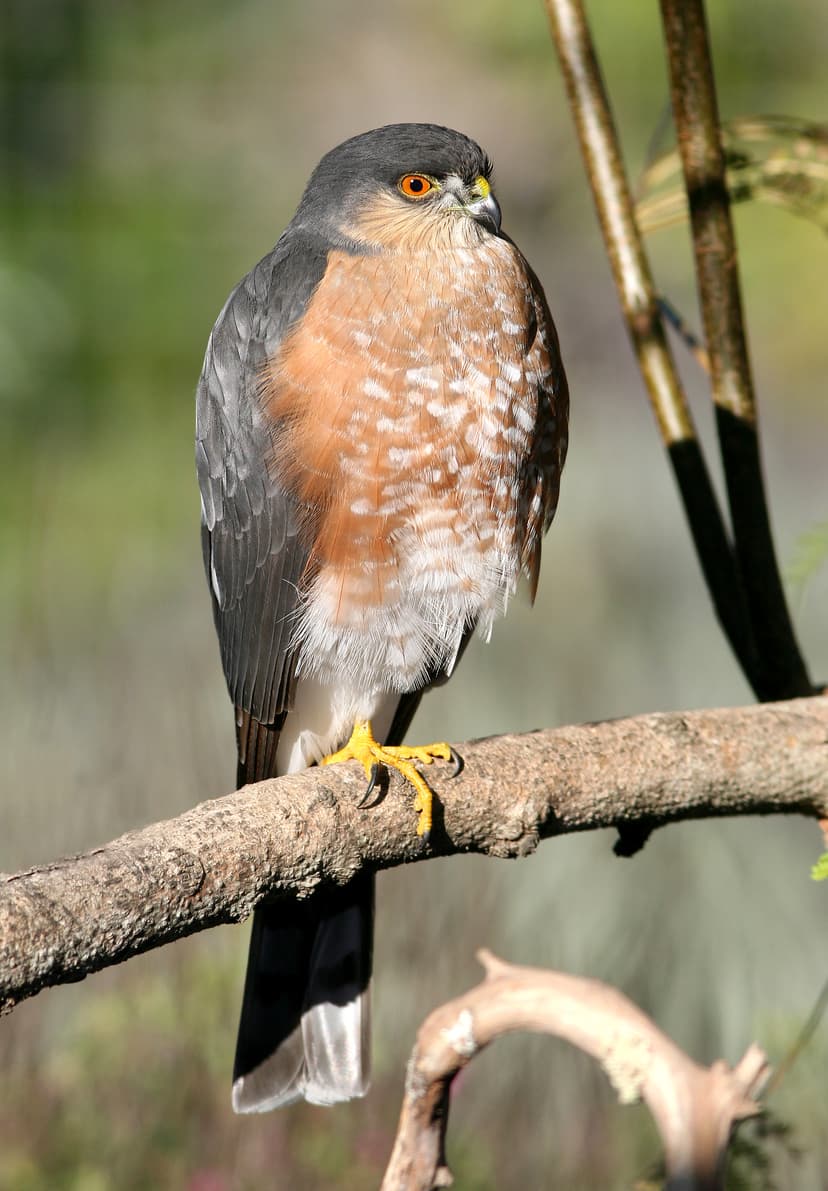
Accipiter striatus
The sharp-shinned hawk (Accipiter striatus) is a small hawk found across North and South America. It is known for its small size, with males being the smallest hawks in the United States and Canada, and its remarkable agility in hunting small birds within dense vegetation. Its taxonomy is complex, with some authorities considering several southern populations to be distinct species.