
Parabuteo unicinctus
Parabuteo unicinctus, also known as the Harris's hawk, is a medium-large bird of prey found from the southwestern United States to South America. This species is distinctive for its highly social behavior, often hunting cooperatively in packs, a trait attributed to their intelligence and trainability, making them popular in falconry.
Key Facts
- ›Hunts cooperatively in packs, a behavior rare among raptors.
- ›Exhibits significant sexual dimorphism, with females being about 35% larger than males.
- ›Found in sparse woodland, semi-desert, and marshes across the Americas.
- ›Their diet primarily consists of mammals, birds, reptiles, and insects.
- ›Can be trained and is commonly used in falconry and for bird abatement.
- ›Juvenile plumage differs significantly from adults, appearing much lighter with streaked underparts.
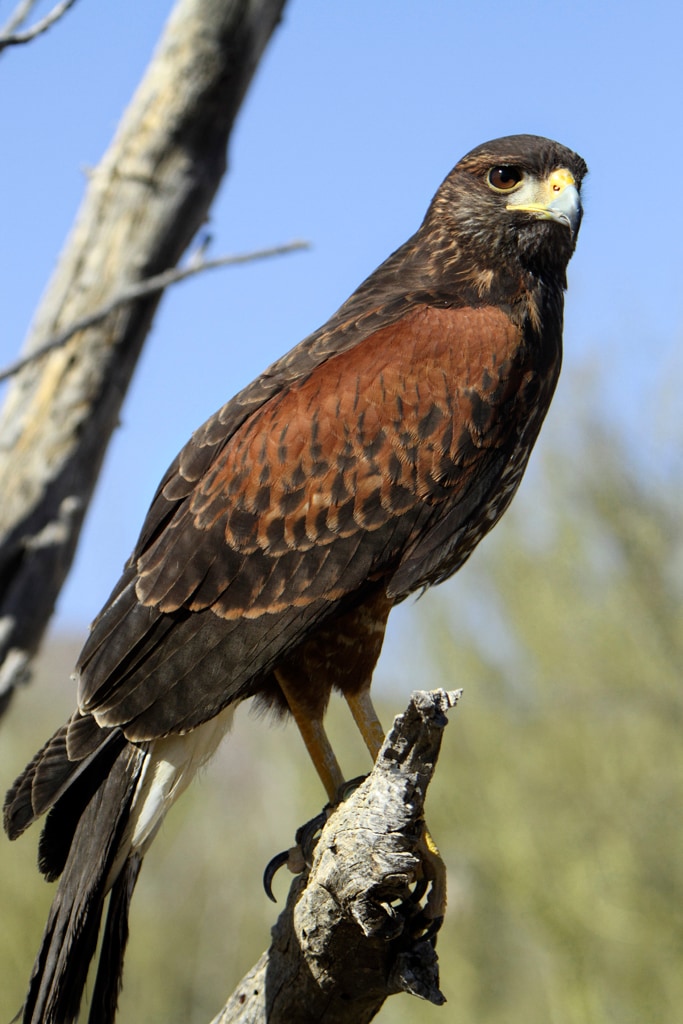
Harris's Hawk, Dusky Hawk, Peuco
Sparse Woodland, Semi-Desert, Marshes, Mangrove Swamps
North America, South America
- Medium-large size, intermediate between Peregrine Falcon and Red-tailed Hawk.
- Length: 46-59 cm.
- Wingspan: 103-120 cm.
- Plumage is brownish with reddish shoulders.
- Tail feathers have a white base and white tip.
- Long, yellow legs and yellow cere.
- Juveniles are lighter with heavily streaked underparts and buff-colored undersides of wings.
Mammals, Birds, Reptiles, Large Insects, Introduced Species
- Cooperative hunting in groups of two to six individuals.
- One group scouts ahead while another follows, continuing until prey is caught.
- Hawks spread out around prey to flush it out.
- Pursues prey on foot, utilizing long legs for speed on the ground.
Ground Squirrels, Rabbits, Black-Tailed Jackrabbits, Cottontails, Lizards, Snakes, Diuca Finch, Great Egret, Wild Turkey, Great Blue Heron, Gambel's Quail, Cactus Wren, Common Degu
Habitat Loss
About Parabuteo unicinctus
Parabuteo unicinctus, commonly known as the Harris's hawk, is a medium-large bird of prey recognized for its striking appearance and highly social behavior. This species' range extends from the southwestern United States down through South America to Chile, central Argentina, and Brazil, where it inhabits sparse woodlands, semi-deserts, and marshes.
Behavior and Hunting
The most distinctive characteristic of the Harris's hawk is its tendency to hunt cooperatively in packs, a behavior rarely observed in other raptors. These social groups, typically consisting of two to seven individuals, demonstrate intelligence and coordination, often flushing prey out or pursuing it on foot with remarkable speed due to their long legs. This cooperative strategy is believed to be an adaptation to their habitat and allows them to successfully capture larger prey than a solitary hawk might manage.
Physical Traits and Reproduction
Harris's hawks exhibit significant sexual dimorphism, with females being considerably larger than males. Adults possess brownish plumage with reddish shoulders, and their tail feathers are marked with a white base and tip. Juveniles have a lighter appearance, marked by heavy streaking on their underparts and buff-colored wing undersides. They typically lay two to four eggs, and the young begin to explore the nest at around 38 days, fledging at 45 to 50 days. In some instances, groups of three hawks, including a non-breeding helper, attend a single nest, assisting in raising the young.
Human Interaction and Conservation
Due to their intelligence and trainability, Harris's hawks have become exceptionally popular in falconry, particularly in Western countries outside of Asia. They have also been employed for bird abatement in urban and industrial areas. Despite their adaptability, wild populations face threats primarily from habitat loss, although they have occasionally been known to adapt to developed environments.
Source: Wikipedia ↗
Frequently Asked Questions
What makes the Harris's hawk unique among raptors?
The Harris's hawk is most notable for its cooperative hunting behavior. Unlike most raptors that hunt alone, they form social groups to pursue and capture prey, a strategy attributed to their intelligence.
Where does the Harris's hawk live?
This species breeds from the southwestern United States south to Chile, central Argentina, and Brazil. They inhabit sparse woodlands, semi-deserts, and marshes.
What is the difference between male and female Harris's hawks?
Harris's hawks display sexual dimorphism, with females being considerably larger than males. On average, males weigh around 701 g, while females average about 1,029 g.
What do Harris's hawks eat?
Their diet is varied and includes mammals like ground squirrels and rabbits, birds ranging from small passerines to larger fowl, reptiles such as lizards and snakes, and large insects. Cooperative hunting allows them to take down larger prey.
Are Harris's hawks migratory?
No, Harris's hawks are permanent residents and do not migrate. They remain in their breeding territories throughout the year.
Why are Harris's hawks popular in falconry?
Their intelligence and social nature make them easy to train, leading to their widespread use and popularity in falconry. They are considered one of the easiest hawks to train outside of Asia.
What are the main threats to Harris's hawk populations?
The primary threat to wild Harris's hawk populations is habitat loss. However, they have shown adaptability by sometimes moving into developed areas.
Related Raptor species
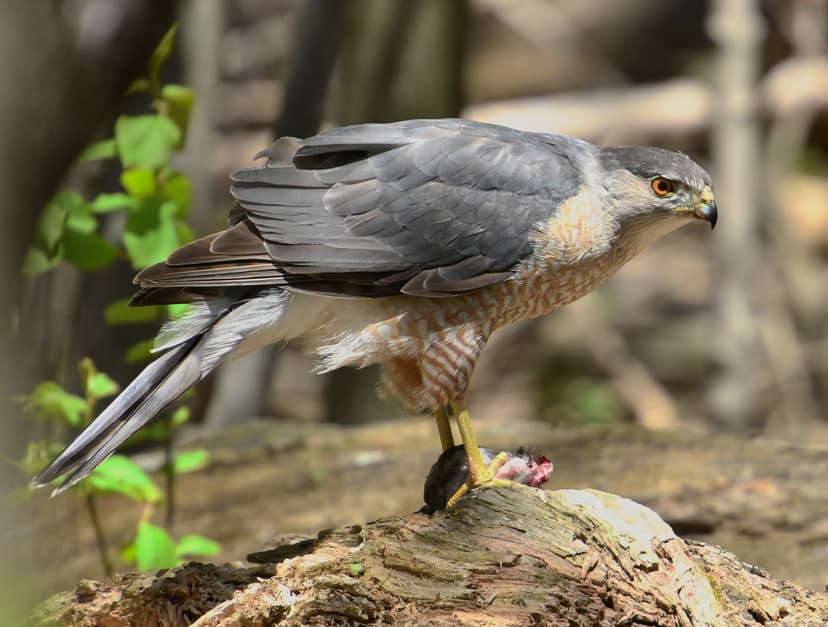
Accipiter cooperii
Cooper's hawk is a medium-sized hawk native to North America, ranging from southern Canada to Mexico. It is known for its exceptional agility, which it uses to hunt agile prey like birds and small mammals. Distinctive features include its blue-gray or brown-gray plumage, a long, barred tail with a white tip, and forward-set eyes adapted for precise hunting.
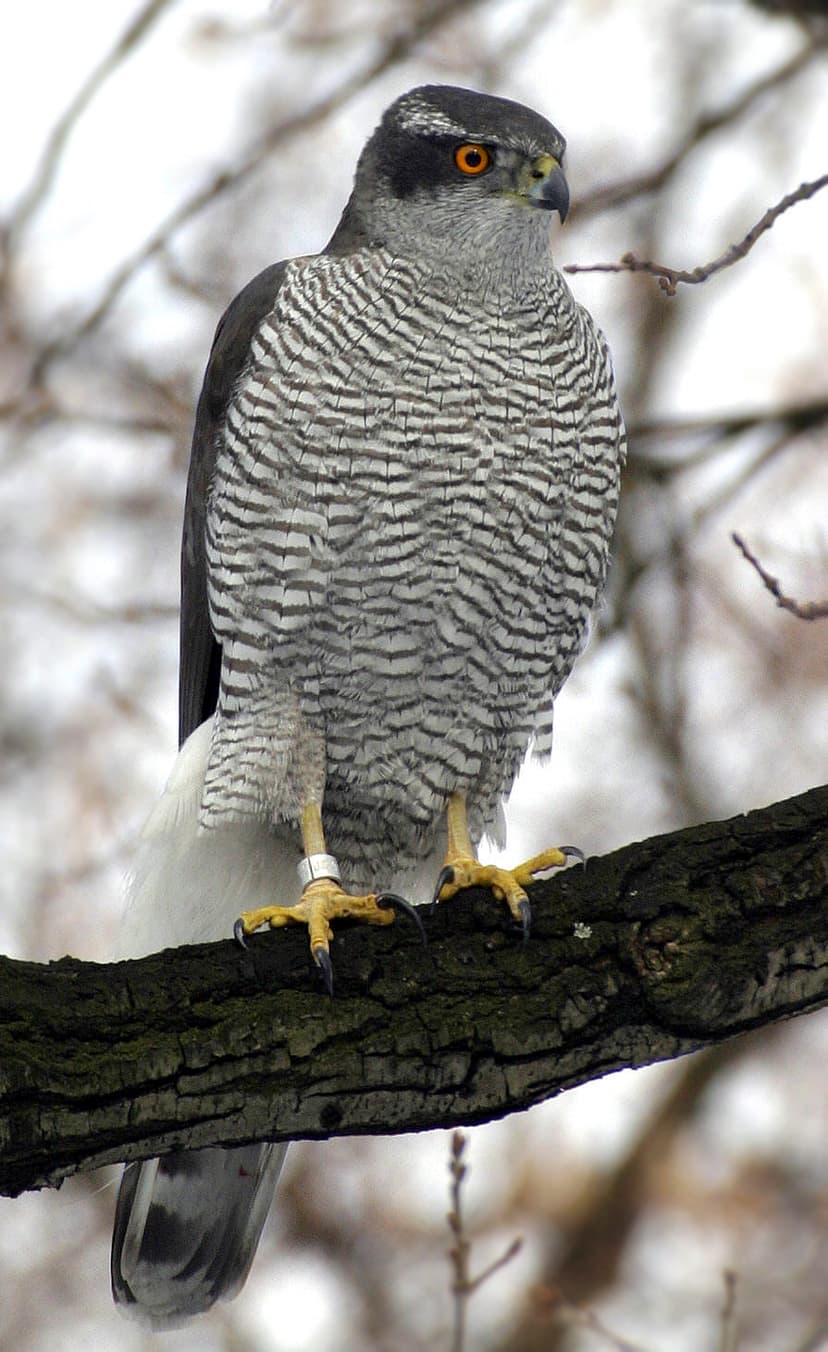
Accipiter gentilis
The Eurasian goshawk (Astur gentilis) is a medium-large bird of prey found across temperate Eurasia. It is recognized by its broad wings, long tail, and distinctively barred plumage. This species is known for its agility in wooded environments and is the sole goshawk in most of its range, often simply called "goshawk".
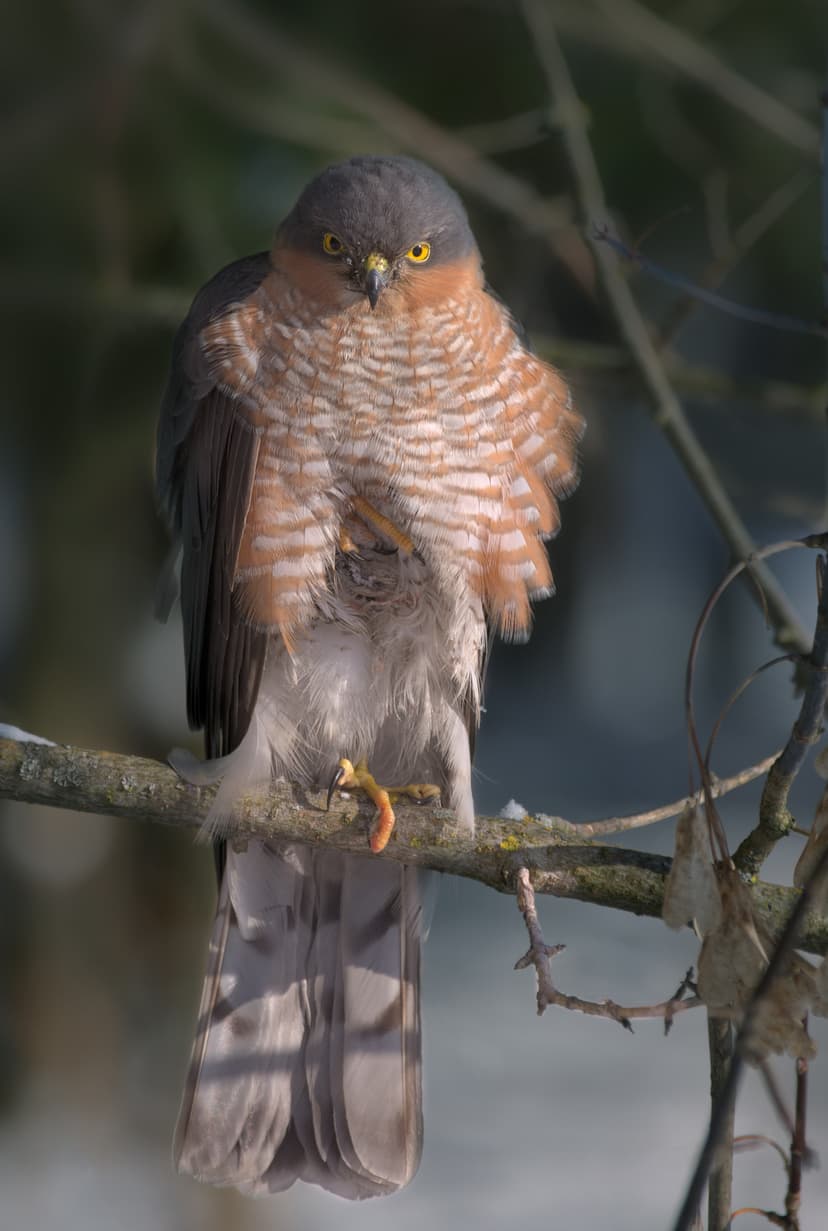
Accipiter nisus
The Eurasian sparrowhawk (Accipiter nisus) is a small bird of prey found across the temperate and subtropical regions of the Old World. It is distinctive for the significant size difference between sexes, with females being much larger than males, and for its specialized hunting of woodland birds, though it also adapts to urban environments. Once threatened by organochlorine insecticides, its populations have recovered and it is now considered of least concern.