
Polemaetus bellicosus
The martial eagle (Polemaetus bellicosus) is a large, powerful booted eagle native to sub-Saharan Africa, notable for its impressive size, strength, and hunting prowess. It is the sole member of its genus and is distinguished by its feathered legs and distinctive dark brown plumage with white spotting. Unfortunately, this species has experienced a significant decline and is currently classified as Endangered due to persecution and habitat changes.
Key Facts
- ›The martial eagle is the only member of the genus Polemaetus and is one of the largest and most powerful booted eagles.
- ›It is characterized by feathers covering its tarsus, a trait shared with other members of the Aquilinae subfamily.
- ›Martial eagles are highly sexually dimorphic, with females being significantly larger and heavier than males.
- ›They are opportunistic predators with a varied diet that includes mammals, birds, and reptiles.
- ›The species primarily hunts by soaring at high altitudes and then stooping on its prey.
- ›Martial eagles are currently classified as Endangered by the IUCN due to a precipitous decline in populations.
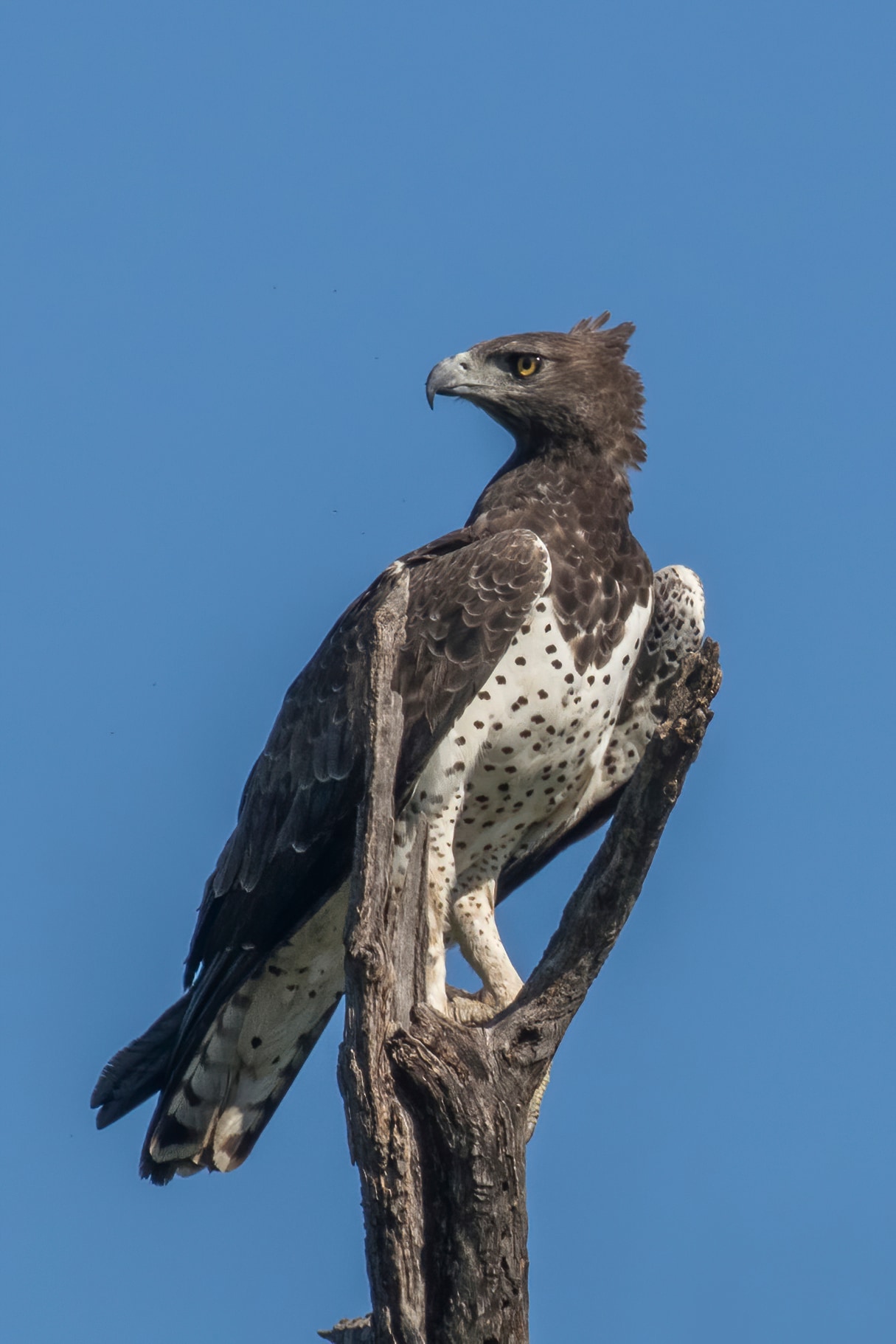
Martial Eagle
Wooded Belts of Open Savanna, Woodland Edges, Thornbush Habitats, Semi-Desert With Scattered Trees, Open Savanna With Wooded Hillocks, Areas Around Pylons, Ephemeral Rivers With Large Trees
Sub-Saharan Africa
- Large eagle with dark brown upperparts and white underparts with blackish-brown spotting.
- Feathers cover the tarsus.
- Possesses a short erectile crest.
- Adults have rich yellow eyes; juveniles have dark brown eyes.
- Highly sexually dimorphic, with females being larger and heavier than males.
- Long, broad wings with relatively narrow rounded tips.
- Relatively short tail compared to its length.
Mammals, Birds, Reptiles
- Primarily hunts from a high soar, stooping on prey.
- Uses keen eyesight to spot prey from great distances.
Persecution by local farmers and game wardens, Habitat changes
About Polemaetus bellicosus
Martial Eagle (Polemaetus bellicosus)
The martial eagle, scientifically known as Polemaetus bellicosus, is a formidable and large raptor native to sub-Saharan Africa. It stands as the sole member of its genus and is recognized as one of the largest and most powerful species within the booted eagle subfamily (Aquilinae), distinguished by the presence of feathers covering its legs.
Range and Habitat
This impressive eagle inhabits a broad swathe of sub-Saharan Africa, favoring environments with ample food and suitable conditions. Its preferred habitats include wooded belts within open savannas, woodland edges, and thornbush areas. While adaptable, they generally avoid closed-canopy forests and hyper-arid deserts, often preferring desolate or protected areas. Martial eagles are found at elevations up to 3,000 meters, though resident birds typically remain below 1,500 meters. Their distribution is notably broader than some other African eagles, such as the crowned eagle and Verreaux's eagle.
Physical Characteristics and Predation
Martial eagles are characterized by their impressive size, with lengths ranging from 78 to 96 cm and wingspans between 188 and 240 cm. They exhibit strong sexual dimorphism, with females being considerably larger and heavier than males. Their plumage is typically dark brown on the upperparts and white with conspicuous blackish-brown spotting on the underparts. A key hunting strategy involves soaring at high altitudes and then descending rapidly upon unsuspecting prey, which can include mammals, birds, and reptiles. Their eyesight is exceptionally keen, allowing them to spot potential prey from vast distances.
Conservation Status and Threats
Despite its power and adaptability, the martial eagle faces significant challenges to its survival. It has experienced a precipitous decline in population over recent centuries and is currently classified as Endangered by the IUCN. The species is one of the most persecuted birds globally, primarily due to conflicts with local farmers and game wardens who perceive them as threats to livestock and game, although the actual impact is often overstated. Habitat degradation and loss also contribute to the species' vulnerability.
Source: Wikipedia ↗
Frequently Asked Questions
What is the martial eagle's scientific name and common names?
The scientific name for the martial eagle is Polemaetus bellicosus. It is also known simply as the martial eagle. It is the only member of its genus, Polemaetus.
Where is the martial eagle found?
The martial eagle is found throughout most of sub-Saharan Africa. They prefer areas with abundant food and favorable environments, often inhabiting wooded belts within open savannas.
What does a martial eagle eat?
Martial eagles are opportunistic predators and their diet is varied. They prey on mammals, birds, and reptiles, adapting their selection based on available food sources.
How large is a martial eagle?
Martial eagles are very large birds, with total lengths ranging from 78 to 96 cm (31 to 38 in). Their wingspan can reach from 188 to 240 cm (6 ft 2 in to 7 ft 10 in), with some reports of even larger spans.
Why is the martial eagle endangered?
The martial eagle is classified as Endangered due to a significant population decline. This decline is attributed to persecution by local farmers and game wardens who view them as threats to livestock and game, although their actual impact is often exaggerated. Habitat changes also contribute to their vulnerability.
What are the key physical characteristics of a martial eagle?
Adult martial eagles have dark brown upperparts and a white underside with blackish-brown spotting. They possess dark brown underwing coverts and pale streaked remiges, giving their wings a dark appearance. Juveniles are distinctly pearly gray with white edging. They also have a short erectile crest and large, yellow eyes.
Related Raptor species
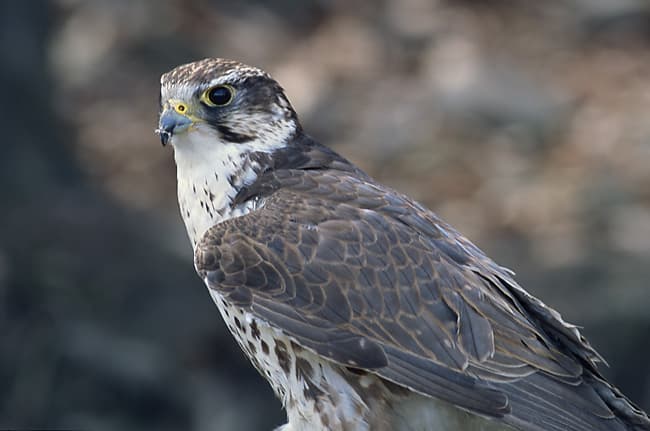
Falco cherrug
The saker falcon (Falco cherrug) is a large falcon species native to Eurasia, known for its impressive speed in flight. It is a partial migrant, with some populations wintering in the Sahel region of Africa. Culturally, it holds significance as the national bird of several countries and has a long history of use in falconry.
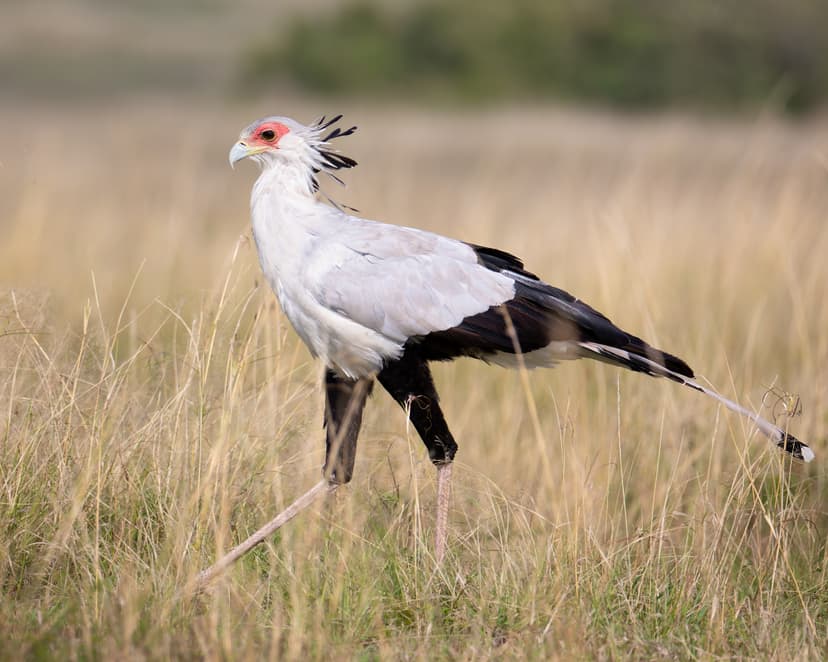
Sagittarius serpentarius
The secretarybird (Sagittarius serpentarius) is a large, distinctive bird of prey found exclusively in Africa. It is primarily terrestrial, hunting its prey on the ground in open grasslands and savannas. Its unique combination of an eagle-like body with crane-like legs and a specialized stomping hunting technique makes it one of the most recognizable raptors.
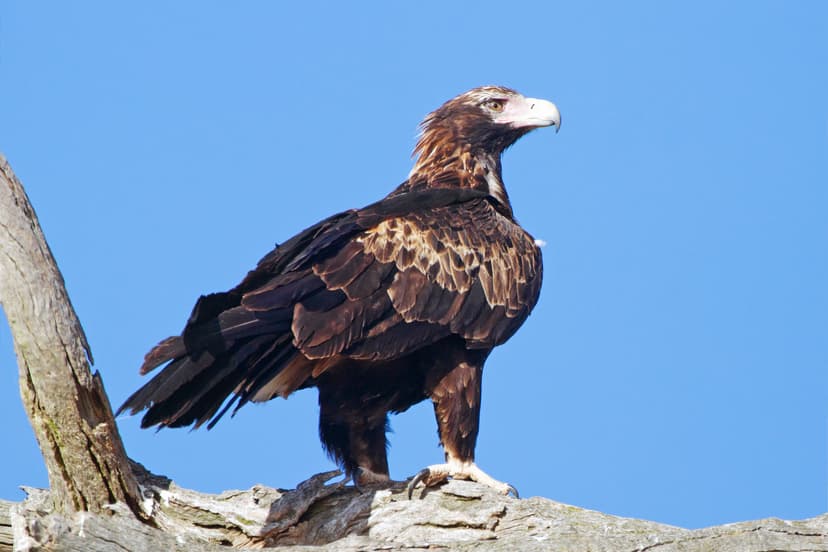
Aquila audax
The wedge-tailed eagle (Aquila audax) is Australia's largest bird of prey, also found in southern New Guinea and Tasmania. It is characterized by its long, broad wings, fully feathered legs, and distinctive wedge-shaped tail. As one of the most powerful avian predators, it is a generalist hunter, preying on mammals, birds, and reptiles, and is known for its resilience and adaptability to various habitats.