
Sagittarius serpentarius
Endangered·Bird of Prey
The secretarybird (Sagittarius serpentarius) is a large, distinctive bird of prey found exclusively in Africa. It is primarily terrestrial, hunting its prey on the ground in open grasslands and savannas. Its unique combination of an eagle-like body with crane-like legs and a specialized stomping hunting technique makes it one of the most recognizable raptors.
Key Facts
- ›Endemic to sub-Saharan Africa, primarily inhabiting open grasslands and savannas.
- ›Possesses exceptionally long, crane-like legs and an eagle-like body, reaching up to 1.3 meters in height.
- ›Hunts by walking on the ground and stomping on prey, rather than primarily using talons for capture.
- ›Diet consists mainly of insects and small vertebrates, though it will also prey on snakes, rodents, and occasionally small mammals.
- ›Classified as Endangered by the IUCN due to a rapid population decline, largely attributed to habitat destruction.
- ›Appears on the coats of arms of South Africa and Sudan, symbolizing protection and growth.
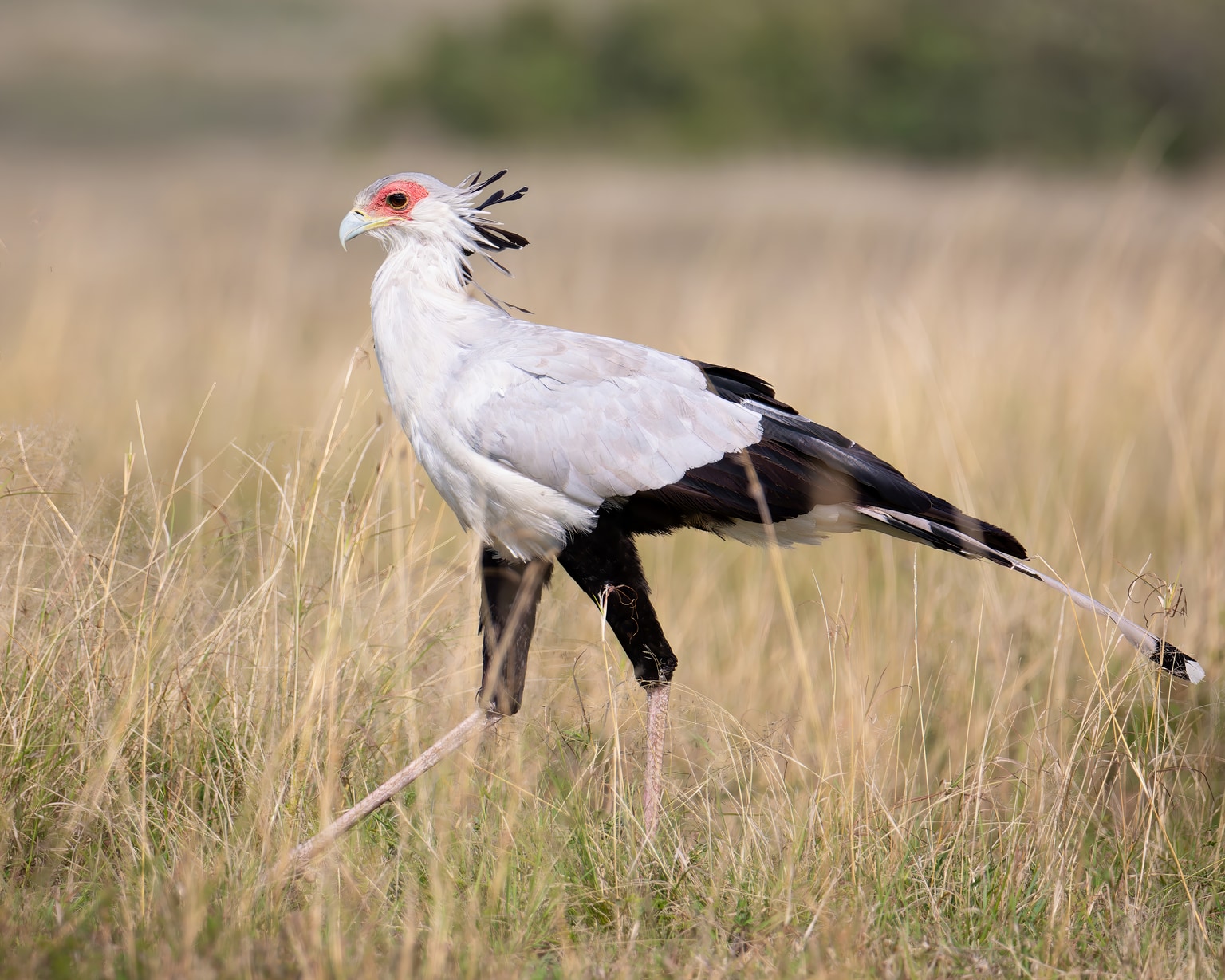
Secretary Bird
Open Grasslands, Savannas, Shrubland
Sub-Saharan Africa
- Large bird of prey, standing up to 1.3 m tall.
- Eagle-like head and body on long, crane-like legs.
- Wingspan between 1.9 and 2.1 m.
- Predominantly grey plumage with black flight feathers and thighs.
- Featherless, red-orange face.
- Flattened dark crest made of long, black feathers.
- Males may have longer tail feathers and more head plumes than females.
- Toes are short and stout, unable to grasp objects effectively.
Insects, Millipedes, Spiders, Scorpions, Freshwater Crabs, Small Vertebrates, Snakes, Occasionally Small Mammals
- Stomping on prey to kill or immobilize
- Flushing prey from tall grass by stomping on vegetation
- Chasing prey with wings spread
- Striking with swift blows of the feet
- Occasionally dropping snakes from flight
Locusts, Grasshoppers, Rodents, Snakes, Lizards, Small Tortoises
Habitat Destruction
About Sagittarius serpentarius
Secretarybird (Sagittarius serpentarius)
The secretarybird, scientifically known as Sagittarius serpentarius, is a large and distinctive bird of prey found exclusively in the sub-Saharan regions of Africa. It is renowned for its striking appearance, characterized by an eagle-like body perched atop exceptionally long, crane-like legs, enabling it to stand as tall as 1.3 meters. This unique morphology is coupled with a primarily terrestrial lifestyle, as the secretarybird spends most of its time walking on the ground in open grasslands and savannas.
Hunting and Diet
Unlike most raptors that rely on aerial pursuit and talons, the secretarybird is a ground hunter. It stalks its prey, which includes a variety of insects, small vertebrates like rodents and lizards, and notably, snakes. Its hunting technique involves flushing prey from vegetation by stomping, and then killing it with rapid, forceful blows from its feet. Some accounts suggest they may even drop snakes from a height to incapacitate them.
Breeding and Life Cycle
Secretarybirds form monogamous pairs and defend large territories. Breeding can occur at any time of year, often coinciding with the late dry season. Nests are constructed high in thorny trees, typically Acacias, as flat platforms of sticks. A clutch of one to three eggs is laid, and both parents share incubation and feeding duties. The chicks hatch asynchronously, and fledging typically occurs between 75 to 80 days after hatching.
Conservation and Cultural Significance
Despite its wide range, the secretarybird's population is experiencing a significant decline, leading to its classification as Endangered by the IUCN. Habitat destruction is the primary threat to its survival. Culturally, the secretarybird is a prominent symbol in Africa, notably appearing on the coats of arms of South Africa and Sudan, where it represents protection and growth. Its ability to combat pests and snakes has historically earned it admiration and protection, though this is diminishing with changing traditions.
Source: Wikipedia ↗
Frequently Asked Questions
What is a secretarybird?
The secretarybird is a large bird of prey native to Africa, easily recognized by its long, crane-like legs and eagle-like body. It is primarily a terrestrial hunter, spending most of its time on the ground in open grasslands and savannas.
What does a secretarybird eat?
Secretarybirds have a varied diet that includes insects, such as locusts and grasshoppers, as well as small vertebrates like rodents, frogs, and lizards. They are also known to hunt snakes, sometimes venomous species, and occasionally small mammals.
How does a secretarybird hunt?
Unlike most raptors, secretarybirds hunt on foot, stalking prey through grasslands. They kill their victims by stomping on them with their powerful legs, a technique that can be surprisingly forceful. They may also strike with their feet, and in some unverified reports, drop snakes from a height.
Where does the secretarybird live?
This species is found throughout sub-Saharan Africa, inhabiting open grasslands, savannas, and shrublands. They prefer areas with shorter grass that do not impede their terrestrial hunting style.
What is the conservation status of the secretarybird?
The secretarybird is currently classified as Endangered by the International Union for Conservation of Nature. Its population is experiencing a rapid decline, primarily due to habitat loss and destruction.
What makes the secretarybird unique?
Its most striking features are its long, bird-like legs and its terrestrial hunting behavior, which involves stomping on prey. The secretarybird is also one of the few raptors that hunts primarily on the ground.
Related Raptor species
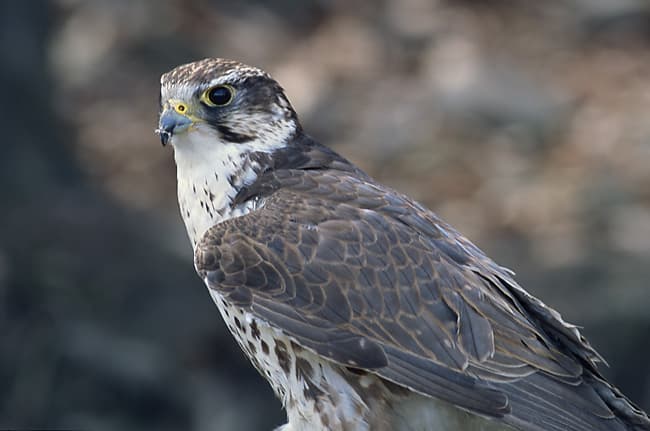
Falco cherrug
The saker falcon (Falco cherrug) is a large falcon species native to Eurasia, known for its impressive speed in flight. It is a partial migrant, with some populations wintering in the Sahel region of Africa. Culturally, it holds significance as the national bird of several countries and has a long history of use in falconry.
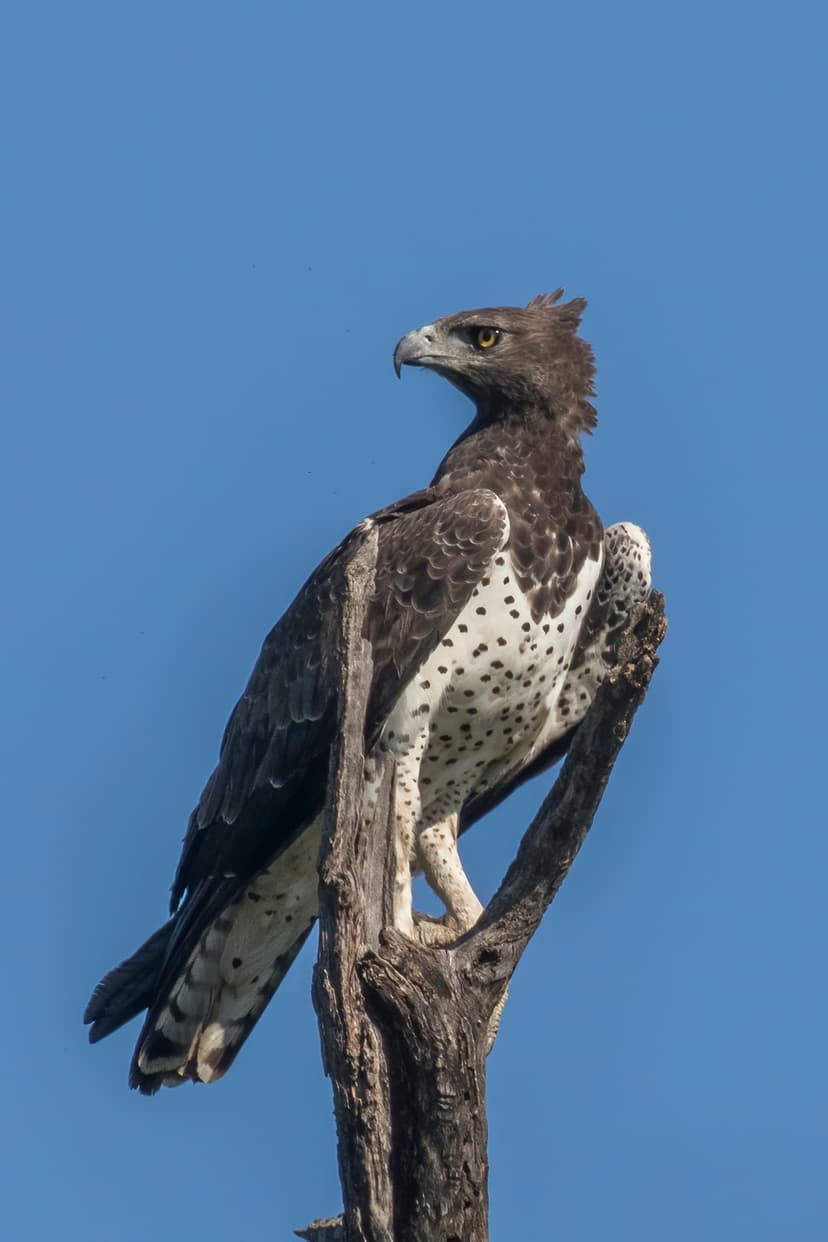
Polemaetus bellicosus
The martial eagle (Polemaetus bellicosus) is a large, powerful booted eagle native to sub-Saharan Africa, notable for its impressive size, strength, and hunting prowess. It is the sole member of its genus and is distinguished by its feathered legs and distinctive dark brown plumage with white spotting. Unfortunately, this species has experienced a significant decline and is currently classified as Endangered due to persecution and habitat changes.
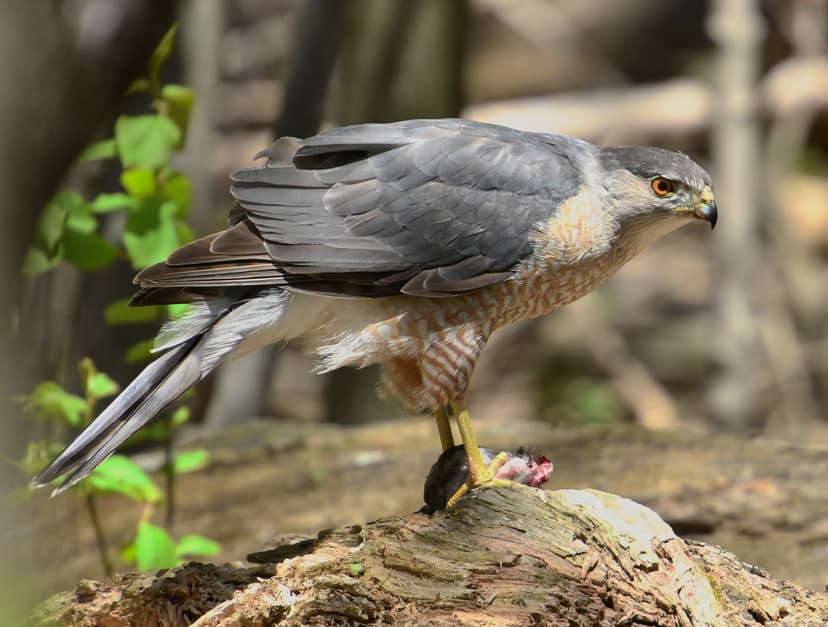
Accipiter cooperii
Cooper's hawk is a medium-sized hawk native to North America, ranging from southern Canada to Mexico. It is known for its exceptional agility, which it uses to hunt agile prey like birds and small mammals. Distinctive features include its blue-gray or brown-gray plumage, a long, barred tail with a white tip, and forward-set eyes adapted for precise hunting.