
Ambystoma flavipiperatum
Ambystoma flavipiperatum·Ambystomatidae
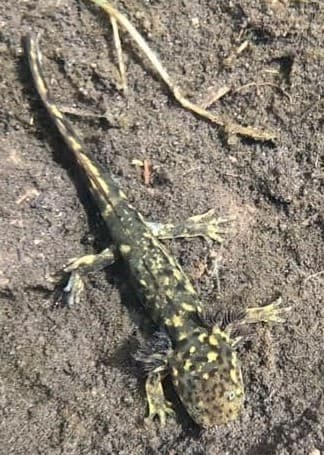
The yellow-peppered salamander (Ambystoma flavipiperatum) is a large, distinctively colored mole salamander found in Jalisco, Mexico. It is characterized by its bright yellow coloration punctuated by large dark spots along its back, giving it its common and scientific name. This species inhabits areas at significant elevations, with larvae displaying similar markings to adults.
Key Facts
- ›Native to elevations around 4900 ft in Jalisco, Mexico.
- ›Features a bright yellow body with large dark dorsal spots.
- ›Possesses almond-shaped eyes and a wide body.
- ›Larvae share adult coloration and can be large before metamorphosis.
- ›Described as similar in appearance to the Blunt-Headed Salamander (Ambystoma amblycephalum).

Salamandra De Champala, Yellow-Headed Salamander
Areas At High Elevations
Mexico
- Large Yellow Salamander
- Large Dark Spots Running Down Its Dorsal Surface
- Almond Eyes
- Wide Body
- Larvae Have the Same Coloration As Adults
- Larvae Have Long, Thick External Gills
- Larvae Have Tall Caudal Fins
- Larvae Can Be Quite Large Before Undergoing Metamorphosis
About Ambystoma flavipiperatum
The yellow-peppered salamander, scientifically known as Ambystoma flavipiperatum, is a striking species of mole salamander native to specific high-elevation regions of Jalisco, Mexico. Its common names, including the yellow-peppered salamander, salamandra de Champala, and yellow-headed salamander, all allude to its distinctive appearance and geographic origin.
Physical Characteristics
This species is notable for its large size and vibrant coloration. The body is primarily a bright yellow, prominently marked with large, dark spots that extend along its dorsal surface, giving rise to its descriptive "yellow-peppered" moniker. It possesses characteristic almond-shaped eyes and a wide body. The larval stage of Ambystoma flavipiperatum mirrors the adult coloration and can reach considerable size before metamorphosis. These larvae are equipped with long, thick external gills, almond eyes, and tall caudal fins, aiding in their aquatic existence before transformation.
Distribution and Habitat
Ambystoma flavipiperatum is geographically restricted to areas at an elevation of approximately 4900 feet around Santa Cruz, Rancho Malveste, and Tapalpa in Jalisco, Mexico. Its habitat preference leans towards these elevated montane environments.
Taxonomy and Relation to Other Species
The yellow-peppered salamander belongs to the family Ambystomatidae, commonly known as mole salamanders. When it was described, it was noted for its similarity to another species, the Blunt-Headed Salamander (Ambystoma amblycephalum).
Source: Wikipedia ↗
Frequently Asked Questions
What is the yellow-peppered salamander?
The yellow-peppered salamander (Ambystoma flavipiperatum) is a species of mole salamander. It is known for its striking coloration and is native to specific high-elevation areas in Mexico.
Where is Ambystoma flavipiperatum found?
This species is found in Jalisco, Mexico, specifically in areas around Santa Cruz, Rancho Malveste, and Tapalpa. It prefers elevations of approximately 4900 feet.
What does the yellow-peppered salamander look like?
It is a large salamander with a prominent yellow base color. Its most distinctive feature is the presence of large, dark spots running down its dorsal surface, resembling pepper. It also has almond-shaped eyes and a wide body.
Do the larvae of Ambystoma flavipiperatum look different from adults?
Larvae of the yellow-peppered salamander share the same coloration as adults. They can grow quite large before undergoing metamorphosis and possess long, thick external gills, almond eyes, and tall caudal fins.
What are other names for Ambystoma flavipiperatum?
The yellow-peppered salamander is also known by the common names salamandra de Champala and the yellow-headed salamander.
Related Salamander and Newt species

Alpine newt
The alpine newt is a species of newt native to continental Europe, with introduced populations in Great Britain and New Zealand. Adults are typically dark grey to blue on their back and sides, with a vibrant orange belly and throat, with males displaying more striking coloration, especially during the breeding season. They are adaptable, inhabiting both lowlands and high altitudes, and are primarily nocturnal during their terrestrial phase.

Alpine salamander
The alpine salamander (Salamandra atra) is a terrestrial amphibian found in the mountainous regions of Europe, primarily in the Alps. It is distinguished by its completely black coloration, although some subspecies display yellow or golden spots. Unlike most salamanders, it gives birth to live young, bypassing an aquatic larval stage.
Ambystoma altamirani
The mountain stream salamander (Ambystoma altamirani) is a species of mole salamander native to central Mexico. It is distinguished by its purplish-black dorsal coloration, purplish-lavender belly, and cream-colored accents on its lips, digit tips, and tail fin. This species inhabits high-elevation pine and pine-oak woodlands, breeding in small streams where both larvae and some adults reside, while other adults venture onto land.