
Ambystoma lermaense
The Lake Lerma salamander (Ambystoma lermaense) is an extremely rare mole salamander species native to the Toluca Valley in central Mexico. This species is characterized by its neotenic tendencies and has faced a catastrophic decline due to habitat destruction, pollution, and dam construction in its native Lerma River and Lake Lerma wetlands.
Key Facts
- ›Native to the Lerma River and Lake Lerma in the Toluca Valley, Mexico.
- ›Faces severe population decline due to wetland drainage, pollution, and dam construction.
- ›First described by Edward Harrison Taylor in 1940.
- ›Listed as Endangered on the IUCN Red List due to lack of occurrence information.
- ›Ex-situ reproduction is possible under laboratory conditions using hormonal stimulation.
- ›Listed in Appendix II of CITES.
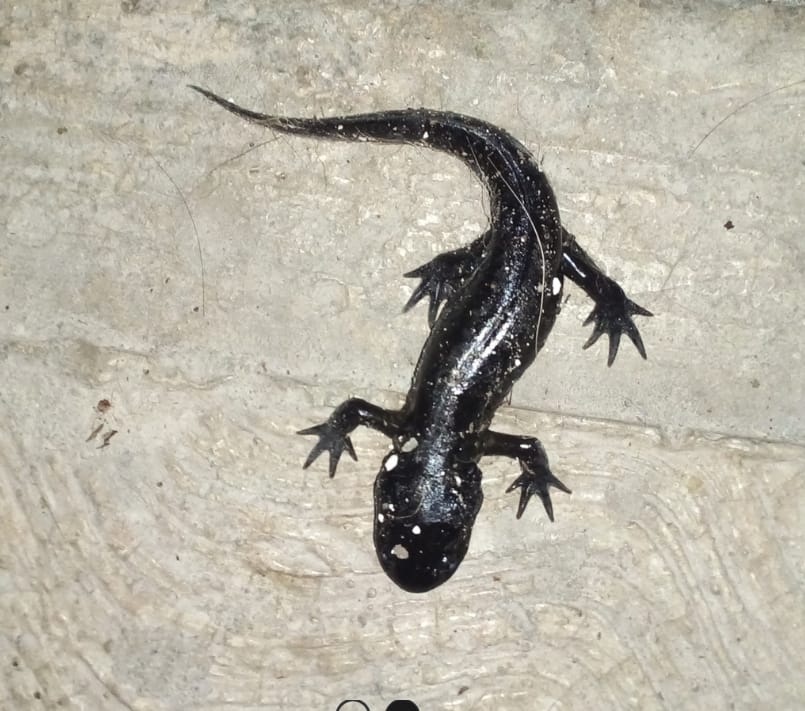
Lake Lerma Salamander
Lerma River, Lake Lerma, Toluca Valley Wetlands
Mexico
Mole Salamander Species, Occasionally Neotenic
Habitat Destruction, Pollution, Dam Construction, Domestic Consumption
About Ambystoma lermaense
The Lake Lerma salamander, scientifically known as Ambystoma lermaense, is an exceedingly rare species of mole salamander found in Mexico. It is characterized by its occasional neoteny, meaning it can retain larval features into adulthood. This species historically inhabited the Lerma River and the now largely destroyed Lake Lerma wetlands in the Toluca Valley, at high altitudes of 2800–3000 meters above sea level.
Conservation Concerns
The existence of Ambystoma lermaense is critically threatened by extensive habitat degradation. The drainage of the Lake Lerma wetlands complex has decimated its primary habitat. Further pressures include pollution of the Lerma River and the impacts of dam construction in regions like Almoloya. These factors, combined with domestic consumption, have led to a catastrophic decline in its populations. Consequently, the species is listed as Endangered on the IUCN Red List, with a significant portion of its vulnerability attributed to a lack of detailed information regarding its current distribution and numbers. It is also included in Appendix II of CITES, regulating its international trade.
Reproduction and Research
Despite its precarious status, research has demonstrated the potential for conservation through ex-situ reproduction. Studies have shown that Ambystoma lermaense can be bred under laboratory conditions. This captive breeding is often achieved through hormonal stimulation, such as the use of Human Chorionic Gonadotropin (hCG), offering a glimmer of hope for the species' survival.
Source: Wikipedia ↗
Frequently Asked Questions
Where does the Lake Lerma salamander live?
The Lake Lerma salamander is found in the Lerma River and Lake Lerma within the Toluca Valley, located in the central highlands of Mexico. Its native habitat is at high altitudes, between 2800 and 3000 meters above sea level.
What has caused the decline of the Lake Lerma salamander population?
The species has suffered a catastrophic decline due to the drainage of the Lake Lerma wetlands, pollution of the Lerma River, and the construction of dams. Domestic consumption has also contributed to the population's reduction.
What is the conservation status of Ambystoma lermaense?
Ambystoma lermaense is listed as Endangered on the IUCN Red List. This classification is partly due to a lack of comprehensive information regarding its current occurrence and population status.
Is it possible to breed the Lake Lerma salamander in captivity?
Yes, ex-situ reproduction for Ambystoma lermaense has been successfully demonstrated under laboratory conditions. This process can be facilitated through hormonal stimulation, such as with Human Chorionic Gonadotropin (hCG), offering a potential conservation strategy.
When was the Lake Lerma salamander first identified?
The Lake Lerma salamander was first described by herpetologist Edward Harrison Taylor. The holotype specimen was discovered east of Toluca in the year 1940.
Related Salamander and Newt species
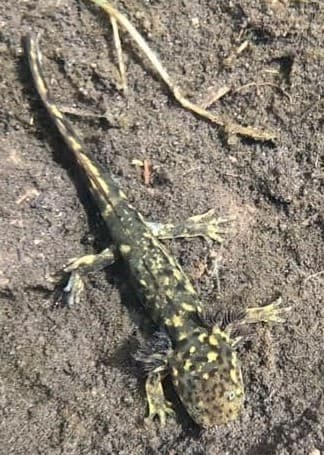
Ambystoma altamirani
The mountain stream salamander (Ambystoma altamirani) is a species of mole salamander native to central Mexico. It is distinguished by its purplish-black dorsal coloration, purplish-lavender belly, and cream-colored accents on its lips, digit tips, and tail fin. This species inhabits high-elevation pine and pine-oak woodlands, breeding in small streams where both larvae and some adults reside, while other adults venture onto land.

Aneides iecanus
The Shasta black salamander (Aneides iecanus) is a species of salamander found only in Shasta County, California. It is distinguished by its large size, black coloration with white spots, and a heavily speckled body, head, and tail.

Aneides niger
The Santa Cruz black salamander (Aneides niger) is a species of salamander found exclusively in the San Francisco Peninsula of California. It is distinguished from other members of its complex by its predominantly black coloration in adulthood, a trait that develops as it matures from a spotted juvenile. This species faces significant threats due to its limited range, which has been impacted by development, water diversions, and wildfires.