
Aneides iecanus
The Shasta black salamander (Aneides iecanus) is a species of salamander found only in Shasta County, California. It is distinguished by its large size, black coloration with white spots, and a heavily speckled body, head, and tail.
Key Facts
- ›Endemic to Shasta County, California, with potential range into southern Siskiyou and Tehama counties.
- ›Characterized by a large, black body adorned with white spots.
- ›Possesses a heavily speckled body, head, and tail, distinguishing it from related species.
- ›Classified as Endangered on the IUCN Red List due to its restricted distribution and habitat threats.
- ›Its taxonomic status was confirmed as a distinct species in a 2019 study, after previously being synonymized with other species.

Shasta Black Salamander
Western Shasta County, Vicinity of Shasta Lake
United States
Large Size, Black Coloration, White Spots, Heavily Speckled Body, Head, and Tail
- Limited Range
- Habitat Loss Due To Shasta Lake Creation
- Potential Habitat Damage From Shasta Dam Raising
About Aneides iecanus
Shasta Black Salamander (Aneides iecanus)
The Shasta black salamander, scientifically known as Aneides iecanus, is a species of salamander belonging to the family Plethodontidae. This species is endemic to Shasta County in California, with its known distribution primarily centered around Shasta Lake in the western part of the county. There is also potential for its range to extend into the southernmost portions of Siskiyou and Tehama counties.
Description and Taxonomy
First described by Edward Drinker Cope in 1883, the Shasta black salamander was for a time considered synonymous with the speckled black salamander (A. flavipunctatus). However, a significant taxonomic re-evaluation in 2019 re-established Aneides iecanus as a distinct species. Physically, it is characterized as a large salamander with a predominantly black coloration, further distinguished by the presence of white spots. Its body, head, and tail are heavily speckled, which helps differentiate it from other closely related species within the A. flavipunctatus complex. On average, it also possesses one fewer trunk vertebra compared to A. klamathensis or A. niger.
Conservation Status and Threats
The Shasta black salamander is currently classified as Endangered on the IUCN Red List. This status is primarily attributed to its highly restricted geographic range. A substantial portion of its natural habitat was lost during the construction of Shasta Lake. Furthermore, ongoing proposals to raise the Shasta Dam pose a significant threat to the remaining habitat, potentially causing severe damage and further imperiling the species' survival.
Source: Wikipedia ↗
Frequently Asked Questions
Where is the Shasta black salamander found?
The Shasta black salamander is endemic to western Shasta County in California, primarily in the vicinity of Shasta Lake. It may also extend into extreme southern Siskiyou and Tehama counties.
What does the Shasta black salamander look like?
This species is a large, black salamander marked with white spots. It is further distinguished by its heavily speckled body, head, and tail.
Why is the Shasta black salamander considered endangered?
It is classified as Endangered on the IUCN Red List due to its limited geographic range. Much of its habitat was lost with the creation of Shasta Lake, and further threats loom from proposals to raise the Shasta Dam.
Is the Shasta black salamander a distinct species?
Yes, a 2019 taxonomic study confirmed Aneides iecanus as a distinct species. It had previously been synonymized with other species, such as the speckled black salamander (A. flavipunctatus).
Related Salamander and Newt species
Ambystoma lermaense
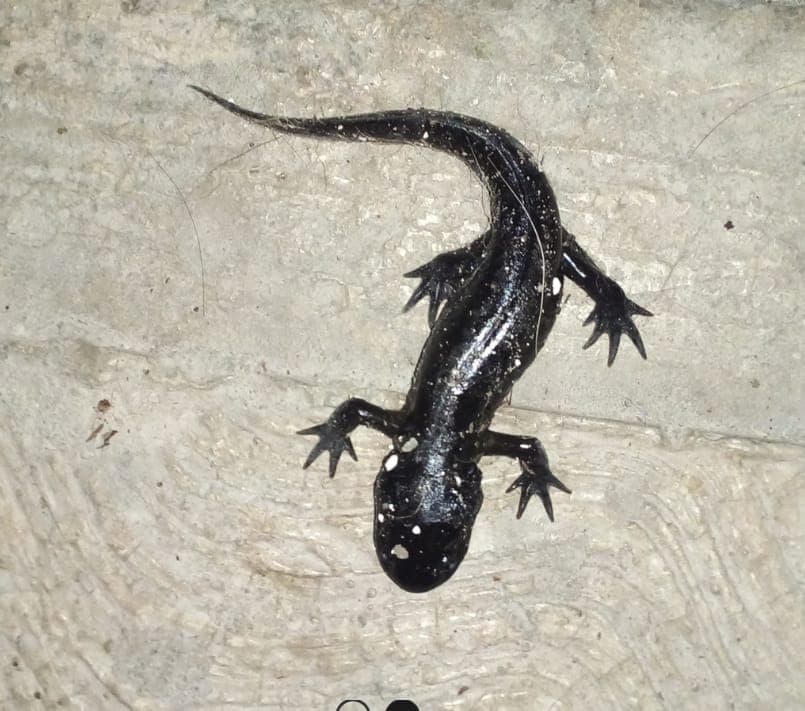
The Lake Lerma salamander (Ambystoma lermaense) is an extremely rare mole salamander species native to the Toluca Valley in central Mexico. This species is characterized by its neotenic tendencies and has faced a catastrophic decline due to habitat destruction, pollution, and dam construction in its native Lerma River and Lake Lerma wetlands.

Aneides niger
The Santa Cruz black salamander (Aneides niger) is a species of salamander found exclusively in the San Francisco Peninsula of California. It is distinguished from other members of its complex by its predominantly black coloration in adulthood, a trait that develops as it matures from a spotted juvenile. This species faces significant threats due to its limited range, which has been impacted by development, water diversions, and wildfires.
Ambystoma altamirani
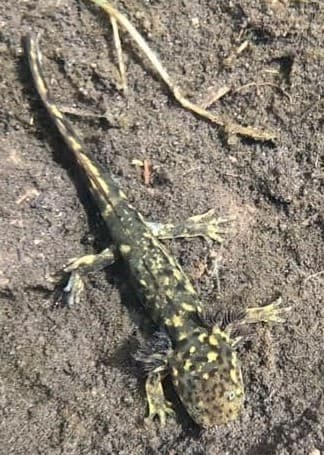
The mountain stream salamander (Ambystoma altamirani) is a species of mole salamander native to central Mexico. It is distinguished by its purplish-black dorsal coloration, purplish-lavender belly, and cream-colored accents on its lips, digit tips, and tail fin. This species inhabits high-elevation pine and pine-oak woodlands, breeding in small streams where both larvae and some adults reside, while other adults venture onto land.