
Ambystoma velasci
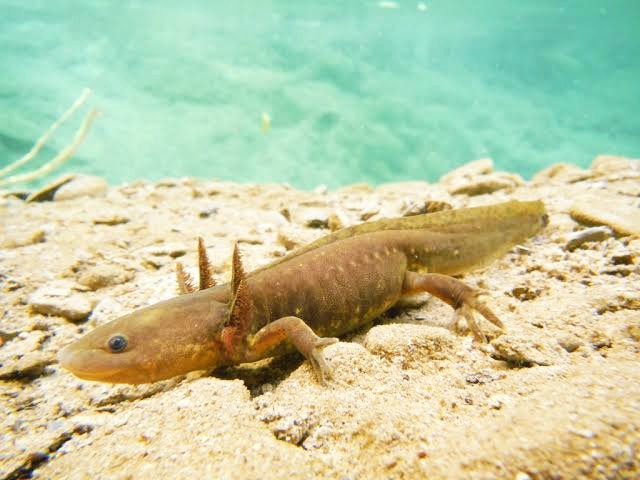
The plateau tiger salamander (Ambystoma velasci) is a mole salamander species found in Mexico, with a possible range extending into the United States. It is distinctive for its ability to exhibit facultative paedomorphosis, meaning adults can retain larval features or undergo metamorphosis again in response to environmental changes. Adults are characterized by olive-green backs with dark spots and a cream underside.
Key Facts
- ›Can undergo metamorphosis again in adulthood, shrinking and losing external gills.
- ›Adults have olive-green backs with dark spots and a cream underside.
- ›Breeds in various aquatic habitats including volcanic lakes, vernal pools, and artificial ponds.
- ›Found in grassland, sparse forest, and semiarid grassland environments.
- ›Threatened by habitat loss from urbanization, deforestation, and water extraction.
- ›Listed as Least Concern by the IUCN but under special protection in Mexico.
Plateau Tiger Salamander, Mexican Tiger Salamander
Grassland, Sparse Forest, Semiarid Grassland, Deep Volcanic Lakes, Shallow Vernal Pools, Artificial Cattle Ponds, Intermittent, Fish-Free Stream Pools, Tropical Deciduous Forests, Pine Oak Forests
Mexico, United States
Olive Green Backs With Dark Spots, White Or Cream Underside of the Abdomen, External Gills
- Exhibits Facultative Paedomorphosis
- Adults Can Undergo Metamorphosis Again In Response To Environmental Conditions
- Shrinks and Loses External Gills During Re-Metamorphosis
- Legs Elongate During Re-Metamorphosis
Habitat Loss, Urbanization, Forest Clearance, Water Extraction, Pollution, Introduction of Fish and Frogs, Logging, Human-Caused Forest Fires
About Ambystoma velasci
Plateau Tiger Salamander (Ambystoma velasci)
The plateau tiger salamander, scientifically known as Ambystoma velasci, is a species of mole salamander belonging to the family Ambystomatidae. It is primarily found in Mexico, with its range potentially extending into the United States. This species is notable for its ability to exhibit facultative paedomorphosis, meaning adult individuals can retain larval traits or undergo a secondary metamorphosis in response to environmental cues.
Description and Life Cycle
Adult plateau tiger salamanders typically have olive-green backs adorned with dark spots, contrasting with a white or cream-colored underside. Like many aquatic salamanders, they possess external gills. A remarkable characteristic of Ambystoma velasci is its capacity for metamorphic change even after reaching adulthood. This process, triggered by environmental factors, involves the salamander shrinking in size, losing its external gills, and experiencing elongation of its legs.
Habitat and Distribution
The natural habitat of the plateau tiger salamander is varied, encompassing grasslands, including areas with sparse forests and semiarid grasslands. They utilize a range of aquatic environments for breeding, such as deep volcanic lakes, ephemeral vernal pools, man-made cattle ponds, and temporary stream pools that are free of fish. Within the highlands of central Mexico, they inhabit ponds and small streams found in tropical deciduous forests or pine-oak forests.
Conservation Status and Threats
Ambystoma velasci faces significant threats, primarily stemming from habitat loss driven by urbanization, deforestation, and excessive water extraction. Pollution and the introduction of non-native species, such as the American bullfrog (Lithobates catesbeianus), also endanger populations. Logging and human-induced forest fires are major contributors to the destruction and fragmentation of their habitats.
Despite these challenges, the plateau tiger salamander is listed as Least Concern by the International Union for Conservation of Nature (IUCN) on the IUCN Red List. However, it is afforded special protection under Mexican law, highlighting its vulnerability within its native range. Conservation studies often give less attention to herpetofauna compared to mammalian and avian species.
Source: Wikipedia ↗
Frequently Asked Questions
What is facultative paedomorphosis in the plateau tiger salamander?
Facultative paedomorphosis means the plateau tiger salamander can retain larval characteristics, such as external gills, into adulthood. It also has the ability to undergo metamorphosis again later in life if environmental conditions change.
What does the plateau tiger salamander look like?
Adults typically display an olive-green coloration on their backs, marked with dark spots. Their undersides are white or cream. They possess external gills, similar to other aquatic salamander species.
Where does the plateau tiger salamander live?
This species is primarily found in Mexico, with its range extending from Chihuahua in the north to Durango in the south and Jalisco in the west. Its natural habitat includes grasslands, sparse forests, and semiarid areas.
What kind of water bodies does the plateau tiger salamander use for breeding?
They breed in a variety of aquatic environments, including deep volcanic lakes, shallow vernal pools, artificial cattle ponds, and intermittent stream pools that are free of fish.
What are the main threats to the plateau tiger salamander?
Major threats include habitat loss due to urbanization, forest clearance, and water extraction. Pollution and the introduction of invasive species like the American bullfrog also pose risks. Logging and human-caused forest fires are significant contributors to habitat destruction.
What is the conservation status of the plateau tiger salamander?
The plateau tiger salamander is listed as Least Concern by the IUCN Red List. However, it is also recognized under a special protection category by Mexican law.
Related Salamander and Newt species

Ambystoma macrodactylum
The long-toed salamander (Ambystoma macrodactylum) is a mole salamander native to the Pacific Northwest of North America. It is distinguished by its mottled black, brown, and yellow coloration and a notably long outer fourth toe on its hind limbs. This species occupies a wide range of habitats, from temperate rainforests to alpine meadows, and is known for its subterranean adult lifestyle and aquatic breeding phase.
Aneides flavipunctatus
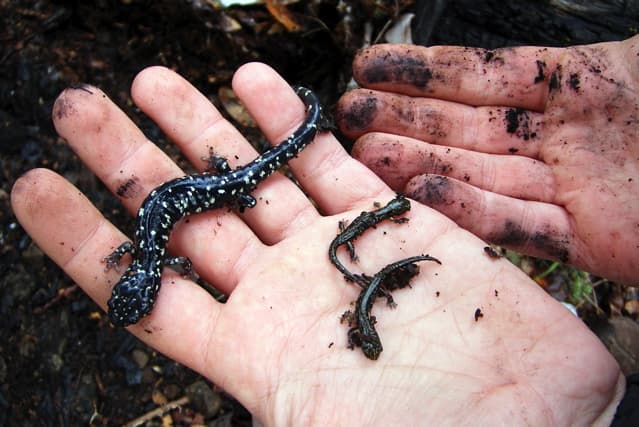
The speckled black salamander (Aneides flavipunctatus) is a species of salamander native to California, found in temperate forests and grasslands. It is distinguished by its variable coloration, ranging from black with white or yellow spots to a grayish or greenish sheen, and its prehensile tail. The species is primarily terrestrial and nocturnal, feeding on small invertebrates.
Ambystoma rosaceum
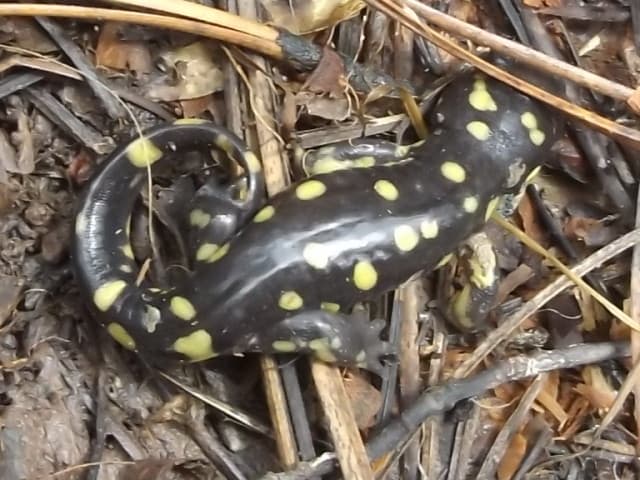
The Tarahumara salamander (Ambystoma rosaceum) is a freshwater mole salamander species endemic to Mexico, found in temperate and montane forests, grasslands, and various aquatic habitats. It is distinguished by its medium size, variable coloration of yellow spots or streaks on a dark background in adults, and the potential for paedomorphosis, where individuals retain larval features. While generally considered Least Concern, it faces threats from habitat loss and introduced species.