
Aneides flavipunctatus
The speckled black salamander (Aneides flavipunctatus) is a species of salamander native to California, found in temperate forests and grasslands. It is distinguished by its variable coloration, ranging from black with white or yellow spots to a grayish or greenish sheen, and its prehensile tail. The species is primarily terrestrial and nocturnal, feeding on small invertebrates.
Key Facts
- ›Endemic to the U.S. state of California.
- ›Found in temperate forests and grasslands, primarily in coastal ranges.
- ›Coloration is highly variable, often black with white or yellow spots.
- ›Possesses a prehensile tail, allowing for some climbing ability.
- ›Primarily terrestrial and nocturnal, feeding on small invertebrates.
- ›Its breeding habits are not extensively studied, but females appear to guard eggs.
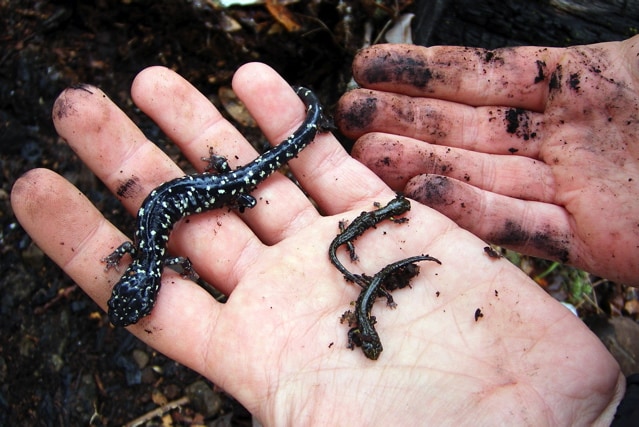
Speckled Black Salamander, Black Salamander
Temperate Forests, Temperate Grassland, Woodland, Damp Places, Stream Banks, Mossy Rocks, Scree
U.S. State of California
- 60 To 75 Millimeters Long
- Color Varies: Black With Coarse Or Fine White Spots, Black With Yellow Spots, Or Black With A Grayish Or Greenish Sheen
- Underside Is Paler
- Juveniles Are Greenish-Gray Or Bronze With Yellow At the Base of Their Legs
- Possesses A Prehensile Tail
Small Invertebrates, Millipedes, Beetles, Ants, Termiles, Flies, Springtails
Mostly Terrestrial, May Sometimes Climb, Mainly Nocturnal, Hides During the Day, Aggressive Towards Its Own Species, Probably Territorial, Bites When Attacked
Habitat Loss, Planting of Vineyards
About Aneides flavipunctatus
The Speckled Black Salamander (Aneides flavipunctatus)
The speckled black salamander, scientifically known as Aneides flavipunctatus, is a species of salamander native to the U.S. state of California. Previously referred to simply as the black salamander, it was identified in 2019 as part of a species complex and distinguished from several related species.
Description and Habitat
This salamander typically grows to between 60 and 75 millimeters (2.4 to 3.0 inches) in length. Its coloration is notably variable, often appearing black with either coarse or fine white spots, or black with yellow spots. Some individuals may display a grayish or greenish sheen, with paler undersides. Juveniles are characterized by a greenish-gray or bronze hue and yellow markings at the base of their legs. The speckled black salamander possesses a prehensile tail, which aids in its ability to climb, similar to the arboreal salamander (Aneides lugubris).
Its natural habitats include temperate forests and temperate grasslands, primarily within the coastal ranges of California. It is commonly found in woodland areas near damp locations and stream banks. Northern populations may inhabit more open country, and in the far north of its range, it can be found among mossy rocks and scree. While typically found below 600 meters (2,000 ft), it can occasionally be found at elevations up to 1,700 meters (5,600 ft).
Biology and Behavior
The speckled black salamander is predominantly terrestrial and nocturnal, seeking shelter during daylight hours. Its diet consists of small invertebrates such as millipedes, beetles, ants, and termites. Juveniles share a similar diet, with the addition of flies and springtails.
Reproductive habits are not extensively studied, but eggs are laid in underground chambers in July or August and appear to be guarded by the female until hatching. In captivity, this species has shown aggression towards conspecifics, and adults in the wild often bear scars, suggesting territorial behavior. It has also been observed to bite when attacked, even by a western garter snake.
Conservation Status
While the speckled black salamander is currently listed as Least Concern by the IUCN Red List, this assessment was made prior to the recent taxonomic splits. Habitat loss, particularly due to the expansion of vineyards, poses a threat to its populations. The species' distribution is primarily within California, ranging from southern Humboldt and Trinity counties southward to Sonoma and Napa counties, with some debate regarding populations in Glenn County.
Source: Wikipedia ↗
Frequently Asked Questions
What is the scientific name for the speckled black salamander?
The scientific name for the speckled black salamander is Aneides flavipunctatus. It was previously referred to as the black salamander before taxonomic studies led to its distinction from related species.
Where can the speckled black salamander be found?
This species is found in the coastal ranges of California, inhabiting forested areas and grasslands. Its range extends from southern Humboldt and Trinity counties south to Sonoma and Napa counties, typically at elevations below 600 meters but sometimes higher.
What does the speckled black salamander look like?
The speckled black salamander typically measures between 60 to 75 millimeters in length. Its coloration varies, commonly appearing black with white or yellow spots, or sometimes exhibiting a grayish or greenish sheen on its back, with a paler underside. Juveniles are greenish-gray or bronze with yellow markings.
What does the speckled black salamander eat?
It feeds on small invertebrates, including millipedes, beetles, ants, and termites. Juveniles consume a similar diet, also including flies and springtails.
What are the known behaviors of the speckled black salamander?
The speckled black salamander is mainly nocturnal and terrestrial, though its prehensile tail allows for some climbing. It is known to be aggressive towards its own species and has demonstrated defensive biting behavior when threatened, such as against a western garter snake.
What is the conservation status of the speckled black salamander?
The speckled black salamander is listed as least concern on the IUCN Red List of Threatened Species. However, this assessment was based on its previous, broader definition, and threats like habitat loss from vineyard development are present.
Related Salamander and Newt species
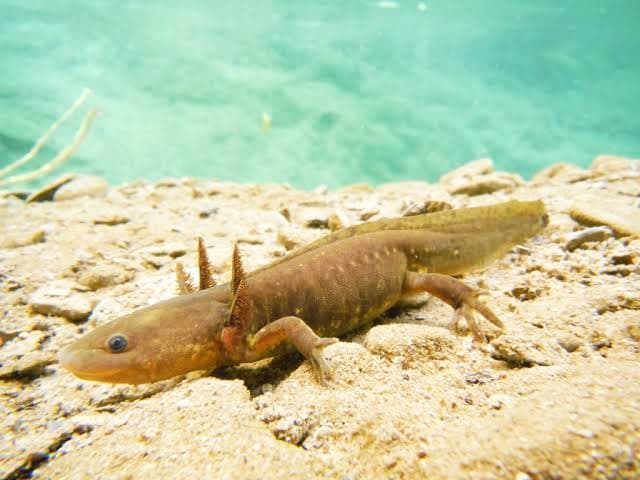
Ambystoma velasci
The plateau tiger salamander (Ambystoma velasci) is a mole salamander species found in Mexico, with a possible range extending into the United States. It is distinctive for its ability to exhibit facultative paedomorphosis, meaning adults can retain larval features or undergo metamorphosis again in response to environmental changes. Adults are characterized by olive-green backs with dark spots and a cream underside.

Ambystoma macrodactylum
The long-toed salamander (Ambystoma macrodactylum) is a mole salamander native to the Pacific Northwest of North America. It is distinguished by its mottled black, brown, and yellow coloration and a notably long outer fourth toe on its hind limbs. This species occupies a wide range of habitats, from temperate rainforests to alpine meadows, and is known for its subterranean adult lifestyle and aquatic breeding phase.

Alpine newt
The alpine newt is a species of newt native to continental Europe, with introduced populations in Great Britain and New Zealand. Adults are typically dark grey to blue on their back and sides, with a vibrant orange belly and throat, with males displaying more striking coloration, especially during the breeding season. They are adaptable, inhabiting both lowlands and high altitudes, and are primarily nocturnal during their terrestrial phase.