
Ambystoma texanum
The small-mouth salamander (Ambystoma texanum) is a species of mole salamander native to the central United States and parts of Canada. It is identifiable by its relatively small head, dark coloration with flecking, and a long tail. This species prefers moist habitats and is known for its nocturnal and subterranean lifestyle.
Key Facts
- ›Small-mouth salamanders are found across the central United States, extending into parts of Canada.
- ›They are typically black or dark brown with light-grey or silvery flecking or blotching.
- ›Adults range from 4.5 to 7.0 inches in length.
- ›Their diet consists of insects, slugs, and earthworms.
- ›Breeding takes place in the spring, with females laying eggs attached to submerged vegetation or rocks.
- ›The species is listed as endangered in Canada, with its only known population on Pelee Island.

Texas Salamander, Porphyry Salamander, Narrow-Mouthed Salamander
Moist Pine Woodlands, Deciduous Forest Bottomlands, Tallgrass Prairies, Farming Areas, Near Temporary Ponds, Along Streams, Subterranean Habitats
Central United States, Canada
- Grows From 4.5 To 7.0 Inches In Length.
- Typically Black Or Dark Brown Coloration.
- Features Light-Grey Or Silvery-Colored Flecking, Or Grey Blotching.
- Has A Fairly Small Head Relative To Its Body.
- Possesses A Long Tail.
- Males Are Typically Smaller Than Females.
- Bellies Are Black, Often With Tiny Flecks.
- Has 14 To 15 Costal Grooves.
Insects, Slugs, Earthworms
- Nocturnal
- Often Subterranean
- Prefers Moist Habitats Near Permanent Bodies of Water
- Breeds In the Spring, Congregating Near Water
- Females Attach Eggs In Small Clumps To Rocks Or Vegetation Underwater
- When Disturbed, Raises and Waves Tail
- Shy and Sensitive, Shares Breeding Pools With Larger Salamander Species
Forest, Prairie, Wetland, Agricultural
About Ambystoma texanum
Small-mouth Salamander (Ambystoma texanum)
The small-mouth salamander, scientifically known as Ambystoma texanum, is a species of mole salamander found across a broad range in the central United States and extending into Canada. Its natural distribution includes the Great Lakes region in Michigan, south to Texas, and east to Tennessee, with a notable population in Pelee, Ontario. It is sometimes referred to by other common names such as the Texas salamander, porphyry salamander, or the narrow-mouthed salamander.
Description and Behavior
Adult small-mouth salamanders typically measure between 4.5 and 7.0 inches in length. Their coloration is usually black or dark brown, distinguished by light-grey or silvery flecking or blotching. A key characteristic is its relatively small head compared to its body size, accompanied by a long tail. Males tend to be smaller than females, and their bellies are black, often speckled with tiny flecks. They possess 14 to 15 costal grooves along their sides.
These salamanders are primarily nocturnal and often live subterranean lives, favoring moist environments situated near permanent water sources. During the spring, they engage in breeding activities, with groups gathering near water. Females can lay a substantial number of eggs, up to 700, which they attach in small clusters of up to 30 eggs to submerged rocks or vegetation. Their diet consists of insects, slugs, and earthworms. Larvae hatch at approximately 0.5 inches (13 mm) and undergo metamorphosis by May or June, reaching about 1.6 inches (40 mm). When threatened or disturbed, the small-mouth salamander exhibits a defense mechanism by raising and waving its tail. These salamanders are described as shy and sensitive, often sharing breeding pools with larger species like the spotted salamander and marbled salamander.
Habitat and Range
The small-mouth salamander inhabits a variety of moist environments. These include pine woodlands, deciduous forest bottomlands, tallgrass prairies, and agricultural areas. They are also found near temporary ponds and along streams. Their geographic distribution extends from western West Virginia southward to the Gulf of Mexico, and westward to Kansas, Oklahoma, and Texas.
Conservation
The sole known Canadian population of the small-mouth salamander resides on Pelee Island in Lake Erie. Reflecting concerns for this specific population, it is listed as endangered by the Committee on the Status of Endangered Wildlife in Canada.
Source: Wikipedia ↗
Frequently Asked Questions
What are the common names for Ambystoma texanum?
Ambystoma texanum is also commonly known as the Texas salamander, porphyry salamander, or the narrow-mouthed salamander.
What is the size of a small-mouth salamander?
Adult small-mouth salamanders typically measure between 4.5 and 7.0 inches in length. Males are generally smaller than females.
What do small-mouth salamanders eat?
Their diet primarily includes insects, slugs, and earthworms. They forage for these food sources in their moist habitats.
Where do small-mouth salamanders live?
They inhabit moist pine woodlands, deciduous forest bottomlands, tallgrass prairies, farming areas, and are found near temporary ponds and along streams.
When do small-mouth salamanders breed?
Breeding occurs in the spring. Groups of these salamanders congregate near water bodies for reproduction.
What is the conservation status of the small-mouth salamander in Canada?
The only known Canadian population of the small-mouth salamander is on Pelee Island. It is listed as endangered by the Committee on the Status of Endangered Wildlife in Canada.
Related Salamander and Newt species
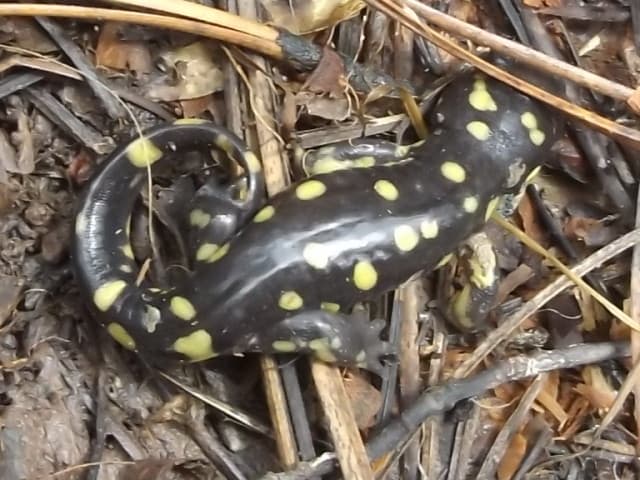
Ambystoma rosaceum
The Tarahumara salamander (Ambystoma rosaceum) is a freshwater mole salamander species endemic to Mexico, found in temperate and montane forests, grasslands, and various aquatic habitats. It is distinguished by its medium size, variable coloration of yellow spots or streaks on a dark background in adults, and the potential for paedomorphosis, where individuals retain larval features. While generally considered Least Concern, it faces threats from habitat loss and introduced species.
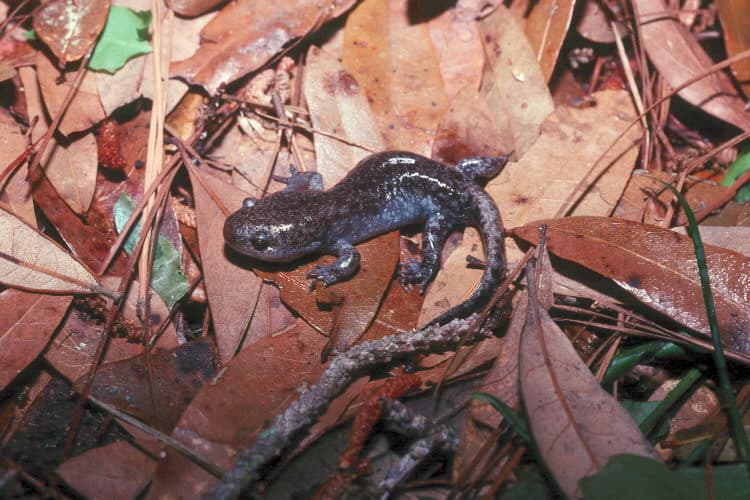
Ambystoma talpoideum
The mole salamander (Ambystoma talpoideum), also known as the tadpole salamander, is a species native to the eastern and central United States. It is characterized by its stocky build, large head, and a unique ability to remain in a neotenic, or larval, state into adulthood. These salamanders inhabit forest floors and migrate to ponds for breeding, with their populations facing threats from habitat alteration.

Black-chinned red salamander
The Black-chinned red salamander is a species of lungless salamander native to the Eastern United States. It is characterized by its brown, orange, or red skin adorned with irregular black spots. These semiaquatic amphibians inhabit temperate forests, streams, bogs, and springs, where they feed on a variety of invertebrates and smaller amphibians.