
Black-chinned red salamander
The Black-chinned red salamander is a species of lungless salamander native to the Eastern United States. It is characterized by its brown, orange, or red skin adorned with irregular black spots. These semiaquatic amphibians inhabit temperate forests, streams, bogs, and springs, where they feed on a variety of invertebrates and smaller amphibians.
Key Facts
- ›Respires through its skin and mouth lining, lacking lungs.
- ›Adults range from 4.3 to 7.1 inches in total length.
- ›Possesses a distinctive gold-like iris with a horizontal bar.
- ›Larval period lasts between 27 and 31 months.
- ›Produces pseudotritontoxin, which is toxic to mice.
- ›Considered threatened in Indiana and New York due to habitat loss.

Red Salamander
Temperate Forests, Small Creeks, Bogs, Ponds, Intermittent Streams, Freshwater Springs, Deciduous Forests, Mixed Hardwood Forests, Under Moss, Under Stones, Under Logs
Eastern United States, Southern New York, Ohio, Northeast Alabama, Upper Peninsula of Michigan, Virginia, Blue Ridge Mountains, South Carolina, Southeast Louisiana, Southwest Kentucky
- Brown, Orange, Or Red Skin With Irregular Black Spots.
- Adults Range From 4.3 To 7.1 Inches In Total Length.
- Relatively Stout Body With 16–18 Coastal Grooved Sides.
- Larvae Are Dark In Coloration, Lack Spots, and Have Distinct Mottling Or Streaks.
- Iris Is Gold-Like With A Horizontal Bar.
- Mud Salamanders Have A Blunter Snout and More Contrasting Dorsal and Ventral Coloration.
Insects, Earthworms, Spiders, Small Crustaceans, Snails, Smaller Salamanders, Insect Larvae, Worms, Chironomidae, Sphaeriidae, Terrestrial Prey, Slugs, Diving Beetles, Springtails, Small Amphibians, Fingernail Clams
- Semiaquatic Adults and Aquatic Larvae.
- Respires Through Skin and Mouth Lining.
- Migrates From Streams To Terrestrial Habitats Seasonally.
- Adults Live In Burrows Along Streams and In Other Moist Environments.
- Courtship Involves A 'Straddle-Walk' For Sperm Transfer.
- Females Can Store Sperm Long-Term.
- Males May Engage In Mate-Guarding Behavior.
- Assumes A Defensive Posture When Threatened, Curling and Elevating Its Tail.
- Produces Distinct Tasting Skin Secretions.
- Considered Part of A MüLlerian Mimicry System.
Habitat Loss, Pollution, Debris, Silt
About Black-chinned red salamander
What is the Black-chinned Red Salamander?
The Black-chinned red salamander, scientifically known as Pseudotriton ruber, is a species of lungless salamander endemic to the Eastern United States. Belonging to the family Plethodontidae, it is characterized by its vibrant coloration, typically ranging from brown to orange or bright red, adorned with numerous irregular black spots. These salamanders are often found in moist environments within temperate and mixed hardwood forests, particularly near clear water sources like small creeks, springs, and bogs. Both the adult and larval stages are adapted to these semiaquatic and aquatic habitats.
Description and Distinguishing Features
Adult Black-chinned red salamanders are medium to large in size, with total lengths typically measuring between 4.3 and 7.1 inches (11–18 cm). They possess a stout body and distinct coastal grooves. The coloration can vary with age, with younger individuals often exhibiting brighter hues. A notable characteristic is the presence of many irregular black spots scattered across their back. The larvae, in contrast, are darker, lack spots, and have a stout head and body with noticeable mottling or streaks. The iris of the adult's eye is a striking gold-like tint, featuring a unique horizontal bar, which helps distinguish it from similar species like the mud salamander (P. montanus). The mud salamander, while also brightly colored, tends to have fewer and smaller spots and a brown iris.
Habitat and Distribution
This species occupies a wide range across the eastern United States. Its habitat includes streams in open areas like fields and meadows, as well as deciduous and mixed hardwood forests, especially in damp settings near seepages and spring-fed brooks. They are typically found near smaller water sources rather than large streams. The distribution extends from southern New York and Ohio down to northeast Alabama and includes parts of Michigan, Virginia, South Carolina, Louisiana, and Kentucky, with different subspecies adapted to specific elevations and microhabitats within these regions.
Diet and Behavior
The Black-chinned red salamander is a generalist predator. Its diet consists of a variety of invertebrates such as insect larvae, worms, spiders, slugs, snails, and small crustaceans. They also prey on smaller amphibians, including other salamander species. Their feeding method involves extending their tongue to capture prey. Behaviorally, these salamanders exhibit a semiaquatic lifestyle, migrating between terrestrial and aquatic environments seasonally. They are known to reside in burrows along stream banks or under logs and rocks. When threatened, they employ a defensive posture and produce skin secretions that are unpalatable, suggesting they are part of a Müllerian mimicry complex where multiple unpalatable species share warning coloration.
Reproduction and Life Cycle
The breeding season for the Black-chinned red salamander is primarily in the fall and early winter. Adults migrate to streams to mate, engaging in primitive courting rituals. Females can store sperm for extended periods before laying eggs in well-hidden nests in headwater streams. The larval period is notably long, lasting between 27 and 31 months, with metamorphosis occurring in the spring and early summer of the third year. This extended larval stage allows them to transform at a larger size. Males mature around four years of age, and females around five.
Conservation Status
Overall, the Black-chinned red salamander is considered common and widespread. However, local populations have declined significantly due to habitat loss. Consequently, it is listed as an endangered species in Indiana and threatened in New York. Maintaining the purity of their stream habitats is crucial, as pollution and debris can adversely affect their survival. Their primitive characteristics also make them valuable for understanding evolutionary processes within the Plethodontid family, highlighting the importance of their conservation.
Source: Wikipedia ↗
Frequently Asked Questions
What are the key physical characteristics of the Black-chinned red salamander?
The Black-chinned red salamander is a medium-large salamander with adults typically measuring 4.3 to 7.1 inches in length. Its skin color ranges from brown to bright red, often with numerous irregular black spots. A distinguishing feature is its gold-like iris with a horizontal bar.
What is the habitat of the Black-chinned red salamander?
These salamanders are found in moist environments such as temperate forests, small creeks, bogs, ponds, intermittent streams, and freshwater springs. Both adults and larvae prefer areas near clear water sources, often residing under moss, stones, or logs.
What does the Black-chinned red salamander eat?
The diet of the Black-chinned red salamander includes a variety of prey. Adults consume insects, earthworms, spiders, small crustaceans, snails, and even smaller salamanders. Larvae primarily feed on aquatic invertebrates like insect larvae and worms.
How does the Black-chinned red salamander reproduce?
Adults migrate to aquatic streams in late summer or early fall to breed. Courtship involves males and females engaging in a 'straddle-walk' where the male deposits sperm for the female to collect. Females lay eggs in clusters in headwater streams, typically in the fall or early winter.
What are the conservation concerns for this species?
While generally common and widespread, the Black-chinned red salamander has experienced local declines due to habitat loss. It is considered threatened in Indiana and New York. Pollution and debris in their preferred stream habitats also pose a threat to their survival.
How does the Black-chinned red salamander defend itself?
When threatened, this salamander adopts a defensive posture by curling its body, elevating its rear, and tucking its head under its tail, which is then undulated. It also produces skin secretions that are unpalatable to predators, forming part of a Müllerian mimicry system.
Related Salamander and Newt species
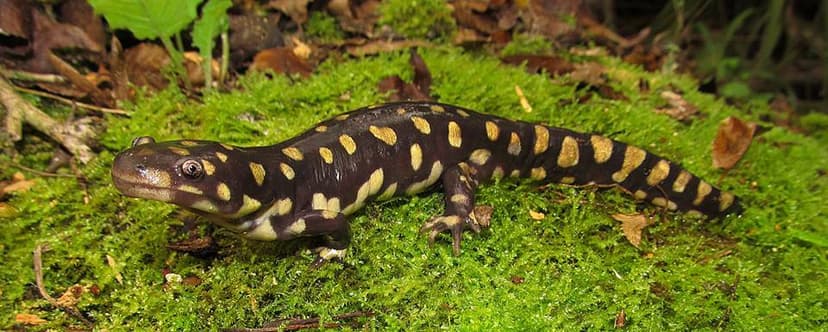
Ambystomatidae
Ambystomatidae is a family of predominantly terrestrial salamanders found across North America, known for their chunky bodies and broad heads. This family includes the mole salamanders (Ambystoma) and the Pacific giant salamanders (Dicamptodon). Some species are among the largest terrestrial salamanders and possess toxic secretions for defense.
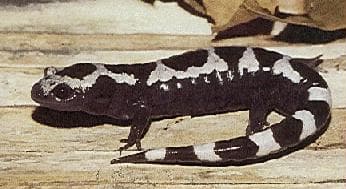
Ambystoma opacum
The marbled salamander (Ambystoma opacum) is a stout, terrestrial salamander found in the eastern United States, distinguished by its striking black and white banded pattern. Females typically have light gray bands, while males exhibit bright white bands, with males also possessing a larger proportion of white on their dorsal surface. This species spends most of its life under logs or in burrows and relies on seasonally flooded areas for breeding.
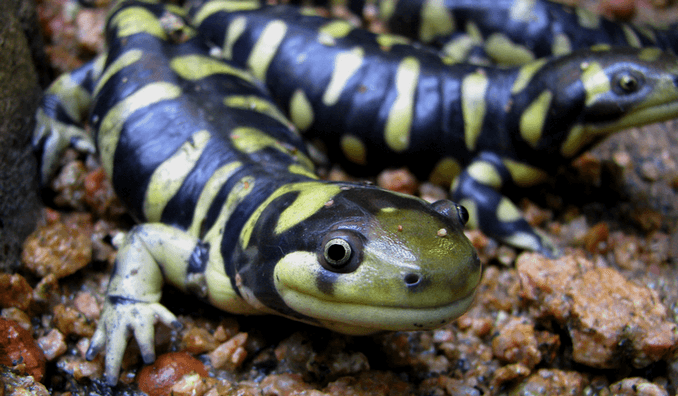
Ambystoma tigrinum
The tiger salamander (Ambystoma tigrinum) is one of the largest terrestrial salamanders native to North America. It is characterized by its distinctive yellow or greenish-yellow markings on a black or dark brown body, and it emits a bright fluorescence under UV light. These amphibians spend much of their lives in burrows and are primarily terrestrial as adults, returning to water only to breed.