
Amphiumidae
Amphiumidae, colloquially known as amphiumas, are a genus of aquatic salamanders native to the southeastern United States. They are characterized by their elongated, eel-like bodies, vestigial legs, and lack of eyelids and tongues. Amphiumas possess one of the largest known DNA complements among living organisms.
Key Facts
- ›Amphiumas are aquatic salamanders found in the southeastern United States.
- ›They have elongated, dark grey-black bodies with very small, vestigial legs.
- ›These salamanders lack eyelids and tongues but possess a visible lateral line.
- ›Females coil around their eggs for about five months until they hatch.
- ›Amphiumas are primarily lung-breathers, even when in water, and exhibit unique respiratory cycles.
- ›Males can be distinguished from females by the white or pink pigmentation of their cloacal opening.

Amphiumas, Conger Eels, Congo Snakes
Wetlands, Marshland, Ephemeral Wetlands, Moist Mud
Southeastern United States, North America
Elongated Body, Grey-Black Coloration, Vestigial Legs, Lack of Eyelids, Lack of Tongue, Visible Lateral Line On Sides
Frogs, Snakes, Fish, Crustaceans, Insects, Other Amphiumas, Annelids, Vegetables, Arachnids, Mollusca, Larvae, Crayfish
Hide In Vegetation During the Day, Active Hunters At Night, Use Suction Feeding, Can Become Aggressive If Provoked, Estivate In Moist Mud During Dry Periods, Rarely Encountered On Land, Female Courts Male Before Mating, Bodies Wrap Around Each Other During Mating
About Amphiumidae
Amphiumidae, colloquially known as amphiumas, represent a unique genus of aquatic salamanders exclusively found in the southeastern United States. These amphibians are distinguished by their elongated, eel-like bodies, which can reach lengths of up to 116 cm (46 inches), and their extremely small, vestigial legs, often leading to misidentification as snakes or eels. Amphiumas also lack eyelids and a tongue, but possess a prominent lateral line along their sides that aids in detecting movement and hunting.
Life and Habitat
Amphiumas are primarily nocturnal hunters, hiding in vegetation during daylight hours. They inhabit various wetland environments, including marshes and ephemeral wetlands, and are capable of estivating in moist mud when water sources dry up. Their diet is varied and includes a range of aquatic and terrestrial prey such as frogs, fish, crustaceans, insects, and even other amphiumas. They employ sophisticated suction feeding techniques, both stationary and through rapid strikes, and show a preference for larger prey like crayfish.
Reproduction and Development
Reproduction in amphiumas involves a courtship ritual initiated by the female, followed by the male transferring a spermatophore directly into the female's cloaca. Female amphiumas lay their eggs in wet mud and diligently coil around them for approximately five months until they hatch. The larvae are born with external gills, which disappear after about four months as their lungs develop and take over the primary role in respiration. Notably, one pair of gill slits is retained throughout their lives, indicating an incomplete metamorphosis.
Unique Adaptations
Amphiumas possess one of the largest known complements of DNA among living organisms, approximately 25 times that of a human. Despite their aquatic lifestyle, they are primarily lung-breathers, with long, highly vascularized lungs that extend over half their body length. Their respiratory system is complex, involving a two-cycle process that utilizes both the buccal cavity and lungs for inhalation and exhalation. Sexual dimorphism is observed in some populations, with males typically exhibiting larger bodies and heads, and they can be sexed by the pigmentation of their cloacal opening: white or pink for males and dark for females.
Source: Wikipedia ↗
Frequently Asked Questions
What are amphiumas also known as?
Amphiumas are colloquially known as amphiumas. Fishermen sometimes refer to them as "conger eels" or "Congo snakes," though these are inaccurate as they are salamanders, not fish or reptiles, and not from Congo.
What do amphiumas eat?
Amphiumas are carnivorous and consume a varied diet including frogs, snakes, fish, crustaceans, insects, annelids, arachnids, mollusks, and other amphiumas. They show a preference for larger crayfish, suggesting a calculated approach to predation.
Where are amphiumas found?
Amphiumas inhabit the southeastern United States, often found in wetlands along the coastal plain. Historically, they had a wider range that extended north to Wyoming.
How do amphiumas reproduce?
Reproduction involves the female courting the male. They then wrap their bodies around each other, and the male transfers a spermatophore directly into the female's cloaca.
What are the physical characteristics of amphiumas?
Amphiumas have elongated, grey-black bodies with vestigial legs up to 2 cm long. They lack eyelids and tongues and possess a lateral line on their sides for detecting movement. Females lay eggs in wet mud and guard them until hatching.
Are amphiumas dangerous?
If provoked, amphiumas can become aggressive. They have strong jaw muscles capable of grabbing and holding prey.
How do amphiumas breathe?
Amphiumas primarily respire through their lungs, which are long organs extending over half their body length. They have a unique two-cycle respiratory process involving both the buccal cavity/nares and lung pressure control for inhalation and exhalation.
Related Salamander and Newt species

Amphiuma means
The two-toed amphiuma (Amphiuma means) is a large aquatic salamander native to the southeastern United States. It is distinguished by its four vestigial legs, each with two toes, and its dark, unicolored skin. Commonly but incorrectly referred to as a "congo snake" or "blind eel," this species inhabits shallow, vegetated waters and can deliver a significant bite when threatened.

Amphiuma pholeter
The one-toed amphiuma (Amphiuma pholeter) is an aquatic, eel-like salamander native to the southeastern United States, specifically parts of Florida, Georgia, and Alabama. It is distinguished by its uniform coloration on both its back and belly, a cone-shaped head, and uniquely, only one toe on each foot, making it the smallest species in its genus.
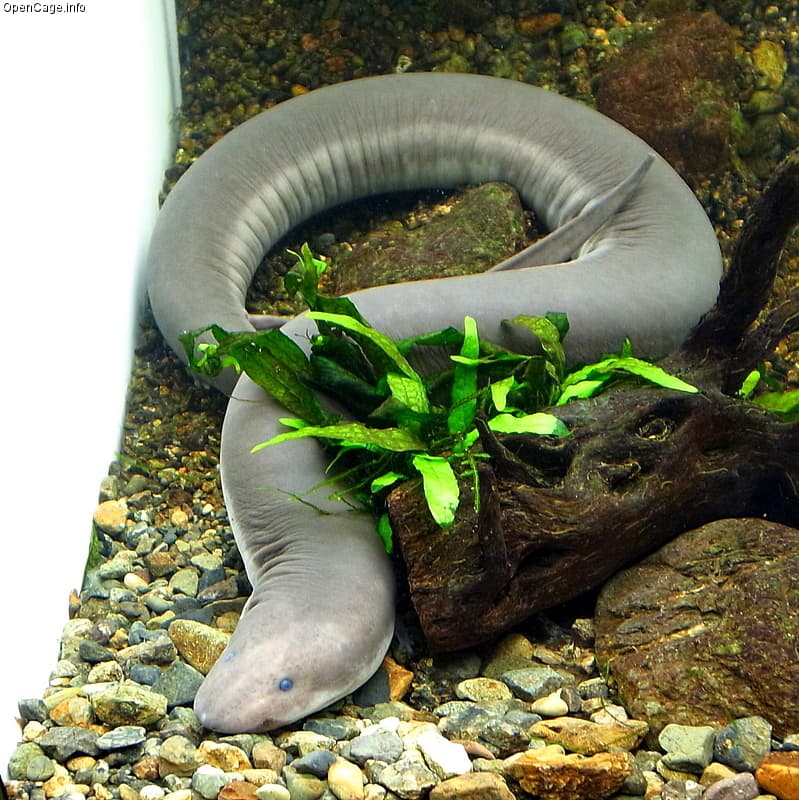
Amphiuma tridactylum
The Amphiuma tridactylum, commonly known as the three-toed amphiuma, is an aquatic salamander species native to the Southeastern United States. It is characterized by its eel-like appearance, tiny vestigial legs, and small, lidless eyes. This species is a nocturnal carnivore found in various slow-moving water bodies and surrounding marshy areas.