
Barton Springs salamander
Vulnerable (IUCN Red List), Endangered (Federal and Texas State)·Internal fertilization
The Barton Springs salamander (Eurycea sosorum) is an endangered lungless salamander endemic to Texas, USA. It is found in Barton Springs and other nearby springs within the Edwards Aquifer, characterized by its clear, constant-temperature waters. This species is distinctive for its neotenic nature, retaining gills throughout its adult life, and its mottled coloration.
Key Facts
- ›Endemic to Barton Springs and nearby areas in Texas, USA.
- ›A lungless salamander that is neotenic, remaining aquatic and retaining gills as an adult.
- ›Found in clear spring waters, often near openings or under rocks and gravel.
- ›Has a mottled dorsal coloration ranging from dark purple to light yellow.
- ›Feeds primarily on small aquatic crustaceans and flatworms.
- ›Listed as vulnerable by the IUCN Red List and endangered by federal and state authorities.

Springs, Aquatic Vegetation, Algae, Under Rocks, Under Gravel, Subterranean Waters
Texas, United States
- Approximately 6.4 Cm In Total Length.
- Mottled Coloration Varying From Darkish Purple To Light Yellow On the Dorsal Side.
- Ventral Side Is Cream Or Translucent, Revealing Stomach Contents and Eggs.
- Yellow-Orange Stripe On the Ventral Side of the Tail.
- Fairly Small Head With Reduced Eyes.
- Slender Body With Elongated Limbs.
- Three Red Gills On Each Side.
- Four Fingers On Forelimbs and Five Toes On Hindlimbs.
Small Aquatic Crustaceans, Planarian Flatworms, Earthworms, Snails, Leeches, Insect Larvae
- Neotenic and Strictly Aquatic.
- Inhabit Surface Waters and Subterranean Waters.
- Utilize Innate Predator Recognition.
- Opportunistic Feeders.
- Display A Tail-Straddling Walk During Reproduction In Captivity.
- Increase Body Movement When Presented With Low Dissolved Oxygen Levels.
Habitat Destruction, Habitat Degradation, Pollution, Land Urbanization Near Barton Creek Watershed, Climate Change, Pathogen Outbreaks
About Barton Springs salamander
The Barton Springs salamander, scientifically known as Eurycea sosorum, is a species of lungless salamander that is critically endangered and endemic to Texas, United States. First discovered in Barton Springs within Austin's Zilker Park, this species is now also recognized in other nearby springs in Travis and Hays Counties. These springs are part of the Edwards Aquifer, providing a unique habitat characterized by clear water that flows year-round at a stable temperature of approximately 20°C (68°F).
Habitat and Distribution
This salamander thrives in clear spring waters, typically found near spring openings, beneath rocks and gravel, and amidst aquatic vegetation and algae. They can inhabit depths ranging from 0.1 to 5 meters. While primarily found in surface waters, they are also adapted to live in subterranean aquatic environments when surface conditions are unfavorable. The species' distribution is confined to the Barton Springs area and adjacent localities within the Edwards Aquifer in Texas.
Physical Description
Barton Springs salamanders reach an average total length of about 6.4 centimeters (2.5 inches). Their dorsal coloration is mottled, varying from dark purple to light yellow, a trait influenced by the distribution of pigment cells. The ventral side is a cream or translucent color, allowing for the visibility of stomach contents and eggs. A distinctive yellow-orange stripe runs along the ventral side of the tail, extending from the cloaca to its tip. They possess a relatively small head with reduced eyes, a slender body, and elongated limbs, suggesting adaptations for a semi-subterranean existence. Three red gills are present on each side of the salamander, which is an ectothermic species exhibiting bilateral symmetry.
Diet and Behavior
As neotenic and strictly aquatic species, Barton Springs salamanders are opportunistic feeders. Their diet primarily consists of small aquatic crustaceans and planarian flatworms, though they will consume other small invertebrates like earthworms, snails, leeches, and insect larvae. Much of their life history remains undocumented, but they are known to exhibit predator recognition. In laboratory settings, they have displayed a tail-straddling walk during reproductive activities. When faced with low dissolved oxygen levels, they increase their movement, possibly to migrate to areas with higher oxygen or to improve oxygen uptake through enhanced water flow across their skin and gills.
Reproduction
Barton Springs salamanders are dioecious, meaning they have separate male and female individuals. Reproduction involves internal fertilization, where males deposit spermatophores that females store in a spermatheca. Females can carry up to 40 eggs, each approximately 1.5 mm in diameter and surrounded by a jelly-like layer. These eggs are laid in clusters on various substrates and can be deposited year-round.
Conservation Concerns
The Barton Springs salamander faces significant threats, primarily due to habitat destruction, degradation, and pollution stemming from urbanization near the Barton Creek watershed. Its limited population size and specialized habitat make it highly vulnerable to extinction. Declines in aquatic vegetation, a critical component of their habitat, have led to sharp drops in population numbers, with recovery observed after habitat restoration efforts. The species is listed as vulnerable by the IUCN Red List and endangered by federal and state authorities. Conservation efforts include a captive breeding program, habitat enhancement initiatives funded by pool entry fees, and ongoing monitoring of pool maintenance procedures and population sizes.
Source: Wikipedia ↗
Frequently Asked Questions
Where are Barton Springs salamanders found?
Barton Springs salamanders are endemic to Texas, United States, specifically found in Barton Springs in Austin and other nearby localities in Travis and Hays Counties, located within the Edwards Aquifer.
What is the habitat of the Barton Springs salamander?
They prefer clear water and are typically found near spring openings, under rocks or gravel, and within aquatic vegetation and algae. These salamanders inhabit springs that flow year-round with a constant temperature of around 20°C (68°F) and can live in water depths from 0.1 to 5 meters.
What do Barton Springs salamanders eat?
Barton Springs salamanders are opportunistic feeders and primarily consume small aquatic crustaceans and planarian flatworms. Their diet can be supplemented with items such as earthworms, snails, leeches, and insect larvae.
What are the physical characteristics of a Barton Springs salamander?
They grow to about 6.4 cm (2.5 in) in total length, with mottled coloration from dark purple to light yellow on their dorsal side. Their ventral side is cream or translucent, and they have a yellow-orange stripe on the ventral side of their tail. They possess a small head with reduced eyes, a slender body, elongated limbs, and three red gills on each side.
How do Barton Springs salamanders reproduce?
These salamanders are dioecious and reproduce via internal fertilization. Females can hold up to 40 eggs, which are deposited in clusters on substrates year-round. Males deposit spermatophores, which females store internally.
What is the conservation status of the Barton Springs salamander?
The Barton Springs salamander is listed as vulnerable by the IUCN Red List and is considered endangered by both federal and state authorities in Texas. Its population has been impacted by habitat degradation and pollution.
Related Salamander and Newt species
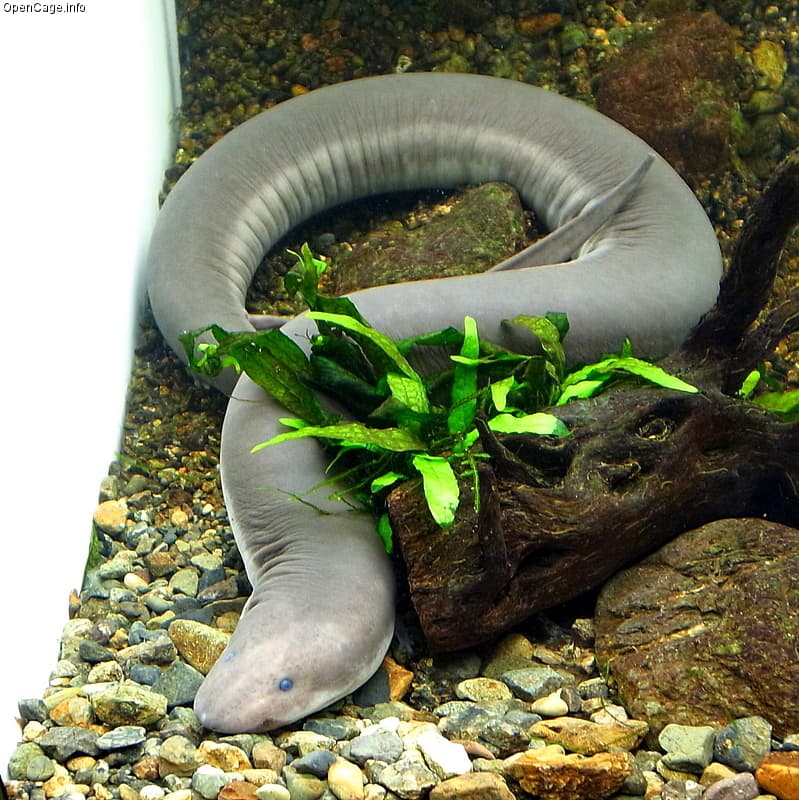
Amphiuma tridactylum
The Amphiuma tridactylum, commonly known as the three-toed amphiuma, is an aquatic salamander species native to the Southeastern United States. It is characterized by its eel-like appearance, tiny vestigial legs, and small, lidless eyes. This species is a nocturnal carnivore found in various slow-moving water bodies and surrounding marshy areas.

Austin blind salamander
The Austin blind salamander (Eurycea waterlooensis) is an endangered, fully aquatic salamander found only in Barton Springs in Austin, Texas. Its name originates from Waterloo, the former name of the city. This species is paedomorphic, meaning it retains juvenile characteristics throughout its adult life and does not metamorphose.

Apalachicola dusky salamander
The Apalachicola dusky salamander is a species of salamander found in the Southeastern United States, specifically in Alabama, Florida, and Georgia. It inhabits temperate forests, intermittent rivers, and freshwater springs. This species is currently threatened by habitat loss.