
Black mountain salamander
The black mountain salamander (Desmognathus welteri) is a species of salamander found in the southern Appalachian Mountains of the southeastern United States. It is characterized by its robust body, short limbs, and variable brown coloration. This secretive salamander primarily inhabits temperate forests near swift-flowing streams and is known for its lengthy larval development and dedicated maternal care for its eggs.
Key Facts
- ›Endemic to the southern Appalachian Mountains in the southeastern United States.
- ›Inhabits temperate forests, rivers, freshwater marshes, and springs.
- ›Adults are typically around 12 CM (5 in) in length.
- ›Females guard and brood their egg clusters until hatching.
- ›The larval stage can last for twenty to twenty-four months.
- ›Known to live up to twenty years in captivity.
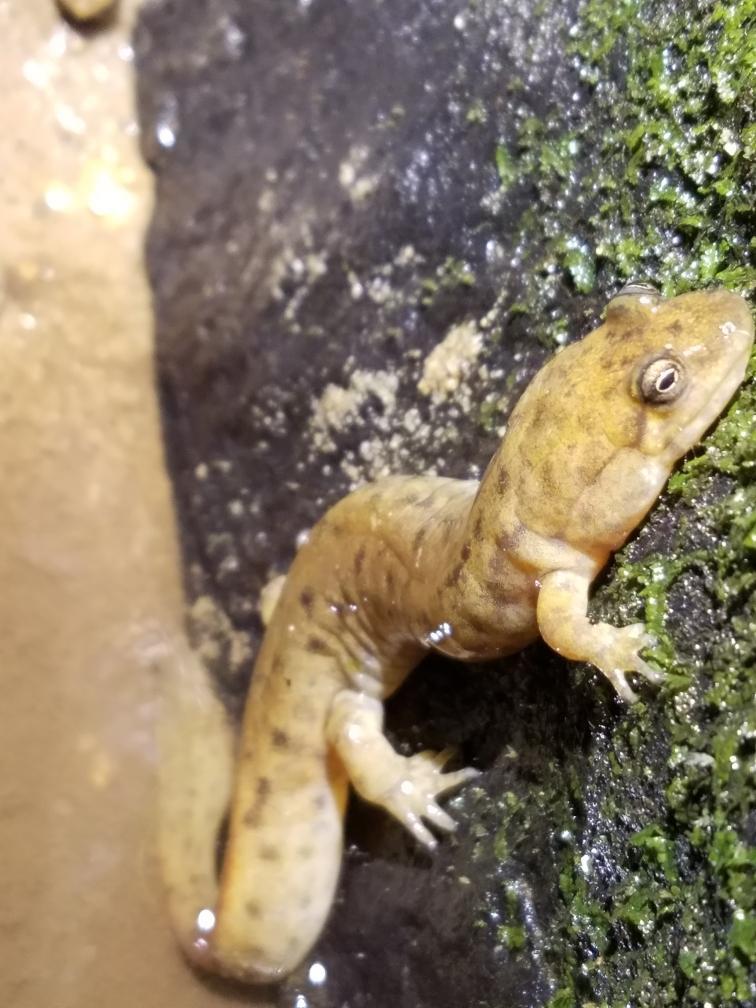
Temperate Forests, Rivers, Freshwater Marshes, Springs, Swift Flowing Streams, Pools, Wet Ditches
Eastern Kentucky, Southwestern Virginia, Eastern Tennessee, United States
- Robust Body
- About 12 Cm Long
- Short, Stout Limbs
- Coloration Is Variable, Usually Pale To Medium Brown On Upper Parts
- Indistinct Pattern of Paler Markings On Upper Parts
- Whitish Underside With Dark Spots and Blotches
Flies, Beetles, Other Insects, Larvae of Flies, Larvae of Butterflies, Larvae of Moths
- Secretive During Daytime
- May Largely Forage At Night
- Female Guards and Broods Eggs
- Larvae Occupy Quiet Shallow Areas of Streams
- Juveniles May Occupy Deeper Water Or Spend More Time On Land After Metamorphosis
Silting From Road Building, Silting From Strip Mining
About Black mountain salamander
The Black Mountain Salamander
The black mountain salamander, scientifically known as Desmognathus welteri, is a species of salamander belonging to the Plethodontidae family. It is endemic to the southern Appalachian Mountains in the southeastern United States, inhabiting elevations from 300 to 1,220 meters (980 to 4,000 ft).
Geographic Distribution and Habitat
This species is found within an approximate area of 20,000 square kilometers across eastern Kentucky, southwestern Virginia, and eastern Tennessee. Its preferred natural habitats include temperate forests, rivers, freshwater marshes, and springs. It thrives in wooded mountainous terrain where it can conceal itself under rocks and logs in or near swift-flowing streams, pools, and wet ditches.
Physical Description
The black mountain salamander possesses a robust body, typically reaching about 12 cm (5 in) in length, supported by short, stout limbs. Its coloration is variable, but the upper parts are generally a pale to medium brown with an indistinct pattern of lighter markings. The underside is whitish, often adorned with dark spots and blotches.
Reproduction and Development
While specific courtship behaviors are not well-documented, reproduction takes place in the spring or summer. The female lays approximately 25 eggs in clusters, attaching them in moist crevices or among wet leaves near streams. She diligently guards and broods these eggs until they hatch. The larvae are aquatic and typically develop in quieter, shallow sections of streams. This larval period is notably extended, lasting between twenty and twenty-four months. Post-metamorphosis, juveniles appear to favor deeper water or spend more time on land, possibly to avoid competition or predation from cannibalistic blackbelly salamanders.
Diet and Behavior
The black mountain salamander is quite secretive during daylight hours, suggesting it largely forages at night. Its diet primarily consists of terrestrial insects like flies and beetles, along with the larvae of flies, butterflies, and moths.
Conservation Status
The populations of the black mountain salamander are considered to be stable or in slight decline, although comprehensive studies have not been conducted. The areas where it occurs are sparsely populated, and its habitat is not generally under significant threat. However, increased silting from human activities such as road building and strip mining has negatively impacted some regions, and the salamander is likely rare in West Virginia. Individuals have been known to live for up to twenty years in captivity, and they are believed to reach maturity between four and five years of age.
Source: Wikipedia ↗
Frequently Asked Questions
Where is the black mountain salamander found?
The black mountain salamander is endemic to the southern Appalachian Mountains in the southeastern United States. Its range covers parts of eastern Kentucky, southwestern Virginia, and eastern Tennessee.
What kind of habitat does the black mountain salamander prefer?
This species prefers temperate forests, rivers, freshwater marshes, and springs. They are typically found hiding under rocks and logs in swift-flowing streams, pools, and wet ditches in wooded mountainous areas.
What does the black mountain salamander eat?
The diet of the black mountain salamander largely consists of insects such as flies and beetles, as well as the larvae of flies, butterflies, and moths. They are secretive and may forage primarily at night.
How does the black mountain salamander reproduce?
Reproduction occurs in the spring or summer, with females laying clusters of about 25 eggs in moist crevices or among wet leaves near streams. The female guards and broods the eggs until they hatch.
What is the lifespan of the black mountain salamander?
Black mountain salamanders are believed to mature around four to five years of age. While their wild lifespan is not specified, they have been known to live for up to twenty years in captivity.
What are the conservation concerns for the black mountain salamander?
Populations appear to be stable or in slight decline, though detailed studies are lacking. While its habitat is not extensively threatened, increased silting from road building and strip mining has impacted some areas, and the species is likely rare in West Virginia.
Related Salamander and Newt species

Amphiuma means
The two-toed amphiuma (Amphiuma means) is a large aquatic salamander native to the southeastern United States. It is distinguished by its four vestigial legs, each with two toes, and its dark, unicolored skin. Commonly but incorrectly referred to as a "congo snake" or "blind eel," this species inhabits shallow, vegetated waters and can deliver a significant bite when threatened.
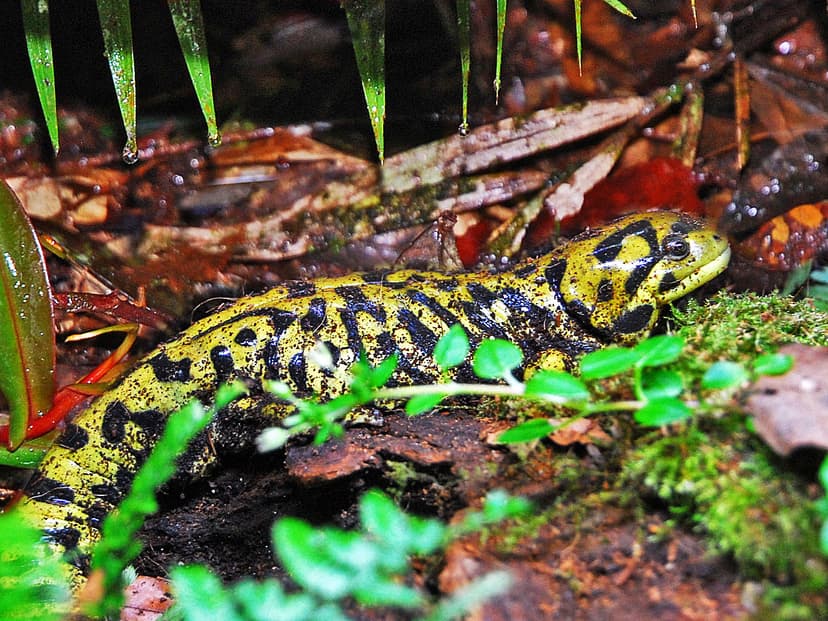
Barred tiger salamander
The barred tiger salamander (Ambystoma mavortium), also known as the western tiger salamander, is a large species of mole salamander found in western North America. It is distinctive for its tiger-like coloring, with bars and spots of muddy yellow on a dark background, and exhibits variable morphologies, including a cannibalistic form.

Amphiuma pholeter
The one-toed amphiuma (Amphiuma pholeter) is an aquatic, eel-like salamander native to the southeastern United States, specifically parts of Florida, Georgia, and Alabama. It is distinguished by its uniform coloration on both its back and belly, a cone-shaped head, and uniquely, only one toe on each foot, making it the smallest species in its genus.