
Batrachoseps stebbinsi
The Tehachapi slender salamander (Batrachoseps stebbinsi) is a species of plethodontid salamander endemic to Kern County, California. It is distinguished by its dark brown coloration with coppery red and silver speckles, and its lungless respiration through moist skin.
Key Facts
- ›Endemic to Kern County, California, in the Piute and Tehachapi Mountains.
- ›Possesses dark brown skin adorned with light, glittery speckles of coppery red and silver.
- ›Reaches a length of approximately 3 inches (76 MM).
- ›Like other plethodontids, it lacks lungs and relies on cutaneous respiration.
- ›Requires moist environments and emerges during periods of high humidity or rain.
- ›Classified as an Endangered species by the IUCN Red List.

Tehachapi Slender Salamander
Damp Leaf Litter, Moist Environments
United States
- Dark Brown Coloration
- Light, Glittery Speckles of Coppery Red and Silver
- Approximately 3 Inches In Length
- Lungless, Breathes Through Skin
Emerges During High Humidity Or Rain, Requires Moist Skin To Breathe
About Batrachoseps stebbinsi
Tehachapi Slender Salamander
The Tehachapi slender salamander, scientifically known as Batrachoseps stebbinsi, is a species of plethodontid salamander found exclusively in Kern County, California, within the western United States. It is recognized as one of the larger members of the Batrachoseps genus.
Distribution and Habitat
This species is endemic to isolated areas within the Piute and Tehachapi Mountains, part of the Transverse Ranges in Southern California. Much of its habitat is situated on land managed by Tejon Ranch. The Tehachapi slender salamander thrives in damp leaf litter and moist environments, typically emerging from its shelter during periods of high humidity or rainfall, a behavior linked to its need for cutaneous respiration.
Physical Description
The Tehachapi slender salamander measures approximately 3 inches (76 mm) in length. Its most striking physical characteristic is its coloration: a dark brown body adorned with light, glittery speckles that exhibit coppery red and silver hues. As a member of the Plethodontidae family, it is lungless, relying entirely on its skin for gas exchange, which underscores its dependence on moist conditions.
Conservation Status
The Tehachapi slender salamander is considered a threatened species in California. On a global scale, it is listed as Endangered by the International Union for Conservation of Nature (IUCN) Red List, highlighting significant concerns for its long-term survival.
Source: Wikipedia ↗
Frequently Asked Questions
Where is the Tehachapi slender salamander found?
The Tehachapi slender salamander is found exclusively in isolated areas of the Piute and Tehachapi Mountains within Kern County, California, in the western United States.
What are the physical characteristics of the Tehachapi slender salamander?
This salamander is dark brown with distinctive light speckles that appear glittery, featuring coppery red and silver tones. It typically measures around 3 inches (76 mm) in length.
How does the Tehachapi slender salamander breathe?
As a member of the plethodontid family, it is lungless and breathes directly through its skin, which necessitates keeping its skin moist.
What is the conservation status of the Tehachapi slender salamander?
The Tehachapi slender salamander is listed as an Endangered species on the IUCN Red List.
What kind of habitat does the Tehachapi slender salamander prefer?
It inhabits damp leaf litter and is typically found in moist environments. The salamander emerges from its habitat during periods of high humidity or rainfall.
Related Salamander and Newt species
Ambystoma altamirani
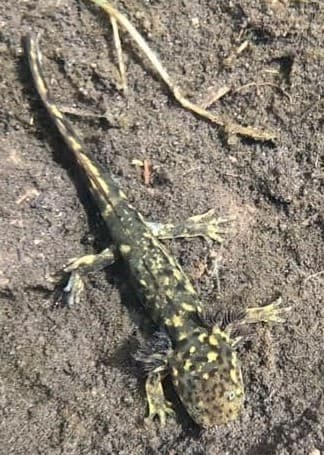
The mountain stream salamander (Ambystoma altamirani) is a species of mole salamander native to central Mexico. It is distinguished by its purplish-black dorsal coloration, purplish-lavender belly, and cream-colored accents on its lips, digit tips, and tail fin. This species inhabits high-elevation pine and pine-oak woodlands, breeding in small streams where both larvae and some adults reside, while other adults venture onto land.
Ambystoma lermaense
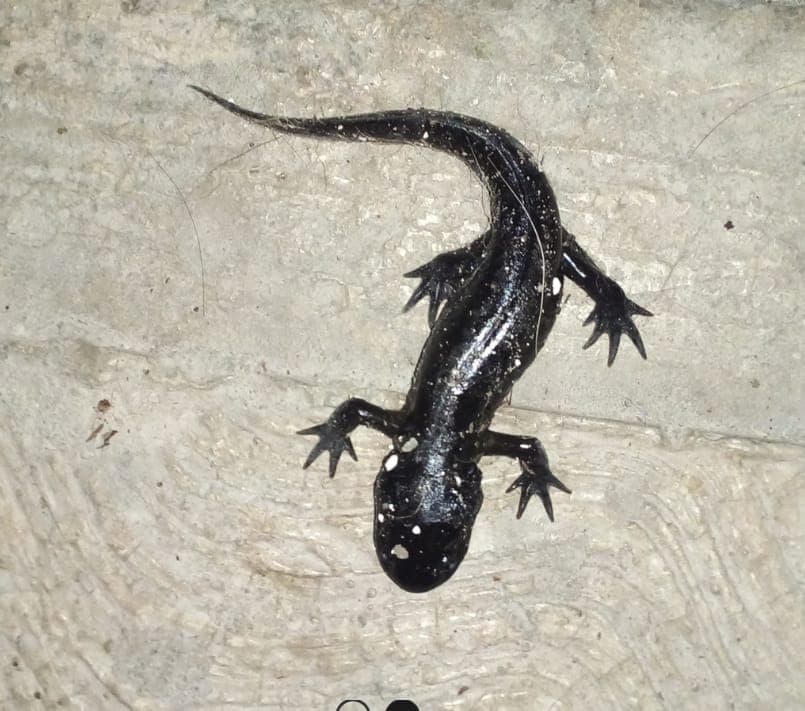
The Lake Lerma salamander (Ambystoma lermaense) is an extremely rare mole salamander species native to the Toluca Valley in central Mexico. This species is characterized by its neotenic tendencies and has faced a catastrophic decline due to habitat destruction, pollution, and dam construction in its native Lerma River and Lake Lerma wetlands.

Aneides iecanus
The Shasta black salamander (Aneides iecanus) is a species of salamander found only in Shasta County, California. It is distinguished by its large size, black coloration with white spots, and a heavily speckled body, head, and tail.