
Berry Cave salamander
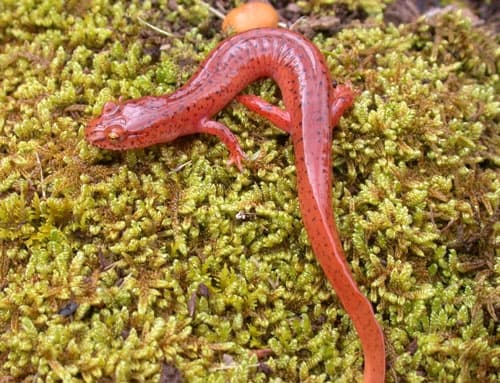
The Berry Cave salamander (Gyrinophilus gulolineatus) is a species of salamander endemic to the inland karst cave systems of the Ridge-and-Valley Appalachians in eastern Tennessee, United States. It is distinguished from the similar Tennessee cave salamander by its larger size, more spatulate snout, broader head, and greater pigmentation. This species is primarily paedomorphic, meaning it often retains larval features and breeds in its juvenile state.
Key Facts
- ›Endemic to inland karst cave systems in eastern Tennessee.
- ›Larger than the Tennessee cave salamander with a broader head and more pigmentation.
- ›Often paedomorphic, retaining larval features and breeding in the juvenile state.
- ›Larval eyes are functional and can detect vibrations, but adult eyes become functionless.
- ›Its range is smaller than the spring salamander and sometimes overlaps within the same cave systems.
- ›Listed as endangered by the state of Tennessee and the IUCN, facing threats from habitat loss.

Inland Karsts, Underground Cave Systems
United States
- Larger Than the Tennessee Cave Salamander
- More Spatulate Snout
- Broader Head
- More Pigmentation
- Premaxilla Bones At the Tip of the Snout Completely Divided In Adults
- Larvae Have Small, Functional Eyes
- Adult Eyes Become Functionless
- Usually Paedomorphic, Remaining and Breeding In the Larval State
- Larvae Can Detect Vibrations In Water
Cave, Karst
Habitat Loss
About Berry Cave salamander
The Berry Cave salamander, scientifically known as Gyrinophilus gulolineatus, is a species of salamander native to the United States, found exclusively in the inland karst cave systems of the Ridge-and-Valley Appalachians in eastern Tennessee. It belongs to the family Plethodontidae. This species is notable for its subterranean existence, inhabiting environments deep underground.
Description and Biology
Resembling the Tennessee cave salamander, the Berry Cave salamander is distinguished by its larger size, a more spatulate snout, a broader head, and increased pigmentation. A key anatomical difference in adults is the complete division of the premaxilla bones at the snout's tip, which is not observed in the Tennessee cave salamander. The larval stage of this species features small, functional eyes capable of detecting vibrations in the water through specialized mechanoreceptors located on the head and sides. However, should they transition to a full adult form, these eyes lose their functionality.
The Berry Cave salamander is typically paedomorphic, a trait where individuals retain juvenile characteristics into adulthood and often reproduce in their larval form. This means they may not undergo complete metamorphosis, remaining in a state that preserves their juvenile traits throughout their lifespan.
Distribution and Habitat
This salamander's range is restricted to caves in the Ridge-and-Valley Appalachians of eastern Tennessee. Its distribution is more limited than that of the closely related spring salamander (Gyrinophilus porphyriticus), and their ranges can overlap, with both species sometimes found within the same cave systems. The total area occupied by the Berry Cave salamander is less than 5,000 km² (1,900 mi²).
Conservation Status
The Berry Cave salamander is recognized as endangered by both the state of Tennessee and the International Union for Conservation of Nature (IUCN). This designation is due to its limited number of known localities, which is estimated to be ten or fewer, and a population that appears to be declining, particularly in the type locality, Berry Cave. Conservation efforts focus on protecting the watersheds that feed into its underground habitats and implementing physical security measures like gates and fences to prevent public access to sensitive cave sites. The protection of these caves also benefits other troglodytic fauna, such as bats and fish, that share these unique ecosystems.
Source: Wikipedia ↗
Frequently Asked Questions
What distinguishes the Berry Cave salamander from the Tennessee cave salamander?
The Berry Cave salamander is generally larger, possesses a more spatulate snout, a broader head, and exhibits more pigmentation compared to the Tennessee cave salamander. Additionally, adult Berry Cave salamanders have completely divided premaxilla bones at the tip of their snout, unlike the Tennessee cave salamander.
What is paedomorphosis in the Berry Cave salamander?
The Berry Cave salamander is usually a paedomorphic species, meaning it often retains its larval characteristics throughout its life and breeds in this juvenile state instead of undergoing full metamorphosis into an adult form.
What are the visual capabilities of the Berry Cave salamander at different life stages?
Larvae of the Berry Cave salamander possess small, functional eyes that can detect vibrations in the water via mechanoreceptors on their head and sides. However, if they do proceed to the adult stage, their eyes become non-functional.
Where is the Berry Cave salamander found?
This salamander is found in caves within the Ridge-and-Valley Appalachians of eastern Tennessee in the United States. Its distribution is confined to inland karst environments where it lives underground.
What is the conservation status of the Berry Cave salamander?
The Berry Cave salamander is listed as endangered by the state of Tennessee and the International Union for Conservation of Nature (IUCN). This status reflects its limited distribution and the threats it faces, particularly from habitat loss.
What are the primary threats to the Berry Cave salamander?
The primary threat to the Berry Cave salamander is habitat loss. Its limited number of known cave locations makes it particularly vulnerable to disturbances and changes in its underground environment.
Related Salamander and Newt species

Austin blind salamander
The Austin blind salamander (Eurycea waterlooensis) is an endangered, fully aquatic salamander found only in Barton Springs in Austin, Texas. Its name originates from Waterloo, the former name of the city. This species is paedomorphic, meaning it retains juvenile characteristics throughout its adult life and does not metamorphose.
Blue Ridge spring salamander
The Blue Ridge spring salamander, a subspecies of the spring salamander (Gyrinophilus porphyriticus), is found in the southern Appalachian Mountains and adjacent Piedmont regions of the United States. This species is distinguished by a distinctive white line from its eye to its nostril, bordered by a dark line, and its varied dorsal coloration ranging from reddish to orange-yellow with black or brown spots. They inhabit cool springs, mountain springs, and moist forest areas, and are notable for their diet which can include other salamanders.

Arboreal salamander
The arboreal salamander (Aneides lugubris) is a lungless salamander species native to California and Baja California, known for its climbing ability and distinctive prehensile tail. It inhabits oak and sycamore woodlands and chaparral, spending daylight hours in tree cavities and exhibiting unique gliding behaviors when falling.