
Black-bellied salamander
The Black-bellied salamander is a species of salamander found in the Appalachian Mountains of the southeastern United States. It is a medium-sized, sturdily built salamander known for its dark coloration and its largely aquatic lifestyle, spending significant time in cold mountain streams. Historically considered Desmognathus quadramaculatus, recent studies indicate this name is a synonym, and the group has been divided into multiple distinct species.
Key Facts
- ›It is the largest species within the genus Desmognathus.
- ›It primarily inhabits cold mountain streams at elevations between 375 to 1,725 meters.
- ›Its diet varies with life stage, including insect nymphs, aquatic and aerial prey, and even other salamanders.
- ›The species exhibits phenotypic variation in coloration, which can be influenced by habitat factors like shade, leaf litter, and rock color.
- ›Breeding occurs in late spring, with females laying eggs that hatch after approximately three months.
- ›Larval development into juveniles takes about three and a half years.

Blackbelly Salamander
Rivers, Intermittent Rivers, Freshwater Springs, Cold Mountain Streams
United States
- Medium-Sized, Growing To 10 To 18 Cm Long.
- Largest Species In the Genus Desmognathus.
- Sturdily Built With A Long Tail.
- Ground Color Is Dark Brown Or Black With Two Rows of Small Pale Spots Along Each Side of the Back.
- Underside Is Usually Black, Sometimes With Pale Flecks In Young Individuals.
- Highly Variable In Color, Ranging From Light Gray To Deep Black, With Color Potentially Related To Habitat.
Insect Nymphs, Aquatic Prey, Aerial Prey, Terrestrial Prey, Other Salamanders
- Largely Aquatic, Spending More Time In Water Than Most Members of Its Genus.
- Mainly Forages On Land But Stays Close To Streams.
- Defends Refugia Aggressively, Including Against Conspecifics.
- May Resort To Cannibalism To Defend Territory.
- Breeds In Late Spring.
- Larval Salamanders Can Detect Differences In Fish To Identify Predators.
- Habitat Loss
- Acidification of Streams From Mining Activities
- Collection By Fishermen For Bait
About Black-bellied salamander
The Black-bellied Salamander
The Black-bellied salamander, historically known as Desmognathus quadramaculatus, is a species of salamander native to the Appalachian Mountains in the southeastern United States. It is the largest member of the Desmognathus genus, commonly referred to as dusky salamanders, which is the second-largest genus of plethodontid salamanders in the eastern U.S. While once considered a single species, recent scientific research has reclassified the Black-bellied salamander group into multiple distinct species, rendering Desmognathus quadramaculatus a synonym.
Description and Distribution
These salamanders are medium-sized, typically measuring between 10 to 18 centimeters (3.9 to 7.1 inches) in length. They possess a sturdy build and a long tail. Their coloration is generally dark brown to black, often featuring two rows of small, pale spots along their backs. The underside is predominantly black, though younger individuals may display pale flecks. Coloration can be highly variable, ranging from light gray to deep black, and has been observed to be influenced by specific habitat characteristics such as shade, leaf litter, and the color of surrounding rocks. The species is found in the Appalachian Mountains, with its range extending through West Virginia, Virginia, Tennessee, North Carolina, South Carolina, and Georgia.
Habitat and Behavior
The Black-bellied salamander is a largely aquatic species, favoring cold mountain streams, rivers, and freshwater springs at elevations between 375 and 1,725 meters. It spends more time in the water compared to most other Desmognathus species, with the exception of the shovelnose salamander. While they forage primarily on land, they maintain a small home range close to the stream, rarely venturing more than 30 centimeters away. Within this territory, they utilize crevices or burrows as refugia, ambushing passing invertebrates. Their diet is diverse and changes with age, encompassing insect nymphs, aquatic and aerial prey, and even other salamanders in adulthood. They are known to aggressively defend these refugia, sometimes leading to cannibalism among conspecifics.
Reproduction and Ecology
Breeding occurs in the late spring. Females deposit between fifteen to forty eggs at the base of submerged boulders. The eggs typically hatch after about three months, and the larval stage is prolonged, with metamorphosis into juveniles taking around three and a half years. Research indicates that these larval salamanders can distinguish between different fish species, recognizing predators. In their ecosystem, Black-bellied salamanders interact with other salamander species, sometimes displacing or preying upon species like the dusky salamander. They also appear to actively avoid seal salamanders, possibly through chemical cues. Defense strategies include warning coloration, immobility, biting, and tail autotomy. Despite its defenses, the species is sometimes preyed upon by garter snakes and shrews.
Conservation Status
Listed as 'Least Concern' by the IUCN Red List, the Black-bellied salamander is considered to have a stable population of at least 10,000 individuals. However, potential threats include localized declines due to stream acidification from mining activities and capture by fishermen for use as bait.
Source: Wikipedia ↗
Frequently Asked Questions
What is the scientific name of the Black-bellied salamander?
Historically, the scientific name for the Black-bellied salamander was Desmognathus quadramaculatus. However, a 2022 study determined this name to be a synonym for the Northern Dusky Salamander, and the group has since been split into several distinct species.
Where is the Black-bellied salamander found?
The Black-bellied salamander is endemic to the Appalachian Mountains in the southeastern United States. Its distribution spans from West Virginia, through southeastern Virginia, eastern Tennessee, western North and South Carolina, and northern Georgia.
What are the natural habitats of the Black-bellied salamander?
This species is found in rivers, intermittent rivers, and freshwater springs. It is largely aquatic and prefers cold mountain streams.
How large does the Black-bellied salamander get?
The Black-bellied salamander is a medium-sized salamander, typically growing to lengths between 10 to 18 centimeters (3.9 to 7.1 inches). It is the largest species in its genus.
What does the Black-bellied salamander eat?
Its diet changes throughout its life. Larvae primarily consume insect nymphs, juveniles eat a mix of aquatic and aerial prey, and adults consume aquatic, aerial, and terrestrial prey, including other salamanders.
What are the defense mechanisms of the Black-bellied salamander?
Defense strategies include warning coloration (though it is not venomous), remaining still to avoid detection, biting aggressors, and shedding its tail as a distraction. It also aggressively defends its refugia against conspecifics, sometimes resorting to cannibalism.
What is the conservation status of the Black-bellied salamander?
The IUCN Red List of Threatened Species classifies the Black-bellied salamander as 'Least Concern.' This is due to a stable population estimated at over 10,000 individuals, though localized declines are possible.
Related Salamander and Newt species
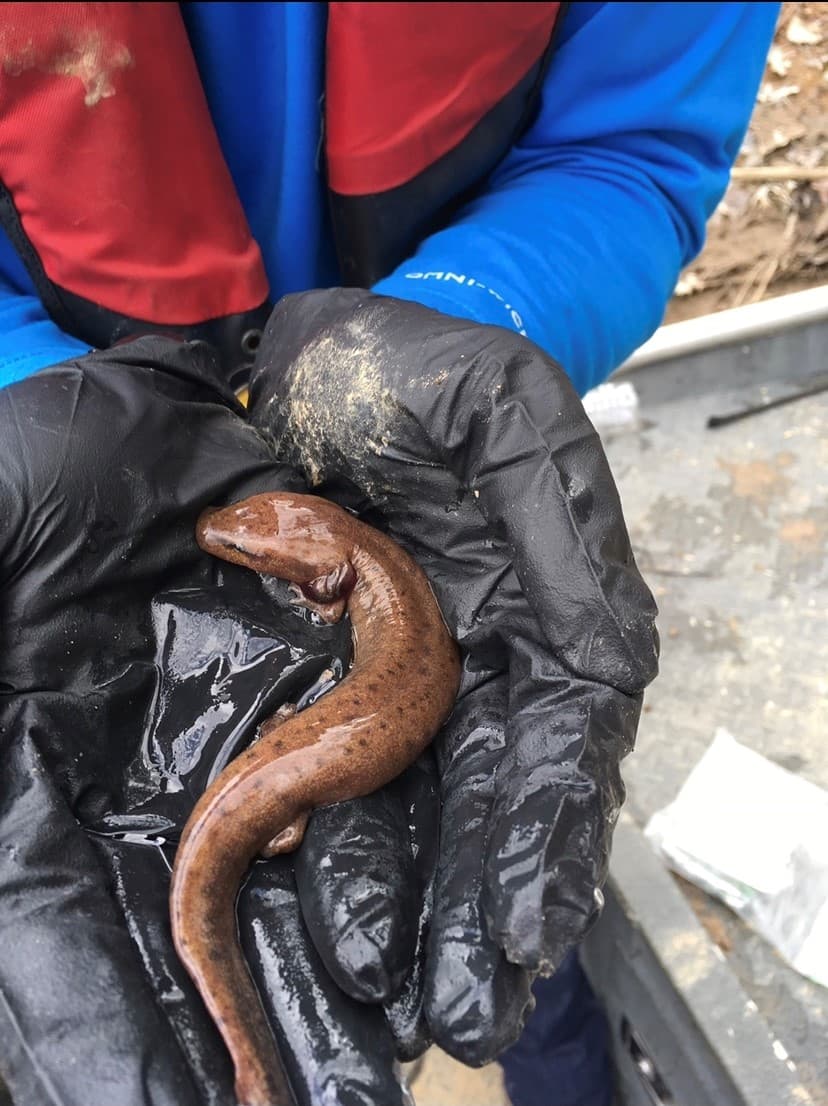
Alabama waterdog
The Alabama waterdog is a medium-sized, perennibranch salamander found in the rivers and streams of Alabama, specifically within the Black Warrior River drainage basin. It is distinguished by its permanent, bushy red gills, and a brown or black dorsum with minimal spotting. This species is currently listed as endangered due to threats like habitat fragmentation and pollution.
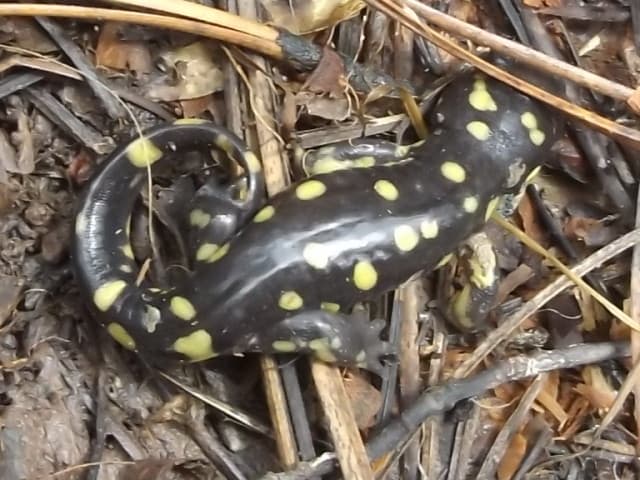
Ambystoma rosaceum
The Tarahumara salamander (Ambystoma rosaceum) is a freshwater mole salamander species endemic to Mexico, found in temperate and montane forests, grasslands, and various aquatic habitats. It is distinguished by its medium size, variable coloration of yellow spots or streaks on a dark background in adults, and the potential for paedomorphosis, where individuals retain larval features. While generally considered Least Concern, it faces threats from habitat loss and introduced species.
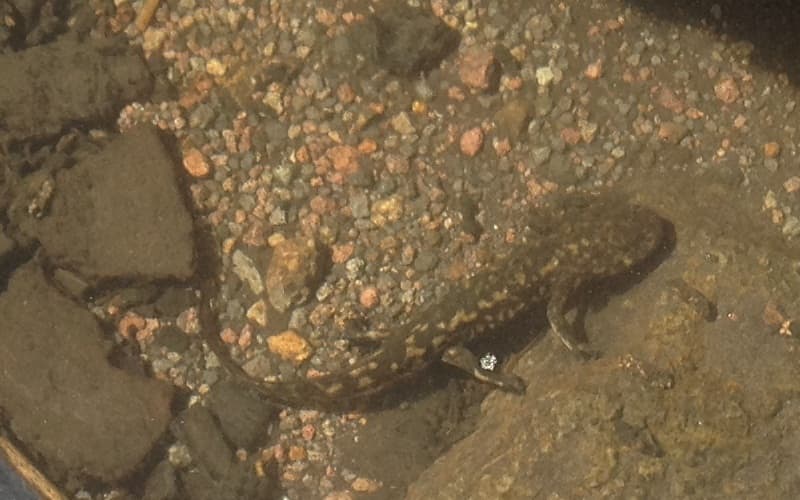
Ambystoma leorae
The Leora's stream salamander (Ambystoma leorae) is a critically endangered mole salamander endemic to a very small region within Mexico's Iztaccihuatl-Popocatepetl National Park. Its survival is threatened by its specific water quality requirements and human activities such as water extraction, cattle grazing, and direct consumption, leading to a single known population persisting on Mount Tlaloc.