
Black Mountain dusky salamander
The Black Mountain dusky salamander (Desmognathus welteri) is a salamander species found in the southern Appalachian Mountains of the southeastern United States. It is distinguished by its robust body, stout limbs, and variable brown coloration, often found in or near swift-flowing streams in wooded mountainous areas.
Key Facts
- ›Endemic to the southern Appalachian Mountains in the southeastern United States.
- ›Inhabits temperate forests, rivers, freshwater marshes, and springs.
- ›Adults are typically around 12 CM (5 inches) long with short, stout limbs.
- ›Coloration is variable, usually pale to medium brown on the upper parts with a whitish underside marked with dark spots and blotches.
- ›Females guard clutches of about 25 eggs laid in moist crevices near streams.
- ›Larval stage is aquatic and lasts for twenty to twenty-four months.
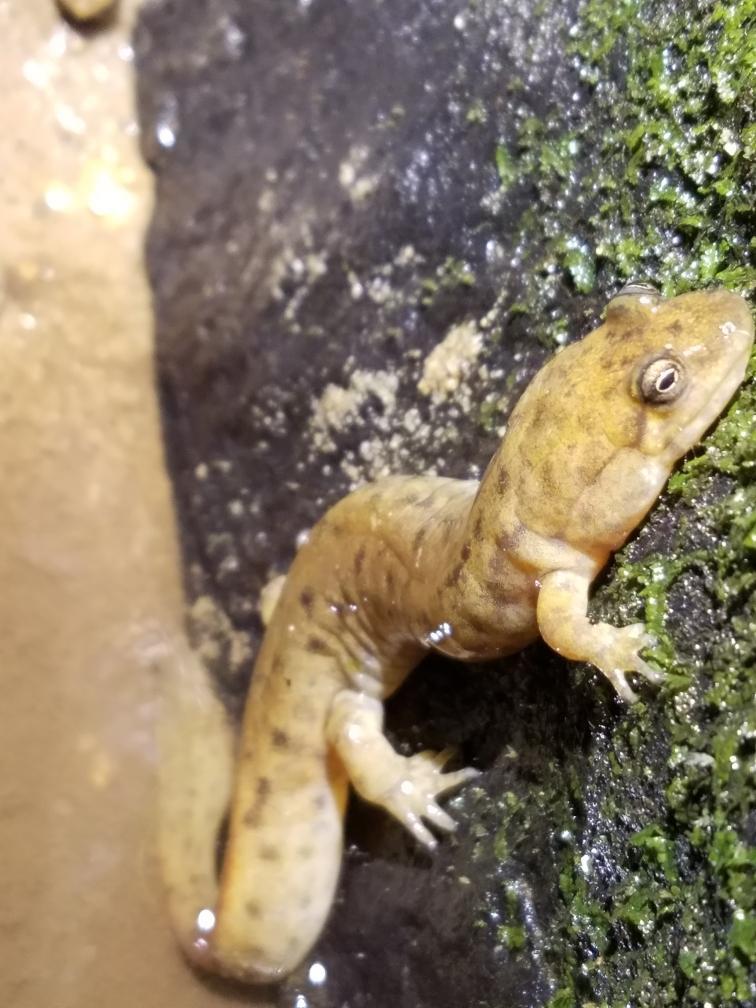
Black Mountain Salamander
Temperate Forests, Rivers, Freshwater Marshes, Springs, Swift Flowing Streams, Pools, Wet Ditches
United States
- Robust Body About 12 Cm Long
- Short, Stout Limbs
- Upper Parts Usually Pale Or Medium Brown With An Indistinct Pattern of Paler Markings
- Whitish Underside With Dark Spots and Blotches
Flies, Beetles, Other Insects, Larvae of Flies, Larvae of Butterflies, Larvae of Moths
- Secretive During Daytime
- May Largely Forage At Night
- Female Guards and Broods Eggs
- Larvae Are Aquatic and Occupy Quiet Shallow Areas of Streams
- Juveniles May Occupy Deeper Water Or Spend More Time On Land After Metamorphosis
Silting From Road Building, Silting From Strip Mining
About Black Mountain dusky salamander
The Black Mountain Dusky Salamander
The Black Mountain dusky salamander, scientifically known as Desmognathus welteri, is a species of salamander native to the southern Appalachian Mountains in the southeastern United States. This species is a member of the Plethodontidae family, which are lungless salamanders.
Distribution and Habitat
This salamander is endemic to a region spanning approximately 20,000 square kilometers within the southern Appalachian Mountains. Its range encompasses parts of eastern Kentucky, southwestern Virginia, and eastern Tennessee, typically found at elevations between 300 and 1,220 meters above sea level. The Black Mountain dusky salamander thrives in wooded mountainous environments, preferring habitats such as temperate forests, rivers, freshwater marshes, and springs. It is often found concealed beneath rocks and logs in or near swift-flowing streams, pools, and wet ditches.
Physical Characteristics
One of several similar-looking dusky salamanders found in upland areas, the Black Mountain dusky salamander features a robust body that reaches about 12 cm (5 inches) in length. It possesses short, stout limbs. The coloration is variable; the upper parts are generally pale to medium brown, often with an indistinct pattern of lighter markings. The underside is typically whitish and marked with dark spots and blotches.
Reproduction and Life Cycle
While specific courtship behaviors are not well-documented, reproduction occurs in the spring or summer. A female lays clutches of approximately 25 eggs, which are attached to each other and resemble a bunch of grapes. These eggs are deposited in moist crevices or among wet leaves in the splash zone of small, fast-flowing streams. The female diligently guards and broods the eggs until they hatch. The resulting larvae are aquatic and typically inhabit the quiet, shallow sections of streams. The larval period lasts for a significant duration, between twenty and twenty-four months. Post-metamorphosis, juveniles appear to favor deeper water or spend more time on land, possibly to avoid competition or predation from cannibalistic species like the blackbelly salamander.
Diet and Behavior
The Black Mountain dusky salamander is known for its secretive nature, particularly during daylight hours, and it is believed to forage primarily at night. Its diet consists mainly of various insects, including flies and beetles, as well as the larval forms of flies, butterflies, and moths.
Conservation Status
The populations of the Black Mountain dusky salamander are reported to be stable or experiencing a slight decline, although comprehensive studies are limited. The areas where it is found are not heavily populated, and its primary habitat is not currently under significant threat. However, activities such as road building and strip mining have led to increased silting in some locales, which can negatively impact the species. In West Virginia, the salamander is considered to be rare.
Source: Wikipedia ↗
Frequently Asked Questions
What is the geographic distribution of the Black Mountain dusky salamander?
The Black Mountain dusky salamander is found in the southern Appalachian Mountains of the southeastern United States. Its range includes eastern Kentucky, southwestern Virginia, and eastern Tennessee, typically at elevations between 300 and 1,220 meters.
What are the natural habitats of the Black Mountain dusky salamander?
This salamander's natural habitats include temperate forests, rivers, freshwater marshes, and springs. It prefers wooded mountainous areas where it can be found under rocks and logs in swift-flowing streams, pools, and wet ditches.
What does the Black Mountain dusky salamander look like?
The Black Mountain dusky salamander has a robust body, approximately 12 cm (5 inches) in length, with short, stout limbs. Its upper parts are usually pale or medium brown with an indistinct pattern, while its underside is whitish with dark spots and blotches.
How does the Black Mountain dusky salamander reproduce?
Reproduction occurs in the spring or summer. The female lays clusters of about 25 eggs in moist crevices near fast-flowing streams and broods them until they hatch. The larvae are aquatic and develop for 20-24 months.
What do Black Mountain dusky salamanders eat?
These salamanders are secretive and may forage mostly at night. Their diet primarily consists of insects such as flies and beetles, as well as the larvae of flies, butterflies, and moths.
What is the conservation status of the Black Mountain dusky salamander?
Populations appear to be stable or in slight decline, though detailed studies are lacking. While its habitat is not generally under threat, increased silting from road building and strip mining can negatively impact some areas.
Related Salamander and Newt species

Black-chinned red salamander
The Black-chinned red salamander is a species of lungless salamander native to the Eastern United States. It is characterized by its brown, orange, or red skin adorned with irregular black spots. These semiaquatic amphibians inhabit temperate forests, streams, bogs, and springs, where they feed on a variety of invertebrates and smaller amphibians.
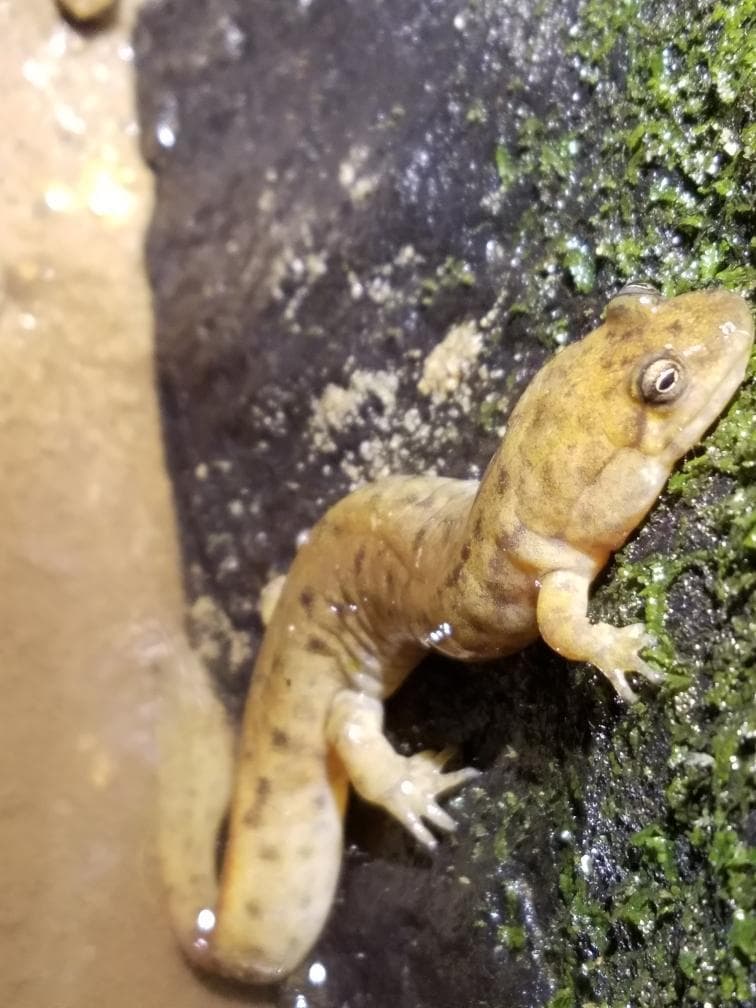
Black mountain salamander
The black mountain salamander (Desmognathus welteri) is a species of salamander found in the southern Appalachian Mountains of the southeastern United States. It is characterized by its robust body, short limbs, and variable brown coloration. This secretive salamander primarily inhabits temperate forests near swift-flowing streams and is known for its lengthy larval development and dedicated maternal care for its eggs.

Alpine newt
The alpine newt is a species of newt native to continental Europe, with introduced populations in Great Britain and New Zealand. Adults are typically dark grey to blue on their back and sides, with a vibrant orange belly and throat, with males displaying more striking coloration, especially during the breeding season. They are adaptable, inhabiting both lowlands and high altitudes, and are primarily nocturnal during their terrestrial phase.