
Bolitoglossa cuna
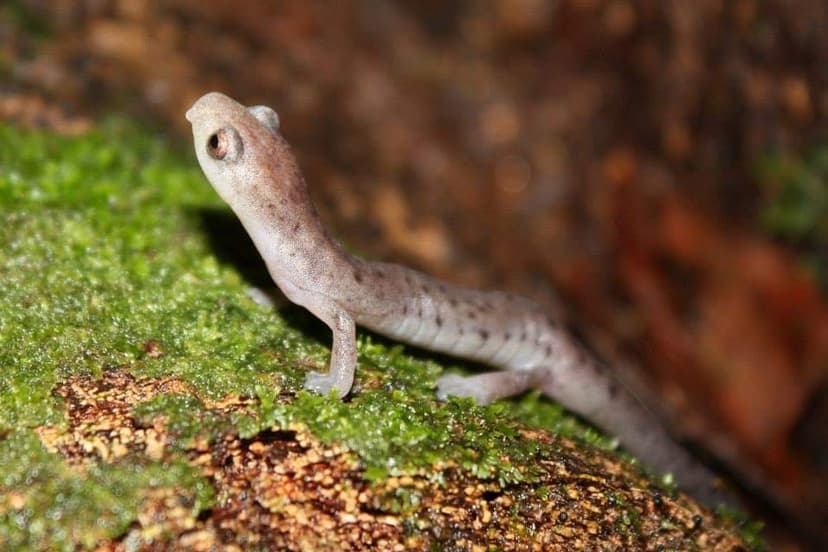
The Camp Sasardi salamander (Bolitoglossa cuna) is a medium-sized salamander species found in the moist lowland tropical rainforests of eastern Guna Yala province, Panama. Distinctive features include its light golden-tan coloration, wholly webbed feet, and a relatively long tail. It is classified as endangered due to its limited geographic distribution and ongoing habitat degradation.
Key Facts
- ›Endemic to the eastern Guna Yala province of Panama.
- ›Found in moist lowland tropical rainforests.
- ›Females reach a snout-vent length of 46.6–55.7 MM.
- ›Characterized by light golden-tan coloration and wholly webbed feet.
- ›Classified as endangered by the IUCN.
- ›Threatened by logging, development, and potential spread of salamander chytrid fungus.

Camp Sasardi Salamander, Camp Sasardi Mushroomtongue Salamander
- Moist Lowland Tropical Rainforests
- Low Vegetation In Forests With Substantial Leaf Litter
Panama
- Medium-Sized Species For Its Genus
- Females Reach A Snout-Vent Length of 46.6–55.7 Mm
- Rather Long Tails
- Wholly Webbed Feet
- Back Is Light Golden-Tan
- Underside Is Lighter In Color
Limited Range, Habitat Degradation, Logging, Development, Salamander Chytrid Fungus
About Bolitoglossa cuna
The Bolitoglossa cuna, commonly known as the Camp Sasardi salamander, is a species of salamander belonging to the family Plethodontidae. This medium-sized amphibian is endemic to the moist lowland tropical rainforests found in the eastern region of Guna Yala province in Panama. Its appearance is characterized by a light golden-tan coloration on its back, a lighter underside, relatively long tails, and distinctively wholly webbed feet.
Distribution and Habitat
This species is exclusively found within Panama, inhabiting tropical rainforests at elevations ranging from 10 to 718 meters. It has been observed on low-lying vegetation within forests that have a significant amount of leaf litter.
Conservation Status
The International Union for Conservation of Nature (IUCN) classifies Bolitoglossa cuna as endangered. This designation is primarily due to its restricted geographical distribution and the ongoing degradation of its natural habitat. Threats to its survival include logging and development activities, which directly impact its rainforest environment. Furthermore, the potential future spread of the salamander chytrid fungus, a pathogen that has severely affected salamander populations elsewhere, poses a significant long-term risk to this species if it reaches the Americas.
Source: Wikipedia ↗
Frequently Asked Questions
What is the scientific name for the Camp Sasardi salamander?
The scientific name for the Camp Sasardi salamander is Bolitoglossa cuna. It was formally described in 1973 based on a specimen collected from Camp Sasardi in Panama.
Where is the Bolitoglossa cuna found?
Bolitoglossa cuna is endemic to Panama, specifically inhabiting the moist lowland tropical rainforests of eastern Guna Yala province. It has been observed at elevations ranging from 10 to 718 meters.
What are the physical characteristics of Bolitoglossa cuna?
Bolitoglossa cuna is a medium-sized salamander for its genus, with females reaching a snout-vent length of 46.6–55.7 mm. They possess rather long tails, wholly webbed feet, and a light golden-tan coloration on their back, with a lighter underside.
Why is the Camp Sasardi salamander considered endangered?
The Bolitoglossa cuna is classified as endangered by the IUCN due to its limited geographic range and ongoing habitat degradation. Threats include logging, development, and the potential future spread of the salamander chytrid fungus to the Americas.
What are the common names for Bolitoglossa cuna?
The common names for Bolitoglossa cuna include the Camp Sasardi salamander and the Camp Sasardi mushroomtongue salamander.
Related Salamander and Newt species
Bolitoglossa alvaradoi
Bolitoglossa alvaradoi, also known as the Moravia de Chirripo salamander, is a medium-sized salamander species endemic to Costa Rica. It is distinguished by its olive-green to dark brown back with black flecking and a pink to fawn hue, inhabiting lowland and premontane rainforests.

Bolitoglossa alberchi
Alberch's salamander (Bolitoglossa alberchi) is a species of salamander found in the mountainous regions of Mexico, specifically in Veracruz, Chiapas, and Oaxaca. It is distinguished by its large size for its genus, a black body with distinctive grayish-green to yellowish chevron patterns along its back, and a long, blotched tail.

Batrachoseps stebbinsi
The Tehachapi slender salamander (Batrachoseps stebbinsi) is a species of plethodontid salamander endemic to Kern County, California. It is distinguished by its dark brown coloration with coppery red and silver speckles, and its lungless respiration through moist skin.