
Bolitoglossa mombachoensis
Bolitoglossa mombachoensis·Plethodontidae
Bolitoglossa mombachoensis, also known as the Mombacho salamander, is a species of salamander endemic to Nicaragua. It is found exclusively on Volcán Mombacho and in surrounding heavily degraded forests. The species is primarily threatened by habitat loss.
Key Facts
- ›Endemic to Nicaragua, specifically Volcán Mombacho.
- ›Inhabits subtropical or tropical moist lowland and montane forests.
- ›Also found in heavily degraded former forest areas.
- ›Its primary threat is habitat loss.
- ›Belongs to the Plethodontidae family.

Mombacho Salamander, Salamandra De Mombacho
Subtropical Or Tropical Moist Lowland Forests, Subtropical Or Tropical Moist Montane Forests, Heavily Degraded Former Forest
Nicaragua
Habitat Loss
About Bolitoglossa mombachoensis
Bolitoglossa mombachoensis, commonly referred to as the Mombacho salamander, is a species of salamander belonging to the family Plethodontidae. Its scientific name is derived from the location where it is found.
Geographic Distribution and Habitat
This species is endemic to Nicaragua. Its known range is restricted to Volcán Mombacho, located in the Granada Department, at elevations between 950 and 1,250 meters above sea level. There is a possibility that Bolitoglossa mombachoensis may also inhabit other volcanoes in southwestern Nicaragua. Its natural environments consist of subtropical or tropical moist lowland forests and subtropical or tropical moist montane forests. Additionally, it is found in areas that have been heavily degraded from their original forest state.
Conservation Status and Threats
The primary threat facing Bolitoglossa mombachoensis is habitat loss. The ongoing degradation and destruction of its forest habitats put significant pressure on its population and survival.
Source: Wikipedia ↗
Frequently Asked Questions
What is the common name for Bolitoglossa mombachoensis?
Bolitoglossa mombachoensis is commonly known in English as the Mombacho salamander. In Spanish, it is referred to as Salamandra De Mombacho.
Where is Bolitoglossa mombachoensis found?
This species is endemic to Nicaragua and is known only from Volcán Mombacho in the Granada Department. It may also be found on other volcanoes in southwestern Nicaragua.
What kind of habitat does the Mombacho salamander prefer?
The Mombacho salamander's natural habitats include subtropical or tropical moist lowland forests and subtropical or tropical moist montane forests. It can also be found in heavily degraded areas that were formerly forests.
What are the main threats to Bolitoglossa mombachoensis?
The most significant threat to the survival of Bolitoglossa mombachoensis is habitat loss. This can occur due to deforestation and land-use changes in its limited range.
Related Salamander and Newt species

Bolitoglossa salvinii
Salvin's salamander (Bolitoglossa salvinii) is a species of salamander native to El Salvador and Guatemala. It inhabits subtropical and tropical moist forests, as well as degraded former forest areas, and is distinguished by its vulnerability to habitat loss and fragmentation.
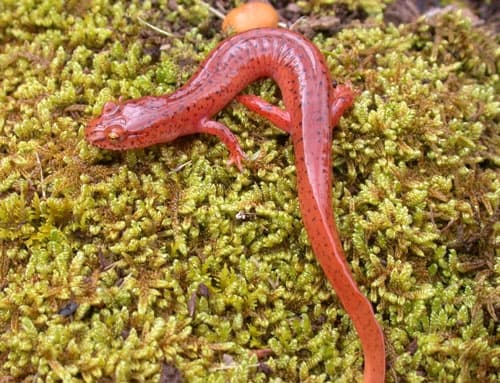
Blue Ridge spring salamander
The Blue Ridge spring salamander, a subspecies of the spring salamander (Gyrinophilus porphyriticus), is found in the southern Appalachian Mountains and adjacent Piedmont regions of the United States. This species is distinguished by a distinctive white line from its eye to its nostril, bordered by a dark line, and its varied dorsal coloration ranging from reddish to orange-yellow with black or brown spots. They inhabit cool springs, mountain springs, and moist forest areas, and are notable for their diet which can include other salamanders.
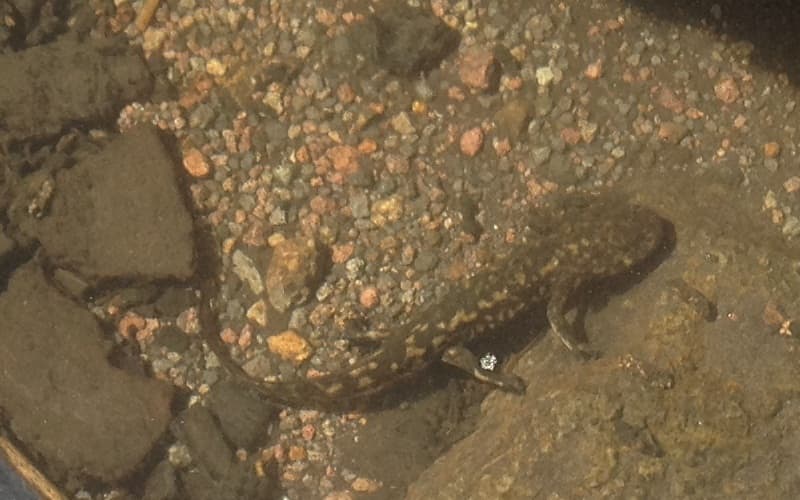
Ambystoma leorae
The Leora's stream salamander (Ambystoma leorae) is a critically endangered mole salamander endemic to a very small region within Mexico's Iztaccihuatl-Popocatepetl National Park. Its survival is threatened by its specific water quality requirements and human activities such as water extraction, cattle grazing, and direct consumption, leading to a single known population persisting on Mount Tlaloc.