
Bolitoglossa occidentalis
Bolitoglossa occidentalis·Plethodontidae
The southern banana salamander (Bolitoglossa occidentalis) is a species of salamander belonging to the Plethodontidae family. It is native to subtropical and tropical lowland and montane forests in Guatemala, Honduras, and Mexico. This species is notably threatened by habitat loss.
Key Facts
- ›Found in Guatemala, Honduras, and Mexico.
- ›Inhabits subtropical or tropical moist lowland and montane forests.
- ›Also found in arable land and plantations.
- ›Primary threat is habitat loss.
- ›Breeding cycle is influenced by microhabitat and environment, though climate also plays a role.

Southern Banana Salamander
Subtropical Or Tropical Moist Lowland Forests, Subtropical Or Tropical Moist Montane Forests, Arable Land, Plantations
Guatemala, Honduras, Mexico
Habitat Loss
About Bolitoglossa occidentalis
Bolitoglossa occidentalis: The Southern Banana Salamander
The southern banana salamander, scientifically known as Bolitoglossa occidentalis, is a species of salamander belonging to the family Plethodontidae. This amphibian is naturally found in the geographic regions of Guatemala, Honduras, and Mexico.
Natural Habitats and Distribution
Bolitoglossa occidentalis inhabits a variety of subtropical and tropical environments. Its preferred natural habitats include moist lowland forests and moist montane forests. The species has also adapted to human-altered landscapes, being found in arable land and plantations, which may offer some refuge or foraging opportunities.
Conservation Concerns
A significant threat to the survival of the southern banana salamander is habitat loss. The ongoing destruction and fragmentation of its forest and other natural environments directly impact its ability to thrive and reproduce.
Reproduction and Behavior
Research into the breeding cycle of Bolitoglossa occidentalis is ongoing, with scientists still seeking to fully understand the specific factors that influence it. While climate plays a role, current understanding suggests that the salamander's microhabitat and the characteristics of its immediate environment are more crucial in determining its breeding patterns.
Source: Wikipedia ↗
Frequently Asked Questions
Where can the southern banana salamander be found?
The southern banana salamander is found in the countries of Guatemala, Honduras, and Mexico. Its natural range includes subtropical and tropical moist lowland and montane forests.
What kind of habitats does Bolitoglossa occidentalis prefer?
Bolitoglossa occidentalis prefers subtropical or tropical moist lowland forests and subtropical or tropical moist montane forests. It can also be found in arable land and plantations.
What are the main threats to the southern banana salamander?
The primary threat to the southern banana salamander is habitat loss. This loss of suitable environments makes survival and reproduction more challenging for the species.
How does climate affect the breeding cycle of the southern banana salamander?
While climate has been shown to influence the breeding cycle of the southern banana salamander, it is believed that the salamander's specific microhabitat and surrounding environment are more significant factors.
Related Salamander and Newt species
Ambystoma rosaceum
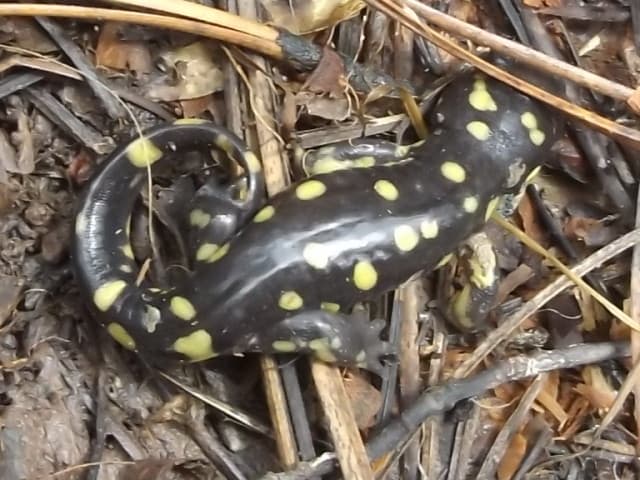
The Tarahumara salamander (Ambystoma rosaceum) is a freshwater mole salamander species endemic to Mexico, found in temperate and montane forests, grasslands, and various aquatic habitats. It is distinguished by its medium size, variable coloration of yellow spots or streaks on a dark background in adults, and the potential for paedomorphosis, where individuals retain larval features. While generally considered Least Concern, it faces threats from habitat loss and introduced species.

Bolitoglossa rufescens
The northern banana salamander (Bolitoglossa rufescens) is a small, terrestrial and arboreal salamander found in the Atlantic slopes of Meso-America, from Mexico through Guatemala, Belize, and northern Honduras. It is distinctive for its lungless respiration and its adaptation to life within bromeliads in tropical and subtropical moist lowland rain forests and mountain ecosystems.

Ambystoma texanum
The small-mouth salamander (Ambystoma texanum) is a species of mole salamander native to the central United States and parts of Canada. It is identifiable by its relatively small head, dark coloration with flecking, and a long tail. This species prefers moist habitats and is known for its nocturnal and subterranean lifestyle.