
Carolina spring salamander
The Carolina spring salamander, also known as Gyrinophilus porphyriticus dunni, is a species of salamander found in the southern Appalachian Mountains and adjacent Piedmont regions of the United States. It is distinguished by a white line from its eye to its nostril, often bordered by a dark line, and a reddish or salmon coloration with black or brown spots. This salamander inhabits temperate forests, springs, and caves, and is known for its prolonged larval stage and cannibalistic tendencies.
Key Facts
- ›The Carolina spring salamander is a subspecies of the spring salamander, Gyrinophilus porphyriticus.
- ›Its natural habitats include temperate forests, freshwater springs, and caves.
- ›Adults can reach lengths of up to 8.06 inches (20.5 CM).
- ›Distinctive features include a white eye-to-nostril line bordered by a dark line.
- ›Their diet can include other salamanders, and they are known to be cannibalistic.
- ›They spend multiple years in the larval stage, with adults taking several more years to reach sexual maturity.
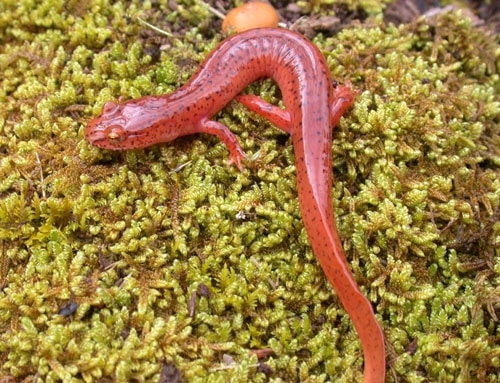
Carolina Spring Salamander
Temperate Forests, Freshwater Springs, Inland Karsts, Caves, Rivers, Swamps, Freshwater Marshes
United States
- Adults Can Be 5–7.5 In Long.
- Record Length Is 8.06 In .
- Distinctive White Line From Eye To Nostril, Bordered Below By A Conspicuous Black Or Dark Brown Line.
- May Have A Dark Line Above the White Line.
- Dorsal Coloration Can Be Clear Reddish, Salmon, Or Orange-Yellow.
- Marked With Black Or Brown Spots Or Flecks.
- 17 To 19 Costal Grooves.
- Larvae Are Aquatic and Have Stream-Type Morphology.
- Juveniles Are Typically More Brightly Colored Than Adults.
- Insects
- Spiders
- Mites
- Millipedes
- Centipedes
- Slugs
- Snails
- Annelid Worms
- Other Small Invertebrates
- Smaller Stream Dwelling Salamanders and Their Eggs
- Cannibalistic
- Spend Time In Wet Soil Close To Water Sources During Colder Months, Remaining Somewhat Active In Burrows Or Leaf Litter.
- Males Deposit Spermatophores During Courtship.
- Females Protect Egg Masses Until Hatching.
- Larvae May Stay Near the Mother After Hatching But Do Not Depend On Her.
- Exhibit Cannibalism of Smaller Individuals.
- Secrete A Toxin Through Their Skin To Ward Off Predation.
Deforestation, Agriculture, Introduction of Fish For Sport
About Carolina spring salamander
The Carolina spring salamander (Gyrinophilus porphyriticus dunni) is a subspecies of the spring salamander, a lungless salamander native to the southeastern United States. This subspecies is specifically found in the southern Appalachian Mountains and the adjacent Piedmont regions, extending from southwest North Carolina to eastern and central Alabama. Its habitat includes temperate forests, freshwater springs, caves, and other moist environments where it requires adequate oxygen and moisture due to its cutaneous respiration.
Description and Life Cycle
Adult Carolina spring salamanders typically range from 5 to 7.5 inches (13 to 19 cm) in length, with a record length of 8.06 inches (20.5 cm). A key distinguishing feature is a white line running from the eye to the nostril, which is bordered below by a distinct black or dark brown line. The dorsal coloration is often a clear reddish, salmon, or orange-yellow, adorned with black or brown spots or flecks. Juveniles tend to be more brightly colored than adults. The species has a prolonged larval period, with individuals remaining in the gilled larval stage for up to four years. Following metamorphosis, it takes another four years for them to reach sexual maturity.
Diet and Behavior
The diet of the Carolina spring salamander is varied, encompassing a wide range of invertebrates such as insects, spiders, slugs, and worms. Notably, they are also known to prey on smaller salamanders and their eggs, and exhibit cannibalistic behavior, particularly larger individuals consuming smaller ones. To deter predators, they can secrete a toxin through their skin. During colder months, they seek refuge in wet soil near water sources or in leaf litter, remaining somewhat active in burrows.
Reproduction
Breeding commonly occurs from late summer into fall. The courtship ritual involves the male depositing a spermatophore, which the female then picks up for later fertilization of her eggs. Females lay clutches of sticky eggs, ranging from 16 to 160, which they protect until they hatch, usually in late summer or early fall. While newly hatched larvae may remain near their mother, they do not directly depend on her for care.
Source: Wikipedia ↗
Frequently Asked Questions
What is the scientific name for the Carolina spring salamander?
The scientific name for the Carolina spring salamander is Gyrinophilus porphyriticus dunni. It is a subspecies of the spring salamander, Gyrinophilus porphyriticus.
Where can the Carolina spring salamander be found?
The Carolina spring salamander is distributed through the southern portion of the Blue Ridge Province and the Piedmont, ranging from southwest North Carolina to eastern to central Alabama.
What are the distinctive physical characteristics of the Carolina spring salamander?
Adults of this subspecies typically measure 5–7.5 inches (13–19 cm) and are characterized by a white line extending from the eye to the nostril, which is bordered below by a conspicuous black or dark brown line. The dorsal coloration is often reddish, salmon, or orange-yellow, marked with black or brown spots or flecks.
What does the Carolina spring salamander eat?
The diet of the Carolina spring salamander includes insects, spiders, mites, millipedes, centipedes, slugs, snails, and other small invertebrates. They are also known to consume smaller stream-dwelling salamanders and their eggs, and are considered cannibalistic.
How long does the Carolina spring salamander stay in its larval stage?
Larvae of this species remain in the larval stage for multiple years, with some individuals spending up to four years as gilled larvae before metamorphosis. It then takes an additional four years for post-metamorphosis individuals to reach sexual maturity.
What are the main threats to the Carolina spring salamander?
While the spring salamander as a whole is listed as least concern by the IUCN, specific state populations face threats primarily due to deforestation and agriculture. Introduction of fish for sport, such as trout, can also negatively impact their survival and growth.
Related Salamander and Newt species
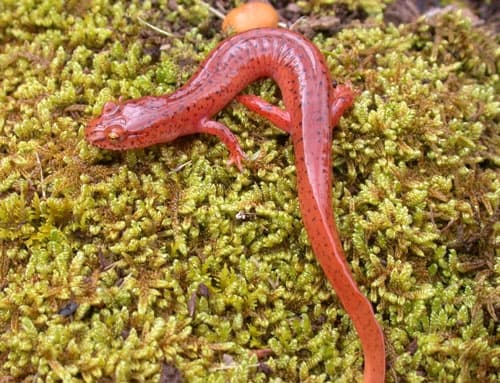
Blue Ridge spring salamander
The Blue Ridge spring salamander, a subspecies of the spring salamander (Gyrinophilus porphyriticus), is found in the southern Appalachian Mountains and adjacent Piedmont regions of the United States. This species is distinguished by a distinctive white line from its eye to its nostril, bordered by a dark line, and its varied dorsal coloration ranging from reddish to orange-yellow with black or brown spots. They inhabit cool springs, mountain springs, and moist forest areas, and are notable for their diet which can include other salamanders.

Andrias davidianus
The Chinese giant salamander (Andrias davidianus) is one of the largest salamanders and amphibians globally, endemic to the Yangtze river basin in China. It is a fully aquatic species known for its large size, dark, wrinkly skin, and distinctive vocalizations that resemble a human infant's cry, earning it the nickname "infant fish." Critically endangered in the wild, its populations have drastically declined due to habitat loss, pollution, and overcollection for food and traditional medicine.

Arboreal salamander
The arboreal salamander (Aneides lugubris) is a lungless salamander species native to California and Baja California, known for its climbing ability and distinctive prehensile tail. It inhabits oak and sycamore woodlands and chaparral, spending daylight hours in tree cavities and exhibiting unique gliding behaviors when falling.