
Carpathian newt
The Carpathian newt, also known as Montandon's newt, is a species of salamander found in the Carpathian and Sudetes Mountains of Central and Eastern Europe. Adults typically reach about 10 cm in length and are characterized by a square body cross-section and yellowish-brown to olive-brown upper surfaces mottled with dark spots. They inhabit temperate forests, marshes, and various bodies of water, and are known to hybridize with smooth newts where their ranges overlap.
Key Facts
- ›Adult Carpathian newts reach a total length of approximately 10 CM, with females generally being larger than males.
- ›The species inhabits temperate forests, marshes, pastures, and various freshwater bodies, including intermittent ones.
- ›Its natural distribution is primarily within the Carpathian Mountains and eastern Sudetes Mountains.
- ›Carpathian newts prefer wet, shady woodlands and are known to hybridize with smooth newts.
- ›Breeding occurs in spring, with females laying up to 250 eggs in ponds, pools, ditches, and marshy areas.
- ›The IUCN has assessed the Carpathian newt as 'least concern' due to its wide range and presumed large population.
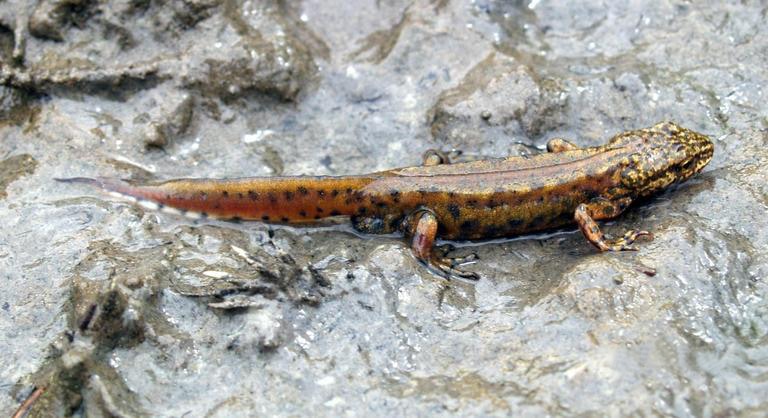
Montandon's Newt
Temperate Forests, Rivers, Intermittent Rivers, Freshwater Marshes, Intermittent Freshwater Marshes, Arable Land, Pastureland, Rural Gardens, Ponds, Coniferous and Broadleaf Woodland, Glades, Woodland Edges, Upland Pastures, Pools, Ditches, Water-Filled Wheel Ruts, Lake Edges
Czech Republic, Poland, Romania, Slovakia, Ukraine, Bavarian Forest
- Total Length of Adults Around 10 Cm
- Females Generally Larger Than Males
- Skin Is Granulated In Terrestrial Individuals, Smoother In Aquatic Ones
- Three Grooves On the Head
- Body Very Square In Cross Section
- Upper Surface Is Yellowish-Brown Or Olive-Brown, Mottled With Fine Dark Spots
- Underparts Are Yellow Or Orange, Often With Small Black Spots At the Sides
- Lower Part of the Tail Is White Or Orange With Large Black Spots
- Males Have A Slight Crest On the Tail and A Filament On the Tip During the Breeding Season
- Males Have A Slightly-Raised Ridge Along the Back During the Breeding Season
- Often Lives Near Breeding Places
- Hides Under Fallen Trees, Rocks, and Loose Bark
- Breeding Starts In Spring
- Prefers Dark, Cold Acid Water For Breeding, But Sometimes Uses Polluted Water
- Tadpoles May Overwinter At Higher Altitudes
- Sexual Maturity Reached At About Three Years
Habitat Loss
About Carpathian newt
The Carpathian newt, scientifically known as Lissotriton montandoni and sometimes referred to as Montandon's newt, is a species of salamander native to the eastern Carpathian and Sudetes Mountains of Central and Eastern Europe. This newt is found in countries including the Czech Republic, Poland, Romania, Slovakia, and Ukraine, with introductions noted in the Bavarian Forest of Germany.
Description and Characteristics
Adult Carpathian newts typically reach a total length of approximately 10 cm, with females generally being larger than males. Their skin texture varies, being granulated in terrestrial individuals and smoother in those that are more aquatic. A distinctive feature is the body's square cross-section, accompanied by three grooves on the head. The upper surfaces are usually yellowish-brown or olive-brown, marked with numerous fine dark spots. The underparts are yellow or orange, often displaying small black spots along the sides. The lower portion of the tail is typically white or orange, adorned with large black spots.
During the breeding season, males develop a slight crest along their tail and a filament at its tip. They also exhibit a subtly raised ridge along their back during this period.
Distribution and Habitat
The natural range of the Carpathian newt is concentrated in the eastern Carpathian Mountains and the eastern Sudetes Mountains, extending to elevations of up to about 2,000 meters. Their preferred habitats include temperate forests, both coniferous and broadleaf, as well as glades, woodland edges, and upland pastures. They are also found in rivers, intermittent rivers, freshwater marshes, intermittent freshwater marshes, arable land, pastureland, rural gardens, and ponds. The species demonstrates some adaptability to degraded habitats and breeds in both permanent and temporary water bodies.
Where their territories overlap with the smooth newt (Lissotriton vulgaris), hybridization frequently occurs, resulting in offspring with intermediate physical characteristics.
Behavior and Reproduction
Carpathian newts often reside in close proximity to their breeding grounds, seeking shelter beneath fallen trees, rocks, and loose bark. Breeding commences in the spring, and females can lay up to 250 eggs throughout the year. They favor breeding sites such as ponds, pools, ditches, water-filled wheel ruts, marshes, and the edges of lakes, often preferring dark, cold, and acidic water, though they have been observed using polluted water. The eggs typically hatch within one to four weeks, depending on ambient temperature. Metamorphosis may occur around twelve weeks, but at higher altitudes, the larval stage, or tadpoles, may overwinter.
Conservation Status
The International Union for Conservation of Nature (IUCN) has assessed the Carpathian newt as 'least concern'. This classification is attributed to its wide geographic range, a presumed large total population, and its tolerance to variations in its habitat. However, the species is noted to be threatened by habitat loss, and its total population is believed to be declining.
Source: Wikipedia ↗
Frequently Asked Questions
What is the average size of an adult Carpathian newt?
Adult Carpathian newts generally grow to a total length of about 10 cm (4 inches). Females tend to be larger than males of the species.
Where are Carpathian newts found naturally?
The Carpathian newt is native to the eastern parts of the Carpathian Mountains and the eastern Sudetes Mountains. Its range also extends across the Czech Republic, Poland, Romania, Slovakia, and Ukraine.
What kind of habitats do Carpathian newts prefer?
They prefer wet, shady woodland environments, including coniferous and broadleaf forests, as well as glades, woodland edges, and upland pastures. They also inhabit freshwater marshes, ponds, and rivers.
How do Carpathian newts reproduce?
Breeding begins in the spring, and females lay up to 250 eggs throughout the year. They choose breeding sites such as ponds, pools, ditches, water-filled wheel ruts, marshes, and lake edges, often preferring dark, cold, acidic water.
What is the conservation status of the Carpathian newt?
The International Union for Conservation of Nature (IUCN) has classified the Carpathian newt as 'least concern'. This assessment is based on its wide distribution, presumed large population size, and tolerance to habitat variations.
Does the Carpathian newt hybridize with other species?
Yes, where their ranges overlap, the Carpathian newt often hybridizes with the smooth newt (Lissotriton vulgaris). The offspring exhibit characteristics intermediate between the two parent species.
Related Salamander and Newt species

Alpine newt
The alpine newt is a species of newt native to continental Europe, with introduced populations in Great Britain and New Zealand. Adults are typically dark grey to blue on their back and sides, with a vibrant orange belly and throat, with males displaying more striking coloration, especially during the breeding season. They are adaptable, inhabiting both lowlands and high altitudes, and are primarily nocturnal during their terrestrial phase.

Ambystoma macrodactylum
The long-toed salamander (Ambystoma macrodactylum) is a mole salamander native to the Pacific Northwest of North America. It is distinguished by its mottled black, brown, and yellow coloration and a notably long outer fourth toe on its hind limbs. This species occupies a wide range of habitats, from temperate rainforests to alpine meadows, and is known for its subterranean adult lifestyle and aquatic breeding phase.
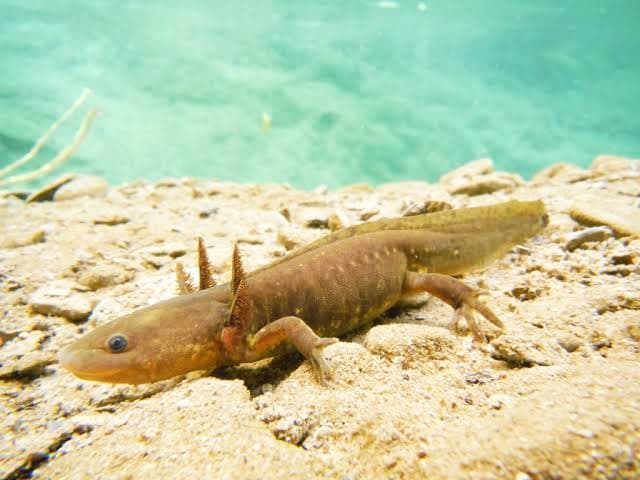
Ambystoma velasci
The plateau tiger salamander (Ambystoma velasci) is a mole salamander species found in Mexico, with a possible range extending into the United States. It is distinctive for its ability to exhibit facultative paedomorphosis, meaning adults can retain larval features or undergo metamorphosis again in response to environmental changes. Adults are characterized by olive-green backs with dark spots and a cream underside.