
Chinese giant salamander
The Chinese giant salamander (Andrias davidianus) is one of the largest amphibians in the world, inhabiting rocky mountain streams and lakes in central China. This fully aquatic species is distinguished by its large head, small eyes, wrinkly dark skin, and its classification as a "living fossil". It is critically endangered in the wild due to significant habitat loss, pollution, and overcollection for food and traditional medicine.
Key Facts
- ›It is one of the largest salamanders and amphibians globally, capable of reaching up to 1.8 meters in length.
- ›The species is considered a 'living fossil' due to its ancient lineage within the Cryptobranchidae family.
- ›Its diet includes insects, fish, amphibians, and freshwater invertebrates, with cannibalism being frequent.
- ›Chinese giant salamanders possess poor eyesight and rely on sensory nodes to detect vibrations in their environment.
- ›They are capable of vocalizing, producing sounds described as barking, whining, hissing, or crying.
- ›The species is critically endangered in the wild, with populations declining by over 80% since the 1950s.

Infant Fish
- Rocky Mountain Streams
- Lakes
- Subterranean Rivers
- Dark, Muddy, Or Rocky Crevices Along Stream Banks
China, Japan, Taiwan
- Large Head With A Wide Mouth
- Small, Lidless, Round Eyes
- Dark, Wrinkly Skin, Typically Mottled Or Speckled Brown, But Can Also Be Brownish Tones, Dark Reddish, Or Black
- Albinos Are White Or Orange
- Line of Paired Tubercles Around Head and Throat
- Produces A Sticky, White Skin Secretion That Repels Predators
- Flat, Broad Body
Insects, Millipedes, Horsehair Worms, Amphibians, Freshwater Crabs, Shrimp, Fish, Asiatic Water Shrew, Plant Material and Gravel, Remains of Other Chinese Giant Salamanders
- Fully Aquatic
- Relies On Sensory Nodes To Detect Vibrations Due To Poor Eyesight
- Most Active From Early Evening To Early Night
- Can Vocalize With Barking, Whining, Hissing, Or Crying Sounds
- Capable of Suction Feeding
- Catches Prey On Land With An Asymmetrical Bite
- Can Fast For Several Years
- Males and Females Maintain Territories
- Exhibit Various Courtship Displays Including Knocking Bellies, Leaning Side-To-Side, Riding, and Mouth-To-Mouth Posturing
Habitat Loss, Pollution, Overcollection, Overhunting, Industrialization, Dam Construction, Siltation, Deforestation, Mining Activity, Pesticides and Chemicals From Farming, Water Temperature Changes, Algal Blooms, Ranavirus Infection, Hybridization With Introduced Populations
About Chinese giant salamander
The Chinese giant salamander (Andrias davidianus) is a monumental amphibian, recognized as one of the largest salamanders and amphibians in the world. This fully aquatic species is native to the clear, rocky mountain streams and lakes found within the Yangtze river basin of central China. It is often referred to as a "living fossil" due to its ancient lineage, belonging to the family Cryptobranchidae, which dates back approximately 170 million years.
Description and Characteristics
Distinguished by its large, flat head, wide mouth, and small, lidless eyes, the Chinese giant salamander possesses dark, wrinkly skin that is typically mottled or speckled in shades of brown, though variations in reddish tones and black are also observed. Albino individuals, appearing white or orange, have been documented. A notable physical trait is the presence of a sticky, white skin secretion that serves to repel predators. These salamanders rely heavily on sensory nodes running along their body to detect vibrations in their environment, as their eyesight is poor. They are also known to vocalize, producing a range of sounds including barking, whining, hissing, and crying, some of which have been likened to the sound of a human infant.
Habitat and Distribution
Chinese giant salamanders are exclusively aquatic, preferring habitats with clear water, quick flow, and moderate depth, often found in streams with rocky, irregular beds and some vegetation. They typically inhabit forested regions at altitudes ranging from 100 to 1,500 meters. While their native range is in central China, they have been introduced to Kyoto Prefecture in Japan and possibly Taiwan, where they can pose a threat to native species through hybridization.
Diet and Behavior
The diet of the Chinese giant salamander is diverse, encompassing insects, amphibians, fish, freshwater crabs, shrimp, and small mammals. Cannibalism is a significant component of their diet. They hunt using a suction feeding method, creating a powerful gape to draw prey into their mouths, and utilize an asymmetrical bite to subdue prey on land. These salamanders are capable of fasting for extended periods, potentially for several years, due to their metabolic reserves. Their activity patterns suggest they are most active from early evening to early night.
Reproduction and Lifecycle
The reproductive cycle is triggered by water temperatures reaching approximately 20 °C, with mating occurring between July and September. Females lay between 400 to 500 eggs in underwater cavities, which are guarded by the male until hatching. The larval stage is characterized by external gills, which persist for several years as the salamander grows. Maturity is typically reached around five to six years of age.
Conservation Status and Threats
The Chinese giant salamander is facing severe threats and is listed as Critically Endangered. Its wild populations have declined dramatically, estimated at over 80% since the 1950s. Major threats include extensive habitat loss and degradation due to industrialization, dam construction, pollution from mining and agriculture, and siltation. Overharvesting for consumption as a delicacy and for use in traditional Chinese medicine has also severely depleted wild numbers. Ranavirus infections have also contributed to population declines. Extensive farming operations exist in China, but concerns remain about the impact on wild populations and the potential spread of diseases.
Source: Wikipedia ↗
Frequently Asked Questions
What is the Chinese giant salamander?
The Chinese giant salamander is one of the world's largest amphibians, known for its significant size and ancient lineage. It is a fully aquatic species that inhabits freshwater environments in China.
Where are Chinese giant salamanders found?
Their native range is primarily the rocky mountain streams and lakes within the Yangtze river basin of central China. They have also been introduced to Kyoto Prefecture in Japan and possibly Taiwan.
What does a Chinese giant salamander look like?
They have large heads with wide mouths, small, lidless eyes, and dark, wrinkly skin that is typically mottled or speckled brown, though other colors including black and reddish tones have been observed. They also have a line of paired tubercles around their head and throat.
What do Chinese giant salamanders eat?
Their diet is varied and includes insects, millipedes, worms, other amphibians, freshwater crabs, shrimp, fish, and even small mammals like the Asiatic water shrew. Cannibalism among individuals is also common.
Why is the Chinese giant salamander endangered?
The species is critically endangered primarily due to habitat loss and degradation caused by industrialization, dam construction, and pollution. Overcollection for consumption as a delicacy and for use in traditional medicine also severely impacts wild populations.
What is the conservation status of the Chinese giant salamander?
The Chinese giant salamander is listed as Critically Endangered. Its wild populations have experienced a drastic decline, estimated to be over 80% in recent generations.
Can Chinese giant salamanders make sounds?
Yes, they are known to vocalize and can produce sounds such as barking, whining, hissing, or crying. Some of these vocalizations are said to resemble the crying of a human infant.
Related Salamander and Newt species
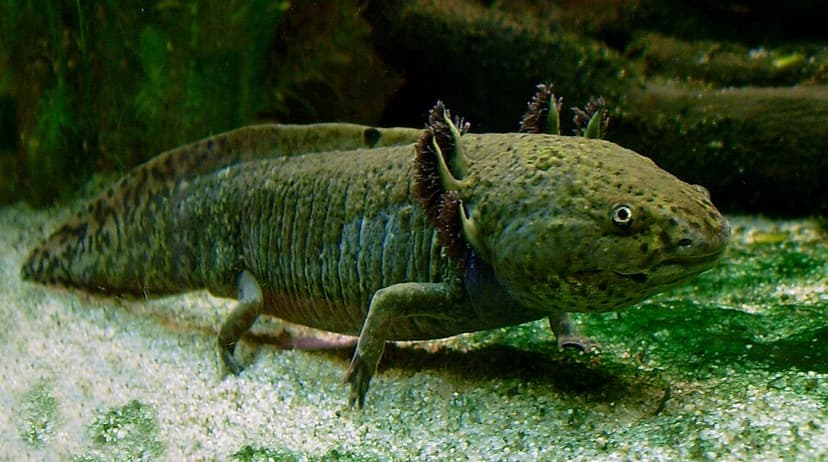
Ambystoma mexicanum
The axolotl (Ambystoma mexicanum) is a species of mole salamander native to the freshwater lakes of the Valley of Mexico. It is uniquely neotenic, meaning it retains its larval features, such as external gills, throughout adulthood and remains fully aquatic. This remarkable ability to regenerate lost body parts, including limbs and even parts of its brain, makes it a crucial subject in scientific research.
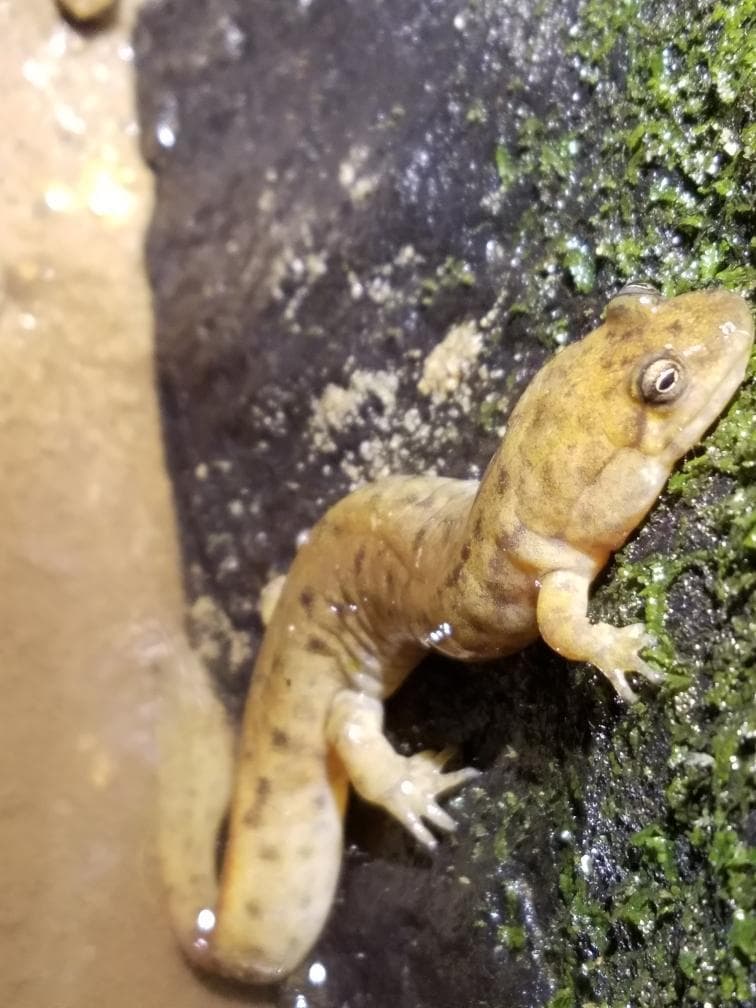
Black mountain salamander
The black mountain salamander (Desmognathus welteri) is a species of salamander found in the southern Appalachian Mountains of the southeastern United States. It is characterized by its robust body, short limbs, and variable brown coloration. This secretive salamander primarily inhabits temperate forests near swift-flowing streams and is known for its lengthy larval development and dedicated maternal care for its eggs.

Ambystoma dumerilii
The Lake Patzcuaro salamander, also known as achoque (Ambystoma dumerilii), is a paedomorphic salamander endemic to Lake Patzcuaro in Michoacán, Mexico. It is distinguished by retaining larval characteristics, such as prominent external gills, throughout its adult life. Historically used for food and traditional medicine by the Purépecha people, the species is now critically endangered due to severe habitat degradation and pollution.