
Chiropterotriton magnipes
Chiropterotriton magnipes·Plethodontidae
The bigfoot splayfoot salamander (Chiropterotriton magnipes) is a species of salamander endemic to northeastern Mexico. It is distinguished by its large feet and is found in caves and forest crevices, primarily in pine-oak woodlands. This species is notably threatened by habitat loss due to deforestation, which leads to cave desiccation.
Key Facts
- ›Endemic to north-eastern Queretaro, Mexico.
- ›Inhabits caves and crevices within pine-oak forests.
- ›Also found in man-made structures like tunnels.
- ›Characterized by its distinctive large feet.
- ›Faces significant threats from habitat loss and cave drying.
- ›Has historically been a rare species.

Bigfoot Splayfoot Salamander, Big-Footed Salamander
Caves, Crevices In Pine–Oak Forest, Tunnel Under A Church
Mexico
Large Feet
Habitat Loss, Cave Drying
About Chiropterotriton magnipes
Bigfoot Splayfoot Salamander
The bigfoot splayfoot salamander, scientifically classified as Chiropterotriton magnipes, is a species of salamander known for its distinctive large feet. This amphibian is endemic to a specific region in northeastern Mexico, specifically Queretaro, where it is found at elevations ranging from 1,300 to 1,810 meters above sea level.
Habitat and Distribution
Chiropterotriton magnipes is naturally found in caves and within the crevices of its pine-oak forest habitat. Intriguingly, it has also been documented in man-made structures, such as a tunnel located beneath a church. Its geographic distribution is consequently limited to northeastern Queretaro, Mexico.
Conservation Concerns
This species faces significant threats primarily due to habitat loss. The removal of forests in its native range leads to the desiccation of the caves that serve as its essential habitat, posing a critical risk to its survival. Historically, the bigfoot splayfoot salamander has not been considered common, with records indicating it has always been a rare find.
Source: Wikipedia ↗
Frequently Asked Questions
What is the bigfoot splayfoot salamander?
The bigfoot splayfoot salamander, scientifically known as Chiropterotriton magnipes, is a species of salamander native to northeastern Mexico. It is recognized by its prominent, large feet.
Where can the bigfoot splayfoot salamander be found?
This salamander is endemic to north-eastern Queretaro in Mexico. Its natural habitats include caves and crevices within pine-oak forests, and it has also been observed in a tunnel beneath a church.
What are the main threats to Chiropterotriton magnipes?
The primary threat to Chiropterotriton magnipes is habitat loss. Deforestation in its range causes the caves it inhabits to dry up, endangering the species.
Is the bigfoot splayfoot salamander common?
No, the bigfoot splayfoot salamander has never been a common species. Records indicate it has always been rare.
Related Salamander and Newt species
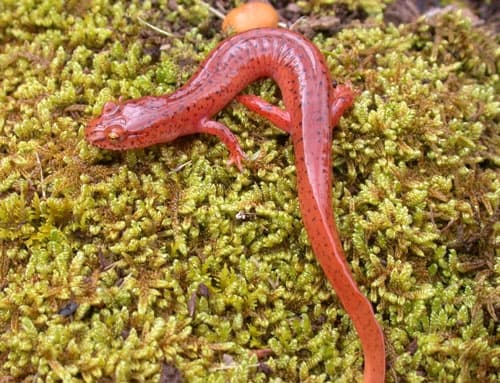
Blue Ridge spring salamander
The Blue Ridge spring salamander, a subspecies of the spring salamander (Gyrinophilus porphyriticus), is found in the southern Appalachian Mountains and adjacent Piedmont regions of the United States. This species is distinguished by a distinctive white line from its eye to its nostril, bordered by a dark line, and its varied dorsal coloration ranging from reddish to orange-yellow with black or brown spots. They inhabit cool springs, mountain springs, and moist forest areas, and are notable for their diet which can include other salamanders.
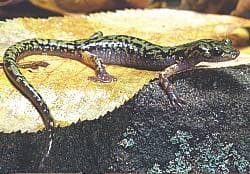
Aneides aeneus
The green salamander (Aneides aeneus) is a small, flat, lungless salamander found in moist, shaded rock crevices in the eastern United States. Its most distinctive feature is its green, lichen-like markings against a darker body, making it unique among North American salamanders. This species is highly specialized in its habitat and exhibits unusual territorial aggression.

Andrias davidianus
The Chinese giant salamander (Andrias davidianus) is one of the largest salamanders and amphibians globally, endemic to the Yangtze river basin in China. It is a fully aquatic species known for its large size, dark, wrinkly skin, and distinctive vocalizations that resemble a human infant's cry, earning it the nickname "infant fish." Critically endangered in the wild, its populations have drastically declined due to habitat loss, pollution, and overcollection for food and traditional medicine.