
Coastal giant salamander
The coastal giant salamander (Dicamptodon tenebrosus) is the largest terrestrial salamander in North America, found in the Pacific Northwest. It exhibits a dual life cycle, with an aquatic larval stage and a terrestrial adult form, though some individuals can become sexually mature while retaining larval features through neoteny. This species is known for its ability to vocalize and its skin secretions which are toxic if ingested.
Key Facts
- ›It is the largest terrestrial salamander in North America, reaching up to 33 CM (13 in) in total length as an adult.
- ›The species has a marbled or reticulate pattern of dark blotches on a light brown or brassy background.
- ›Coastal giant salamanders can vocalize, a rare trait among salamanders.
- ›They have an aquatic larval stage with gills and a terrestrial adult stage that develops lungs.
- ›Neoteny, where individuals mature sexually while retaining gills, is observed, particularly in British Columbia populations.
- ›Adults are opportunistic feeders, consuming invertebrates, small vertebrates, and even other giant salamanders.

Moderate To Slow Flowing Mountain Streams, Under Rocks and Crevasses, Clear, Cool Or Cold, Well-Oxygenated Streams, Mountain Lakes, Ponds, Humid Forests, Under Rocks and Logs, Rocky Shores of Mountain Lakes
Northern California, Oregon, Washington, Southern British Columbia
- Can Reach Up To 33 Cm In Total Length As A Terrestrial Adult
- Can Reach Up To 35.5 Cm In Paedomorphic Forms
- Stout Limbs With Four Toes On the Front Feet and Five Toes On the Back Feet
- Tail Is Around 40 Percent of the Total Length and Is Laterally Compressed
- Marbled Or Reticulate Pattern of Dark Blotches On A Light Brown Or Brassy-Colored Background On Head, Back, and Sides
- Broad Head With A Shovel-Like Snout
- Fold of Skin Across the Throat Called the Gular Fold
- Medium-Sized Eyes With A Brass-Flecked Iris and A Large Black Pupil
- Larval Stage Has Filamentous Gills and An Elongated Tail With A Caudal Fin
- Terrestrial Adult Form Loses Caudal Fin and Filamentous Gills, Develops Robust Legs and Internal Lungs
- Adult-Sized Neotenes Have A Uniform Brown Coloring On Their Heads, Sides, and Backs
Slugs, Insects, Worms, Other Invertebrates, Small Vertebrates, Small Rodents, Snakes, Other Giant Salamanders, Small Macroinvertebrates, Insect Larvae, Small Fish, Mollusks
- Terrestrial Adults Spend Most of Their Time Underground In Burrows
- Emerge To Reproduce and Forage On Rainy and Humid Nights
- Opportunistic Feeders
- Consume Other Individuals of the Same Species
- Arch Its Back and Lash Its Tail Forward When Threatened
- Excrete Toxins Through Their Skin
- Capable of Producing A Painful Bite
About Coastal giant salamander
The coastal giant salamander (Dicamptodon tenebrosus) holds the distinction of being the largest terrestrial salamander found in North America. This species is native to the Pacific Northwest region, with its range extending across Northern California, Oregon, Washington, and into southern British Columbia. It is closely related to other species within the genus Dicamptodon, including the California, Cope's, and Idaho giant salamanders.
Description and Life Cycle
Adult coastal giant salamanders are robust in build, featuring stout limbs with four toes on the front feet and five on the hind feet. Their tail constitutes approximately 40 percent of their total length and is laterally compressed. The coloration is distinctive, characterized by a marbled or reticulate pattern of dark blotches set against a light brown or brassy background across the head, back, and sides. A notable feature is the broad head with a shovel-like snout and a prominent gular fold across the throat. The eyes are medium-sized with brass-flecked irises and large black pupils. Uniquely among salamanders, the coastal giant salamander possesses the ability to vocalize.
This species exhibits a fascinating dual life history. They begin life as aquatic larvae, equipped with filamentous gills and an elongated tail featuring a caudal fin, similar to a tadpole. Upon metamorphosis, they transition into a terrestrial adult form, losing their external gills and caudal fin while developing robust legs and internal lungs. However, a remarkable phenomenon known as neoteny can occur, particularly in populations in British Columbia. In neotenic individuals, larvae become sexually mature without undergoing full metamorphosis, retaining their external gills into adulthood. These adult-sized neotenes typically display a uniform brown coloration.
Behavior and Diet
Terrestrial adult coastal giant salamanders are primarily fossorial, spending most of their time concealed underground in burrows. They emerge to forage and reproduce, typically on rainy and humid nights. As opportunistic feeders, their diet is varied. Adults consume a wide range of prey, including invertebrates such as slugs, insects, and worms, as well as small vertebrates like rodents and snakes, and even other giant salamanders. Larval stages focus on smaller prey, such as insect larvae, small fish, and mollusks. Cannibalism, with both adults and larvae consuming individuals of their own species, has been documented.
Defense Mechanisms
When faced with a threat, adult coastal giant salamanders employ several defense strategies. They will arch their backs and lash their tails forward. Furthermore, they possess the ability to excrete toxins through their skin, which can induce nausea if ingested. Additionally, they are capable of delivering a painful bite.
Habitat and Distribution
The coastal giant salamander's habitat preferences are tied to its life stage. Aquatic larvae are found in clear, cool, well-oxygenated mountain streams, and occasionally in mountain lakes and ponds. Metamorphosed adults inhabit humid forests, often seeking shelter under rocks and logs, and are typically found near mountain streams or along the rocky shores of mountain lakes.
Conservation
In British Columbia, Pacific giant salamanders, including the coastal giant salamander, are afforded protection under the Wildlife Act, which prohibits their killing or collection.
Source: Wikipedia ↗
Frequently Asked Questions
What is the maximum size of a coastal giant salamander?
As a terrestrial adult, the coastal giant salamander can reach up to 33 cm (13 inches) in total length. Paedomorphic forms, which retain larval characteristics, can grow slightly larger, up to 35.5 cm (14.0 inches).
What does a coastal giant salamander eat?
Adults are opportunistic feeders and will eat anything they can fit in their mouths, including slugs, insects, worms, small rodents, snakes, and other giant salamanders. Larval stages primarily consume small macroinvertebrates, small fish, and mollusks.
How does a coastal giant salamander defend itself?
When threatened, an adult coastal giant salamander will arch its back and lash its tail forward. They also excrete toxins through their skin that can cause nausea if ingested, and they are capable of delivering a painful bite.
Where are coastal giant salamanders found?
This species is endemic to the Pacific Northwest of North America, with natural distribution in Northern California, Oregon, Washington, and southern British Columbia.
What are the typical habitats for coastal giant salamanders?
Aquatic stages inhabit clear, cool or cold, well-oxygenated mountain streams, and sometimes mountain lakes and ponds. Metamorphosed adults are found in humid forests under rocks and logs, near mountain streams, or along the rocky shores of mountain lakes.
Can coastal giant salamanders make sounds?
Yes, the coastal giant salamander is one of the few salamander species capable of vocalizing.
What is neoteny in coastal giant salamanders?
Neoteny is a process where some coastal giant salamander larvae become sexually mature without losing their external gills. This allows them to reproduce while remaining in an aquatic or semi-aquatic state, and adult-sized neotenes have a uniform brown coloration.
Related Salamander and Newt species
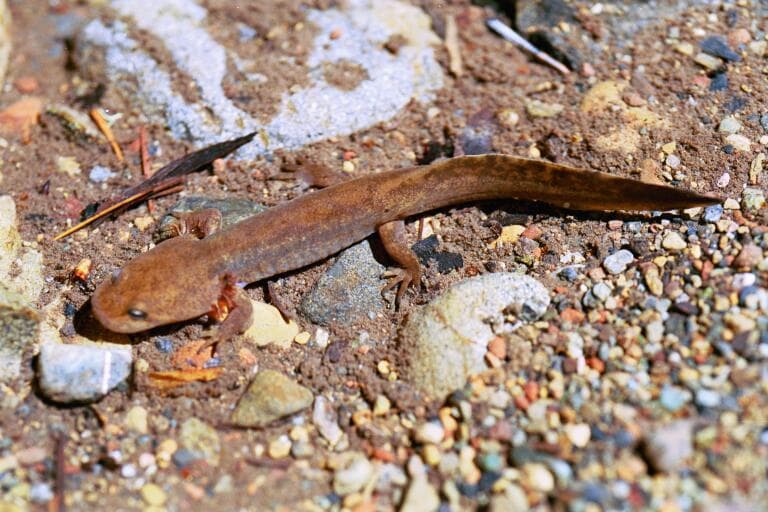
California giant salamander
The California giant salamander is a large amphibian endemic to Northern California, spending its adult terrestrial life near freshwater sources. Distinctive features include a marbled pattern, a broad head, and the ability to vocalize. This species is an important indicator of stream health.
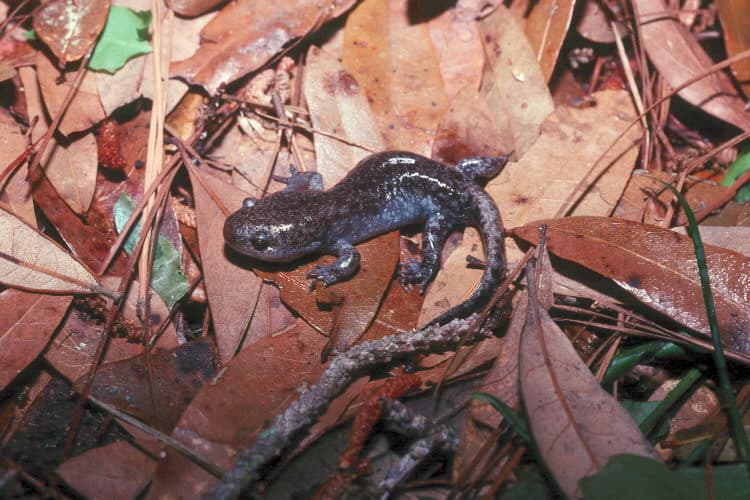
Ambystoma talpoideum
The mole salamander (Ambystoma talpoideum), also known as the tadpole salamander, is a species native to the eastern and central United States. It is characterized by its stocky build, large head, and a unique ability to remain in a neotenic, or larval, state into adulthood. These salamanders inhabit forest floors and migrate to ponds for breeding, with their populations facing threats from habitat alteration.

Ambystoma dumerilii
The Lake Patzcuaro salamander, also known as achoque (Ambystoma dumerilii), is a paedomorphic salamander endemic to Lake Patzcuaro in Michoacán, Mexico. It is distinguished by retaining larval characteristics, such as prominent external gills, throughout its adult life. Historically used for food and traditional medicine by the Purépecha people, the species is now critically endangered due to severe habitat degradation and pollution.