
Desmognathus auriculatus
Holbrook's southern dusky salamander, scientifically known as *Desmognathus auriculatus*, is a species of salamander native to the southeastern United States. Once abundant, its populations have drastically declined since the 1960s, and it is now found in a fraction of its former range. This species is characterized by its dark coloration, long tail, and disproportionately larger hind legs.
Key Facts
- ›Holbrook's southern dusky salamander is endemic to the southeastern United States.
- ›It was formerly known as the southern dusky salamander and is also referred to in older texts as the eared triton.
- ›The species has experienced significant and unexplained population declines since the late 1960s.
- ›Adults typically measure between 3 to 6 inches in length.
- ›They prefer moist, swampy areas near ponds or along the floodplains of streams and rivers.
- ›Breeding occurs in the fall, with females laying eggs in sheltered ground debris.
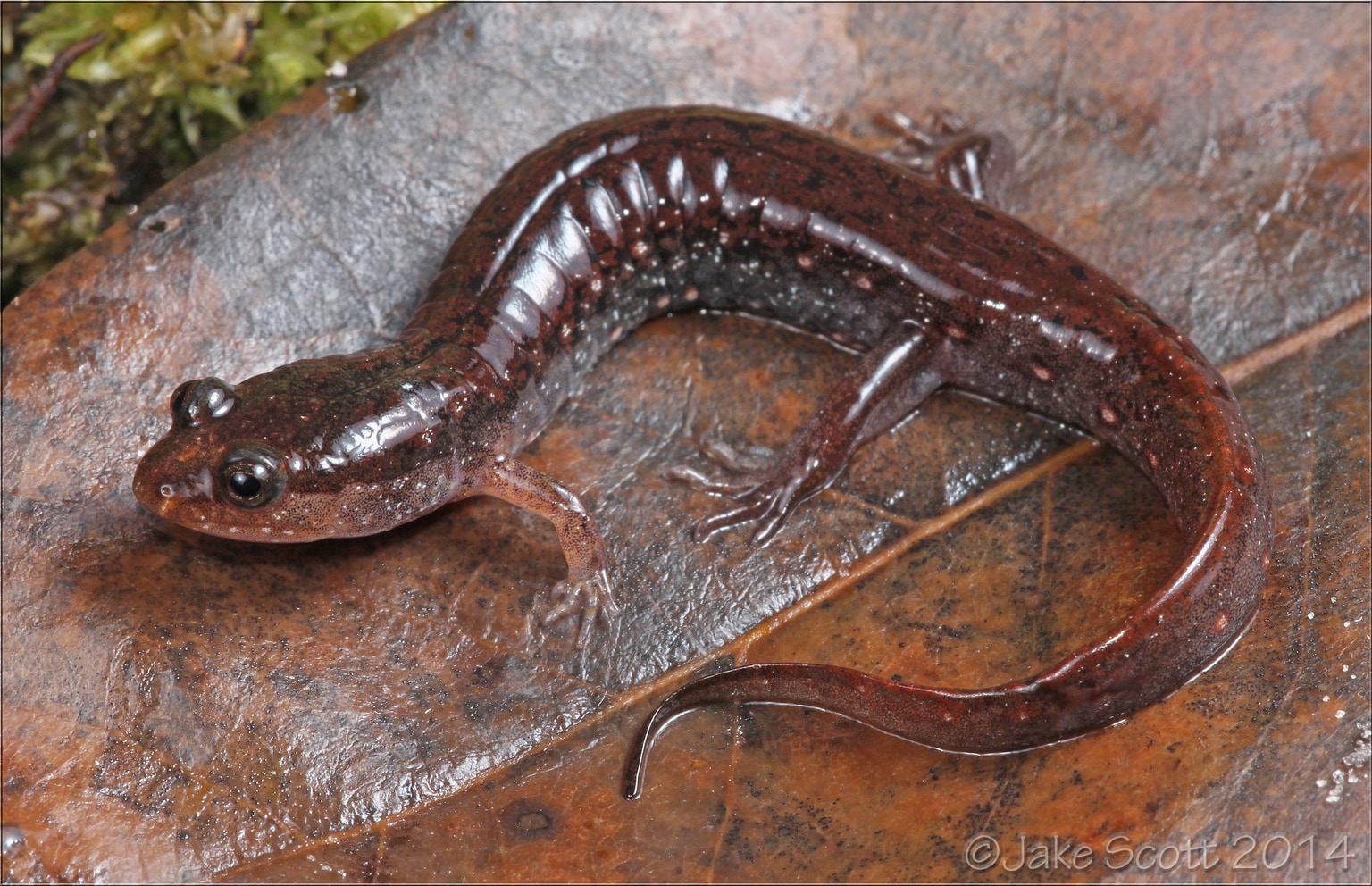
Holbrook's Southern Dusky Salamander, Eared Triton
Tannic, Swampy Areas Near Ponds, Flood Plain of Streams and Rivers
Southern Georgia, Peninsular Florida, Florida Panhandle, Southern Alabama
3 To 6 Inches In Length, Typically Dark Brown To Black In Color, Long Tail, Rear Legs Noticeably Larger Than Front Legs
- Largely Nocturnal
- Breeding Takes Place In the Fall Months
- Females Lay Eggs In Moist, Sheltered Areas of Ground Debris
- Major, Unexplained Declines Since the Late 1960s To 1970s
About Desmognathus auriculatus
Holbrook's Southern Dusky Salamander (Desmognathus auriculatus)
Holbrook's southern dusky salamander, scientifically designated as Desmognathus auriculatus and formerly referred to as the southern dusky salamander or the eared triton in older texts, is a species of salamander native to the southeastern United States. This species is characterized by its predominantly dark brown to black coloration, a lengthy tail, and hind legs that are distinctly larger than its forelimbs, with adults typically measuring between 3 to 6 inches in length.
Habitat and Behavior
Desmognathus auriculatus prefers moist, tannic, and swampy environments, commonly found in proximity to ponds or along the floodplains of streams and rivers. The species is largely nocturnal, exhibiting its primary activity during the night. Its reproductive cycle is timed for the fall months, during which females deposit their eggs in carefully selected moist and sheltered locations within ground debris.
Distribution and Conservation Challenges
The geographic range of the 'true' D. auriculatus (lineage A) extends along the Atlantic coastal plain from southern Georgia south to peninsular Florida, and westward into the Florida Panhandle and southern Alabama. Despite its historical abundance, Holbrook's southern dusky salamander has experienced profound and unexplained population declines since the late 1960s and early 1970s. These declines have resulted in the species occupying less than one percent of its former habitat, with notable disappearances from previously inhabited areas, including large portions of peninsular Florida. The precise causes for these drastic reductions remain unknown, as other salamander species sharing these environments have not exhibited similar population losses.
Source: Wikipedia ↗
Frequently Asked Questions
What is the scientific name for Holbrook's southern dusky salamander?
The scientific name for Holbrook's southern dusky salamander is *Desmognathus auriculatus*. It was previously known as the southern dusky salamander.
Where is Holbrook's southern dusky salamander found?
The 'true' *Desmognathus auriculatus* (lineage A) is found along the Atlantic coastal plain from southern Georgia to peninsular Florida, and westward to the Florida Panhandle and southern Alabama.
What are the physical characteristics of Desmognathus auriculatus?
Holbrook's southern dusky salamander typically grows between 3 to 6 inches in length. It is usually dark brown to black, possesses a long tail, and its rear legs are noticeably larger than its front legs.
What kind of habitat does this salamander prefer?
This species prefers tannic, swampy environments, often found near ponds or on the floodplains of streams and rivers.
What is the conservation status or population trend of Desmognathus auriculatus?
The species was formerly abundant but has experienced major, unexplained population declines since the late 1960s to 1970s, now occupying less than 1 percent of its former range. It has seemingly disappeared from peninsular Florida.
When does Holbrook's southern dusky salamander breed?
Breeding for Holbrook's southern dusky salamander takes place during the fall months. Females deposit their eggs in moist, sheltered areas among ground debris.
Related Salamander and Newt species
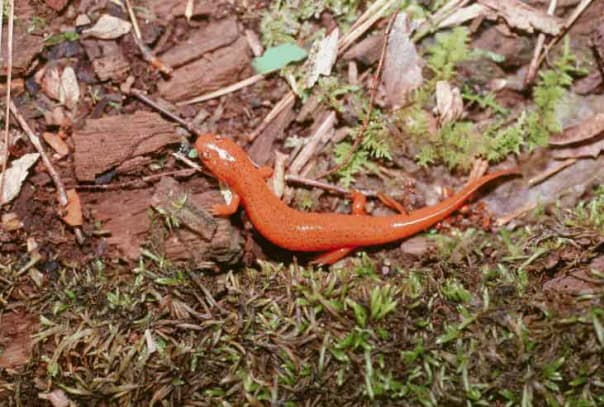
Eastern mud salamander
The Eastern mud salamander (Pseudotriton montanus montanus) is a species of salamander found in the eastern United States, inhabiting muddy wetland and riparian environments. It is characterized by its bright red to reddish-brown coloration, stocky body, and distinct black spots, which can vary in number and visibility with age and location. This species is known for its elusive nature and a unique proteinaceous skin toxin.
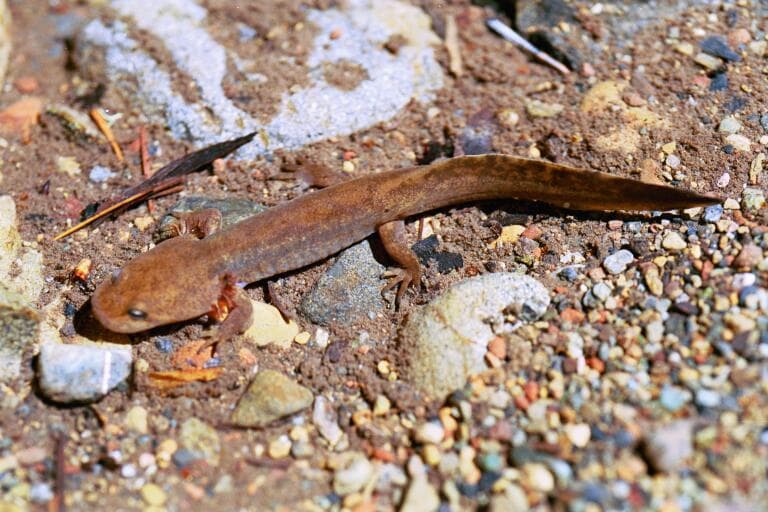
California giant salamander
The California giant salamander is a large amphibian endemic to Northern California, spending its adult terrestrial life near freshwater sources. Distinctive features include a marbled pattern, a broad head, and the ability to vocalize. This species is an important indicator of stream health.

Ambystoma macrodactylum
The long-toed salamander (Ambystoma macrodactylum) is a mole salamander native to the Pacific Northwest of North America. It is distinguished by its mottled black, brown, and yellow coloration and a notably long outer fourth toe on its hind limbs. This species occupies a wide range of habitats, from temperate rainforests to alpine meadows, and is known for its subterranean adult lifestyle and aquatic breeding phase.