
Eastern mud salamander
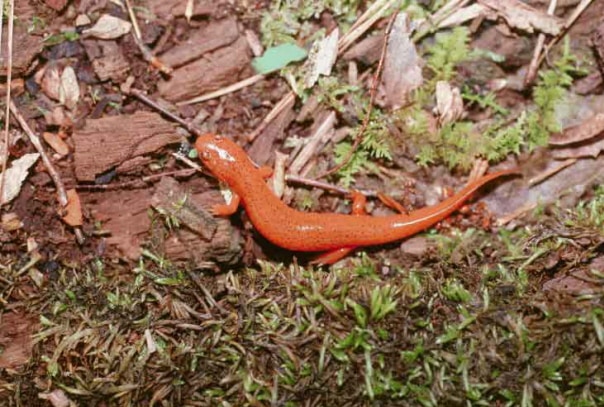
The Eastern mud salamander (Pseudotriton montanus montanus) is a species of salamander found in the eastern United States, inhabiting muddy wetland and riparian environments. It is characterized by its bright red to reddish-brown coloration, stocky body, and distinct black spots, which can vary in number and visibility with age and location. This species is known for its elusive nature and a unique proteinaceous skin toxin.
Key Facts
- ›The Eastern mud salamander is a subspecies of the mud salamander (Pseudotriton montanus).
- ›It inhabits muddy streams, seeps, swamps, and is found under logs, rocks, and leaves.
- ›Adults typically display reddish-brown coloration with brown eyes, a stocky build, and between 30-40 distinct round black spots.
- ›Juveniles are often bright red or orangish-brown with unmarked stomachs and separated spots.
- ›The species produces a proteinaceous skin toxin that can induce irritability and weakness in predators.
- ›It is readily confused with the red salamander and the spring salamander due to similarities in appearance.
Eastern Mud Salamander
Streams, Seeps, Swamps, Under Logs, Under Rocks, Under Leaves, Muddy Wetland Habitats, Riparian Habitats, Muddy Springs, Bogs
Eastern United States, Central Mississippi
- Bright Red, Reddish-Brown, Orangish-Brown, Or Crimson Coloration In Younger Individuals.
- Dark Purplish-Red Or Brown Coloration In Older Individuals.
- Stocky Bodies With Short Tails.
- Brown Eyes.
- Between 30 and 40 Distinct Round Black Spots On Their Backs In Adulthood.
- Juveniles Have Unmarked Stomachs and Separated Spots.
- Spots Can Become Fainter Or Disappear With Age.
- Body Color Varies With Locality, With Coastal Populations Tending To Be Darker and Inland Populations Brighter.
- Lengths of 7.5 To 20.3 Cm In Adulthood.
- 16 To 17 Coastal Grooves Along Dorsal Sides.
Aquatic Invertebrates, Other Salamander Larvae, Earthworms, Beetles, Spiders, Smaller Salamanders, Mites
- Burrowing Species.
- Seek Shelter Under Leaf Litter, Logs, Stones, Or Bark.
- Build Tunnels In Creek Banks.
- Spend Most of Their Lives In Close Proximity To Water.
- Larvae Are Often Found Underground In Muddy Springs.
- Adults Make Burrows In Muddy Areas After Losing Gills.
- May Use Crayfish Burrows, With Heads Sticking Out To Wait For Prey.
- Forage At Night and During Rains.
- Go Deep Underground During Hottest Months of Summer, Especially In Drying Springs.
- Exhibit Anti-Predator Techniques: Curling Body, Extending Rear Limbs, Raising Tail To Appear Larger.
- Release Toxic Substance From Their Dorsum.
- Males Perform Tail Undulation Display During Mating.
- Females May Stay With Eggs To Aid Incubation.
Rarity In Certain Regions, Habitat Loss
About Eastern mud salamander
What is the Eastern Mud Salamander?
The Eastern mud salamander, scientifically known as Pseudotriton montanus montanus, is a species of salamander belonging to the Plethodontidae family. It is a subspecies of the mud salamander complex and is recognized for its elusive nature and its preference for muddy wetland and riparian habitats. The species is found in the eastern half of the United States, with a notable isolated population in central Mississippi.
Physical Characteristics and Distinctions
Adult mud salamanders are characterized by their stocky bodies, short tails, and a distinctive reddish-brown coloration. While younger individuals may be bright red, orangish-brown, or crimson, they typically develop between 30 and 40 distinct round black spots on their backs as they mature. The intensity and visibility of these spots can vary with age and locality; older salamanders may exhibit fainter spots or lose them entirely. The species possesses brown eyes and can reach lengths of 7.5 to 20.3 cm (3–8 inches). The Eastern mud salamander is often confused with the red salamander (Pseudotriton ruber) and the spring salamander (Gyrinophilus porphyriticus). It can be distinguished from the red salamander by its dark brown eyes and short snout, compared to the red salamander's golden yellow eyes and long snout, as well as the spacing of their dorsal spots. It differs from the spring salamander by its shorter body length and the absence of a nasal ridge.
Habitat and Behavior
The Eastern mud salamander thrives in environments such as swamps, bogs, seeps, springs, and streams that feature muddy bottoms and clean water. They are burrowing creatures, seeking refuge beneath leaf litter, logs, stones, or bark, and are also known to construct tunnels in creek banks. These amphibians generally remain close to water sources. Larvae are typically found underground in muddy springs, while adults, after losing their gills, create burrows in muddy areas, sometimes utilizing those of crayfish. They are primarily nocturnal, foraging during the night and during rains before returning to their burrows. During the hottest summer months, both larval and adult mud salamanders retreat deep underground to escape the heat, especially in springs that dry up.
Defense Mechanisms and Diet
A notable characteristic of the mud salamander is its ability to produce a proteinaceous skin toxin along its dorsum, a defense mechanism also found in the red salamander. This toxin can induce symptoms such as extreme irritability, hypothermia, and physical weakness in predators. The coloration and defensive posture of the mud salamander have led to hypotheses of mimicry, potentially imitating the warning coloration of the toxic red eft stage of the eastern newt. The diet of the Eastern mud salamander varies with age. Larvae consume aquatic invertebrates of similar or smaller size, and may prey on other salamander larvae. Adult diets are more varied and can include earthworms, beetles, spiders, and smaller salamanders, as well as invertebrates like mites. Their diet is significantly influenced by their immediate habitat.
Reproduction and Conservation
Mud salamanders breed during the warmer months, with egg deposition commonly occurring in autumn and winter. Females typically reproduce at most once per year, while males may breed multiple times. Females reach reproductive maturity around four to five years of age, while males mature around two to two and a half years. Clutch sizes can range from 65 to 200 eggs, increasing with the female's body size. Due to its extreme rarity in certain areas, such as Virginia where it was placed on the threatened species list in 1979, the Eastern mud salamander faces conservation concerns. While considered secure globally by some organizations, its localized rarity highlights the need for continued study and habitat protection.
Source: Wikipedia ↗
Frequently Asked Questions
What is the scientific name of the Eastern mud salamander?
The scientific name for the Eastern mud salamander is Pseudotriton montanus montanus. It is a subspecies within the Pseudotriton montanus complex.
What are the distinguishing physical characteristics of the Eastern mud salamander?
Adult Eastern mud salamanders are known for their reddish-brown color, brown eyes, stocky bodies, and short tails, often featuring between 30 and 40 distinct round black spots. Younger individuals are typically brighter red or orangish-brown with unmarked stomachs and less defined spots.
Where is the Eastern mud salamander found?
The Eastern mud salamander is endemic to the eastern half of the United States, inhabiting muddy wetland environments such as swamps, seeps, and streams, as well as areas under logs, rocks, and leaves.
How does the Eastern mud salamander differ from the red salamander?
The Eastern mud salamander can be distinguished from the red salamander by its dark brown eyes and short snout, compared to the red salamander's golden yellow eyes and long snout. Additionally, mud salamanders have widely separated dorsal spots, while red salamanders have spots that are closer together.
What kind of toxins does the Eastern mud salamander produce?
The mud salamander produces a proteinaceous skin toxin along its back. This toxin is found only in the mud salamander and the red salamander and can cause symptoms like extreme irritability, hypothermia, and physical weakness in predators.
What is the typical habitat of the Eastern mud salamander?
Mud salamanders prefer small, muddy seeps and springs that may dry up in the summer, as well as swamps and streams with muddy bottoms and clean water. They are burrowing species, seeking shelter under leaf litter, logs, stones, or bark, and may also create tunnels in creek banks.
What do Eastern mud salamanders eat?
The diet of the Eastern mud salamander varies with age. Larvae consume aquatic invertebrates similar in size or smaller to themselves, and may eat other salamander larvae. Adults have a more varied diet that can include earthworms, beetles, spiders, and smaller salamanders, as well as invertebrates like mites.
Related Salamander and Newt species
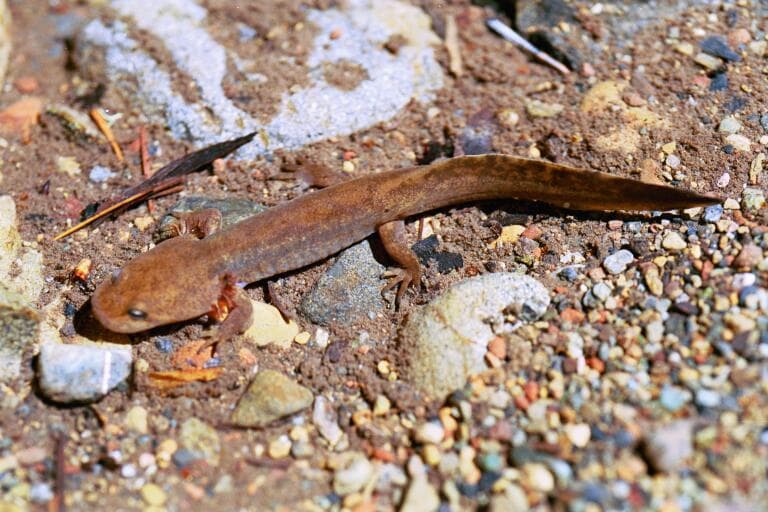
California giant salamander
The California giant salamander is a large amphibian endemic to Northern California, spending its adult terrestrial life near freshwater sources. Distinctive features include a marbled pattern, a broad head, and the ability to vocalize. This species is an important indicator of stream health.

Coastal giant salamander
The coastal giant salamander (Dicamptodon tenebrosus) is the largest terrestrial salamander in North America, found in the Pacific Northwest. It exhibits a dual life cycle, with an aquatic larval stage and a terrestrial adult form, though some individuals can become sexually mature while retaining larval features through neoteny. This species is known for its ability to vocalize and its skin secretions which are toxic if ingested.

Eastern long-tailed salamander
The Eastern long-tailed salamander is a species of lungless salamander found in the Appalachian Region and Ohio River valley of the eastern United States. It is characterized by its yellow to orange-red body, often adorned with black spots, and a notably long tail. This salamander is commonly found in cave twilight zones, springs, and surrounding forests.