
Dixie Caverns salamander
Plethodon dixi·Plethodontidae
The Dixie Caverns salamander is a species of lungless salamander endemic to Virginia, United States. Primarily found in Roanoke County and surrounding areas, it was once confused with Wehrle's salamander but was confirmed as a distinct species in 2019. This salamander is known for its specific habitat requirements within its limited geographic range.
Key Facts
- ›Endemic to the state of Virginia, USA.
- ›Primarily found in Roanoke County and nearby areas.
- ›Belongs to the Plethodontidae family (lungless salamanders).
- ›Was historically confused with Wehrle's salamander (Plethodon wehrlei).
- ›Reaffirmed as a distinct species in 2019.
- ›Little is known about its specific ecological role beyond its geographic distribution.
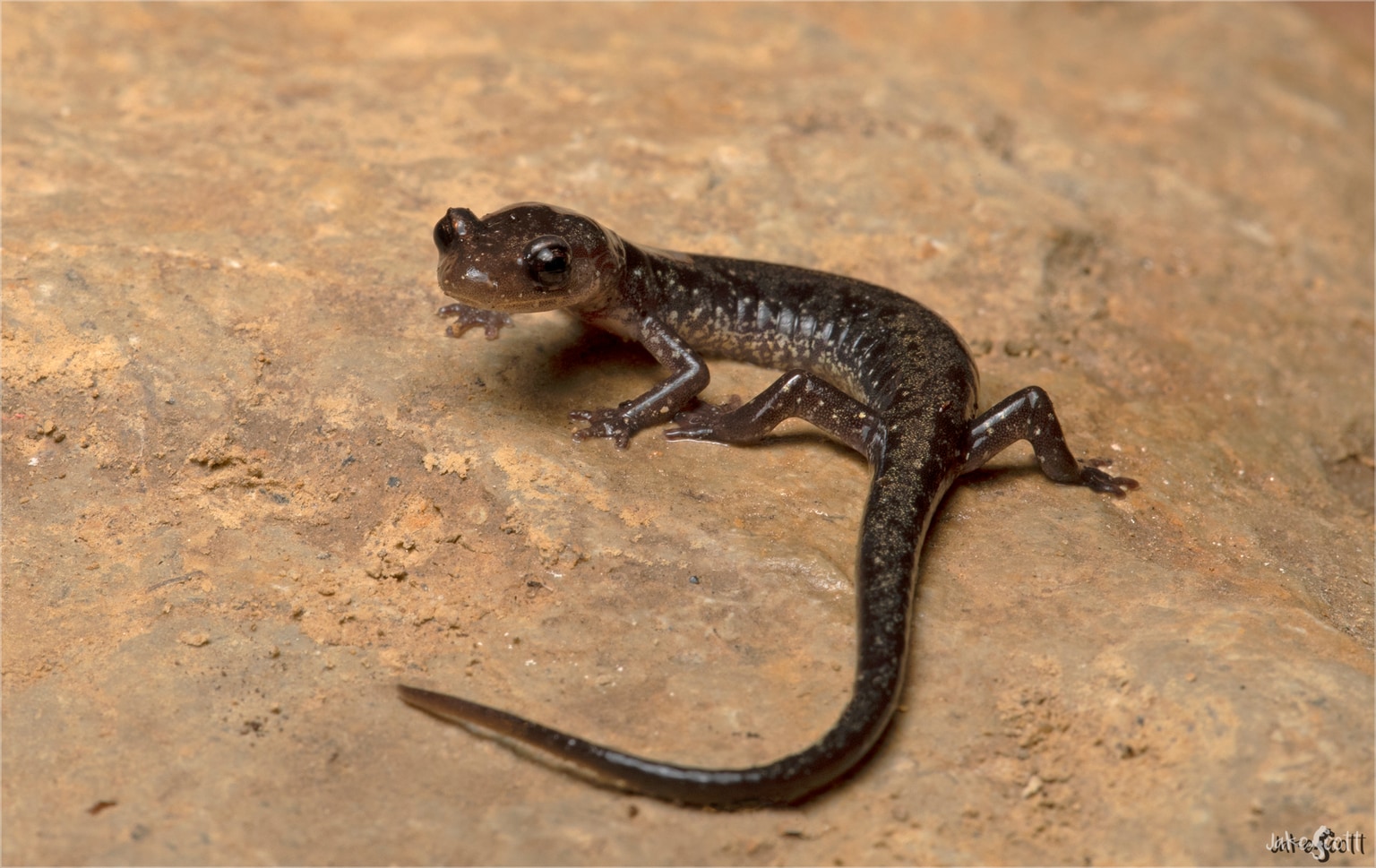
Dixie Caverns Salamander
Terrestrial Habitats Within Its Endemic Range
United States
- Belongs To the Plethodontidae Family, Indicating It Is A Lungless Salamander.
About Dixie Caverns salamander
The Dixie Caverns salamander, scientifically known as Plethodon dixi, is a species of salamander endemic to the state of Virginia in the United States. This lungless salamander is primarily found within Roanoke County and has also been documented in surrounding counties, indicating a relatively localized geographic distribution.
Taxonomy and Identification
Historically, the Dixie Caverns salamander was often confused with Wehrle's salamander (Plethodon wehrlei) and was consequently merged with that species for a period following its initial description. However, research conducted in 2019 re-examined its distinct characteristics and reaffirmed its status as a separate species. It belongs to the Plethodontidae family, a diverse group of salamanders known for lacking lungs and respiring through their skin and the lining of their mouths.
Distribution and Habitat
The known range of the Dixie Caverns salamander is largely confined to Virginia, with a notable concentration in Roanoke County. While specific microhabitat preferences are not detailed, its classification within the Plethodontidae family suggests it occupies terrestrial environments within its endemic region. Further ecological studies would be beneficial to fully understand its habitat requirements and life cycle.
Source: Wikipedia ↗
Frequently Asked Questions
Where is the Dixie Caverns salamander found?
The Dixie Caverns salamander is endemic to the state of Virginia in the United States. It is most frequently observed in Roanoke County, with additional specimens reported in adjacent counties.
What family does the Dixie Caverns salamander belong to?
This species belongs to the Plethodontidae family. This family is characterized by lungless salamanders, meaning they rely on cutaneous respiration (breathing through their skin) and buccopharyngeal respiration (breathing through the lining of their mouth and pharynx).
Was the Dixie Caverns salamander always considered a separate species?
No, the Dixie Caverns salamander was commonly confused with Wehrle's salamander (Plethodon wehrlei). It was merged with that species shortly after its initial description. However, a study conducted in 2019 re-established it as a distinct species.
Related Salamander and Newt species
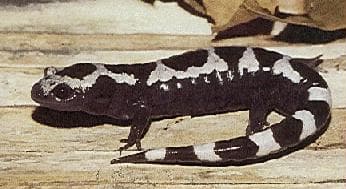
Ambystoma opacum
The marbled salamander (Ambystoma opacum) is a stout, terrestrial salamander found in the eastern United States, distinguished by its striking black and white banded pattern. Females typically have light gray bands, while males exhibit bright white bands, with males also possessing a larger proportion of white on their dorsal surface. This species spends most of its life under logs or in burrows and relies on seasonally flooded areas for breeding.

Aneides lugubris
The arboreal salamander (Aneides lugubris) is a species of climbing salamander native to California and Baja California. It is distinguished by its prehensile tail, sharp teeth, and unique arboreal adaptations, including gliding behavior when falling from trees. This lungless salamander is primarily nocturnal and insectivorous, inhabiting oak and sycamore woodlands and chaparral.

Eastern red-spotted newt
The eastern newt, scientifically known as Notophthalmus viridescens, is a common amphibian found across eastern North America. This species is distinctive for its three distinct life stages: an aquatic larva, a terrestrial "red eft" juvenile phase, and an aquatic adult form. They are known for producing tetrodotoxin, a potent toxin that deters predators.